


Slow beauty is a movement and philosophy, coined by author Shel Pink, that helps people build a sustainable self-care practice grounded in nature, health, and wellbeing through multi-sensory rituals and intentional product choices. The bottom line: you get better long-term skin health and genuine wellbeing not by buying more, but by buying less and doing it with more care.
Three things you can do today, before you spend a penny:
- Simplify to three core products. Audit your bathroom shelf and keep only what you actually finish. One cleanser, one moisturiser, one SPF is a complete routine.
- Add a two-minute ritual. Apply your moisturiser slowly, with three deliberate breaths. That shift in attention is the whole point.
- Choose refillable or small-batch packaging next time you restock. You are not overhauling your routine; you are just making a better next purchase.
Table of Contents
- What is slow beauty, and how does it differ from fast and clean beauty?
- Where slow beauty comes from: slow living, spa traditions, and Shel Pink
- The core principles that define slow beauty
- How to adopt slow beauty in daily life
- What to look for in slow beauty products, and how to spot greenwashing
- What the evidence says about slow beauty’s benefits
- Common misconceptions about slow beauty, and what it actually is
- How slow beauty aligns with an organic, low-waste lifestyle
- Key takeaways
- Why slow beauty is worth taking seriously
- Organic and natural products that support a slow beauty lifestyle
- Useful sources and further reading
What is slow beauty, and how does it differ from fast and clean beauty?
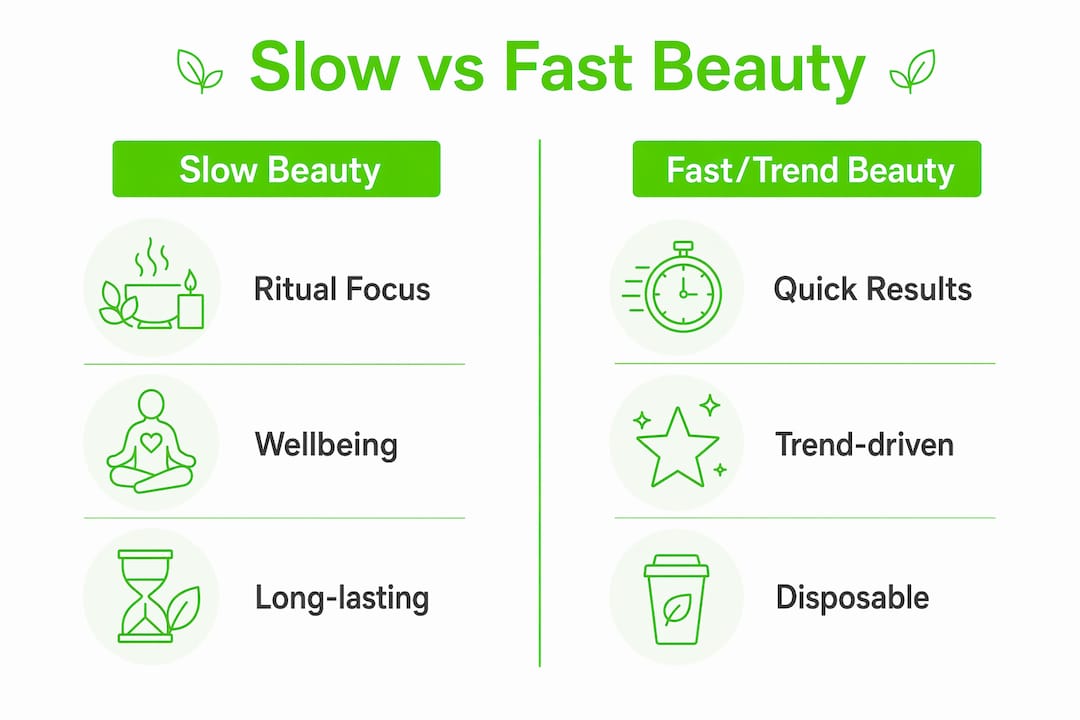
Slow beauty is not simply a preference for natural ingredients. It is a full reorientation of why you have a skincare routine at all. Where fast beauty chases trends, launches, and the dopamine hit of a new product, slow beauty asks you to slow the cycle down: fewer products, used more deliberately, chosen with supply-chain awareness, and applied as a ritual rather than a chore.
Shel Pink, whose Slow Beauty® Journal is the primary reference point for the movement, frames it this way: rituals practised across day, week, month, and season accumulate into long-term wellbeing rather than quick fixes. That temporal framing is what separates slow beauty most sharply from both fast beauty and the clean beauty movement.
Clean beauty focuses mainly on ingredient safety, what is in the formula. Slow beauty goes further: it asks where the ingredients came from, how the product was made, who made it, and whether the packaging can be returned, refilled, or composted. It also asks what the ritual itself does for your nervous system, not just your complexion.
| Dimension | Slow beauty | Fast/trend beauty | Clean beauty |
|---|---|---|---|
| Core intent | Ritual, wellbeing, longevity | Novelty, trend-chasing, speed | Ingredient safety |
| Pace | Seasonal, deliberate | Launch-driven, rapid | Varies |
| Supply-chain focus | Ethics, provenance, small-batch | Scale, speed to market | Formulation only |
| Expected results | Long-term skin and mental health | Immediate visible change | Safer formulas |
Where slow beauty comes from: slow living, spa traditions, and Shel Pink
The intellectual roots of slow beauty sit inside the broader slow living movement, which itself grew from the Slow Food movement founded by Carlo Petrini in Italy in 1989. The logic is the same: speed and standardisation strip meaning and quality from everyday experience, whether that experience is a meal or a morning cleanse.
Spa culture is the other major ancestor. Practitioners link slow beauty directly to ancient spa traditions where ritual, connection, and sensory nourishment were the point, not a side effect. The Roman thermae, Japanese onsen, and Ayurvedic abhyanga massage all share a common thread: the body is tended to slowly, with attention, as an act of care rather than maintenance.
Shel Pink brought these threads together into a named movement with her book Slow Beauty and the Slow Beauty® Journal, which remains the most cited primary source in the space. Her definition is worth quoting directly:
That phrase “joyful way of feeling and being” is doing real work. It repositions skincare from a corrective task (fix the dark circles, fight the wrinkles) to something closer to a daily act of self-respect. Slow beauty also overlaps with Ayurvedic principles and holistic care, where diet, lifestyle, and stress management are understood to shape skin health just as much as any topical product.
The core principles that define slow beauty
These are the ideas that separate genuine slow beauty practice from a marketing label. Use them as a checklist when evaluating your routine or a brand’s claims.
- Ritual and intention. Application is deliberate and sensory, not rushed. Touch, scent, and breath are part of the practice. Example: massaging a facial oil upward for sixty seconds rather than dabbing it on.
- Buy less, buy better. Fewer products, chosen for longevity and multifunctionality. Example: a single cold-pressed rosehip oil that works as a serum, facial oil, and cuticle treatment.
- Ingredient provenance. Know where key ingredients come from and whether they are sourced ethically. Example: shea butter from a women’s cooperative with fair-pay certification.
- Small-batch and in-house formulation. Small-batch production keeps ingredients fresher, reduces overproduction waste, and makes supply chains shorter and more traceable.
- Seasonality. Products and ingredients shift with the seasons, mirroring how the skin’s needs change. Example: a richer balm in winter, a lighter water-based gel in summer.
- Repair over replacement. Finish what you have before buying more. Decant, scrape, and use to the last drop.
- Social and environmental ethics. Truly slow brands address fair pay and ethical sourcing across commodity inputs such as mica and shea, and minimise carbon through local or regional sourcing.
- Holistic scope. Skin health is not only topical. Diet, sleep, stress, and movement all feed into it. Slow beauty connects naturally to mindful eating and seasonal food choices.
Pro Tip: Before buying anything new, spend one week using every product you already own to the end of its life. You will almost certainly discover that your current routine is already closer to slow beauty than you thought — and you will have a clearer sense of what you actually need.
How to adopt slow beauty in daily life
The most common mistake is treating slow beauty as a shopping exercise. Experts are clear that the mindset shift, starting with what you already own and changing how you apply it, delivers more than any new product purchase. Start there.
Step 1: Audit and simplify
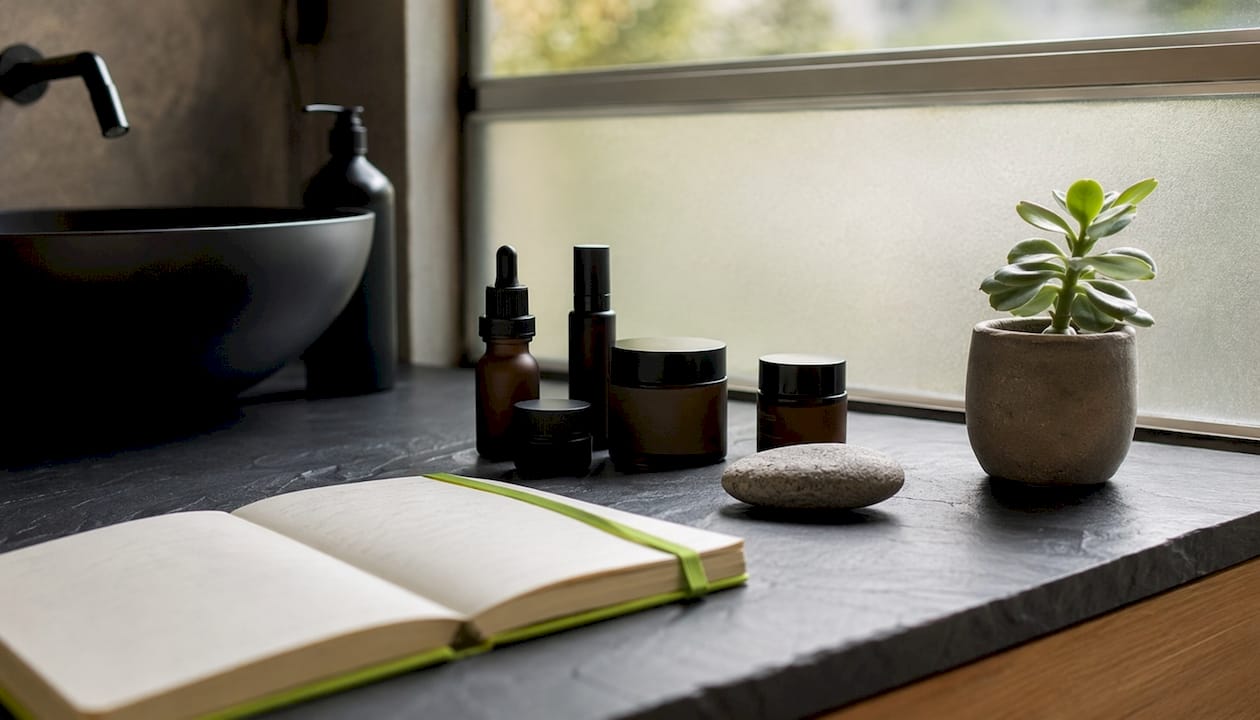
Go through everything on your shelf. Ask three questions: Do I finish this? Does it work? Do I know what is in it? Anything that fails all three goes. You are aiming for a routine small enough to fit in one hand.
Step 2: Build a weekly rhythm
Slow beauty is not just a daily routine; it operates across different time scales.
- Daily: A morning and evening ritual of three to five minutes each, applied with full attention.
- Weekly: One longer restorative practice, perhaps a face mask, a scalp massage, or a bath with essential oils.
- Monthly: A seasonal review. What does your skin actually need right now? Adjust accordingly.
Step 3: Use ritual templates
Morning ritual (5–7 minutes). Cleanse with warm water and a gentle cream cleanser. Apply a facial mist, then a lightweight moisturiser with SPF. Spend thirty seconds massaging the moisturiser in upward strokes. Finish with one slow breath before you leave the bathroom.
Evening ritual (8–10 minutes). Double-cleanse if you wore SPF or makeup. Apply a facial oil or balm with a two-minute lymphatic drainage massage. Use a gua sha tool or simply your fingertips. No phone during this time.
Weekend restorative ritual (20–30 minutes). Draw a warm bath with Epsom salts and a few drops of lavender essential oil. Apply a clay or enzyme mask while you soak. Follow with a body oil applied to damp skin. This is the slow beauty equivalent of a spa session, at home, at no extra cost if you already own these things.
Fitting rituals into a busy life
Time-box the ritual. Five minutes is enough if those five minutes are genuinely present. A sensory cue, the scent of a particular oil or the weight of a specific tool in your hand, signals to your nervous system that the ritual has begun. That cue does more psychological work than the product itself. For building these habits naturally, consistency of time and place matters far more than duration.
What to look for in slow beauty products, and how to spot greenwashing
Buying less means buying better, and that requires knowing what “better” actually looks like on a label.
Certifications worth trusting in the UK
- COSMOS Organic / COSMOS Natural (certified by the Soil Association in the UK): the most rigorous EU/UK-recognised standard for organic and natural cosmetics. COSMOS Organic requires a minimum percentage of organic ingredients and restricts synthetic processing aids.
- Soil Association Organic: the UK’s best-known organic certification body, applying to both food and beauty. A Soil Association mark on a skincare product means the organic claims have been independently verified.
- Leaping Bunny: cruelty-free certification covering the full supply chain, not just finished products.
- B Corp: a broader business ethics certification that covers environmental and social performance, not just formulation.
Ingredients commonly favoured in slow beauty
Cold-pressed plant oils (rosehip, jojoba, marula), raw shea butter, beeswax, plant-derived hyaluronic acid, bakuchiol (a plant-based retinol alternative), kaolin clay, and botanical extracts sourced from named, traceable origins. These tend to be minimally processed, biodegradable, and effective.
Greenwashing red flags
- Vague claims: “natural”, “eco-friendly”, “green” with no certification to back them.
- Ingredient lists that bury synthetic fillers behind a handful of botanical names on the front label.
- Recyclable packaging claims on products that use mixed-material tubes or pumps that cannot actually be recycled kerbside in the UK.
- “Clean” as a standalone claim with no definition of what has been excluded.
- Brands that launch dozens of new products every season. That pace is structurally incompatible with slow beauty’s small-batch, low-waste ethos.
Pro Tip: Check the COSMOS or Soil Association certification databases directly rather than trusting the logo on the packaging. Both bodies publish searchable lists of certified products online.
What the evidence says about slow beauty’s benefits
Psychological benefits
The psychological case for slow beauty is well-supported. Deliberate, sensory rituals reduce decision fatigue by shrinking the number of products you manage. They create a reliable daily anchor, a moment of predictable calm, which research on mindfulness consistently links to lower cortisol and better sleep. The multisensory ritual approach — touch, scent, deliberate breathing — converts a functional task into something closer to a meditation practice. That is not marketing language; it is how habit loops and sensory anchoring actually work in the brain.
Slow beauty also reframes ageing. Rather than treating lines and pigmentation as problems to correct, the philosophy positions them as part of a process. That shift alone reduces the anxiety that drives impulse purchasing and the churn of fast beauty.
Skin health outcomes
Dermatologically, the strongest argument for slow beauty is consistency. Skin responds to routine. A simple, well-chosen three-product routine used every day for six months will outperform a complex ten-step routine used erratically. Slow beauty’s insistence on fewer, better products naturally encourages that consistency.
The holistic scope matters here too. Slow beauty overlaps with Ayurvedic principles that treat diet, stress, and lifestyle as primary skin influencers, not afterthoughts. The connection between gut health and skin condition is an active area of dermatological research, and slow beauty’s emphasis on internal wellbeing sits well within that emerging picture.
Environmental impact
The conventional beauty industry’s waste problem is substantial. Vogue notes that the industry generates enormous volumes of landfill waste, with an estimated 120 billion single-use packaging components produced globally each year. Slow beauty’s response is structural: fewer products, refillable formats, small-batch production that avoids overstock, and supply chains short enough to be traceable.
Stat to know: The beauty industry produces an estimated 120 billion single-use packaging units annually, the majority of which are not recycled.
The 2026 beauty trend data shows growing consumer appetite for feel-good, sensorial formulations, which suggests slow beauty’s multisensory approach is not a niche preference but a direction the wider market is moving toward.
Common misconceptions about slow beauty, and what it actually is
Myths versus facts
| Myth | Fact |
|---|---|
| Slow beauty means expensive products | It means buying fewer products, which often costs less overall |
| It is anti-science | It values evidence-based ingredients; it is anti-hype, not anti-research |
| It is only about packaging | Packaging is one factor; ritual, ethics, and provenance matter equally |
| Slow beauty and slow cosmetics are the same | Slow cosmetics is a separate European movement with its own certification criteria |
| You need to overhaul your routine to start | Starting with what you own and changing how you use it is the recommended entry point |
Slow beauty vs slow cosmetics: a quick distinction
Slow cosmetics is a distinct European movement, particularly active in France and Belgium, with its own scoring system for evaluating product formulas. Slow beauty is broader: it encompasses ritual, lifestyle, supply-chain ethics, and internal wellbeing, not just formula composition. The two overlap but are not interchangeable terms.
Avoiding perfectionism
The biggest practical barrier to slow beauty is the all-or-nothing trap. You do not need to replace every product at once, source everything from a certified small-batch brand, or build a forty-five-minute morning ritual. Start with one change: one ritual, one better-chosen replacement when something runs out. Slow beauty is, by definition, a gradual practice.
How slow beauty aligns with an organic, low-waste lifestyle
Slow beauty does not exist in isolation from the rest of how you live. Its principles, seasonal sourcing, buying less but better, attending to provenance and ethics, map directly onto the same values that drive sustainable food choices and mindful consumption more broadly. The parallel with the slow food movement is not accidental: both ask you to know where something came from, who made it, and whether the process was fair.
At Naturessoulshop, the product range reflects exactly that overlap. The categories stocked align naturally with slow beauty’s holistic scope:
- Natural and organic skincare ingredients (plant oils, botanical extracts) that double as kitchen and bathroom staples
- Vegan and gluten-free food products that support the internal wellbeing dimension of slow beauty
- Home care products with clean, traceable ingredients
- Multi-use organic items that reduce the need for single-purpose products across both food and personal care
The slow food and slow beauty movements share a root logic: slow food principles applied to what you eat and slow beauty applied to how you care for your body are two expressions of the same intention. Naturessoulshop’s range spans both, which makes it a practical starting point for anyone building a low-waste, organic lifestyle rather than just a skincare routine.
Key takeaways
Slow beauty works because it replaces the churn of trend-driven purchasing with consistent, intentional rituals and fewer, better-chosen products that support long-term skin health and genuine wellbeing.
| Point | Details |
|---|---|
| Start with what you own | Audit your shelf before buying anything; the ritual shift matters more than new products. |
| Ritual depth over product count | A deliberate two-minute application beats a rushed ten-step routine every time. |
| Certifications to trust in the UK | Look for COSMOS Organic, Soil Association, or Leaping Bunny marks; verify on the certifier’s own database. |
| Environmental case is structural | Fewer products and refillable formats reduce waste more reliably than recyclable packaging alone. |
| Naturessoulshop spans both dimensions | The range covers organic food and skincare categories, supporting slow beauty’s internal and external wellbeing goals. |
Your seven-day starter plan
- Day 1: Audit your bathroom shelf. Remove anything you have not used in a month.
- Day 2: Identify your three core products. Use only those today.
- Day 3: Add a two-minute facial massage to your evening routine using what you already own.
- Day 4: Read the ingredient list on your most-used product. Look up one ingredient you do not recognise.
- Day 5: Check whether any of your products carry a COSMOS or Soil Association certification.
- Day 6: Try the weekend restorative ritual: a warm bath, a mask, a body oil on damp skin.
- Day 7: Write down one product you will replace with a small-batch or refillable alternative when it runs out. Just one.
Why slow beauty is worth taking seriously
There is a version of slow beauty that gets co-opted very quickly: a brand slaps “slow” on its packaging, uses amber glass and serif fonts, and charges twice the price for the same supply chain. That is not slow beauty; it is slow beauty aesthetics, and the distinction matters.
The genuine practice is less photogenic and more useful. It is the decision to stop buying the next serum before finishing the current one. It is the recognition that your skin does not need twelve products; it needs three good ones and enough sleep. It is understanding that the anxiety driving your skincare spending is often the same anxiety a deliberate ritual could address, without a new purchase.
What slow beauty gets right, and what its critics miss, is that ritual is not indulgence. Deliberate, sensory self-care has a measurable effect on stress and adherence. The person who spends five minutes applying one oil with full attention will be more consistent, and therefore see better results, than the person who rushes through eight products while checking their phone. That is not philosophy; it is how habits work.
The supply-chain dimension is where slow beauty asks the most of you, and where it is most worth the effort. Knowing that your shea butter comes from a fairly paid cooperative, or that your facial oil was cold-pressed in small batches to preserve potency, is not virtue signalling. It is the difference between a product that is genuinely better and one that is merely marketed as such.
Organic and natural products that support a slow beauty lifestyle
If you have read this far and want to take a practical next step, Naturessoulshop stocks a range of organic, clean-ingredient products across skincare, food, and home care categories that sit naturally within a slow beauty lifestyle. The range is built around the same principles: clean ingredients, traceable sourcing, and products that serve more than one purpose.
Whether you are looking for natural skincare staples, organic pantry essentials that support your skin from the inside, or low-waste home care options, the Naturessoulshop store is a practical place to start. No overhaul required. Browse by category, pick one thing that replaces something you are already running low on, and go from there.
Useful sources and further reading
The sources below are worth bookmarking if you want to go deeper on slow beauty’s principles, origins, and practical application.
- The Slow Beauty® Journal — Shel Pink’s primary platform and the canonical source for the movement’s definition, rituals, and advocacy programme. Start here for the philosophy in its original form.
- NewBeauty: What Is Slow Beauty? — A clear practitioner-level explainer covering small-batch production, in-house formulation, and seasonal sourcing. Useful for understanding what separates authentic slow beauty brands from marketing-led claims.
- Vogue India: Why Slow Beauty Is the New Clean Beauty — Covers the environmental waste context, Ayurvedic overlaps, and supply-chain ethics. The source for the 120 billion single-use packaging figure cited in this article.
- The Slow Year: Slow Beauty — Practitioner perspective on starting with what you own and the mindset shift that underpins the whole approach. Particularly useful for newcomers who feel the barrier to entry is too high.
- Layoga: Slow Beauty 101 — Connects slow beauty to spa heritage and multisensory ritual practice. Good background reading for the historical and cultural roots of the movement.
- Sensient Beauty: Beauty Trends 2026 — Industry trend data showing the mainstream appetite for sensorial, feel-good formulations that align with slow beauty’s direction of travel.


