


Many first-time parents in Delhi NCR quickly realise that choosing healthier food goes beyond nutrition labels and supermarket convenience. The Slow Food Movement offers a fresh perspective, transforming family meals into acts of personal and environmental care. By focusing on the principles of good, clean, and fair, you can nurture your family’s wellbeing whilst supporting local producers and protecting the Earth. Discover how these guiding values create real change for ordinary families like yours.
Table of Contents
- Defining the Slow Food Movement Principles
- Types of Slow Food Practices Worldwide
- How Slow Food Supports Family Wellness
- Costs, Risks, and Common Misconceptions
- Comparing Slow Food With Other Alternatives
Key Takeaways
| Point | Details |
|---|---|
| Slow Food Principles | The movement is centred on three core principles: Good, Clean, and Fair, emphasising quality, sustainability, and social equity in food production. |
| Cultural and Nutritional Wellness | Embracing Slow Food fosters healthier family relationships with food, enhancing both nutrition and cultural identity through shared meals and traditional cooking. |
| Accessibility and Affordability | While organic local produce can be pricier, Slow Food counters elitism by promoting inclusivity and fair compensation for farmers. |
| Adaptability of Practices | The Slow Food movement thrives by adapting to local contexts, ensuring that communities can implement practices that resonate with their unique needs and traditions. |
Defining the Slow Food Movement Principles
When you hear “Slow Food,” you might imagine leisurely meals around a table. But the movement is far more deliberate than that. It began in 1986 in Rome as a direct reaction against fast food culture and has grown into something with real teeth: a global philosophy that challenges how we think about eating. The movement is active across over 160 countries now, and its core message remains consistent—that what we put on our plates carries weight beyond taste alone.
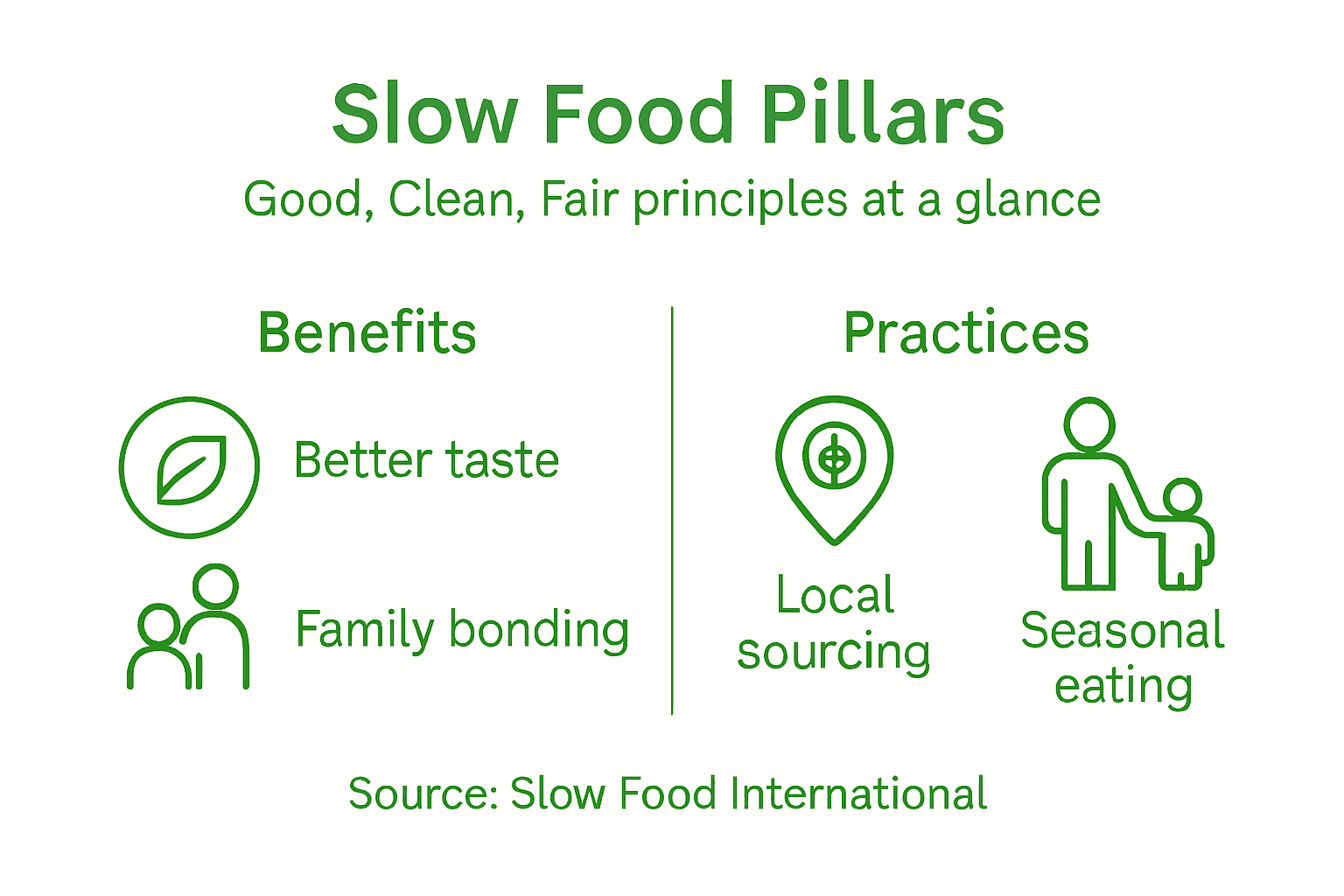
At its heart, the Slow Food movement rests on three interconnected pillars: Good, Clean, and Fair. Good means food that delivers genuine quality and pleasure—locally sourced, seasonally appropriate, and prepared with care rather than convenience. It’s about reconnecting with the flavour and texture of real food, not processed approximations. Clean refers to ecological sustainability, which means food produced in ways that respect the environment. This includes supporting agricultural practices that don’t strip the soil, protect biodiversity, or contribute unnecessarily to pollution. Fair acknowledges social equity, ensuring that small producers, farmers, and workers receive fair compensation and recognition for their labour. These three principles work together. You cannot have truly good food if it destroys the environment, nor can food be clean if it depends on exploiting those who grow it.
What makes this relevant to your family in Delhi NCR? The movement emphasises local food, traditional cooking, and biodiversity conservation as tools for sustainable development. For first-time parents, this translates to simple everyday decisions: choosing organic vegetables from local farmers markets instead of supermarket chains, learning traditional recipes using seasonal produce, and teaching your children where food actually comes from. The movement connects personal food choices to broader cultural, political, and environmental questions. When you buy from a local organic producer, you’re not simply purchasing vegetables—you’re supporting farming practices that preserve soil health, reduce chemical runoff into water systems, and maintain traditional agricultural knowledge.
The principles are also fundamentally about pleasure and accessibility. Slow Food rejects the notion that sustainability must be expensive or exclusive. Instead, it advocates for food systems that are genuinely enjoyable and accessible to ordinary families, not just wealthy urban dwellers. This means promoting quality over quantity, but in a way that actually fits your budget and lifestyle.
Pro tip: Start by identifying one local farmer, producer, or organic market near you in Delhi NCR and commit to sourcing at least three staple items from them each week—this single action embodies all three principles without overwhelming your routine.
Types of Slow Food Practices Worldwide
The beauty of the Slow Food movement lies in its adaptability. Rather than imposing a one-size-fits-all approach, it morphs to fit local realities, cultures, and needs. What works in rural Tuscany differs vastly from what works in urban Delhi or rural Cuba. This flexibility is not a weakness but the movement’s greatest strength. Practitioners worldwide have developed diverse practices supporting community food systems that address their specific contexts whilst honouring the core principles of good, clean, and fair food.
Consider the range of initiatives now operating across continents. In Europe, organisations have established home delivery services bringing fresh local produce directly to urban families, whilst seed distribution programmes in Ukraine preserve traditional crop varieties. African communities have created food gardens that serve dual purposes: producing nutritious food and strengthening social bonds. Cuban families participate in structured horticulture training programmes that teach sustainable food production on limited land. The Americas have developed online platforms connecting conscious consumers directly with small producers, cutting out middlemen and ensuring fairer prices. Each approach reflects local priorities. Urban dwellers in crowded cities need different solutions than rural communities, yet all serve the same purpose: reconnecting people with their food sources and supporting sustainable agriculture.
Beyond these direct food production initiatives, the movement operates through broader structural mechanisms. The Slow Food network maintains local chapters, called convivia, which bring people together around shared meals and values. Heritage preservation projects like the Ark of Taste document and protect traditional foods at risk of disappearing. Presidia programmes support artisanal food producers maintaining heritage recipes and techniques. Educational initiatives teach young people about sustainable shopping and food literacy. This multifaceted approach means you might encounter Slow Food practices as a consumer buying from a farmers market, as a participant in a community gardening project, or as someone learning traditional cooking methods. The movement recognises that sustainable food systems require action at every level—from individual household choices to community organisations to international advocacy.
For your family in Delhi NCR, understanding these global practices provides inspiration for your own approach. You need not wait for a formal organisation to implement these ideas. Many families are already creating modest versions locally: starting kitchen gardens with native seeds, forming informal buying groups with neighbours to purchase directly from organic farmers, or organising community meals around traditional recipes. The Slow Food movement demonstrates that transformation starts small, rooted in place, connected to people you know.
Below is a summary of various slow food practices worldwide and their unique community impacts:
| Region | Typical Practice | Community Impact |
|---|---|---|
| Europe | Home delivery of local food | Easier urban access to fresh produce |
| Africa | Community food gardens | Nutrition boost and social bonding |
| Americas | Online producer-consumer platforms | Fair pricing and farmer support |
| Cuba | Urban horticulture training | Education and sustainable food skills |
| Ukraine | Traditional seed distribution | Preserves crop diversity and heritage |
Pro tip: Identify one slow food practice from another part of the world that resonates with your family’s circumstances, then adapt it to your Delhi NCR context rather than trying to replicate it exactly—this creative localisation is exactly how the global movement thrives.
How Slow Food Supports Family Wellness
Family wellness is not simply about individual nutrition. It encompasses how we eat together, where our food comes from, what values we transmit to our children through our food choices, and how those choices ripple outward into our communities and environment. The Slow Food movement addresses wellness holistically by recognising that healthy families depend on healthy food systems. When you embrace slow food principles, you are not just changing what appears on your plate. You are reshaping your family’s relationship with nourishment, culture, and the land itself.
At the most immediate level, slow food practices support wellness through nutrition and pleasure. Seasonal, locally grown produce picked at peak ripeness contains more nutrients than supermarket alternatives transported across continents. Traditional recipes passed down through families carry cultural meaning alongside nutritional value. When you prepare meals using plant-based ingredients from sustainable sources, you provide your children with better nutrition whilst teaching them that eating well need not be complicated or expensive. The Slow Food approach rejects the notion that healthy eating requires expensive supplements or specialised products. Instead, it emphasises whole foods, traditional preparation methods, and the simple act of cooking together. This shift alone transforms family wellness. Children who help prepare meals develop better relationships with food, understand nutrition intuitively, and are more likely to make healthy choices independently as adults.
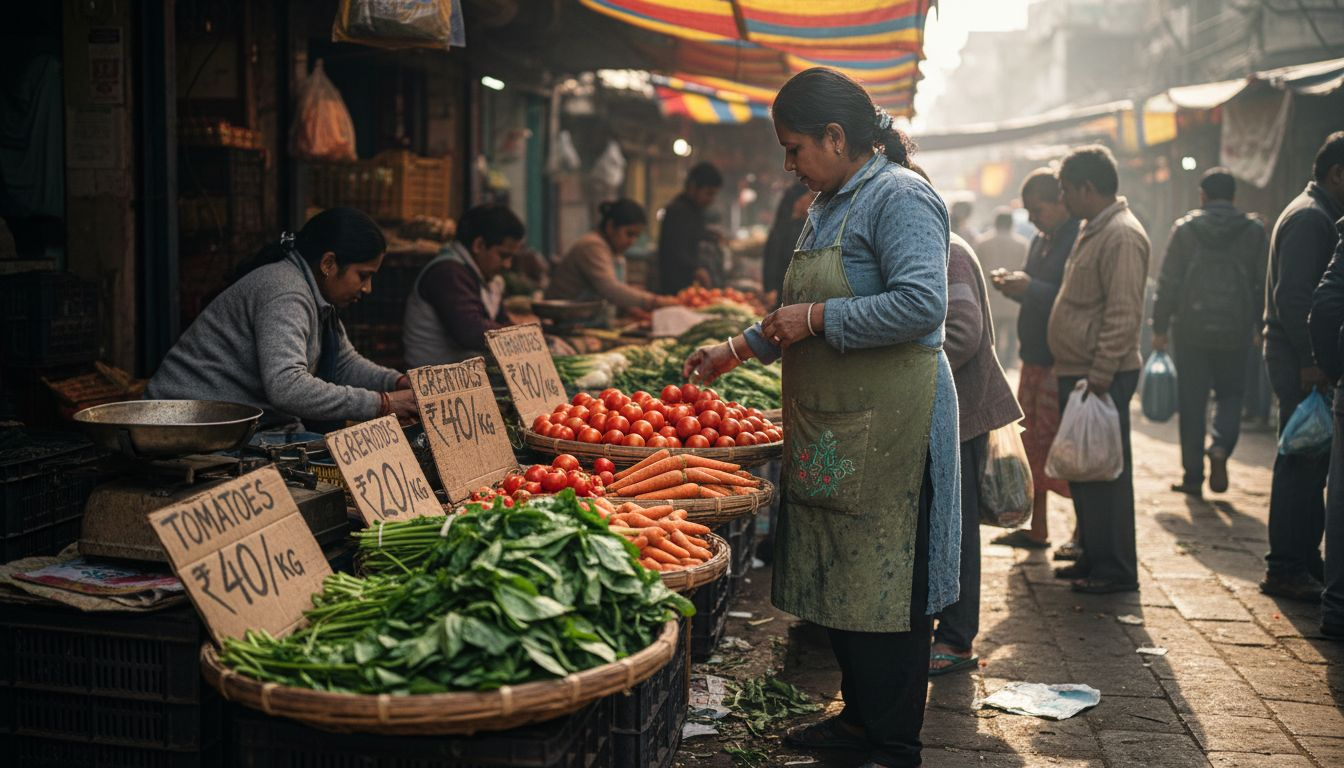
Beyond individual nutrition, slow food supports family wellness by strengthening community bonds and cultural identity. Meals shared with family and neighbours, rooted in local traditions and seasonal rhythms, provide psychological and social nourishment alongside physical nourishment. The Slow Food movement fosters community connections around food traditions whilst promoting sustainable agricultural practices that protect environmental health. When your family sources food from local organic producers, you establish relationships with the people growing your food. Your children learn where their meals originate. You develop investment in local agricultural success. This creates social solidarity. In Delhi NCR, where many families are disconnected from farming communities, deliberately rebuilding these connections through slow food practices restores something fundamental: understanding that human wellbeing is inseparable from environmental wellbeing.
The movement also supports family wellness by reducing exposure to harmful chemicals and supporting farmers who reject synthetic pesticides. Organic, locally grown food contains fewer residues from agricultural chemicals. When you purchase from organic producers committed to agroecological practices, you support farming methods that build soil health, protect water systems, and maintain biodiversity. Your family’s health improves. The broader environment improves. The farmers producing your food earn fair prices for their labour. This is wellness operating at multiple scales simultaneously, each level reinforcing the others.
Pro tip: Rather than attempting to convert your entire diet overnight, identify one meal per week that your family will prepare together using seasonal local ingredients sourced directly from an organic producer or farmers market—this single consistent practice creates measurable wellness improvements whilst building sustainable habits.
Costs, Risks, and Common Misconceptions
Let’s address the elephant in the room. One of the most persistent objections to the Slow Food movement is that it costs more money. There’s a kernel of truth here, but the fuller picture is more nuanced. Yes, organic produce from local farmers sometimes costs more per kilogram than mass-produced supermarket alternatives. But this comparison ignores crucial context. Supermarket prices reflect subsidies supporting industrial agriculture, externalised environmental costs, and worker exploitation. They do not reflect the true cost of food. When you buy organic local produce, you are paying closer to the actual price, which includes fair wages for farmers, sustainable soil management, and environmental protection. The real question is not whether slow food costs more, but whether you can afford not to invest in food systems that protect your family’s long-term health and your children’s environmental inheritance.
Another legitimate concern involves accessibility. Low-income families in Delhi NCR face genuine barriers to participating in slow food practices. Farmers markets require time to visit. Organic produce often demands higher upfront spending. Community supported agriculture schemes need initial cash investment. These obstacles are real. However, the Slow Food movement actively acknowledges this tension rather than ignoring it. The movement addresses accessibility challenges through solidarity approaches and fair pricing mechanisms designed to broaden participation across income levels. Practical alternatives exist: joining informal buying groups with neighbours to bulk-purchase directly from farmers at lower costs, growing your own produce even in small balcony gardens, preserving seasonal abundance through pickling and drying, and prioritising buying organic for the most pesticide-heavy crops whilst accepting conventional options for others. Slow food need not be perfect to be meaningful.
The most damaging misconception frames Slow Food as elitist snobbery reserved for wealthy urbanites. This fundamentally misunderstands the movement. Slow Food originated in Italy amongst working-class communities protecting their food traditions against homogenisation. It thrives today in rural Africa, rural Cuba, and working-class neighbourhoods worldwide. The misconception persists partly because visible Slow Food communities in wealthy areas receive disproportionate media attention. But the real movement operates quietly in communities you might not notice: women’s collectives in villages preserving heritage grain varieties, families gathering seasonally to prepare and preserve food together, neighbourhoods organising informal food sharing networks. These practices cost little money but require time, knowledge, and community commitment.
Other challenges warrant serious consideration. The movement must navigate tensions involving food safety, production scalability, and balancing local identity with global pressures. Small-scale organic farming cannot instantly feed everyone. Environmental footprints matter regardless of production method. These complexities mean Slow Food is not a complete solution to global food insecurity, nor does it claim to be. Rather, it offers a framework for making better choices within the system we inhabit today whilst advocating for systemic change. For your family, this means you need not achieve perfection. Incremental improvements matter.
Pro tip: Start by calculating what you currently spend on food, then identify three items your family buys regularly that you can source from local organic producers instead—often the actual cost difference is smaller than anticipated once you factor in reduced food waste from fresher produce.
Comparing Slow Food With Other Alternatives
When you explore sustainable food choices, you encounter a crowded landscape of competing movements and labels. Organic certification, farm-to-table restaurants, community-supported agriculture, vegan diets, local food networks. Each offers something valuable. But Slow Food stands apart in meaningful ways. Understanding these differences helps you make deliberate choices aligned with your family’s values rather than simply following whatever sounds most virtuous at the moment.
The critical distinction between Slow Food and other alternative food movements centres on what each prioritises. Community-supported agriculture schemes emphasise the direct relationship between farmers and consumers, cutting out middlemen and ensuring fairer prices. This is genuinely valuable. However, CSA focuses primarily on the farmer-consumer transaction without necessarily addressing cultural preservation or gastronomic pleasure. Organic certification emphasises production methods, excluding synthetic pesticides and fertilisers. This protects your family from chemical exposure and supports environmental health. But organic labelling says nothing about whether food is local, culturally meaningful, or produced by people earning fair wages. Vegan and plant-based movements address animal welfare and environmental impact but may inadvertently support industrial agriculture if plant foods are grown conventionally and transported globally.
Here’s how key alternative food movements differ from Slow Food:
| Aspect Focused | Slow Food Movement | Organic Certification | Community Supported Agriculture |
|---|---|---|---|
| Cultural Preservation | Central focus: traditions and heritage | Not addressed | Sometimes, via local varieties |
| Eating Pleasure | Strong emphasis on enjoyment | Not highlighted | Depends on produce quality |
| Environmental Sustainability | Core principle: biodiversity and ecology | Prioritised in standards | Often included, varies |
| Fair Compensation | Essential principle | Not guaranteed | Direct support for farmers |
| Local Sourcing | Champions local, seasonal foods | Not required by label | Always local by definition |
| Accessibility | Advocates inclusivity for all incomes | Variable, often higher cost | Varies, depends on scheme |
Slow Food integrates these concerns whilst adding dimensions others neglect. Slow Food’s unique emphasis on cultural preservation, gastronomic pleasure, and biodiversity differentiates it fundamentally from movements focused predominantly on production methods or direct relationships alone. When you embrace slow food principles, you simultaneously address nutrition, environmental sustainability, fair economics, and cultural continuity. This integration matters because food is not merely fuel. It carries meaning. Traditional recipes connect you to your ancestors. Local seasonal eating roots you in your environment. Supporting small producers builds community. Slow Food refuses to separate these dimensions because they are inseparable in real human experience.
The movement also adapts to regional contexts. Slow Food operates differently across regions, focusing on preserving culinary traditions and environmental sustainability in Europe, whilst promoting local food education in the USA, and addressing food safety and cultural heritage in China. This flexibility matters for you in Delhi NCR. Rather than imposing imported models, Slow Food invites you to recover and celebrate your own food traditions. Your family’s regional cuisine, local produce, traditional preparation methods. These become the foundation. This is radically different from movements importing European organic standards or American farm-to-table aesthetics without considering what already exists in your place.
This does not mean Slow Food is superior to other approaches. Rather, these movements complement each other. A comprehensive approach to sustainable food might combine CSA’s direct farmer relationships, organic certification’s production standards, and Slow Food’s cultural and pleasure-based dimensions. For your family, the question is not which alternative is “best” but which resonates with your values and circumstances, and how multiple approaches can work together to create genuine change in how your family eats.
Pro tip: Rather than switching entirely to one movement, experiment by adopting practices from different approaches simultaneously: join a CSA for some produce, buy certified organic items for others, and make one weekly meal using traditional family recipes with seasonal local ingredients.
Embrace the Slow Food Movement for Your Family Wellness Today
Are you ready to transform your family’s wellbeing by adopting the Slow Food movement’s core principles of Good, Clean, and Fair food? Many families in Delhi NCR face the challenge of sourcing truly organic and locally produced food that supports both health and the environment. At Nature’s Soul Shop, we understand that reconnecting with authentic, seasonal ingredients is essential for nourishing your loved ones and fostering lasting food traditions without compromising on convenience or budget.
Discover a wide selection of organic fruits, vegetables, and natural products carefully curated to support your journey towards sustainable and enjoyable eating habits. By choosing organic and natural products that prioritise clean ingredients, you are investing in your family’s nutrition and in fair farming practices that protect the environment. Take the first step with simple, wholesome choices from our range of gluten free and vegan options to create delicious meals that resonate with your heritage and wellness goals. Start today and experience how small changes can lead to big improvements in your home and community.
Frequently Asked Questions
What are the core principles of the Slow Food movement?
The Slow Food movement is built on three interconnected pillars: Good, Clean, and Fair. Good signifies food that is of genuine quality and pleasure, Clean refers to ecological sustainability, and Fair concerns social equity for farmers and producers.
How can adopting Slow Food practices benefit my family’s health?
Embracing Slow Food practices can enhance family health by encouraging the consumption of fresh, seasonal produce which is often more nutritious. Additionally, it fosters cooking together as a family, improving relationships with food and teaching children healthy eating habits.
What common misconceptions exist about the Slow Food movement?
A common misconception is that the Slow Food movement is elitist and primarily for wealthy individuals. In reality, it originated in working-class communities and promotes the idea that delicious, sustainable food should be accessible to everyone, regardless of income.
How does the Slow Food movement support community well-being?
The Slow Food movement strengthens community well-being by creating bonds through shared meals, encouraging local food sourcing, and fostering relationships between consumers and producers. This connection enhances social cohesion and encourages investment in local agricultural practices.
Recommended
- Food Sustainability: Impact on Modern Wellness Choices – naturessoulshop
- Healthy Family Meal Planning for Balanced Living – naturessoulshop
- Building a Balanced Meal Naturally: A Step-by-Step Guide – naturessoulshop
- 7 Smart Plant-Based Meals for Family Wellness – naturessoulshop
- 7 Essential Family Cookware Recommendations for Chefs – Brass & Steel


