


Finding skin that truly glows in the heart of Delhi NCR is not as simple as picking up the latest serum. Daily exposure to pollution, intense UV rays, and fluctuating humidity puts immense pressure on your skin’s barrier and hydration levels. For those aiming to combat premature ageing and dryness, defining healthy skin from within means understanding how visual, mechanical, and internal factors combine to create lasting radiance. Discover genuine approaches that work with your physiology to promote resilience, hydration, and a noticeably youthful appearance.
Table of Contents
- Defining Healthy Skin From Within
- Nutrition’s Role In Skin Vitality
- Hydration And Its Impact On Skin
- Addressing Ageing: Antioxidants And Collagen
- Common Misconceptions And Pitfalls To Avoid
Key Takeaways
| Point | Details |
|---|---|
| Healthy Skin Relying on Internal Factors | True skin health is influenced by internal processes, including nutrition and lifestyle, which support hydration, elasticity, and protective functions. |
| Nutrient-Rich Diet is Crucial | A consistent intake of skin-supporting nutrients, such as antioxidants and essential fatty acids, is essential for maintaining healthy skin from within. |
| Hydration Affects Appearance | Adequate hydration, both internally and externally, is vital for skin resilience and moisture retention, which helps prevent signs of ageing. |
| Lifestyle Changes Enhance Skin Health | Consistent lifestyle adjustments, such as stress management and quality sleep, significantly affect skin health more than topical treatments alone. |
Defining Healthy Skin From Within
Healthy skin isn’t simply what you see in the mirror. It’s a reflection of how your body’s largest organ is functioning at the cellular level. When we talk about skin health from within, we’re referring to a combination of physical attributes and internal processes that work together to maintain your skin’s protective barrier, elasticity, and youthful appearance. Your skin performs critical functions every second—regulating temperature, protecting against pathogens, and preventing water loss—and when it’s truly healthy, these systems operate seamlessly.
The science behind skin health reveals that skin quality encompasses visual, topographical, and mechanical attributes including hydration levels, elasticity, pigmentation evenness, and firmness. These aren’t isolated characteristics. Hydration affects elasticity, which influences how light reflects off your skin and whether fine lines appear prominent. Firmness depends on collagen and elastin production, which is directly affected by your nutrition and lifestyle choices. Pigmentation evenness relates to sun exposure, antioxidant status, and inflammatory markers within your body. When all these elements align, your skin doesn’t just look healthier—it actually functions more effectively as a protective barrier.
What distinguishes truly healthy skin from within is understanding that skin aging involves intrinsic and extrinsic factors that affect your skin’s protective and structural functions. Your genetics determine your baseline skin type and how quickly collagen degrades. Environmental factors like Delhi NCR’s intense UV exposure, pollution levels, and fluctuating humidity challenge your skin constantly. But here’s what matters: the strategies that work are those aligned with your physiology—proper nutrition that supplies the building blocks for collagen synthesis, consistent lifestyle habits that regulate inflammation, and protection methods that don’t damage the skin barrier. This is what separates superficial treatments from genuine skin health.
For someone living in urban Delhi NCR dealing with combination skin, pollution exposure, and concerns about premature ageing, defining healthy skin means establishing a baseline. Healthy skin for you might mean skin that maintains hydration despite the dry air and pollution, skin that recovers quickly from congestion, and skin that shows even tone and firmness. It’s not about perfection. It’s about your skin performing its functions efficiently and looking visibly clearer, more resilient, and more youthful because the internal systems supporting it are working optimally.
Pro tip: Photograph your skin under consistent natural light every 4 weeks to track improvements in texture, hydration, and clarity—visible changes in these markers indicate your internal approach is actually working.
Nutrition’s Role in Skin Vitality
Your skin doesn’t exist in isolation from the rest of your body. Every nutrient you consume travels through your bloodstream and influences whether your skin can repair itself, maintain hydration, and resist the visible signs of ageing. Think of your diet as the raw materials your body uses to build and maintain skin cells. Without the right ingredients, even the most expensive skincare products cannot compensate for what’s missing internally. The reality is that nutrition profoundly impacts skin health and ageing, and the evidence supporting this connection continues to grow stronger.
When you consume foods rich in specific nutrients, you’re essentially delivering skin-supporting compounds directly to the cells responsible for maintaining your skin’s structure and function. Antioxidants like vitamins C and E neutralise free radicals generated by Delhi NCR’s pollution and UV exposure, preventing oxidative damage that accelerates ageing. Polyphenols from coloured fruits, vegetables, and green tea strengthen your skin’s natural defences. B vitamins support skin cell turnover and barrier repair. Zinc and selenium regulate inflammation and support collagen production. Omega-3 fatty acids maintain cell membrane integrity and hydration levels. The interplay between these nutrients isn’t random—your body has evolved to utilise them in very specific ways to keep your skin functioning optimally. When healthy dietary habits provide essential nutrients for repair, hydration, and barrier function, you’ll notice improvements in skin clarity, texture, and resilience within weeks rather than months.
What separates people who see genuine skin improvements from diet versus those who don’t comes down to consistency and specificity. You can’t simply eat one salad and expect transformed skin. Instead, build your meals around foods that concentrate these skin-supporting nutrients. Consider nutrient dense foods that elevate daily wellbeing, which often provide multiple skin-supporting compounds in single servings. Leafy greens contain both antioxidants and minerals. Fatty fish provides omega-3s and selenium. Coloured vegetables deliver polyphenols. Nuts and seeds offer vitamin E and zinc. The goal isn’t perfection—it’s making these foods the foundation of your regular eating patterns. If your current diet lacks these elements, your skin will reflect that deficiency regardless of your skincare routine. Conversely, if you prioritise nutrient-rich whole foods consistently, your skin becomes noticeably more resilient, hydrated, and youthful-looking because your body finally has the resources it needs.
Here’s how essential nutrients support skin health:
| Nutrient | Main Function for Skin | Example Food Source |
|---|---|---|
| Vitamin C | Collagen synthesis, brightening | Kiwi, capsicum, oranges |
| Vitamin E | Protects cell membranes | Sunflower seeds, almonds |
| Polyphenols | Fortifies natural defences | Green tea, berries |
| B Vitamins | Cell turnover, repair | Whole grains, eggs |
| Zinc | Regulates inflammation | Pumpkin seeds, lentils |
| Selenium | Antioxidant action | Brazil nuts, fish |
| Omega-3 fatty acids | Maintains membrane hydration | Sardines, walnuts |
Pro tip: Build your weekly meal plan around three to four nutrient-dense whole foods that contain multiple skin-supporting nutrients, then repeat this pattern consistently for eight weeks to allow your skin’s natural renewal cycle to demonstrate visible improvements.
Hydration and Its Impact on Skin
Dehydrated skin looks tired, feels uncomfortable, and ages faster. When your skin lacks adequate water content, it becomes a cascade of problems. Fine lines appear more pronounced because there’s less moisture plumping the skin. Your complexion loses its glow because light doesn’t reflect evenly across a dry surface. Your skin feels tight and uncomfortable, especially after cleansing. The protective barrier weakens, making you more susceptible to irritation and congestion. What makes this particularly frustrating for people in Delhi NCR is that the dry climate and pollution actively work against skin hydration. You can invest in premium serums and creams, but if your skin isn’t properly hydrated at a cellular level, these products simply won’t perform as intended. Understanding that hydration fundamentally affects skin elasticity and appearance shifts how you approach skincare entirely.

Your skin’s ability to retain water depends on two interconnected systems. The first is your skin barrier, a complex layer of lipids and proteins that acts like a sealed envelope, preventing water from evaporating. The second is humectants, substances within your skin that attract and hold water molecules. Both systems deteriorate as you age. Intrinsic ageing impairs lipid synthesis, leading to increased water loss and dehydration that manifests visibly as dryness and loss of resilience. External factors compound this problem. Pollution particles damage the barrier. Strong cleansers strip away protective lipids. Heat and dry air accelerate water loss. Dehydration isn’t just uncomfortable—it’s actively ageing your skin because your body cannot perform essential repair functions without adequate hydration. Your skin cells need water to function, regenerate, and maintain structural integrity.
Addressing hydration requires working on multiple levels simultaneously. Internally, drink enough water consistently—not just when you’re thirsty. Aim for pale urine colour as a hydration indicator. Include foods with high water content: cucumber, watermelon, tomatoes, and leafy greens all contribute to systemic hydration. Externally, use gentle cleansers that don’t compromise your barrier. Apply hydrating products to damp skin so they lock in moisture rather than sitting on dry skin. Look for humectants like glycerine or hyaluronic acid that actually pull water into your skin. Follow with lightweight oils or moisturisers that seal the barrier and prevent evaporation. The sequence matters because applying a rich moisturiser to completely dry skin doesn’t hydrate—it just sits on the surface. What transforms skin most noticeably is consistency. One hydrating session helps temporarily. But sustained hydration over weeks reveals the true impact: softer texture, improved elasticity, reduced fine lines, and a visible luminosity that no highlighter can replicate. Your skin finally has the resources to repair itself and maintain youthfulness.
Compare the impact of different hydration approaches on your skin:
| Approach | Internal Benefit | External Benefit |
|---|---|---|
| Drinking water | Restores systemic hydration | Enhances elasticity from within |
| Eating hydrating foods | Boosts moisture at cellular level | Supports glow and plumpness |
| Gentle cleansers | Preserves protective lipids | Reduces barrier disruption |
| Humectant products | Attracts water to skin surface | Softens and smoothens texture |
| Sealing with oils | Prevents moisture loss | Maintains suppler, firmer skin |
Pro tip: Mist your face with rose water or hydrating toner throughout the day, then immediately seal with a facial oil, to maintain hydration levels in Delhi NCR’s dry climate and prevent transepidermal water loss.
Addressing Ageing: Antioxidants and Collagen
Your skin ages because two things happen simultaneously. First, your body generates reactive oxygen species (free radicals) through normal metabolism and environmental exposure. Delhi NCR’s intense UV rays and pollution accelerate this process dramatically. These free radicals attack collagen and elastin fibres, breaking them down faster than your body can repair them. Second, your collagen production declines. At twenty-five, your body starts producing approximately 1% less collagen each year. By forty, this slowdown becomes visibly apparent as fine lines deepen and skin loses its firm, plump appearance. The skin simply cannot maintain its structure without sufficient collagen. What makes this frustrating is that both problems feed each other—oxidative damage impairs your body’s ability to produce new collagen, whilst diminished collagen weakens your skin’s ability to defend against oxidative stress. Understanding that oxidative stress degrades collagen and damages skin structure explains why targeting both antioxidants and collagen production is absolutely essential for reversing visible ageing.
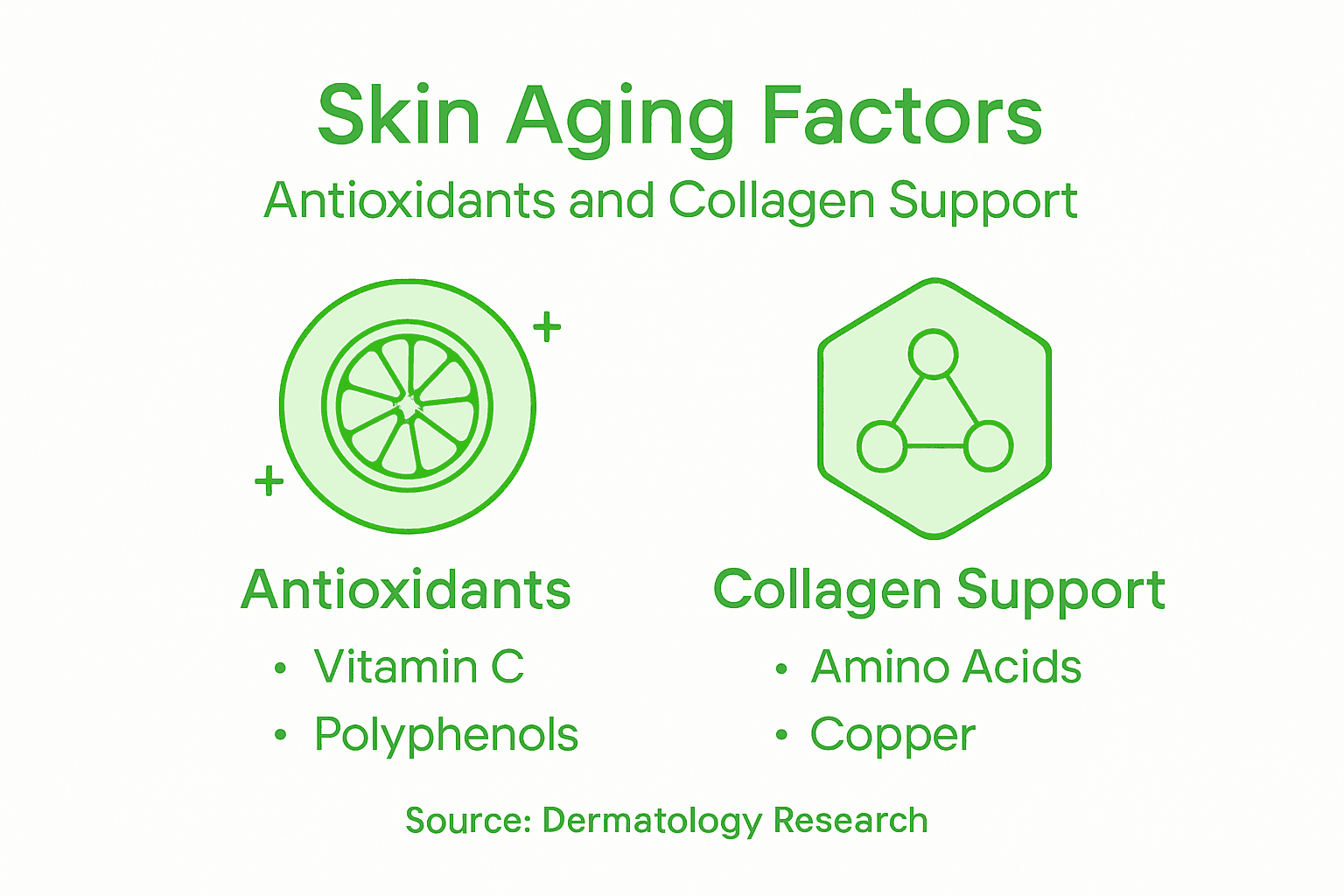
Antioxidants work by neutralising free radicals before they damage your skin cells. Think of them as bodyguards protecting your collagen from attack. Vitamin C boosts collagen synthesis whilst brightening tone. Vitamin E defends cell membranes against oxidative damage. Polyphenols from green tea and berries possess remarkable anti-inflammatory properties. Beta carotene from orange and red vegetables converts to vitamin A, which accelerates cell renewal. But here’s the crucial part: consuming these antioxidants through food is far more effective than topical application alone, because antioxidant strategies combined with collagen-promoting agents rejuvenate aged skin by working from within your body’s cellular systems. When you eat antioxidant-rich foods consistently, these compounds circulate through your bloodstream and protect your skin at the cellular level where damage actually occurs. Topical antioxidant serums offer supplementary benefits, but they cannot replace the systemic protection of internal consumption.
Collagen production requires specific building blocks. Your body synthesises collagen from amino acids found in protein, particularly proline, glycine, and lysine. It also requires vitamin C as a crucial cofactor—without it, your body literally cannot construct collagen molecules. Iron and copper facilitate collagen cross-linking, which determines how strong your collagen structure becomes. Bone broth contains bioavailable collagen peptides that your digestive system breaks down into amino acids your body can utilise. Fatty fish provides both omega-3s for inflammation control and amino acids for collagen synthesis. Consider superfoods for longevity that support collagen production, which concentrate multiple collagen-supporting nutrients in single servings. The reality is that no single food fixes ageing, but a consistent pattern of antioxidant-rich vegetables, protein sources containing collagen-building amino acids, and vitamin C sources creates the ideal internal environment for your skin to maintain youthfulness. Visible results appear gradually—usually within twelve weeks of consistent nutrition—because your body needs time to synthesise new collagen and allow damaged cells to renew.
Pro tip: Combine a vitamin C-rich food (orange, kiwi, capsicum) with a protein source (fish, eggs, legumes) and a copper source (dark leafy greens, nuts) in the same meal to provide all elements your body requires to synthesise and strengthen new collagen simultaneously.
Common Misconceptions and Pitfalls to Avoid
The skincare industry thrives on a fundamental misconception: that expensive creams and serums can reverse ageing regardless of what happens inside your body. You see advertisements featuring celebrities with perfect skin, each promoting a different £5,000 moisturiser, and the implication is clear—apply this product and your skin will transform. The reality is far different. Overreliance on topical treatments without addressing diet and lifestyle neglects the intrinsic factors that actually determine skin health. Your skin reflects your internal environment. No serum can compensate for poor nutrition, chronic sleep deprivation, or constant stress. Many anti-ageing products marketed aggressively lack convincing scientific evidence and may even carry safety risks through synthetic ingredients or unstable formulations. This creates a vicious cycle: people invest heavily in skincare products, see minimal results, and then invest even more, believing they haven’t found the right product yet. The truth is they’ve been addressing the wrong problem entirely.
Another dangerous pitfall involves expecting rapid results from any single intervention. Your skin cells renew approximately every twenty-eight to forty days. Collagen synthesis takes weeks to accelerate noticeably. Barrier repair requires consistent hydration over time. Yet people apply a new serum and expect visible transformation within days. When results don’t materialise, they abandon the approach entirely. Pitfalls in skin management often involve neglecting lifestyle factors such as sleep, diet, and physical activity, creating unrealistic expectations where cosmetic interventions alone promise quick fixes rather than acknowledging that sustained behavioural changes provide genuine long-term benefits. Someone might purchase a collagen supplement and expect their fine lines to disappear within a week. When they don’t, the supplement gets relegated to the bathroom cabinet, labelled as ineffective. But that same supplement, combined with adequate vitamin C consumption, consistent hydration, and seven hours of sleep nightly, would demonstrate measurable results within twelve weeks. Patience isn’t just virtuous—it’s scientifically necessary for skin transformation.
A third misconception specifically affects people in urban environments like Delhi NCR: the belief that SPF is optional on cloudy days or that sunscreen is only necessary during summer. UV radiation penetrates clouds and exists year-round at high altitudes. Pollution particles actually amplify UV damage by creating a reactive environment on your skin’s surface. Skipping photoprotection on a single cloudy winter day seems insignificant. But those accumulated exposures compound into visible pigmentation, texture damage, and accelerated collagen breakdown. Similarly, many people avoid whole food nutrition because they perceive it as time-consuming or expensive, yet they spend considerable money on skincare supplements and treatments. Organic vegetables and quality proteins cost substantially less than premium serums when calculated per application. The investment prioritisation is backwards.
Many also underestimate how profoundly sleep and stress impact skin ageing. During sleep, your body increases blood flow to skin and rebuilds collagen. Chronic sleep deprivation measurably increases cortisol, which triggers inflammation and impairs barrier function. Yet someone might optimise their diet perfectly whilst sleeping five hours nightly and wondering why their skin still shows tired, congested patterns. Stress accelerates ageing through inflammatory pathways that no topical product can address.
Pro tip: Before purchasing any new skincare product, commit to three consistent lifestyle changes (eight hours sleep, two litres of water daily, and one antioxidant-rich meal daily) for four weeks to establish a baseline of what your skin actually needs rather than what marketing suggests.
Unlock Radiant Skin by Nourishing From Within
The challenge of achieving truly healthy skin starts inside your body where nutrition, hydration, and antioxidant support unite to strengthen your skin’s natural functions. If you are living in urban environments like Delhi NCR and struggling with combination skin exposed to pollution and premature ageing, addressing these internal factors is vital. Your goal is to restore hydration, boost collagen production, and protect your skin against oxidative damage using consistent lifestyle habits combined with clean, nutrient-rich foods and natural products with no harmful chemicals.

Experience the transformative power of a holistic approach at Nature’s Soul Shop. Our extensive range of organic and natural wellness products including fresh fruits and vegetables, nutrient-dense superfoods, and gentle skin care essentials is specifically designed to support your skin’s cellular repair and resilience. Why wait to see visible improvements in hydration, firmness, and glow when you can start cultivating genuine skin vitality today? Explore our offerings now and build a personalised routine informed by science to nourish healthy skin from deep within.
Frequently Asked Questions
What are the key nutrients needed for healthy skin?
A balanced diet for healthy skin should include antioxidants like vitamins C and E, polyphenols from fruits and vegetables, B vitamins for cell turnover, zinc for inflammation control, selenium for antioxidant action, and omega-3 fatty acids for hydration.
How does hydration affect skin health?
Hydration is crucial for skin elasticity and appearance. Dehydrated skin can appear tired, show fine lines, and lose its natural glow. Consistent hydration, both from water intake and hydrating foods, helps maintain skin’s structural integrity and prevents visible signs of ageing.
What role do antioxidants play in skin ageing?
Antioxidants help neutralise free radicals that cause oxidative stress, which can degrade collagen and elastin in the skin. They work to protect and repair skin cells, ultimately promoting a more youthful appearance and reducing signs of ageing when consumed consistently through diet.
How long does it take to see visible improvements in skin health from dietary changes?
Visible improvements in skin health can typically be seen within twelve weeks of adopting a nutrient-rich diet, as it takes time for the body to synthesise new collagen and rejuvenate skin cells.
Recommended
- Superfoods for Longevity: Complete Essential Guide – naturessoulshop
- Natural Skin Care Benefits: Wellness for Sensitive Skin – naturessoulshop
- Organic Skincare Benefits: Cleaner Living, Healthier Skin – naturessoulshop
- Improving Gut Health Naturally: Lasting Benefits for Families – naturessoulshop
- Nährstoffe für die Haut: Tipps für Sportler und sensible Haut – Kühlkern UG (Haftungsbeschränkt)
- Hair and Skin Care: Expert Tips for Stronger Growth 2025 | MyHair
- Menopause Skin Care in 2026: The Complete UK Guide to Radiant Skin After 45 – Azio Beauty


