


More than 60 percent of British adults now recognise that not all calories are created equal. Choosing nutrient-dense foods makes a real difference, yet the true meaning of nutrient density often gets lost in everyday meal planning. Understanding which foods pack the biggest nutritional punch can transform your grocery list and your health. This guide will demystify nutrient density and show how British diets can benefit from smarter, more informed food choices.
Table of Contents
- Defining Nutrient Density In Everyday Foods
- Major Categories Of Nutrient Dense Choices
- Selecting Nutrient Rich Foods For Every Diet
- Comparing Nutrient Density To Popular Alternatives
- Risks Of Nutrient Poor Diets And Common Traps
Key Takeaways
| Point | Details |
|---|---|
| Understanding Nutrient Density | Nutrient density characterises foods that provide high nutritional value relative to their caloric content, emphasising the importance of choosing nutrient-dense over calorie-dense foods. |
| Emphasis on Whole Foods | Prioritising whole, minimally processed foods like vegetables, fruits, and lean proteins supports optimal nutritional intake and overall health. |
| Avoiding Nutritional Traps | Being aware of common dietary traps, such as reliance on processed foods and calorie counting without considering quality, is crucial for maintaining a nutrient-rich diet. |
| Personalised Nutritional Strategies | Developing an informed dietary strategy that focuses on nutrient density can enhance individual health outcomes and support long-term wellness. |
Defining Nutrient Density In Everyday Foods
Nutrient density represents a sophisticated yet straightforward approach to understanding food quality beyond basic caloric measurements. Fundamentally, it describes foods that provide substantial nutritional value relative to their total caloric content. Nutrient composition analysis reveals that certain foods deliver remarkable concentrations of essential vitamins, minerals, and bioactive compounds while maintaining low caloric profiles.
The Nutrient Rich Foods (NRF) index provides a scientific framework for evaluating nutritional quality, ranking foods based on their comprehensive nutritional profile. This methodology considers both nutrients to encourage (like vitamins, minerals, protein) and nutrients to limit (such as saturated fats and added sugars). Nutrient density fundamentally emphasises consuming foods abundant in health-promoting components without excessive caloric intake.
Key characteristics of nutrient-dense foods include:
- High vitamin and mineral content
- Significant protein or beneficial macronutrient profile
- Minimal processing
- Low added sugar and saturated fat levels
- Presence of essential micronutrients
Understanding nutrient density empowers individuals to make strategic dietary choices, prioritising foods that offer maximum nutritional benefit. By selecting plant-based staple foods and whole food options, people can optimise their nutritional intake while maintaining balanced energy consumption.
Major Categories Of Nutrient Dense Choices
Dietary guidelines consistently highlight several fundamental categories of nutrient-dense foods that provide exceptional nutritional value. These categories encompass a diverse range of whole food groups, each offering unique health benefits and essential micronutrients. Understanding these categories enables individuals to make strategic nutritional choices that support overall wellness and metabolic function.
The primary nutrient-dense food categories include:
- Vegetables: Dark leafy greens, cruciferous vegetables, and colourful produce
- Fruits: Berries, citrus fruits, and antioxidant-rich options
- Whole Grains: Quinoa, brown rice, oats, and ancient grains
- Lean Proteins: Fish, legumes, poultry, and plant-based protein sources
- Low-Fat Dairy Alternatives: Yoghurt, kefir, and fortified plant-based milks
Nutritional profiling research from dietary guidelines emphasises the importance of selecting whole, minimally processed foods within these categories. By incorporating plant-based protein sources and diverse nutrient-rich foods, individuals can optimise their nutritional intake and support long-term health objectives.

Each food category offers specific nutritional advantages. Vegetables provide essential vitamins and minerals, fruits deliver powerful antioxidants, whole grains offer complex carbohydrates and fibre, lean proteins support muscle maintenance, and dairy alternatives contribute calcium and probiotics. Strategically combining these food groups creates a comprehensive nutritional approach that addresses diverse physiological needs.
Selecting Nutrient Rich Foods For Every Diet
The Naturally Nutrient Rich (NNR) scoring system offers a sophisticated approach to identifying nutrient-dense foods across diverse dietary patterns. This scientific methodology enables individuals to make informed nutritional choices regardless of their specific dietary preferences, whether they follow vegetarian, vegan, omnivorous, or specialised eating plans. Nutritional selection becomes a strategic process of understanding food quality beyond mere caloric content.
Key strategies for selecting nutrient-rich foods include:
- Prioritise whole, minimally processed ingredients
- Diversify food sources within each nutritional category
- Consider nutrient bioavailability
- Balance macronutrient and micronutrient intake
- Select foods with high nutritional complexity
Nutrient profiling research demonstrates that different dietary approaches can achieve optimal nutrition through thoughtful food selection. Natural protein sources play a crucial role in this selection process, providing essential amino acids and supporting metabolic functions across various dietary frameworks.
Individuals can enhance their nutritional intake by understanding nutrient density principles. This involves examining foods not just for their macronutrient content, but for their comprehensive micronutrient profile. The goal is creating a personalised eating strategy that delivers maximum nutritional value, supporting overall health and wellness through intelligent dietary choices.
Comparing Nutrient Density To Popular Alternatives
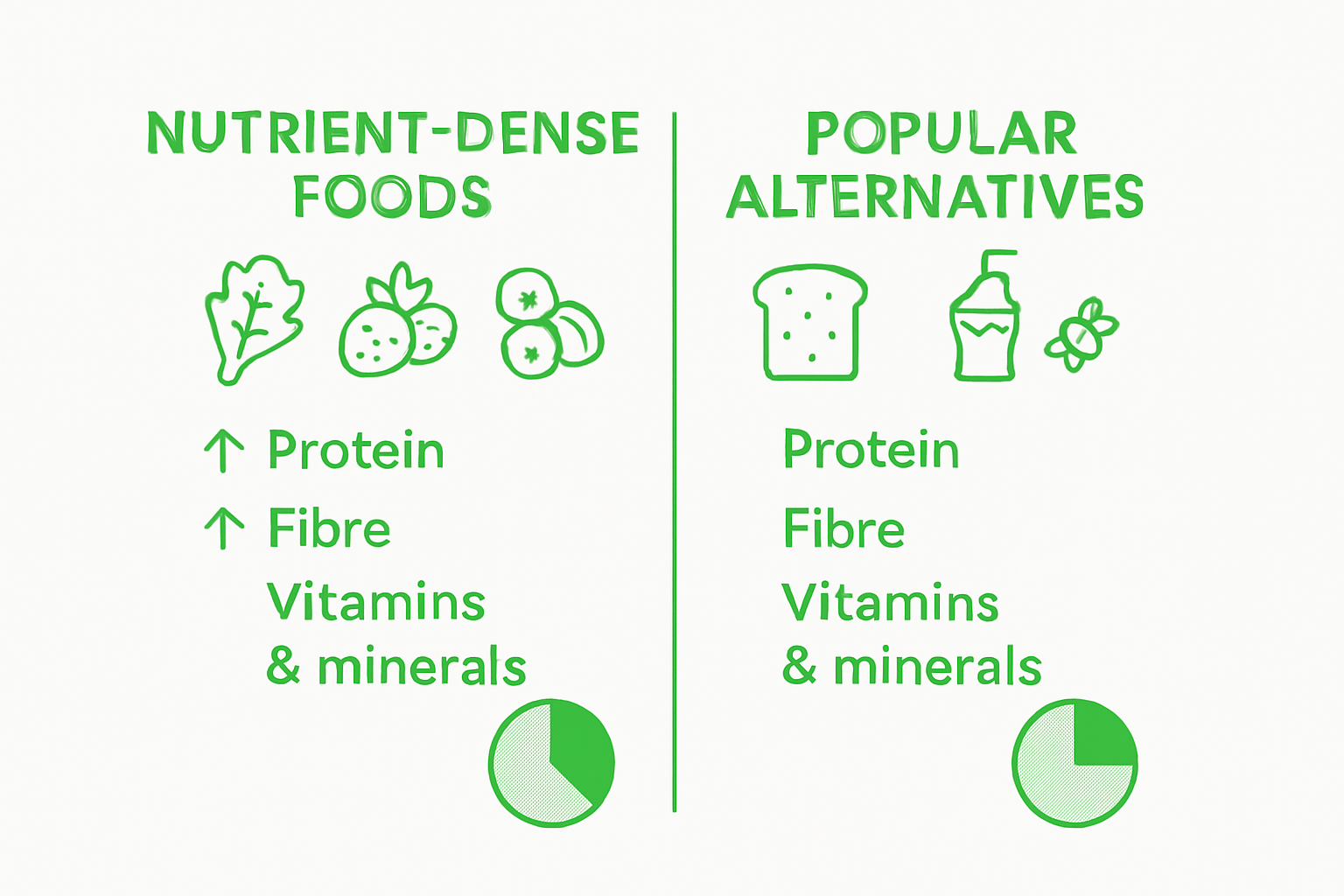
Nutrient profiling models offer comprehensive strategies for evaluating food quality beyond traditional caloric measurements. Unlike conventional dietary approaches that focus solely on macronutrient content, nutrient density provides a more nuanced understanding of nutritional value. This method assesses foods based on their comprehensive micronutrient profile, vitamin concentration, and overall health-promoting potential.
Key comparative metrics between nutrient-dense foods and popular alternatives include:
- Micronutrient concentration: Whole foods vs processed alternatives
- Nutritional bioavailability: Natural sources vs synthetic supplements
- Mineral and vitamin density: Unrefined ingredients vs refined products
- Energy-to-nutrient ratio: Nutrient-rich choices vs calorie-dense options
- Metabolic impact: Whole food nutrients vs isolated nutritional components
Nutrient profiling research demonstrates significant variations in nutritional quality across different food categories. Plant-based diet approaches often provide superior nutrient density compared to traditional dietary models, emphasising whole food ingredients and minimally processed selections.
Ultimately, understanding nutrient density requires a holistic perspective. Consumers must look beyond surface-level nutritional claims, examining food sources critically and prioritising ingredients that deliver comprehensive health benefits. This approach transforms dietary choices from simple consumption to strategic nutritional investment, supporting long-term wellness through intelligent food selection.
Risks Of Nutrient Poor Diets And Common Traps
Nutrient density research consistently highlights the profound health risks associated with chronically inadequate nutritional intake. Nutrient-poor diets can lead to systemic metabolic dysfunction, compromising immune response, cellular regeneration, and long-term physiological resilience. Modern dietary patterns often prioritise convenience and caloric density over genuine nutritional value, creating significant health vulnerabilities.
Common nutritional traps that compromise dietary quality include:
- Processed food dependency: Relying on convenience meals
- Calorie counting without nutrient assessment: Focusing on quantity over quality
- Restrictive diet misconceptions: Eliminating entire food groups
- Overconsumption of empty calories: Selecting foods with minimal nutritional value
- Micronutrient deficiency ignorance: Failing to understand comprehensive nutritional needs
Nutrient profiling methodologies expose the intricate challenges in accurately describing nutritional quality. Understanding potential vegan diet deficiencies becomes crucial in navigating dietary complexity, helping individuals make informed nutritional choices that support holistic health.
Recognising nutritional risks requires a proactive approach. Individuals must develop nutritional literacy, learning to evaluate foods beyond surface-level marketing claims. Strategic dietary planning involves understanding individual metabolic needs, selecting whole food sources, and maintaining a diverse, nutrient-rich nutritional framework that supports comprehensive physiological functioning.
Elevate Your Wellbeing with Truly Nutrient-Dense Foods
Many people struggle with choosing foods that offer genuine nutritional value without excess calories or hidden additives. This article highlights the challenge of identifying foods rich in essential vitamins, minerals and bioactive compounds while avoiding common pitfalls like processed food dependency and micronutrient deficiencies. If your goal is to prioritise whole, minimally processed ingredients that support long-term health and metabolic function then you deserve a trusted source for clean and natural products.
Discover a wide selection of organic and natural foods that align perfectly with nutrient density principles at Nature’s Soul Shop. From fresh fruits and vegetables to vegan and gluten free options, each item is carefully curated to keep your diet rich in beneficial macronutrients and micronutrients.

Take control of your nutrition today by choosing quality ingredients that nourish your body at every meal. Visit https://naturessoulshop.com to explore our offerings and learn how our clean ingredient philosophy can help you avoid common nutritional traps described in the article. Start building a personalised eating strategy based on nutrient density and make every bite a step towards improved wellbeing.
Frequently Asked Questions
What is nutrient density in foods?
Nutrient density refers to the amount of essential nutrients a food provides relative to its total caloric content. Foods that are high in nutrient density offer significant vitamins, minerals, and beneficial compounds while maintaining low calories.
How can I identify nutrient-dense foods?
You can identify nutrient-dense foods by looking for high levels of vitamins and minerals, high protein content, and minimal processing. Additionally, foods should have low levels of added sugars and saturated fats to qualify as nutrient dense.
What are some examples of nutrient-dense food categories?
Some key categories of nutrient-dense foods include vegetables (especially dark leafy greens and colourful produce), fruits (like berries and citrus), whole grains (such as quinoa and oats), lean proteins (including fish and legumes), and low-fat dairy alternatives (like yoghurt and fortified plant-based milks).
Why is it important to avoid nutrient-poor diets?
Avoiding nutrient-poor diets is crucial because they can lead to metabolic dysfunction, deficiencies in essential nutrients, and overall health vulnerabilities. Focusing on nutrient-dense foods helps optimise your nutritional intake and supports long-term wellbeing.
Recommended
- Superfoods for Longevity: Complete Essential Guide – naturessoulshop
- Understanding Digestive Health Foods for Optimal Wellbeing – naturessoulshop
- 7 Fiber Rich Vegan Foods You Need to Try Today – naturessoulshop
- 7 Easy Vegan Dinner Recipes for Healthy Living – naturessoulshop
- Hair Loss Diet: Foods and Tips for Stronger Hair in 2025 | MyHair


