


You spot a package marked organic at the grocery store and assume it’s healthier. Yet that organic biscuit may have just as much sugar and saturated fat as the conventional version. Many parents believe organic always means superior nutrition, but that’s misleading. Understanding Indian food labelling empowers you to make genuinely better health choices for your family. This guide clarifies Indian food labelling laws, organic certification, and practical label reading tips to help you navigate the wellness marketplace confidently in 2026.
Table of Contents
- Indian Food Labelling Regulations Overview
- New Food Labelling Requirements And Their Impact On Consumers
- Organic Food Labelling Explained
- Common Misconceptions About Food Labelling And Organic Claims
- Latest Regulatory Developments And Emerging Trends In India
- Practical Tips For Parents To Navigate Food Labelling Confidently
- Summary And Next Steps For Health-Conscious Families
- Explore Genuine Organic Foods At Nature’s Soul Shop
- Frequently Asked Questions About Food Labelling In India
Key Takeaways
| Point | Details |
|---|---|
| Indian food labelling laws mandate clear nutrition and allergen information since 2022 | FSSAI regulations require all packaged foods to display nutritional facts, allergens, and manufacturing data. |
| Front-of-pack labels highlight key nutrients for quick decisions since 2025 | Calories, sugar, fat, fiber, and protein appear prominently on the front, enabling rapid comparisons. |
| Jaivik Bharat is the official organic certification logo | This mark verifies products meet pesticide-free, synthetic fertilizer-free, and GMO-free standards. |
| Not all organic products are nutritionally superior | Organic doesn’t guarantee lower calories or better nutrient density; verify nutrition labels carefully. |
| Practical tips enable authentic organic food identification | Check certification numbers, read ingredient lists thoroughly, and use trusted resources to avoid misleading claims. |
Indian Food Labelling Regulations Overview
The Food Safety and Standards Authority of India (FSSAI) sets the rules that protect your family from confusing or incomplete food information. FSSAI’s 2020 regulations mandate nutrition, allergen, and manufacturing data on food labels effective July 2022. Every packaged food sold in India must now display specific details to help you make informed decisions.
Key labelling elements include nutritional facts panels showing calories, macronutrients, and micronutrients per serving. Allergen warnings highlight ingredients like nuts, soy, gluten, or dairy that could trigger reactions. Manufacturing details include the producer’s name, address, and FSSAI licence number, giving you traceability. Understanding Indian food safety regulations empowers you to decode labels confidently and protect your family’s health.
Compliance timelines matter because products manufactured before July 2022 might lack complete information. By 2026, nearly all products on shelves should meet the full requirements. When shopping, check that the label includes the FSSAI licence number and a complete nutrition panel. These elements signal the manufacturer follows current FSSAI labelling regulations and values transparency.
Pro Tip: Save a photo of a compliant label on your phone as a reference. Compare it against new products to spot missing information quickly.
New Food Labelling Requirements and Their Impact on Consumers
Since January 2025, FSSAI mandates prominent front-of-pack labelling highlighting calories, sugar, fat, fiber, and protein. This reform transforms how busy parents shop by placing the most critical nutrition data where you see it first. Instead of flipping packages and squinting at tiny back-panel text, you get instant visibility into what matters most.
Front-of-pack (FOP) labels typically appear as colored boxes or tables on the package front. They display per-serving amounts of total calories, total sugars, saturated fat, dietary fiber, and protein. Some manufacturers use traffic light color coding: green for healthier levels, amber for moderate, and red for high amounts of sugar or fat. This visual system helps you compare products at a glance, even with a toddler tugging your sleeve.
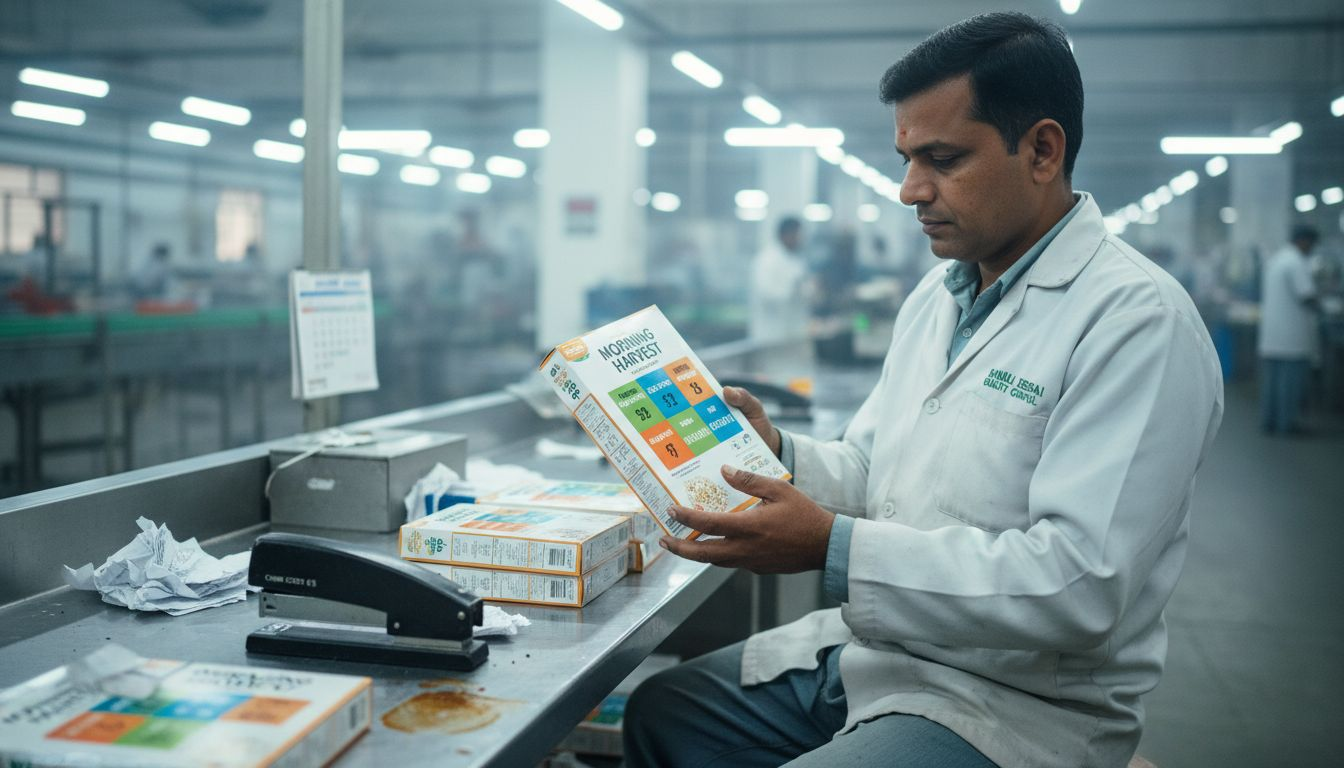
The impact on health-conscious parents has been significant. Front-of-pack updates improved parents’ quick identification of key nutrients for healthier family food choices. You can now reject a cereal with 15 grams of sugar per serving in seconds, without reading ingredient lists. For busy families, this speeds up shopping and reduces decision fatigue.
Common pitfalls still exist. Some consumers ignore the “per serving” detail and assume the numbers represent the entire package. A bag of chips might show 150 calories on the front, but contain three servings, totaling 450 calories. Always check serving size and calculate totals if you plan to consume more than one serving. Learning interpreting front-of-pack nutrition labels ensures you use these tools effectively.
Key FOP elements to prioritize:
- Total calories per serving to manage energy intake
- Total sugars to limit hidden sweeteners affecting children’s health
- Saturated fat to support heart health
- Dietary fiber to promote digestion and satiety
- Protein to ensure adequate nutrition for growing kids
Familiarize yourself with FSSAI front-of-pack nutrition reforms to stay updated on format changes and new requirements.
Organic Food Labelling Explained
Organic labelling in India follows strict standards designed to assure you that products meet specific farming and processing criteria. Jaivik Bharat logo certifies products meet pesticide-free, synthetic fertilizer-free, and GMO-free organic standards under 2017 regulations. This green and white logo is your most reliable marker of authentic organic status when shopping.
Organic standards prohibit synthetic pesticides, chemical fertilizers, genetically modified organisms, and growth hormones in production. Organic labelling standards include traceability to ensure authenticity from farm to fork. Certified organic producers maintain records documenting every step, so authorities can verify claims. This traceability protects you from fraudulent labelling and ensures the organic premium you pay reflects genuine practices.
Beyond Jaivik Bharat, you might encounter other certification marks on organic products. These include India Organic, issued by APEDA for export-grade products, and international logos like USDA Organic or EU Organic on imported goods. Each has slightly different standards, but all require third-party verification and regular audits. Understanding organic certification in India helps you recognize legitimate marks and avoid imposters.
| Certification Logo | Issuing Authority | Key Features |
|---|---|---|
| Jaivik Bharat | FSSAI (India) | National organic mark; no synthetic pesticides, fertilizers, or GMOs; traceability required |
| India Organic | APEDA (India) | Export-focused; meets National Programme for Organic Production standards; international equivalence |
| USDA Organic | USDA (USA) | Imported products; 95%+ organic ingredients; no GMOs or synthetic additives |
| EU Organic | European Union | Imported products; strict pesticide limits; animal welfare standards |
When evaluating organic claims, look for the certification number printed near the logo. This alphanumeric code links the product to a certified farm or processor. You can verify it through the certification body’s website or FSSAI’s online portal. Checking organic food labelling meaning clarifies what each term and logo signifies in the Indian context.
Pro Tip: Screenshot the Jaivik Bharat organic logo from the FSSAI website and compare it to product packaging. Counterfeit logos often have subtle color or font differences.
Critical organic labelling elements:
- Certification logo (Jaivik Bharat or equivalent)
- Certification number for verification
- Certifying agency name
- Organic ingredient percentage if product is not 100% organic
- Country of origin for imported organic goods
Common Misconceptions About Food Labelling and Organic Claims
Many parents assume organic automatically means healthier, but that’s not always true. Organic cookies still contain sugar and calories. An organic soft drink has the same health impact as a conventional one. The organic label certifies farming practices, not nutritional superiority. Always read the nutrition panel and ingredient list, even on organic products, to assess true health value.
Another misconception involves certification logo rigor. Not all organic marks have equal standards. Some private certifications lack government oversight or third-party audits. Stick to recognized marks like Jaivik Bharat or India Organic to ensure credibility. Understanding organic standards misconceptions helps you avoid paying a premium for questionable claims.
Parents often overlook ingredient lists in favor of front-panel marketing. A product might shout “organic” in large letters but bury concerning additives in the fine print. Organic cane sugar is still sugar. Organic palm oil still raises environmental concerns. Read every ingredient, especially those you don’t recognize, and research anything questionable.
Common mistakes to avoid:
- Assuming organic guarantees better nutrition without checking the nutrition panel
- Trusting vague terms like “natural” or “pure” without certification logos
- Ignoring serving sizes when comparing organic and conventional products
- Paying extra for organic versions of highly processed foods that offer minimal health benefits
- Overlooking the ingredient list and focusing only on the organic claim
- Believing all certification logos are equally rigorous without verifying the issuing authority
Practical checks for confident shopping:
- Confirm the presence of Jaivik Bharat or another recognized organic logo
- Verify the certification number on the issuing body’s website
- Compare nutrition panels of organic and conventional versions side by side
- Read ingredient lists completely, prioritizing whole food ingredients
- Question products with lengthy ingredient lists or unrecognizable chemical names
- Research unfamiliar certification marks before trusting them
Latest Regulatory Developments and Emerging Trends in India
FSSAI formed a panel in 2025 to revamp organic food certification and enhance traceability for authenticity. This initiative aims to close enforcement gaps and reduce mislabelling in the organic market. The panel is reviewing certification processes, auditing standards, and penalty structures to ensure only genuine organic products carry certification marks.
Traceability systems from farm to fork are emerging as a regulatory expectation in India to reduce mislabelling and promote transparency. Blockchain-based tracking and QR code systems are being tested to give you direct access to a product’s origin and certification history. Scanning a code with your smartphone could soon reveal the farm name, harvest date, and organic audit results. This transparency builds trust and makes fraud harder to execute.
These developments benefit you by increasing confidence in organic purchases. As enforcement tightens, counterfeit organic labels will decline, ensuring your money supports genuine sustainable farming. Enhanced traceability also allows you to support specific farms or regions aligned with your values. Learning about traceability features in organic labelling prepares you to leverage these tools as they roll out.
Emerging trends to watch:
- Blockchain and QR code traceability systems for instant verification
- Stricter penalties for fraudulent organic labelling and mislabelling
- Expanded organic certification to cover more product categories, including processed foods
- Integration of organic labelling standards with international equivalents for easier imports
- Consumer education campaigns by FSSAI to improve label literacy nationwide
Stay informed by checking the FSSAI organic regulation panel 2025 updates regularly. Subscribe to FSSAI newsletters or follow their social media channels for announcements.
Pro Tip: Bookmark the FSSAI website on your phone and check for regulatory updates quarterly. New rules often phase in gradually, giving you time to adjust your shopping habits.
Practical Tips for Parents to Navigate Food Labelling Confidently
Start by prioritizing the Jaivik Bharat logo and FSSAI licence number on every product. These two elements confirm the product meets baseline safety and organic standards. No logo or licence number signals potential issues. Make it a habit to scan for these markers before reading anything else.
Use front-of-pack nutrition highlights to filter out unhealthy options quickly. Set mental thresholds for your family: perhaps no more than 10 grams of sugar per serving in cereals, or a minimum of 3 grams of fiber. Apply these rules consistently to streamline decisions and avoid impulse buys driven by attractive packaging.
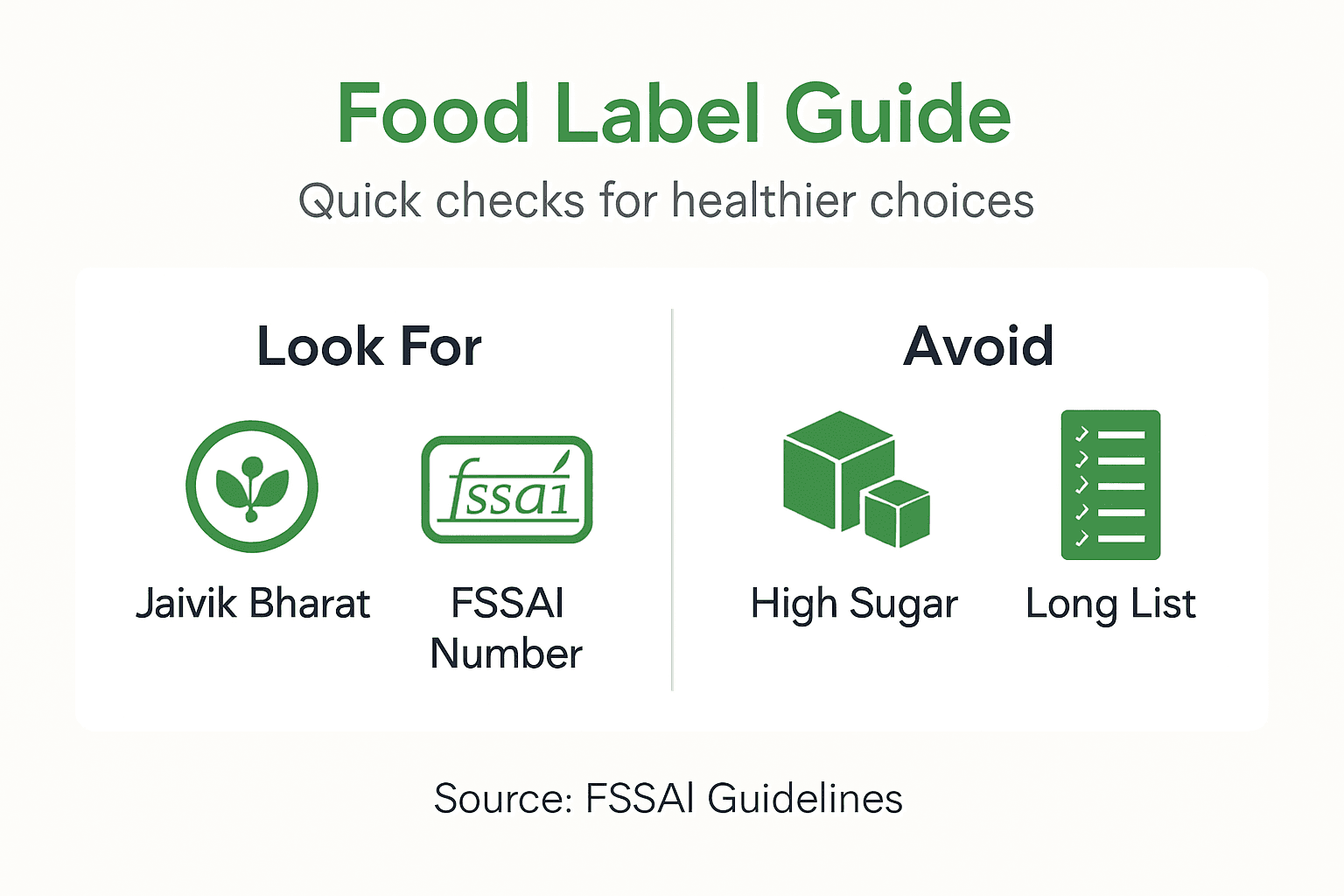
Always verify ingredient lists, even on products that pass the FOP nutrition test. Ingredients appear in descending order by weight, so the first three to five items dominate the product. If sugar appears in the top three, or if you see multiple types of sugar (cane sugar, corn syrup, dextrose), reconsider the purchase. Prioritize products with short ingredient lists full of recognizable whole foods.
Trusted resources and apps can support your label reading. FSSAI’s Food Safety Connect app lets you verify licence numbers and file complaints. Apps like HealthifyMe or MyFitnessPal help you track nutrition data and compare products. Leverage these tools to make decisions faster and more accurately. For deeper guidance, explore practical label reading tips and steps for trusting organic labels.
Actionable shopping strategies:
- Scan for Jaivik Bharat or equivalent organic logo first
- Check FSSAI licence number and verify online if uncertain
- Use front-of-pack data to eliminate high sugar or low fiber products immediately
- Read the full ingredient list, focusing on the first five items
- Avoid products with vague terms like “natural flavors” without further detail
- Compare organic and conventional versions of the same product to assess value
- Use mobile apps to verify claims and track nutritional goals
Pro Tip: Create a personal database of trusted brands and products in a note-taking app. After verifying a product once, you can repurchase confidently without re-checking every time, saving you effort on repeat shopping trips.
Summary and Next Steps for Health-Conscious Families
Understanding Indian labelling regulations provides a solid foundation for informed, health-focused shopping. You now know how to decode mandatory nutrition panels, interpret front-of-pack highlights, and recognize authentic organic certifications like Jaivik Bharat. These skills protect your family from misleading marketing and empower you to choose foods that genuinely support wellness.
Recognizing authentic organic certifications and verifying them through certification numbers and trusted logos builds confidence. You can invest in organic products knowing they meet rigorous standards. Applying the practical tips shared here, from setting nutrition thresholds to using verification apps, transforms label reading from a chore into a quick, routine habit.
Key actions to implement immediately:
- Photograph a compliant FSSAI label and a genuine Jaivik Bharat logo for reference
- Download the FSSAI Food Safety Connect app to verify licence numbers on the go
- Set personal nutrition rules (sugar limits, fiber minimums) aligned with your family’s health goals
- Audit your pantry and replace products that fail your new standards
Stay updated on evolving regulations by subscribing to FSSAI updates and following wellness-focused news sources. The regulatory landscape will continue improving, offering you even better tools for making safe, healthy food choices. Your commitment to label literacy today sets your family up for a lifetime of better nutrition and wellness.
Explore Genuine Organic Foods at Nature’s Soul Shop
Applying your new label-reading skills is easier when you shop at a trusted source committed to transparency and quality. Nature’s Soul Shop offers a curated selection of verified organic products across fruits, vegetables, meats, dairy, dry grocery, vegan and gluten-free options, home care, and skin care. Every product features clear certification marks and complete labelling, so you can shop with confidence.
Explore expert articles like the guide to identifying organic products and the switching to organic guide to deepen your knowledge. Nature’s Soul Shop combines convenience with credibility, supporting your family’s wellness journey with clean ingredients and reliable information. Visit today and discover how easy it is to make healthier choices without compromising on quality or taste.
Frequently Asked Questions About Food Labelling in India
What does the Jaivik Bharat logo guarantee?
The Jaivik Bharat logo certifies that a product meets Indian organic standards: no synthetic pesticides, chemical fertilizers, or GMOs. It confirms third-party verification and traceability from farm to shelf. This logo is your most reliable marker of authentic organic status in India.
How do front-of-pack nutrition labels help busy parents?
Front-of-pack labels display calories, sugar, fat, fiber, and protein prominently, enabling rapid comparisons without flipping packages. You can reject unhealthy options in seconds, reducing decision fatigue during busy shopping trips. This visual system supports healthier choices even with distractions.
Are organic foods always more nutritious than conventional ones?
No, organic certification focuses on farming practices, not nutritional content. An organic biscuit can have just as much sugar and fat as a conventional one. Always check the nutrition panel and ingredient list to assess true health value, regardless of organic status.
How can I verify if an organic label is authentic?
Check for a recognized certification logo like Jaivik Bharat and a certification number. Verify the number on the certifying body’s website or FSSAI’s online portal. Compare the logo to official images from FSSAI to spot counterfeits, which often have subtle color or font differences.
What changes in food labelling regulations can consumers expect soon?
FSSAI’s 2025 panel is revamping organic certification to enhance traceability and reduce mislabelling. Expect blockchain-based tracking systems, QR codes for instant verification, and stricter penalties for fraudulent claims. These changes will increase transparency and build consumer trust in organic products over the next few years.
Recommended
- Organic Certification in India: Your Guide to Healthy Choices – naturessoulshop
- Natural Food Preservatives: Healthier Choices for 2025 – naturessoulshop
- Sustainable Food Packaging: Ensuring Healthier Choices – naturessoulshop
- Preservatives in Packaged Food: What Delhi NCR Needs to Know in 2025 – naturessoulshop
- /Vegan Bowls - My Framer Site
- Wie wird Kennzeichnung gehandhabt (Advertorial/Partner/PR) und welche inhaltlichen Guidelines gelten (Tonality, Nutzenargumentation, Belege, Bild-/Video-Assets)? - hotelimpulse


