


Every parent faces that moment when they wonder if their child’s food is truly safe and meets the highest standards. With British, American, and Indian regulations influencing products on Delhi NCR shelves, clear food safety rules matter more than ever. Over 60 percent of families now seek certified organic or gluten-free options, yet many labels remain confusing. Discover what you need to know about regulations that help keep your family’s meals safe, healthy, and trustworthy.
Table of Contents
- Defining Health Regulations For Food Products
- Types Of Organic And Gluten-Free Food Standards
- Global Legal Framework Governing Food Safety
- Labelling, Certification And Allergy Disclosure Laws
- Obligations, Compliance Costs And Common Pitfalls
Key Takeaways
| Point | Details |
|---|---|
| Importance of Food Regulations | Food regulations play a vital role in protecting consumer health and ensuring safe food production throughout the supply chain. |
| Stakeholder Collaboration | Effective food safety involves multiple stakeholders, including government agencies, food producers, and scientific experts working together for compliance and safety. |
| Adaptation to Emerging Risks | Continuous adaptation of food regulations is essential to address new challenges from technological advancements and evolving consumer needs. |
| Compliance Costs and Challenges | Food businesses face significant compliance costs and must navigate complex regulatory landscapes to ensure consumer safety and avoid potential risks. |
Defining Health Regulations for Food Products
Food regulations represent a critical framework for protecting consumer health and ensuring safe food production across all stages of the supply chain. These comprehensive legal structures establish precise standards governing how food products are manufactured, processed, packaged, and distributed. Food safety legal frameworks play a fundamental role in safeguarding public wellness by establishing clear guidelines that manufacturers must follow.
At their core, health regulations for food products aim to mitigate potential risks associated with food production and consumption. These regulations cover multiple critical domains including microbiological standards, chemical contamination limits, labelling requirements, and traceability protocols. General Food Law Regulations provide a structured approach to managing food safety, establishing principles that ensure consistent quality and protection across different production environments.
The implementation of food regulations involves multiple stakeholders, including government agencies, food producers, distributors, and scientific experts. These regulations typically mandate rigorous testing protocols, require comprehensive documentation of production processes, and establish clear mechanisms for tracking food products from origin to consumer. Key components often include:
- Detailed hygienic production standards
- Maximum permissible levels of chemical contaminants
- Mandatory nutritional labelling requirements
- Systematic quality control mechanisms
- Transparent reporting protocols for potential safety incidents
Effective food regulations require continuous adaptation to emerging scientific understanding, technological advancements, and changing consumer needs. Regulatory bodies must remain vigilant, updating guidelines to address new challenges such as emerging foodborne pathogens, novel processing techniques, and evolving nutritional research.
Pro Tip: When purchasing food products, always check for clear regulatory compliance labels and understand the quality certifications displayed on packaging to make informed nutritional choices.
Types of Organic and Gluten-Free Food Standards
Organic and gluten-free food standards represent critical regulatory frameworks designed to protect consumer health and ensure product integrity across different markets. Global gluten-free standards demonstrate significant variation in threshold levels, testing methodologies, and enforcement mechanisms across international jurisdictions.
In the realm of organic food standards, governmental agencies establish stringent certification requirements that prohibit the use of synthetic chemicals, genetically modified organisms, and biotechnological interventions. Food labelling regulations mandate precise documentation and verification processes to ensure consumers receive accurate information about product composition and production methods.
Key aspects of organic and gluten-free standards typically include:
- Maximum permissible contaminant levels
- Specific testing protocols
- Detailed documentation requirements
- Transparent certification processes
- Regular compliance audits
- Clear product labelling guidelines
The implementation of these standards involves multiple stakeholders, including regulatory bodies, food producers, independent certification agencies, and scientific experts. Different regions maintain unique approaches to defining and enforcing these standards, with most countries establishing upper limits around 20 parts per million (ppm) for gluten-free product classifications.
Pro Tip: Always carefully examine product labels and certification marks to understand the specific organic or gluten-free standards applied during production.
Global Legal Framework Governing Food Safety
The global legal framework for food safety represents a complex and interconnected system of regulations designed to protect consumers and ensure the integrity of food supply chains worldwide. National legal frameworks play a crucial role in regulating food production, trade, and handling across different international jurisdictions, with each country developing unique approaches to food safety management.

International organisations such as the Food and Agriculture Organisation (FAO) and World Health Organisation (WHO) work collaboratively to establish comprehensive guidelines and standards that support individual national systems. Global food safety strategy emphasises the importance of science-based approaches, addressing emerging challenges such as technological advances, changing food systems, and increasingly complex global trade networks.
Key components of the global legal framework for food safety typically include:
- Comprehensive risk assessment protocols
- Standardised testing and verification procedures
- Transparent traceability requirements
- Coordinated international reporting mechanisms
- Consistent quality control standards
- Robust enforcement and compliance strategies
The implementation of these legal frameworks involves multiple stakeholders, including governmental regulatory bodies, international agencies, food producers, scientific researchers, and independent certification organisations. These collaborative efforts aim to create a unified approach to food safety that can adapt to evolving technological, environmental, and social challenges while maintaining the highest standards of consumer protection.
Here is a comparison of how key global food safety organisations support consumer protection:
| Organisation | Main Role | Impact on Food Safety |
|---|---|---|
| FAO (UN) | Develops international food standards | Promotes safe and fair global trade |
| WHO | Sets health-based food guidelines | Reduces risk of foodborne illness |
| National Regulators | Enforce national safety laws | Ensure compliance within countries |
| Codex Alimentarius | Harmonises global standards | Eases international market access |
Pro Tip: Stay informed about international food safety regulations by regularly consulting authoritative sources and understanding the complex interactions between national and global food safety standards.
Labelling, Certification and Allergy Disclosure Laws
Labelling, certification, and allergy disclosure laws represent critical consumer protection mechanisms designed to safeguard individuals with specific dietary requirements and sensitivities. Food allergen labeling laws vary significantly across different international jurisdictions, with each region developing unique approaches to protecting vulnerable populations from potential health risks.
Comprehensive regulatory frameworks mandate detailed information disclosure, requiring food manufacturers to provide transparent and accessible information about potential allergens and ingredient compositions. EU food labelling regulations establish stringent guidelines for presenting allergen information, including specific requirements for font size, presentation, and information accessibility across both prepackaged and non-prepacked food products.
Key aspects of allergen disclosure and certification laws typically encompass:
- Mandatory declaration of major allergenic ingredients
- Clear font and visibility requirements
- Comprehensive ingredient traceability
- Standardised allergen warning protocols
- Precise cross-contamination risk notifications
- Consistent international reporting mechanisms
The implementation of these regulations involves multiple stakeholders, including governmental regulatory bodies, food producers, scientific researchers, and consumer protection agencies. These collaborative efforts aim to create robust systems that balance consumer safety with practical manufacturing considerations, ensuring individuals can make informed dietary choices while minimising potential health risks.
Pro Tip: Always carefully read product labels, paying special attention to allergen warnings and ingredient lists, even when purchasing familiar products that may have reformulated their recipes.
Obligations, Compliance Costs and Common Pitfalls
Food businesses face increasingly complex regulatory landscapes that demand meticulous attention to detail and substantial investment in compliance mechanisms. Food business allergen obligations encompass a wide range of responsibilities, including comprehensive allergen declaration, staff training, and maintaining rigorous documentation systems to protect consumer safety.
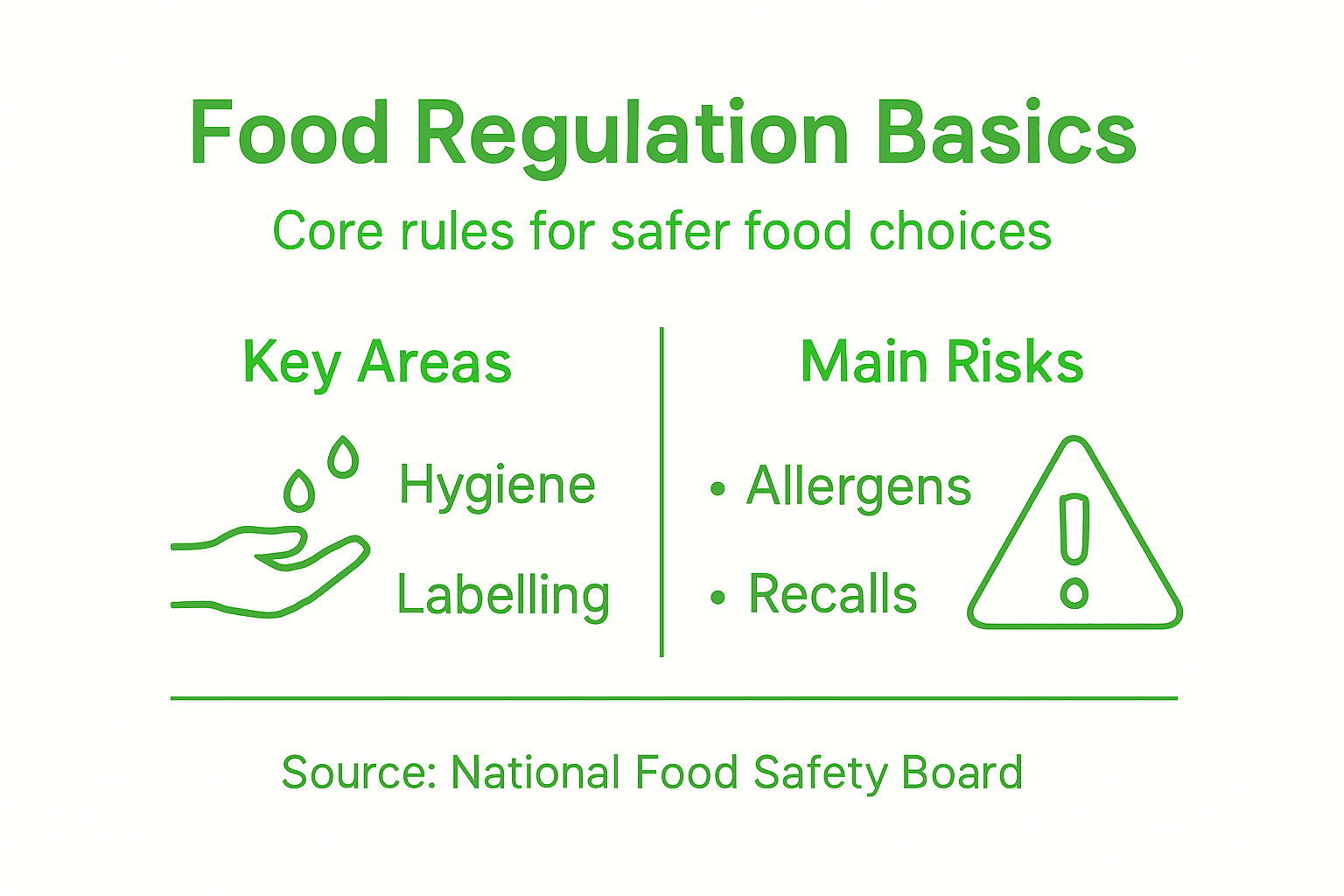
The financial implications of regulatory compliance extend far beyond simple labelling requirements, involving significant operational costs related to certification, documentation, and ongoing staff education. Food labelling compliance challenges demonstrate the intricate nature of maintaining accurate, up-to-date product information across diverse regulatory environments.
Common compliance challenges and potential pitfalls include:
- Inconsistent allergen documentation
- Inadequate staff training protocols
- Incomplete cross-contamination risk assessments
- Unclear precautionary labelling statements
- Fragmented supplier management systems
- Missed regulatory update notifications
Successful navigation of these complex regulatory requirements demands a proactive approach, integrating technological solutions, continuous staff training, and robust quality management systems. Companies must develop comprehensive strategies that anticipate regulatory changes, maintain precise documentation, and prioritise consumer safety across all operational domains.
The table below summarises typical compliance costs versus risks for food businesses:
| Compliance Area | Typical Cost | Potential Risk if Ignored |
|---|---|---|
| Allergen Labelling | Staff training, label redesign | Customer health incidents, recalls |
| Certification & Audits | Inspection fees, documentation | Market loss, legal penalties |
| Supplier Traceability | IT systems, ongoing updates | Traceback failures, fines |
Pro Tip: Implement a centralised compliance management system that provides real-time regulatory updates and automates documentation tracking to minimise human error and reduce potential legal risks.
Safeguard Your Family’s Health with Trusted Organic and Gluten-Free Choices
Navigating health regulations and recognising the importance of transparent allergen labelling can be overwhelming for families striving to protect their loved ones. This article highlights the critical role of compliance with food safety laws, allergen disclosure, and organic standards in preventing health risks and ensuring nutritional integrity. At Nature’s Soul Shop, we deeply understand these challenges and are committed to helping you make informed, confident choices with our extensive range of organic, natural, vegan, and gluten-free products.
Discover how adherence to rigorous certification standards and clear labelling enhances your peace of mind when selecting fruits, vegetables, dairy, meats, and dry groceries. Shopping at Nature’s Soul Shop means embracing clean ingredients carefully sourced to meet stringent health regulations. Act now to prioritise your family’s wellness by exploring our trusted collection and experience the reassurance that only transparent and compliant products can provide. Visit Nature’s Soul Shop today and take the first step towards safer, healthier food choices for your home.
Frequently Asked Questions
What are health regulations for food products?
Health regulations for food products are legal frameworks that set standards for the manufacturing, processing, packaging, and distribution of food. They are designed to protect consumer health by ensuring safe food production and consumption.
Why are food safety regulations important?
Food safety regulations are essential as they help mitigate risks associated with foodborne illnesses, chemical contamination, and ensure proper labelling and traceability, thus safeguarding public health and consumer trust.
How do regulations protect consumers from foodborne illnesses?
Regulations protect consumers by establishing microbiological standards, requiring rigorous testing protocols, and mandating clear reporting mechanisms for any potential safety incidents that may arise during food production.
What should I look for on food packaging to ensure regulatory compliance?
When purchasing food, look for clear regulatory compliance labels, quality certifications, and allergen information on the packaging. This helps you make informed nutritional choices and ensures the product meets established safety standards.


