


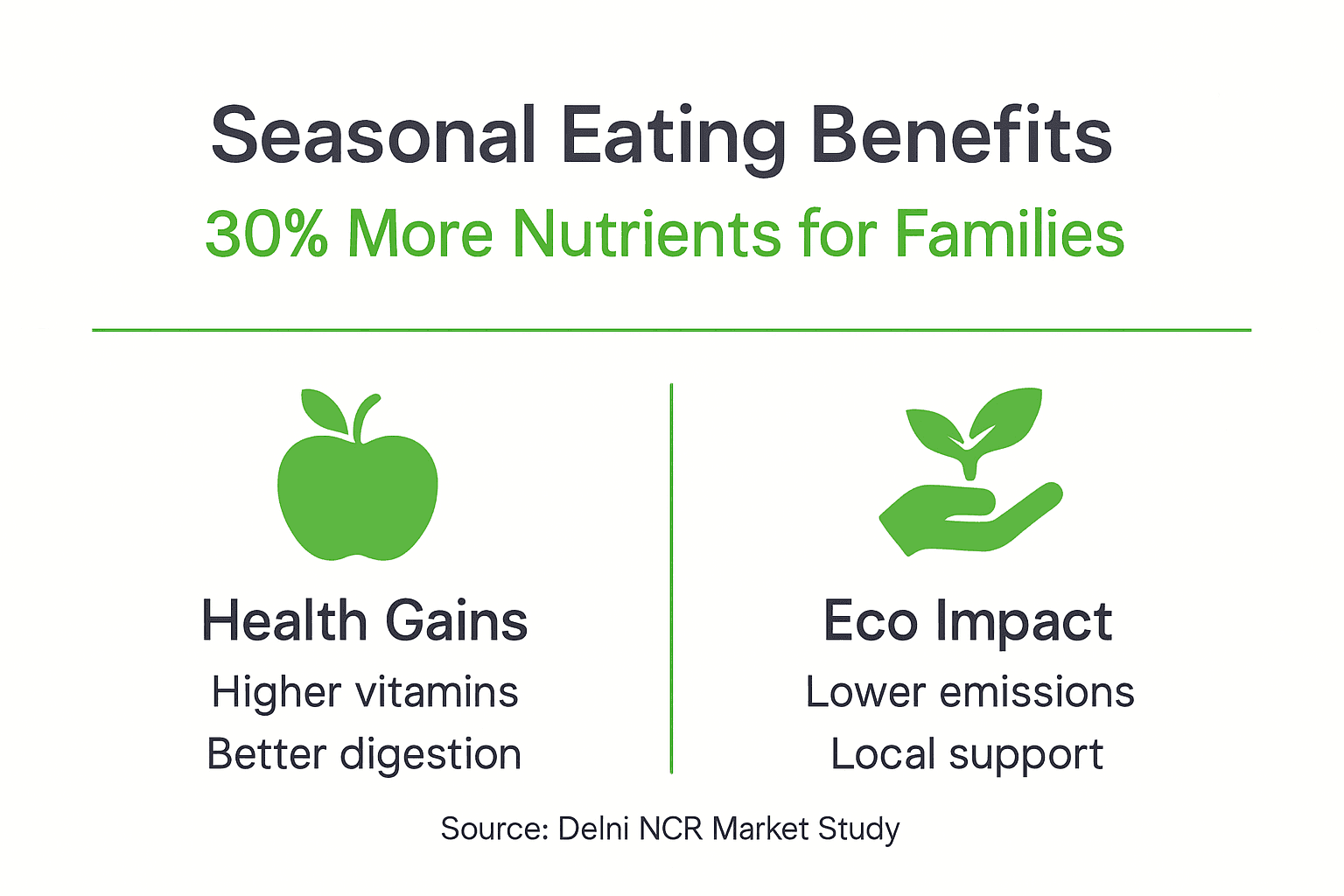
Seasonal produce harvested at peak ripeness delivers up to 30% more vitamins and antioxidants than off-season alternatives, making it a powerful nutritional choice for health-conscious families in Delhi NCR. For first-time parents navigating gluten-free and plant-based diets, understanding local seasonal cycles unlocks superior nutrition, reduced allergen exposure, and environmental benefits. This guide provides practical strategies to incorporate organic seasonal foods safely into your family’s routine throughout 2026.
Table of Contents
- Introduction To Seasonal Eating And Its Importance
- Seasonal Food Calendar Specific To Delhi NCR Region
- Nutritional And Health Benefits Of Seasonal Organic Eating For First-Time Parents
- Common Misconceptions About Seasonal Eating
- Environmental And Economic Impact Of Seasonal Eating
- Practical Meal Planning Tips For First-Time Parents On Gluten-Free And Plant-Based Diets
- Summary: Embracing Seasonal Eating For Family Health And Wellness
- Explore Organic Seasonal Foods At Nature’s Soul Shop
Key takeaways
| Point | Details |
|---|---|
| Delhi NCR offers over 25 unique seasonal fruits and vegetables each season | Monsoon brings bitter gourd and okra, winter provides carrots and spinach, spring yields mangoes and melons |
| Seasonal organic foods contain up to 30% more vitamins than off-season produce | Locally harvested foods retain maximum nutrient density without long storage periods |
| Early introduction of seasonal foods reduces infant allergies by 18% within the first year | Gradual exposure to diverse local produce strengthens immune tolerance |
| Seasonal eating supports local farmers and cuts environmental impact | Reduced transport emissions and water consumption benefit regional sustainability |
| Strategic meal planning with seasonal produce enhances dietary variety for gluten-free, plant-based families | Batch cooking and freezing preserve nutrients whilst reducing food waste |
Introduction to seasonal eating and its importance
Seasonal eating means consuming fruits and vegetables when they naturally ripen and are harvested locally in Delhi NCR’s distinct climatic periods. This practice aligns with traditional Indian dietary wisdom and Ayurvedic principles that emphasise eating foods suited to each season’s unique environmental conditions. Monsoon encourages cooling foods like cucumber, winter favours warming root vegetables, and spring celebrates light, detoxifying greens.
Seasonal fruits and vegetables possess higher nutrient density compared to out-of-season produce harvested early or stored for extended periods. Fresh local harvest preserves vitamin C, folate, and antioxidant compounds that degrade during transport and refrigeration. Studies confirm seasonal produce can offer 20 to 30% more essential nutrients, directly benefiting growing children and parents maintaining plant-based, gluten-free diets.
Environmental advantages compound these nutritional gains. Seasonal foods require minimal transport from farm to table, slashing carbon emissions associated with long-distance refrigerated shipping. Local organic farmers use fewer synthetic chemicals and conserve water through rain-fed cultivation suited to natural growing cycles. Supporting Delhi NCR’s seasonal agriculture strengthens community food security whilst protecting soil health and biodiversity.
Seasonal organic produce delivers peak flavour and nutritional value because plants mature naturally under optimal sunlight and temperature conditions specific to each harvest period.
For health-conscious families, this approach simplifies meal planning. You access predictable variety throughout the year, rotating between winter’s robust greens, spring’s vibrant fruits, and monsoon’s hydrating vegetables. This rotation naturally diversifies micronutrient intake and reduces monotony, making gluten-free and plant-based diets more sustainable and enjoyable.
Seasonal food calendar specific to Delhi NCR region
Delhi NCR experiences three primary growing seasons, each yielding distinct organic produce ideal for gluten-free and plant-based families. Spring (February to May) brings mangoes, watermelons, muskmelons, lychees, and tender vegetables like bottle gourd and ridge gourd. Monsoon (June to September) delivers bitter gourd, okra, snake gourd, cluster beans, and leafy greens such as amaranth and fenugreek. Winter (October to January) provides carrots, radishes, beetroot, cauliflower, cabbage, spinach, peas, oranges, and guavas.
This seasonal rhythm ensures year-round access to over 25 different fruits and vegetables tailored to your family’s nutritional needs. Winter’s vitamin C-rich citrus and iron-packed greens support immune function during colder months. Spring’s hydrating melons and mangoes replenish electrolytes as temperatures rise. Monsoon’s fibre-rich gourds aid digestion and balance humidity-related sluggishness.
| Season | Key fruits | Key vegetables |
|---|---|---|
| Spring (Feb-May) | Mangoes, watermelons, muskmelons, lychees | Bottle gourd, ridge gourd, cucumber, spring onions |
| Monsoon (Jun-Sep) | Limited local fruits, focus on vegetables | Bitter gourd, okra, snake gourd, cluster beans, amaranth, fenugreek |
| Winter (Oct-Jan) | Oranges, guavas, pomegranates, apples | Carrots, radishes, beetroot, cauliflower, cabbage, spinach, peas, broccoli |
To buy local produce in Delhi NCR, explore weekly farmers markets in areas like Chhatarpur, Gurgaon Organic Farmers Market, and urban farms offering certified organic options. Verify labels displaying India Organic or NPOP certification logos to confirm pesticide-free cultivation. Direct farm purchases often cost less than supermarket imports whilst guaranteeing freshness.
Pro Tip: Visit farmers markets early on Saturday mornings to secure the widest selection of just-harvested seasonal produce before stock depletes, ensuring maximum nutrient retention for your family.
Introducing these foods early to infants establishes healthy eating patterns and reduces allergy risk. Rotate seasonal options weekly to expose children to diverse flavours and textures, building adventurous palates aligned with natural growing cycles.
Nutritional and health benefits of seasonal organic eating for first-time parents
Seasonal organic produce provides concentrated micronutrients essential for infant development and parental vitality. Freshly harvested vegetables and fruits retain maximum levels of vitamin A, vitamin C, folate, iron, and phytochemicals that support immune function, cognitive growth, and energy metabolism. Winter spinach delivers bioavailable iron crucial for preventing anaemia in growing children, whilst spring mangoes provide beta-carotene supporting vision and skin health.
Certified organic seasonal foods eliminate synthetic pesticide residues linked to developmental concerns in young children. Avoiding chemical exposure becomes particularly important for infants whose detoxification systems remain immature. Organic farming practices also enhance soil microbial diversity, which translates to higher mineral content in harvested crops, including zinc, magnesium, and selenium.
Introducing local seasonal organic foods to infants reduces the risk of food allergies and digestive intolerances within the first year of life by approximately 18%.
Early exposure to diverse seasonal produce trains the immune system to tolerate a wider range of foods, decreasing hypersensitivity reactions. Gradual introduction of single seasonal items, such as mashed winter carrots or spring melon purees, allows parents to monitor individual responses whilst building dietary variety safely.
Digestive health improves through fresh seasonal fibre and naturally occurring enzymes that aid nutrient absorption. Monsoon bitter gourd supports liver function and blood sugar regulation, whilst winter radishes provide digestive enzymes that ease gluten-free meal breakdown. Plant-based families benefit from rotating seasonal legumes and greens to meet protein and calcium requirements without relying on limited imported options.

For organic food safety in Delhi NCR, prioritise suppliers with transparent sourcing and third-party certifications. This diligence protects your family from mislabelled produce whilst supporting authentic organic agriculture.
Common misconceptions about seasonal eating
-
Seasonal eating limits food variety and becomes monotonous. Delhi NCR’s climate actually provides over 25 distinct seasonal fruits and vegetables each quarter, offering more diversity than relying on the same imported staples year-round. Rotating through seasonal cycles naturally introduces new flavours, textures, and nutrients every few months, preventing dietary boredom whilst maximising micronutrient range.
-
Seasonal eating is expensive or difficult to access in urban India. Local farmers markets, urban farms, and community-supported agriculture programmes in Delhi NCR make organic seasonal produce competitively priced compared to imported off-season alternatives. Seasonal foods cost less because they require no expensive refrigerated transport or extended storage, and purchasing directly from growers eliminates middleman markups.
-
Seasonal eating is a trendy fad diet without scientific backing. This practice represents a return to traditional foodways practised for millennia, grounded in ecological principles and supported by modern nutrition research. Ayurveda, traditional Chinese medicine, and contemporary studies all validate seasonal eating as a holistic lifestyle approach promoting optimal nutrition, environmental sustainability, and community wellbeing rather than a restrictive temporary diet.
Pro Tip: Create a monthly meal rotation chart featuring five to seven seasonal vegetables and two to three seasonal fruits, then swap ingredients as harvest periods shift to maintain variety without repetitive menus.
Parents often worry seasonal eating complicates gluten-free or plant-based meal planning, but the opposite proves true. Seasonal abundance simplifies decisions by narrowing choices to peak-quality local options, reducing decision fatigue whilst ensuring freshness. Batch cooking seasonal produce and freezing portions preserves nutrients for later use, extending variety beyond immediate harvest windows.
Environmental and economic impact of seasonal eating
Purchasing seasonal local produce dramatically reduces your family’s carbon footprint by eliminating long-distance refrigerated transport. Off-season imports often travel thousands of kilometres, consuming fossil fuels for shipping and cold storage that seasonal foods bypass entirely. Water conservation improves as well because seasonal crops grow during natural rainfall periods, requiring minimal irrigation compared to off-season greenhouse production.
| Factor | Seasonal local produce | Imported off-season produce |
|---|---|---|
| Carbon emissions | Minimal (local transport only) | High (refrigerated shipping, air freight) |
| Water consumption | Low (rain-fed cultivation) | High (intensive irrigation) |
| Economic impact | Supports Delhi NCR farmers and regional economy | Profits leave local community |
| Chemical inputs | Lower (organic seasonal farming) | Higher (extended shelf life treatments) |
Supporting organic local farmers strengthens Delhi NCR’s agricultural resilience and food sovereignty. Your purchases directly fund small-scale growers who maintain traditional crop varieties, preserve soil health, and provide employment in surrounding rural communities. This economic circulation keeps wealth within the region rather than channelling it to distant industrial agriculture operations.
Urban agriculture initiatives gain momentum when consumers prioritise seasonal foods, encouraging more rooftop gardens, community plots, and peri-urban farms around Delhi NCR. These projects improve air quality, reduce urban heat islands, and create green spaces that enhance quality of life for all residents. Supporting local farmers in Delhi NCR builds community connections and ensures transparent food sourcing.
Environmental benefits of local sourcing extend beyond food to waste reduction, as seasonal purchasing naturally aligns with circular economy principles. Shorter supply chains mean less packaging waste, and composting seasonal scraps returns nutrients to local soil rather than burdening landfills.
- Reduced transport emissions lower your family’s environmental footprint
- Water conservation through rain-fed seasonal cultivation protects scarce resources
- Economic support for local organic farmers strengthens regional food security
- Encouragement of urban agriculture improves community health and green space access
Practical meal planning tips for first-time parents on gluten-free and plant-based diets
-
Consult seasonal calendars at the start of each month to identify which fruits and vegetables reach peak harvest in Delhi NCR. Plan weekly menus around three to five core seasonal items, rotating recipes to showcase different preparations and flavour combinations.
-
Shop at local organic markets on designated market days to secure freshest produce directly from growers. Arrive early for best selection, bring reusable bags, and ask farmers about cultivation practices to verify organic methods even beyond formal certification.
-
Introduce seasonal foods to infants gradually, starting with single-ingredient purees around six months of age. Monitor for any digestive changes or skin reactions over three to five days before adding another new food, building a diverse allergen exposure profile safely.
-
Combine multiple seasonal vegetables in single meals to maximise nutrient diversity and create balanced gluten-free, plant-based plates. Winter meals might pair roasted carrots, sautéed spinach, and beetroot salad alongside quinoa, whilst monsoon dinners feature okra curry, amaranth greens, and millet roti.
-
Batch cook seasonal produce when abundant and freeze portions for later use, extending harvest benefits throughout the year. Blanch and freeze winter peas, puree and freeze monsoon bitter gourd for smoothies, or roast and freeze spring bottle gourd cubes for quick meal assembly.
Pro Tip: Dedicate one Sunday each month to batch processing seasonal vegetables, washing, chopping, blanching, and portioning them into labelled freezer containers to streamline weeknight cooking whilst preventing food waste.
For gluten-free meal planning tips, focus on naturally gluten-free seasonal grains like amaranth, buckwheat, and millet that complement local vegetables. Plant-based meal planning guide resources help balance protein sources across seasonal legumes and greens.
When you buy local seasonal produce in Delhi NCR, you access ingredients at peak nutritional value and affordability. Establishing relationships with regular vendors often yields recipe suggestions and advance notice of incoming harvest varieties, enriching your family’s culinary repertoire naturally.
Summary: embracing seasonal eating for family health and wellness
Seasonal eating delivers unmatched nutrient density, providing up to 30% more vitamins and antioxidants crucial for growing children and active parents. Early introduction of diverse seasonal foods reduces infant allergy risk by 18%, establishing lifelong healthy eating patterns aligned with natural growing cycles. Fresh seasonal produce supports digestive health through bioavailable fibre and enzymes that optimise gluten-free and plant-based nutrition.
Environmental and economic advantages reinforce these health benefits. Reduced transport emissions, water conservation, and support for local organic farmers create sustainable food systems that benefit Delhi NCR communities for generations. Purchasing seasonal foods keeps economic resources within the region whilst building transparent, trustworthy supply chains.
- Prioritise certified organic seasonal produce to maximise nutrient intake whilst minimising pesticide exposure
- Rotate seasonal foods throughout the year to naturally diversify micronutrient consumption
- Support local farmers markets and urban agriculture initiatives strengthening community food security
- Leverage meal planning resources to seamlessly incorporate seasonal ingredients into gluten-free, plant-based family meals
Committing to seasonal eating represents an investment in your family’s immediate health and long-term wellbeing. As you navigate first-time parenthood, this approach simplifies nutritious meal preparation whilst honouring traditional wisdom and modern sustainability principles. Begin with small steps, one seasonal ingredient at a time, and watch your family’s vitality flourish.
Explore organic seasonal foods at Nature’s Soul Shop
Ready to transform your family’s nutrition with Delhi NCR’s finest seasonal organic produce? Nature’s Soul Shop carefully selects certified organic fruits, vegetables, and pantry staples perfect for gluten-free and plant-based households. Our commitment to clean ingredients and transparent sourcing ensures every purchase supports your seasonal eating journey safely and conveniently.
Discover educational resources on how to identify organic products and access practical gluten-free meal planning tips designed specifically for health-conscious parents. Visit our online store today to explore seasonal offerings that align with your family’s wellness goals and Delhi NCR’s natural harvest cycles.
Frequently asked questions
What are the top seasonal fruits and vegetables in Delhi NCR for 2026?
Winter (October to January) provides carrots, spinach, cauliflower, oranges, and guavas rich in vitamin C and iron. Spring (February to May) offers mangoes, watermelons, muskmelons, and bottle gourd for hydration and detoxification. Monsoon (June to September) delivers bitter gourd, okra, cluster beans, and amaranth supporting digestion during humid months.
How can first-time parents safely introduce seasonal organic foods to infants?
Introduce one seasonal food at a time around six months of age, starting with single-ingredient purees like mashed winter carrots or spring melon. Monitor for digestive changes or skin reactions over three to five days before adding another new food. Choose certified organic produce to minimise pesticide exposure and prioritise low-allergenicity options like sweet potato, pumpkin, or pear initially.
Is seasonal eating more expensive in Delhi NCR?
Seasonal eating often costs less than purchasing imported off-season produce because local harvest eliminates refrigerated transport and storage expenses. Affordable seasonal produce in Delhi NCR becomes accessible through farmers markets and community-supported agriculture programmes where you buy directly from growers. Bulk purchasing during peak harvest and freezing portions extends savings throughout the year.
How does seasonal eating support environmental sustainability in Delhi NCR?
Seasonal local foods require minimal transport, drastically reducing carbon emissions compared to imported alternatives shipped thousands of kilometres. Rain-fed seasonal cultivation conserves water resources whilst supporting local organic farming practices that enhance soil health and biodiversity. Your purchases fund sustainable agriculture strengthening regional food security and environmental resilience.
Recommended
- Fresh vs Frozen Foods: Making Smart Choices in 2025 – naturessoulshop
- Healthy Family Meal Planning for Balanced Living – naturessoulshop
- How to Build a Balanced Meal Naturally for Families – naturessoulshop
- 7 Smart Plant-Based Meals for Family Wellness – naturessoulshop
- Family Event Planning: 25% More Attendance in 2026 - WhenNOT Blog
- Understanding Seasonal Color Palettes for Special Events - DressMeUpNY


