


Managing food allergies in children can feel overwhelming for parents in Delhi NCR. Hidden allergens lurk in everyday foods, threatening accidental reactions that disrupt family life and health. This comprehensive guide equips you with a structured, organic-focused approach to confidently reduce allergy risks by 75% or more. You’ll learn prerequisite steps, daily management practices, emergency preparedness, and troubleshooting strategies using certified organic and clean-label products available locally.
Table of Contents
- Prerequisites And Preparations Before Starting
- Core Steps For Managing Food Allergies
- Preventing Cross-Contamination And Safe Food Handling
- Emergency Preparedness And Response
- Common Mistakes And Troubleshooting In Food Allergy Management
Key Takeaways
| Point | Details |
|---|---|
| Prerequisites Matter | Confirm diagnosis, secure epinephrine auto-injectors, and source certified organic foods before starting management. |
| Daily Management Steps | Strict allergen avoidance, careful meal prep with organic ingredients, and consistent symptom monitoring reduce reactions. |
| Cross-Contamination Prevention | Kitchen hygiene, utensil segregation, and clean-label home products prevent 85% of accidental allergen exposure. |
| Emergency Readiness | Immediate epinephrine use and practiced action plans reduce fatal anaphylaxis risk by over 90%. |
| Avoid Common Mistakes | Always verify labels, update emergency plans quarterly, and choose clearly certified allergen-free products. |
Prerequisites and Preparations Before Starting
Before implementing an allergy management plan, you need a solid foundation. Start with professional allergen identification through skin prick tests or blood work from a qualified allergist. Guessing which foods trigger reactions leads to unnecessary restrictions or dangerous oversights.
Secure epinephrine auto-injectors and create emergency action plans as your safety net. Keep two auto-injectors accessible at all times—one at home and another wherever your child spends significant time. Train everyone in your household on recognizing symptoms and administering epinephrine correctly.
Sourcing trusted food becomes critical. Focus on choosing certified organic and clean-label foods from verified suppliers in Delhi NCR. Organic certification ensures stricter ingredient transparency, though you must still verify allergen-free status on every label. Build relationships with local vendors who understand your specific allergen concerns and can guarantee product integrity.
Establish kitchen hygiene protocols immediately. Designate separate cutting boards, utensils, and storage areas for allergenic and safe foods. Clean all surfaces thoroughly with hot water and soap before preparing allergen-free meals. This segregation prevents the majority of accidental exposures at home.
Pro Tip: Create a dedicated allergen-free zone in your pantry with clearly labeled bins and shelves that only store safe foods your child can access independently.
Budget planning deserves attention because organic, allergy-friendly products often cost more than conventional options. Allocate 20-30% more in your monthly food budget initially. Track spending to identify affordable staples that meet your safety standards without straining finances.
Essential Preparation Checklist
| Preparation Item | Action Required | Timeline |
|---|---|---|
| Allergen Diagnosis | Complete testing with allergist | Week 1-2 |
| Epinephrine Auto-Injectors | Obtain 2+ devices, learn administration | Week 1 |
| Emergency Action Plan | Document steps, share with caregivers | Week 2 |
| Organic Food Sources | Identify certified suppliers in Delhi NCR | Week 2-3 |
| Kitchen Protocols | Set up segregated zones and cleaning routine | Week 3 |
| Budget Adjustment | Calculate increased costs, allocate funds | Ongoing |
Core Steps for Managing Food Allergies
Managing food allergies requires disciplined daily practices. Your first priority is strict allergen avoidance through meticulous label reading. Manufacturers change formulations without notice, so verify ingredients on every purchase even for familiar brands. Look beyond obvious allergen names to identify derivatives like whey in dairy allergies or hydrolyzed vegetable protein in soy allergies.
Prepare meals using certified organic ingredients whenever possible. Organic products typically contain fewer additives and clearer ingredient lists, making allergen identification easier. Find tips for selecting organic allergy-safe foods that balance nutrition with safety. Batch cooking and freezing safe meals saves time while maintaining control over ingredients.
Consistent symptom monitoring catches reactions early. Keep a daily log noting foods consumed, timing, and any symptoms like skin changes, digestive issues, or breathing difficulties. Patterns emerge that help identify hidden triggers or tolerance changes over time.
Including your child in allergy education proves powerful. Research shows involving children in allergy education reduces accidental reactions by 25%. Teach age-appropriate skills like reading simple labels, politely declining unsafe foods, and recognizing early symptoms in their own body.
Daily Management Steps
- Read every food label completely before purchasing or serving, checking for allergens and derivative ingredients.
- Prepare meals in your designated allergen-free kitchen zone using only verified organic ingredients.
- Monitor and log your child’s symptoms after meals, noting foods eaten and any physical changes.
- Educate your child progressively about their specific allergens, safe foods, and asking adults for help.
- Communicate daily with caregivers about meal plans, ingredient sources, and any symptoms observed.
Family education extends beyond your child. Grandparents, siblings, and regular visitors must understand cross-contamination risks and emergency procedures. Schedule quarterly refresher sessions where everyone practices epinephrine administration and reviews updated allergen lists.
Pro Tip: Take photos of safe product labels on your phone to quickly verify correct items when shopping or ordering online, especially helpful when multiple family members shop.
Preventing Cross-Contamination and Safe Food Handling
Cross-contamination represents one of the biggest risks in home allergy management. Research confirms proper kitchen hygiene and utensil segregation prevent 85% of cross-contact during food preparation. Clean utensils, cutting boards, and countertops thoroughly with hot soapy water after any contact with allergenic foods.
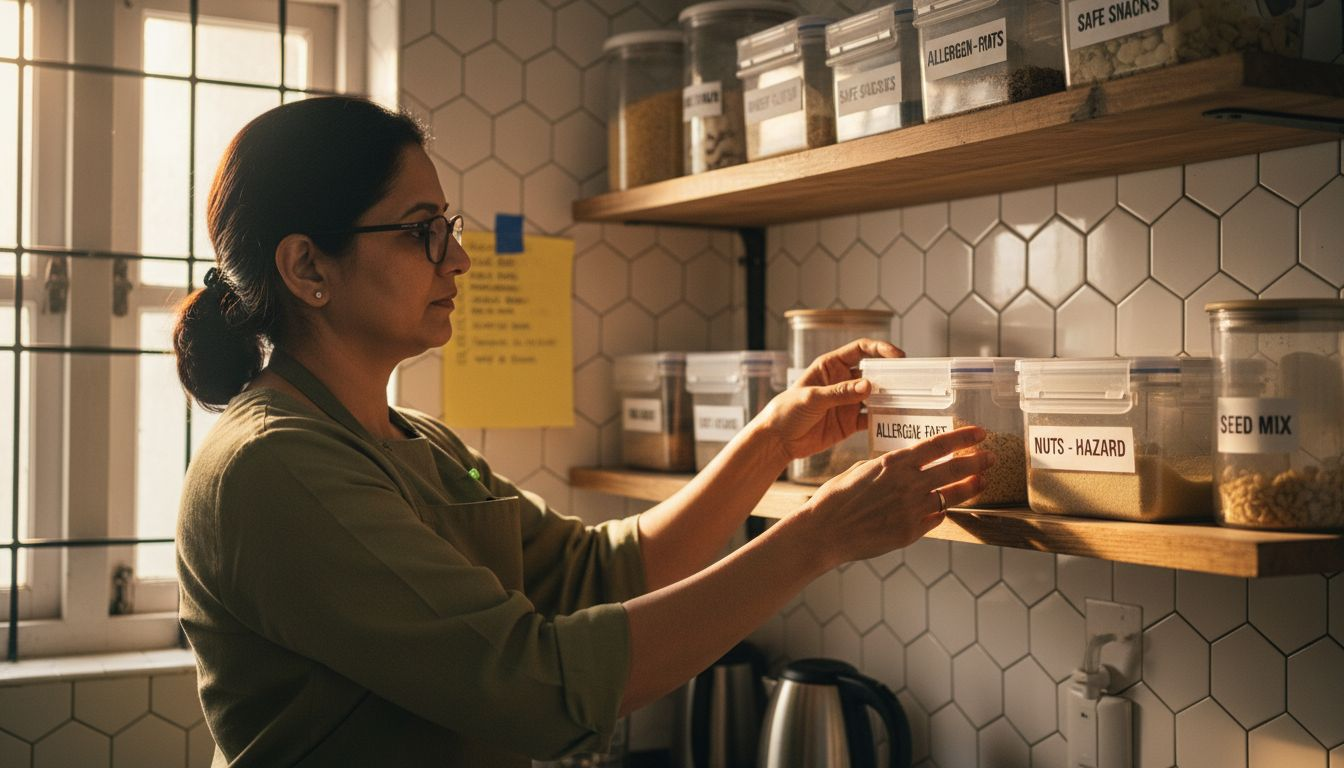
Store allergenic and safe foods in completely separate areas. Use airtight containers with clear labels indicating allergen status. Place safe foods on higher shelves where allergen particles cannot fall onto them from above. Never reuse containers that previously held allergens without intensive cleaning.
Your cleaning products matter too. Switch to organic home care products for safe allergy management that eliminate synthetic fragrances and harsh chemicals triggering additional sensitivities. Clean-label dish soaps, surface cleaners, and laundry detergents reduce overall irritant load on your child’s immune system.
Train every family member on handling protocols. Even well-meaning relatives can inadvertently cause exposure through shared serving spoons or cutting boards. Post visual reminders in your kitchen showing proper cleaning steps and storage zones.
Safe Food Handling Practices
- Wash hands thoroughly with soap for 20 seconds before and after handling any food, especially allergens.
- Use color-coded cutting boards and utensils exclusively for allergen-free food preparation.
- Clean all surfaces with hot soapy water immediately after contact with allergenic foods.
- Store allergen-free foods in sealed containers on dedicated shelves away from cross-contact risk.
- Replace sponges and dishcloths weekly to prevent allergen residue buildup and transfer.
Implement clear labeling throughout your kitchen. Mark containers, shelves, and even refrigerator zones with simple symbols or text indicating allergen status. This visual system helps everyone quickly identify safe foods and prevents confusion during busy meal times.
Kitchen Zone Comparison
| Zone Type | Purpose | Key Features |
|---|---|---|
| Allergen-Free Zone | Preparing safe meals only | Dedicated utensils, color-coded tools, sealed storage |
| Mixed Zone | General family meal prep | Requires thorough cleaning between uses, separate boards |
| Allergen Zone | Foods containing known allergens | Isolated storage, clearly labeled, restricted access |
Pro Tip: Keep a separate sponge or cloth in a distinct color exclusively for cleaning allergen-free preparation surfaces, preventing cross-contamination from general dishwashing.
Emergency Preparedness and Response
Recognizing allergic reactions quickly saves lives. Mild reactions include skin hives, itching, mild stomach discomfort, or nasal congestion. Severe anaphylaxis symptoms involve difficulty breathing, throat tightness, rapid pulse, dizziness, or loss of consciousness. Never wait to see if symptoms worsen before acting.
Keep epinephrine auto-injectors within reach at all times. Studies prove epinephrine administered immediately reduces fatal anaphylaxis risk by over 90%. Store one device at home in a consistent, accessible location everyone knows. Carry the second wherever your child goes, ensuring caregivers understand its location and use.
Develop a written allergy emergency action plan with your allergist. Document your child’s specific allergens, typical reaction symptoms, exact epinephrine administration steps, and emergency contact numbers. Post copies prominently at home, share with schools and caregivers, and keep a digital version on your phone.
Practice emergency procedures regularly. Quarterly drills help everyone stay calm and effective during actual emergencies. Use trainer devices to practice injection technique without wasting medication. Time how quickly family members can locate and correctly use the auto-injector.
Emergency Response Steps
- Recognize early symptoms like skin changes, swelling, breathing difficulty, or sudden behavioral changes.
- Administer epinephrine immediately if severe symptoms appear, do not delay waiting for symptom progression.
- Call emergency services right after giving epinephrine, even if symptoms appear to improve initially.
- Keep the child lying down with legs elevated unless breathing difficulties require sitting upright.
- Prepare to give a second epinephrine dose after 5-15 minutes if symptoms persist or worsen.
Train caregivers and school personnel thoroughly. Anyone supervising your child needs hands-on practice recognizing reactions and administering epinephrine. Provide them with simplified action plans and emergency contact cards. Learn about managing allergy emergencies outside home to extend safety beyond your kitchen.
Pro Tip: Set phone reminders to check epinephrine expiration dates monthly, auto-injectors typically last 12-18 months and lose effectiveness after expiring.
Common Mistakes and Troubleshooting in Food Allergy Management
Parents frequently make avoidable errors that compromise safety. Always read and verify food labels before feeding, even on products you’ve used before. Manufacturers reformulate without prominent notice, and safe products suddenly become dangerous. Checking every time protects against these silent changes.
Underestimating secondary allergen exposure causes many reactions. Cross-contact from shared equipment in manufacturing facilities or restaurants introduces trace allergens. Research shows ignoring secondary allergen exposure and outdated emergency plans cause many recurring reactions. Ask detailed questions about preparation methods and ingredient sourcing when eating outside your home.
Regularly update and rehearse allergy action plans. Life changes like new schools, caregivers, or living situations require plan revisions. Quarterly reviews ensure everyone stays informed and confident. Outdated contact information or forgotten procedures create dangerous delays during emergencies.
Watch carefully for subtle symptoms and new triggers. Food allergies can evolve, with children developing tolerance to some allergens while acquiring new sensitivities. Monthly symptom reviews help identify emerging patterns before severe reactions occur.
Choose clearly certified organic and allergen-free products only. Vague marketing claims like


