


Research reveals that people who prepare meals at home lose twice as much weight compared to those relying on ultra-processed ready meals, even when calorie intake appears similar. This surprising finding challenges conventional wisdom about weight management and highlights powerful advantages of home cooking beyond simple calorie counting. Whether you want to improve your family’s nutrition, reduce exposure to additives, or gain confidence in the kitchen, understanding these benefits can transform your approach to daily meals and long-term wellbeing.
Table of Contents
- How Cooking At Home Improves Your Nutrition And Health
- The Role Of Cooking Skills And Habits In Promoting Long-Term Well-Being
- Why Home-Cooked Meals Generally Lead To Healthier Families
- How To Maximise The Benefits Of Home-Cooked Meals With Organic Ingredients
- Explore Organic Food Choices For Your Home Kitchen
- Frequently Asked Questions
Key takeaways
| Point | Details |
|---|---|
| Ingredient control | Home cooking lets you manage oil, salt, and sugar quantities whilst avoiding ultra-processed additives found in packaged foods. |
| Enhanced nutrition | Preparing meals from scratch correlates with higher fruit and vegetable intake alongside reduced consumption of processed items. |
| Weight management | Home-cooked food supports superior fat loss compared to processed meals, even with equivalent calorie levels. |
| Skill development | Building cooking competence improves dietary autonomy, confidence, and overall wellbeing for individuals and families. |
| Organic advantages | Using organic ingredients adds minerals, antioxidants, and may reduce allergy and obesity risks for your household. |
How cooking at home improves your nutrition and health
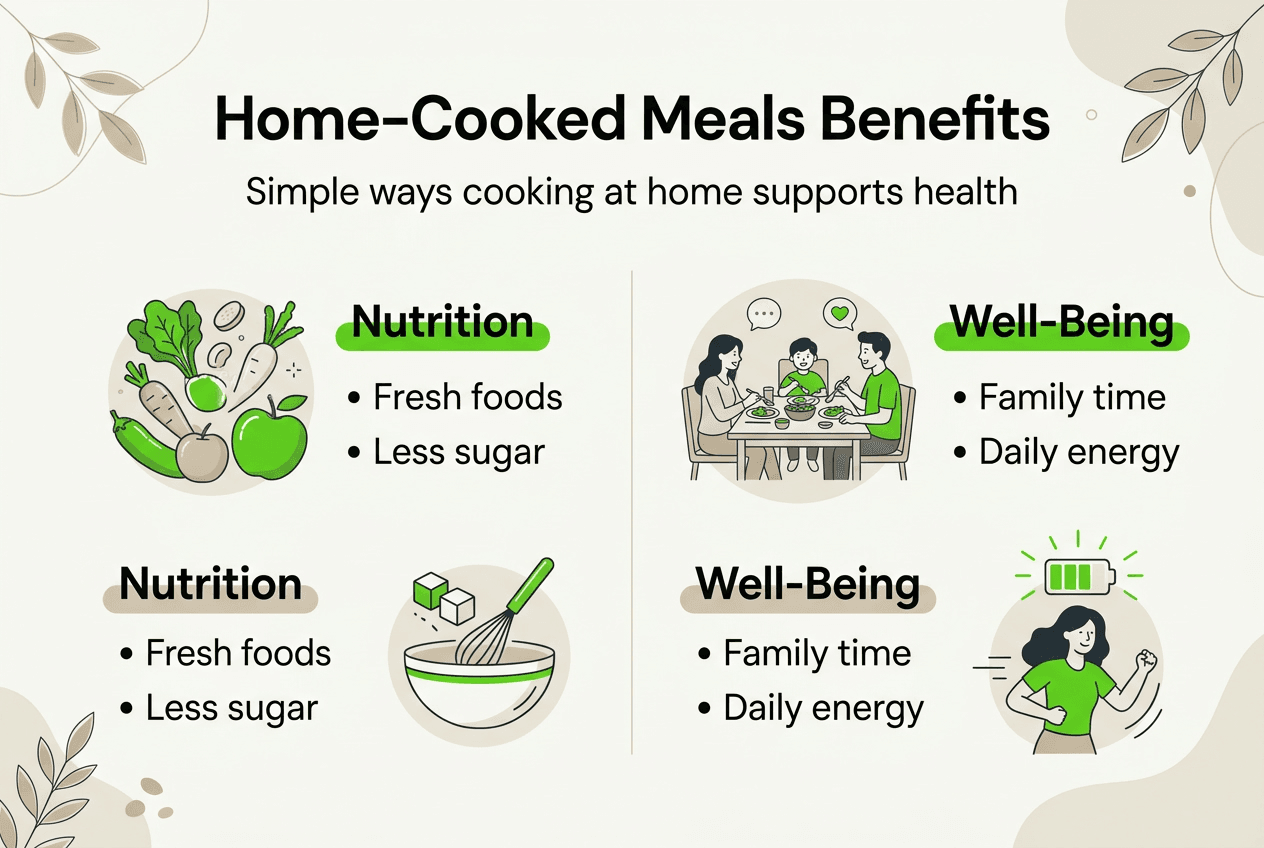
Preparing meals in your own kitchen gives you complete authority over what goes into each dish. Home-cooked food generally contains fewer preservatives, less ultra-processing, and allows for more control over oil, salt, and sugar intake, reducing your exposure to sodium, added sugars, and trans fats commonly found in restaurant meals or ready-made options. You decide precisely how much butter goes into your vegetables, whether to add salt to your pasta water, and which sweetener suits your preferences.
This control translates into measurable health improvements. Studies demonstrate that cooking from scratch helps you lose more fat even if the calories are the same as processed foods, suggesting that the quality and texture of ingredients matter as much as quantity. Processed foods often have softer textures and higher calorie density, making them easier to overconsume without feeling satisfied. Home-cooked meals require more chewing and digestion, naturally slowing your eating pace and improving satiety signals.
The nutritional profile shifts dramatically when you cook at home:
- Fresh ingredients retain more vitamins and minerals compared to packaged alternatives with extended shelf lives
- Whole foods provide fibre, antioxidants, and phytonutrients often stripped during industrial processing
- Cooking methods like steaming or roasting preserve nutrients better than deep frying or high-heat processing
- Natural flavours reduce the need for artificial enhancers, colourings, or preservatives
“The difference between home-cooked and processed meals extends beyond ingredients to how your body processes the food itself, affecting everything from digestion to fat storage.”
When you focus on building a balanced meal naturally, you create dishes that support stable blood sugar, sustained energy, and better nutrient absorption. Your body recognises and utilises whole ingredients more efficiently than synthetic compounds or heavily modified substances found in ultra-processed products.
The role of cooking skills and habits in promoting long-term well-being
Developing competence in the kitchen does more than improve what you eat. It fundamentally changes your relationship with food and enhances your autonomy over dietary choices. Recent evidence shows that culinary workshops improve eating habits, autonomy, and wellbeing in adults with 81% reporting better culinary practices, demonstrating how skill-building translates into sustained behavioural change.
Acquiring cooking abilities increases your confidence to experiment with new ingredients, adapt recipes to your preferences, and respond flexibly to what’s available seasonally or locally. You stop relying on convenience foods because preparing a quick stir-fry or simple pasta becomes second nature. This independence supports better choices even when time is limited or external circumstances change.
Practical benefits of enhanced cooking skills include:
- Greater consumption of fruits, vegetables, and whole grains as you learn to prepare them appealingly
- Reduced dependence on takeaways, ready meals, or restaurant dining
- Improved ability to accommodate dietary requirements or preferences within your household
- Enhanced creativity and enjoyment in meal preparation, making healthy eating sustainable
- Better understanding of nutrition, portion sizes, and balanced meal composition
Regular cooking practice builds self-efficacy that extends beyond the kitchen. Successfully preparing a new dish or mastering a challenging technique reinforces your capability to learn and adapt, supporting mental wellbeing alongside physical health. This psychological benefit proves particularly valuable for families, where cooking together creates shared experiences and teaches children essential life skills.
Pro Tip: Start with three simple recipes you can prepare confidently, then gradually add one new dish each week to expand your repertoire without feeling overwhelmed.
For households with selective eaters, developing cooking skills helps you present familiar foods in varied ways. Check out tips for picky eaters encourage healthy organic eating for strategies that make nutritious options more appealing. Consider exploring virtual food safety workshops to build confidence in proper food handling and storage techniques.
Why home-cooked meals generally lead to healthier families
The impact of home cooking extends throughout your household, influencing everyone’s dietary intake and health outcomes. Research from Japan found that participants consuming 350 g/day or more vegetables were more likely to cook at home and use fewer ready meals, demonstrating a clear connection between cooking frequency and meeting nutritional guidelines. Families who prepare meals together typically consume more diverse nutrients and establish healthier eating patterns that persist over time.

Ready-made meal consumption correlates with lower intake of essential vitamins, minerals, and fibre. These products often prioritise shelf stability, convenience, and cost over nutritional density. When you cook at home, you naturally incorporate fresh produce, lean proteins, and whole grains that support growth, development, and disease prevention across all age groups.
Choosing organic ingredients amplifies these benefits. Evidence indicates that organic vegetables contain more minerals and antioxidants, contributing additional nutritional value to your meals. Organic produce also reduces exposure to synthetic pesticides and herbicides, which may affect children’s development and long-term health. The enhanced nutrient profile supports immune function, cognitive performance, and overall vitality.
| Aspect | Home-cooked meals | Processed meals |
|---|---|---|
| Vegetable content | Higher quantities, fresh preparation | Limited variety, often overcooked |
| Sodium levels | Controlled by cook, typically lower | Elevated for preservation and flavour |
| Added sugars | Minimal, used intentionally | Common in sauces, breads, and sides |
| Nutrient density | Maximised through fresh ingredients | Reduced through processing and storage |
| Fibre content | Naturally high from whole foods | Often removed during manufacturing |
Balanced home meals support stable digestion, consistent energy throughout the day, and better sleep quality. When your family eats foods that nourish rather than merely fill, you notice improvements in mood, concentration, and physical performance. These changes become particularly evident in children, whose growing bodies require optimal nutrition.
Explore the nutritional value of organic foods to understand specific advantages for your household. If you’re considering a transition, review this switching to organic step by step guide for practical advice on prioritising purchases and managing costs effectively.
How to maximise the benefits of home-cooked meals with organic ingredients
Integrating organic foods into your cooking routine enhances the health advantages you’ve already gained from preparing meals at home. Start by selecting certified organic ingredients for items your family consumes most frequently, such as leafy greens, berries, or dairy products. Research shows that organic food may reduce the risk of allergic disease and obesity, while organic dairy and meat have higher omega-3 fatty acids, making strategic choices particularly valuable for growing children.
Practical strategies for incorporating organic ingredients include:
- Prioritising organic versions of produce with thin skins or high pesticide residues, such as strawberries, spinach, and apples
- Choosing organic meat and dairy to access superior omega-3 profiles and avoid antibiotic residues
- Buying seasonal organic produce when prices are most competitive and flavour is peak
- Shopping at farmers’ markets or joining organic box schemes for fresh, local options
- Storing organic items properly to maximise shelf life and reduce waste
Cooking techniques significantly affect nutrient retention in your meals. Steaming vegetables preserves water-soluble vitamins better than boiling. Roasting at moderate temperatures concentrates flavours whilst maintaining mineral content. Quick sautéing in minimal oil protects delicate compounds found in fresh produce. Learning these methods ensures you extract maximum nutritional value from quality ingredients.
Meal planning supports consistent home cooking by reducing daily decision fatigue. Dedicate time each week to outline meals, create shopping lists, and prepare components in advance. Batch cooking grains, chopping vegetables, or marinating proteins streamlines weeknight preparation. When healthy options are readily available, you’re less tempted by convenience foods.
Pro Tip: Gradually switch to organic products category by category, starting with items your family consumes daily, to ease the financial transition whilst building sustainable habits.
For comprehensive guidance on creating nutritious dishes, visit the building a balanced meal naturally guide. If you’re curious about specific protein choices, explore organic meat benefits why make the switch 2025 for detailed information on quality differences and health implications.
Explore organic food choices for your home kitchen
Now that you understand the powerful benefits of home cooking with quality ingredients, sourcing those ingredients becomes your next step. Nature’s Soul Shop offers an extensive range of certified organic groceries designed to support your healthy cooking habits naturally. From fresh produce and premium meats to pantry staples and dairy alternatives, you’ll find everything needed to prepare nutritious meals your family will love.
Browse the online organic food store to discover seasonal vegetables, organic proteins, and wholesome ingredients that elevate your home cooking. Explore Nature’s Soul Fresh products for the highest quality organic options delivered conveniently to your door. Visit the health and wellness products section for complementary items that support your family’s wellbeing journey.
Frequently asked questions
What are the benefits of eating home-cooked meals?
Home-cooked meals provide superior nutritional control, allowing you to manage sodium, sugar, and fat intake whilst avoiding ultra-processed additives. They support better weight management, increased vegetable consumption, and improved dietary autonomy. Psychologically, cooking builds confidence and creates opportunities for family connection around shared meals.
How does home cooking affect weight loss compared to processed foods?
Research demonstrates that eating home-cooked food leads to twice as much weight loss compared to diets of ultra-processed ready meals and packaged snacks, even when calorie intake appears similar. The texture and composition of home-cooked food promotes better satiety, slower eating pace, and more efficient fat metabolism. Your body processes whole ingredients differently than heavily modified processed substances.
What role do organic ingredients play in home cooking?
Organic ingredients enhance the nutritional value of home-cooked meals by providing more minerals and antioxidants whilst potentially reducing risk of allergies and obesity. Organic dairy and meat contain higher omega-3 fatty acids compared to conventional options. Choosing organic reduces your family’s exposure to synthetic pesticides, herbicides, and antibiotic residues that may affect long-term health.
How can I start cooking more meals at home effectively?
Begin with three simple recipes you can prepare confidently, gradually expanding your repertoire as skills develop. Schedule weekly meal planning sessions to reduce daily decision-making and create organised shopping lists. Batch prepare components like grains, chopped vegetables, or marinated proteins to streamline weeknight cooking. Focus on building consistent habits rather than perfection, celebrating small wins as you establish your routine.
Recommended
- Importance of Meal Prep: Healthy Family Eating Simplified – naturessoulshop
- How to Meal Prep Healthy Naturally for Lasting Wellness – naturessoulshop
- Healthy Family Meal Planning for Balanced Living – naturessoulshop
- Understanding Local Produce Benefits for Healthy Living – naturessoulshop
- Ergonomics For Cooks: Enhancing Comfort And Safety - Probe IT
- Master Meal Prep with Bimby: Nutritional Balance & Convenience


