


Every parent faces that moment when busy schedules and special dietary needs seem impossible to manage together. For health-conscious families in Delhi NCR, balancing gluten-free or plant-based meals with parenting demands can quickly feel overwhelming. Understanding the true meaning and flexibility of meal prep brings practical solutions, helping you simplify healthy eating, reclaim precious time, and support your family’s wellbeing without the stress of complicated routines.
Table of Contents
- Defining Meal Prep And Common Misconceptions
- Types Of Meal Prep For Modern Families
- Meal Prep For Gluten-Free And Plant-Based Diets
- Key Benefits: Nutrition, Time, And Cost Savings
- Common Mistakes And Safe Storage Practices
Key Takeaways
| Point | Details |
|---|---|
| Meal Prep is Flexible | Meal preparation adapts to family schedules and dietary preferences, making healthy eating simpler. |
| Various Meal Prep Strategies | Different methods like full meal cooking, batch cooking, and partial prep cater to diverse household needs. |
| Nutritional and Financial Benefits | Effective meal prep enhances nutritional control, saves time, and reduces food costs. |
| Food Safety is Crucial | Attention to safe practices in meal storage and preparation is essential to prevent foodborne illnesses. |
Defining Meal Prep and Common Misconceptions
Meal preparation, or meal prep, is a strategic approach to planning and preparing meals in advance that simplifies healthy eating for busy families. Strategic meal planning involves systematically preparing meals or meal components ahead of time to promote balanced nutrition and reduce daily cooking stress.
Contrary to popular belief, meal prep is not about rigid, time-consuming cooking marathons. Instead, it’s a flexible method that adapts to individual family schedules and dietary preferences. The core principles of meal prep include:
- Preparing multiple meals simultaneously
- Portioning ingredients in advance
- Creating mix-and-match meal components
- Reducing daily cooking time
- Minimising food waste
Many people mistakenly assume meal prep requires professional culinary skills or hours of kitchen time. However, effective meal preparation can be simple and efficient. Family meal planning actually varies widely across different households, with research indicating that structural supports for meal preparation remain limited.
Meal prep is not about perfection, but about making healthy eating more accessible and manageable for busy families.
Pro tip: Start small by preparing just 2-3 meals in advance and gradually build your meal prep confidence and skills.
Types of Meal Prep for Modern Families
Meal preparation strategies have evolved significantly to accommodate the diverse needs of contemporary families. Family meal preparation practices encompass multiple approaches that can be tailored to individual household dynamics, cooking skills, and time constraints.
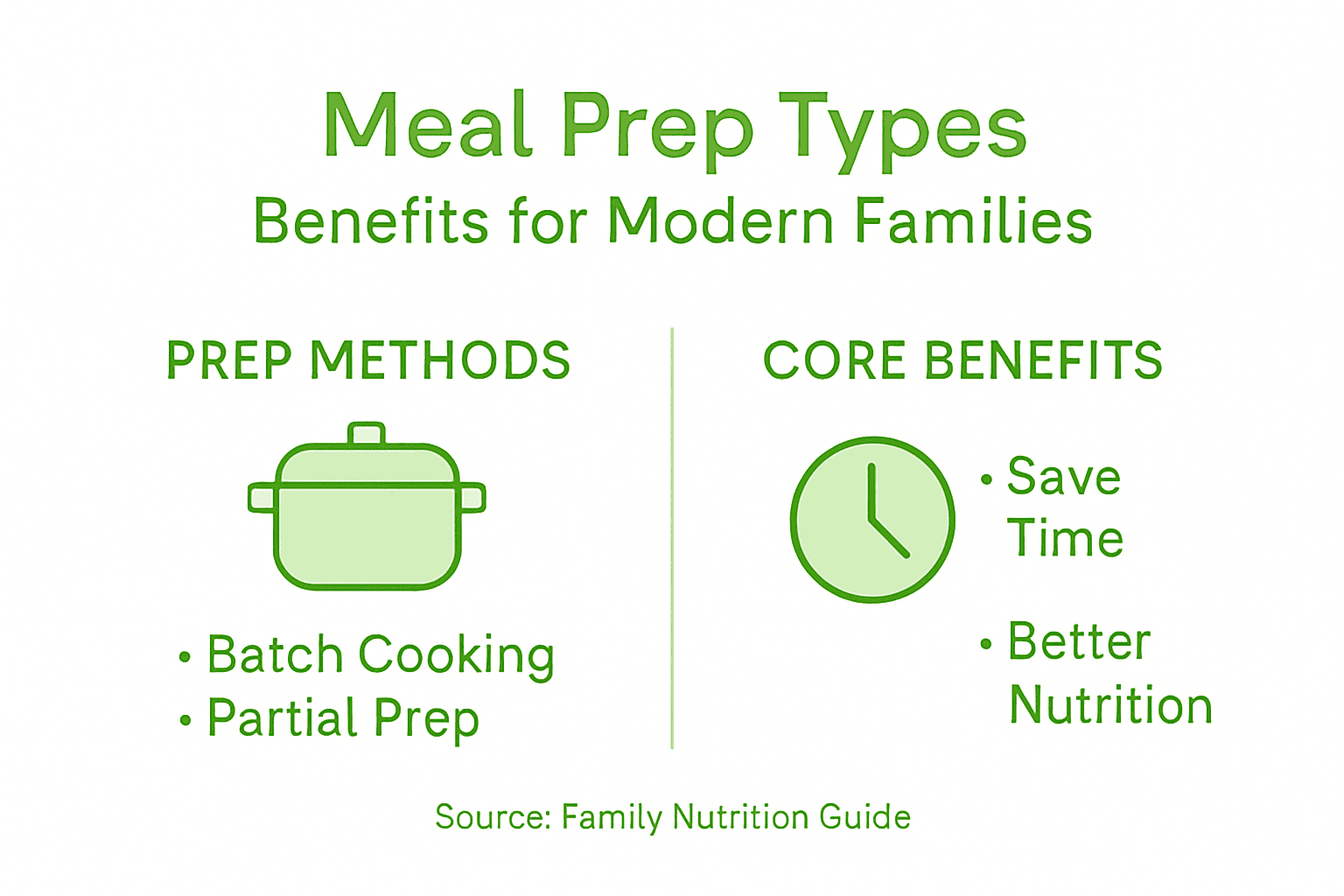
The primary types of meal prep include:
- Full Meal Cooking: Preparing complete meals for several days in advance
- Batch Cooking: Preparing staple ingredients that can be mixed and matched
- Partial Prep: Preparing specific meal components or ingredients ahead of time
- Theme-Based Prep: Planning meals around specific dietary themes or nutritional goals
Each meal prep method offers unique advantages for busy families. Diverse family mealtime strategies recognise that meal preparation is not one-size-fits-all, but instead requires flexibility and personalisation. Some families might prefer batch cooking protein and grain bases, while others might opt for fully prepared meals that can be quickly assembled or reheated.
Here is a comparison of common meal prep approaches and their everyday suitability:
| Meal Prep Method | Best For | Time Investment | Flexibility Level |
|---|---|---|---|
| Full Meal Cooking | Large families, busy weeks | Moderate upfront required | Least, meals fixed per day |
| Batch Cooking | Versatile eaters | High initial, low daily | High, components can vary |
| Partial Prep | Mixed schedules | Low daily, steady overall | Very high, choose components |
| Theme-Based Prep | Specific dietary needs | Moderate upfront | Medium, depends on chosen themes |
Modern meal prep is about creating sustainable, adaptable strategies that support family nutrition without adding unnecessary stress.
Pro tip: Experiment with different meal prep techniques to discover the approach that best suits your family’s unique lifestyle and dietary needs.
Meal Prep for Gluten-Free and Plant-Based Diets
Navigating meal preparation for gluten-free and plant-based diets requires strategic nutritional planning and creativity. Whole food plant-based dietary approaches focus on maximising nutrient intake while eliminating gluten and animal products, presenting both challenges and exciting culinary opportunities.
Key considerations for successful gluten-free and plant-based meal prep include:
- Identifying nutrient-dense gluten-free grains
- Incorporating protein-rich plant sources
- Balancing micronutrient requirements
- Exploring creative ingredient substitutions
- Developing diverse meal rotation strategies
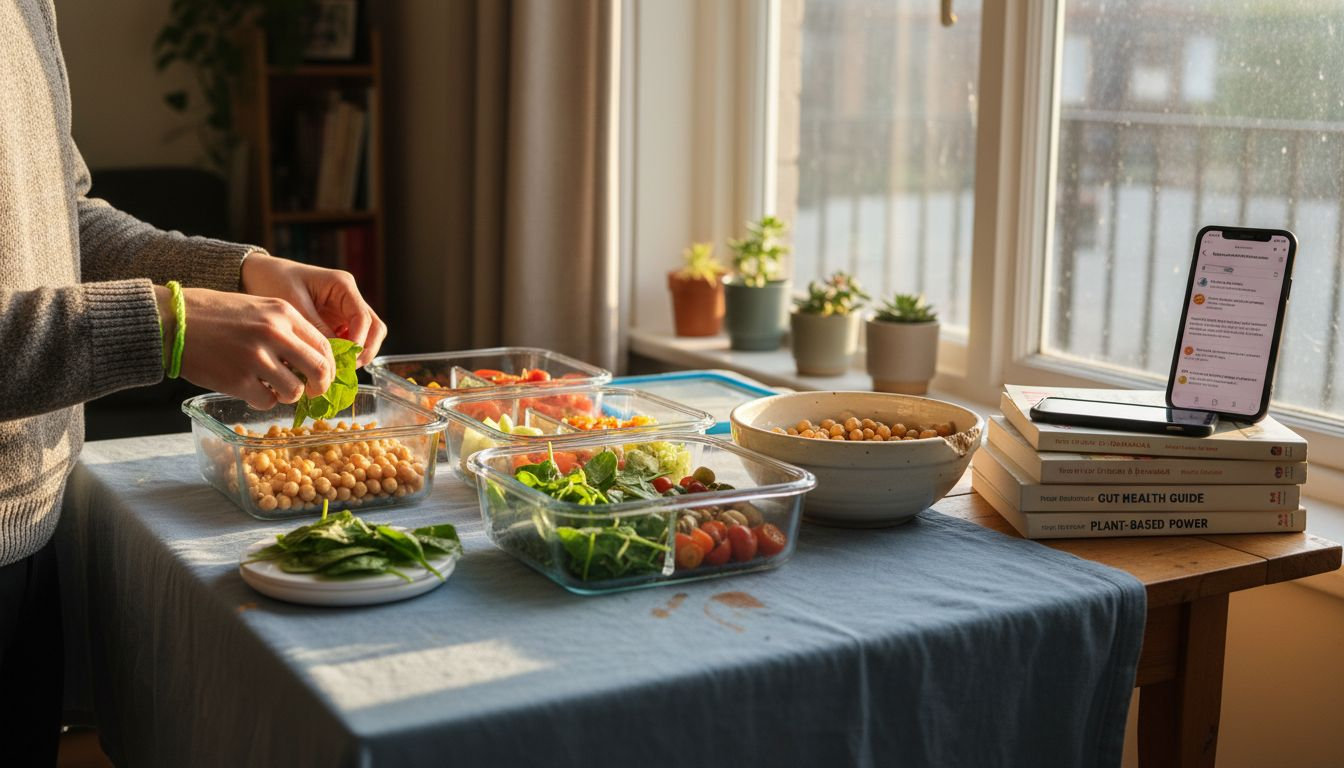
Plant-based nutrition strategies highlight the importance of careful meal planning to address potential nutritional gaps. Protein sources like legumes, nuts, seeds, and gluten-free grains such as quinoa and amaranth become crucial. Fortified plant milks and targeted supplementation can help manage calcium, vitamin D, iron, and zinc requirements.
The following summary shows how meal prep addresses unique needs of gluten-free and plant-based families:
| Dietary Focus | Typical Challenges | Meal Prep Solutions |
|---|---|---|
| Gluten-Free | Avoiding hidden gluten sources | Plan using certified grains, prep at home |
| Plant-Based | Achieving balanced nutrition | Develop diverse rotation, include legumes |
| Both Combined | Preventing nutrient shortfalls | Track micronutrient intake, fortify where possible |
Successful gluten-free and plant-based meal prep is about creative nutrition, not dietary restriction.
Pro tip: Invest in a comprehensive nutrition guide to help track and balance your micronutrient intake when following a gluten-free plant-based diet.
Key Benefits: Nutrition, Time, and Cost Savings
Meal preparation strategies offer profound advantages that extend far beyond simple cooking convenience. By systematically planning and preparing meals in advance, families can unlock significant nutritional, temporal, and financial benefits that transform their approach to everyday eating.
The key benefits of meal prep include:
- Nutritional Control: Precise ingredient selection and portion management
- Time Efficiency: Reducing daily cooking and decision-making stress
- Cost Reduction: Minimising food waste and impulse purchasing
- Consistent Healthy Eating: Maintaining dietary goals amid busy schedules
- Stress Minimisation: Eliminating daily meal planning challenges
Comprehensive meal prepping approaches demonstrate that strategic food preparation can dramatically improve overall lifestyle quality. By purchasing ingredients in bulk, controlling portion sizes, and planning meals thoughtfully, families can simultaneously enhance nutrition, save money, and reclaim valuable time during hectic weeks.
Meal prep is not just about food preparation, but about creating a sustainable, health-focused lifestyle strategy.
Pro tip: Designate a specific weekly time slot for meal planning and preparation to maximise your efficiency and consistency.
Common Mistakes and Safe Storage Practices
Meal preparation safety requires meticulous attention to prevent potential foodborne illnesses. Home cooks often unknowingly compromise food safety through simple yet critical errors that can significantly impact family health.
Common meal prep safety mistakes include:
- Using identical cutting boards for raw meat and vegetables
- Thawing frozen foods at room temperature
- Relying on food colour instead of temperature checks
- Neglecting proper refrigeration temperatures
- Failing to cool cooked foods quickly
- Reheating meals incorrectly
Safe meal storage practices are fundamental to maintaining food quality and preventing bacterial growth. Families should prioritise using shallow, airtight containers, maintaining refrigeration temperatures below 40°F (4°C), and labelling meals with precise preparation dates. Proper cooling within two hours of cooking and ensuring thorough reheating to at least 165°F (74°C) are critical steps in protecting family nutrition.
Food safety in meal prep is not about perfection, but consistent, informed practices.
Pro tip: Invest in a reliable food thermometer and use separate colour-coded chopping boards to eliminate cross-contamination risks.
Simplify Healthy Family Eating with Thoughtful Meal Prep and Pure Ingredients
Meal preparation can feel overwhelming when trying to balance nutrition, time, and dietary needs such as gluten-free or plant-based lifestyles. The key challenge often lies in creating flexible, safe, and nutrient-rich meals that fit your family’s unique rhythm while avoiding food waste and stress. At Nature’s Soul Shop, we understand the importance of strategic meal prep as a pathway to sustained wellness for busy households.
Discover how integrating organic and natural products with clean ingredients from our extensive range can transform your meal prep experience. Whether you are batch cooking or preparing meals tailored to specific dietary goals, our selection of premium fruits, vegetables, vegan and gluten-free options supports your commitment to healthful eating. Take the next step today by exploring our collection at Nature’s Soul Shop and empower your family to enjoy fresh, wholesome meals with less hassle and greater peace of mind. Start simplifying your meal prep journey now and embrace a healthier lifestyle with us.
Frequently Asked Questions
What is meal prep and why is it important?
Meal prep, or meal preparation, is the practice of planning and preparing meals in advance to simplify healthy eating. It helps busy families manage nutrition better, save time during the week, and reduce food waste.
What are the different types of meal prep?
The main types of meal prep include full meal cooking, batch cooking, partial prep, and theme-based prep. Each method caters to different family needs, schedules, and dietary preferences, allowing for flexibility in meal planning.
How can meal prep benefit my family’s nutrition?
Meal prep allows for precise ingredient selection and portion management, making it easier to maintain dietary goals and ensure balanced meals. It also helps reduce reliance on convenience food, leading to healthier eating habits.
What are common meal prep safety practices?
Common safety practices include using separate cutting boards for raw meat and vegetables, keeping refrigeration temperatures below 40°F (4°C), labelling meals with preparation dates, and ensuring meals are reheated to at least 165°F (74°C) to prevent foodborne illnesses.
Recommended
- How to Meal Prep Healthy Naturally for Lasting Wellness – naturessoulshop
- Healthy Family Meal Planning for Balanced Living – naturessoulshop
- 7 Smart Plant-Based Meals for Family Wellness – naturessoulshop
- How to Build a Balanced Meal Naturally for Families – naturessoulshop
- Cel mai bun calculator de calorii online 2026 - Ghid complet pas cu pa – Protein4Life


