


Choosing food for your family in Delhi NCR can feel reassuring when the label reads ‘organic,’ yet many health-conscious parents are surprised to learn that added sugars often hide behind wholesome claims. With products like breakfast cereal and yoghurt containing more than just natural sweetness, even the most careful shopper can be misled. By learning to spot hidden sugars in everyday favourites, you give your family a real chance at healthier choices and greater peace of mind.
Table of Contents
- Hidden Sugars In Food Explained
- Types Of Sugars And Label Terminology
- Common Food Sources You Might Miss
- Recognising Hidden Sugars In Organic Products
- Health Risks For Children And Adults
- Practical Strategies For Reducing Intake
Key Takeaways
| Point | Details |
|---|---|
| Hidden Sugars Are Common | Many processed foods contain hidden sugars, often masquerading under complex names. Consumers should be vigilant in reading ingredient lists to identify these sugars. |
| Added Vs Naturally Occurring Sugars | Added sugars provide empty calories and health risks, differing from the beneficial naturally occurring sugars found in whole foods. |
| Significant Health Risks | Excessive sugar consumption can lead to serious health issues such as obesity and type 2 diabetes, affecting both children and adults. |
| Incremental Reduction Strategies | Gradual changes, such as replacing sugary drinks with water, can help families sustainably lower their sugar intake. |
Hidden Sugars in Food Explained
Hidden sugars represent a significant nutritional challenge for health-conscious families in Delhi NCR. Surprising sugar content extends far beyond obvious sweet treats, infiltrating numerous processed and packaged food items.
Most people remain unaware that added sugars frequently appear in seemingly healthy products like breakfast cereals, yoghurts, condiments, and beverages. Research indicates that the average person consumes approximately 22 teaspoons of added sugar daily - dramatically exceeding recommended nutritional guidelines. These hidden sugars emerge under multiple complex names that can perplex even savvy consumers:
- Maltose
- Dextrose
- High-fructose corn syrup
- Sucrose
- Rice syrup
- Fruit juice concentrates
Understanding these alternative sugar terminology helps families make more informed dietary choices. Added sugars differ critically from naturally occurring sugars found in whole fruits and vegetables. While natural sugars accompany beneficial nutrients, added sugars provide empty calories that contribute to potential health risks.
Nutritional experts recommend examining food labels carefully to identify concealed sugar content. Reading ingredient lists thoroughly can reveal hidden sugar sources, enabling families to make healthier selections. Manufacturers often incorporate sugars into products to enhance flavour, texture, and shelf stability.
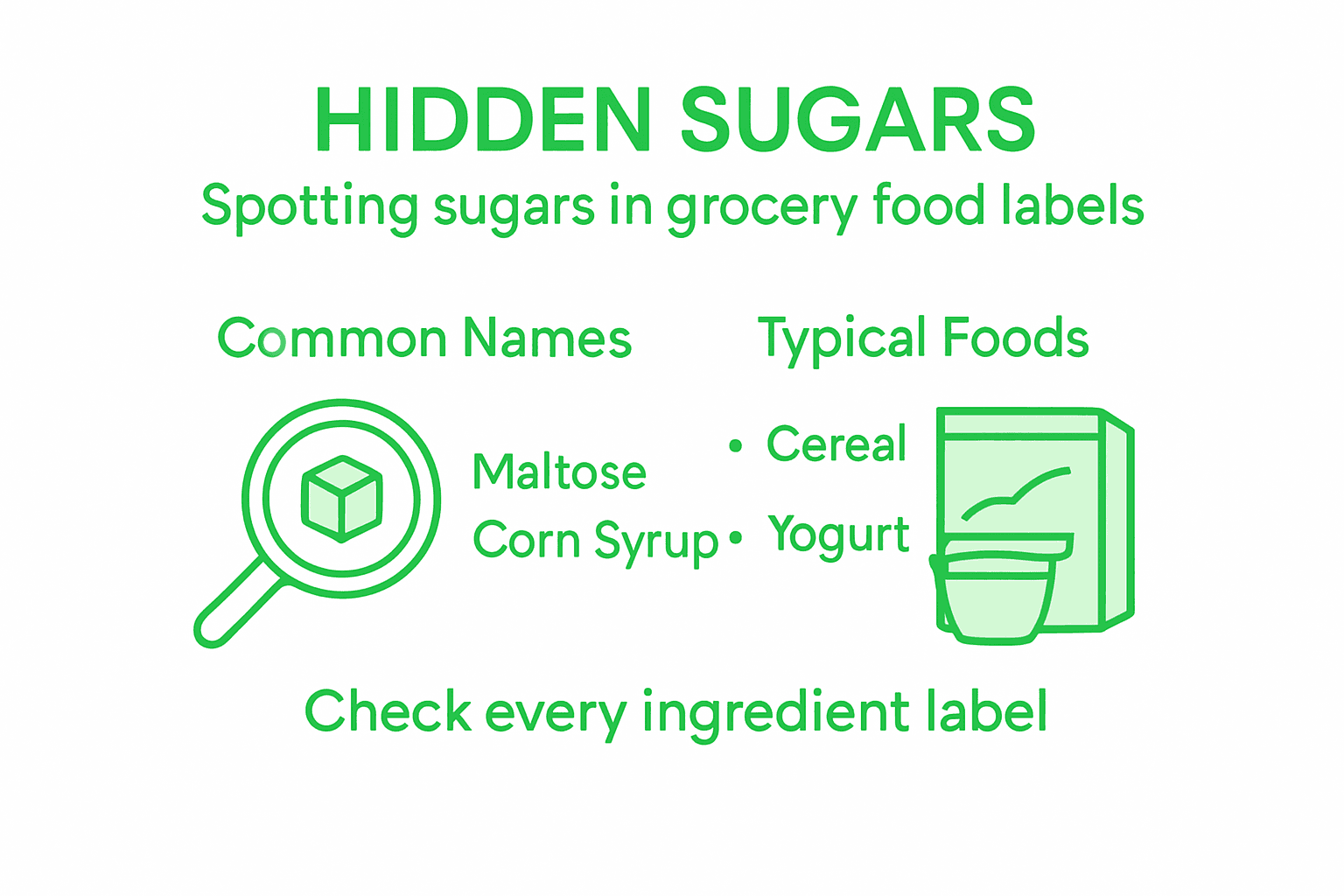
Here is a quick reference to commonly used alternative names for added sugars and suggestions for spotting them on labels:
| Sugar Alias | Typical Products | Label Clue |
|---|---|---|
| High-fructose corn syrup | Sodas, baked goods | Ends in ‘syrup’ or ‘ose’ |
| Maltose | Cereal, sports drinks | Found near listed grains |
| Dextrose | Snack bars, desserts | Appears with starch sources |
| Rice syrup | Health snacks, granola | Often used in ‘healthy’ food |
| Fruit juice concentrate | Yoghurt, sauces | Contains ‘concentrate’ term |
| Sucrose | Table sugar, condiments | Classic sweetener name |
Identifying these listed names can help reduce unintentional sugar consumption.
Pro tip: When shopping, prioritise whole foods and carefully scan ingredient lists, looking beyond the nutrition label to identify sugar-related terms that might indicate hidden sweeteners.
Types of Sugars and Label Terminology
Navigating sugar terminology on food labels requires understanding the nuanced categories of sugars present in modern food products. Sugar labelling guidelines provide crucial insights into distinguishing between different types of sugars consumers encounter daily.
Food manufacturers use multiple sugar types, each with distinct characteristics and metabolic impacts. The primary categories include:
- Naturally occurring sugars: Found in whole fruits, vegetables, and dairy products
- Added sugars: Incorporated during food processing or preparation
- Simple sugars: Monosaccharides like glucose and fructose
- Complex sugars: Disaccharides such as sucrose and lactose
Added sugars represent a particularly critical category for health-conscious consumers. These sugars are introduced during manufacturing and include ingredients like high-fructose corn syrup, honey, maltose, and fruit juice concentrates. Common sugar types often appear under multiple names, making label reading challenging.
Nutrition labels now provide more transparent information about sugar content. The Dietary Guidelines recommend limiting added sugars to less than 10% of total daily caloric intake. Consumers should carefully examine ingredient lists, looking for terms indicating hidden sugars and understanding their potential health implications.
Pro tip: Develop a habit of scanning ingredient lists from top to bottom, recognising that ingredients are listed in descending order of quantity, with sugar-related terms potentially appearing under various names.
Common Food Sources You Might Miss
Unexpected sugar sources often lurk in foods consumers least expect, transforming seemingly healthy choices into sugar traps. Many processed and packaged foods contain hidden sugars that can significantly impact daily nutritional intake, often without consumers realising.
Common food categories harbouring concealed sugars include:
- Condiments like ketchup and barbecue sauce
- Salad dressings and marinades
- Breakfast cereals and granola
- Packaged fruit products
- Flavoured yoghurts
- Bread and bakery items
- Canned soups and sauces
- Protein bars and health snacks
Processed foods represent the most significant source of hidden sugars. Nutrition experts consistently warn that beverages pose an especially dangerous category, with soft drinks, fruit juices, and sweetened coffee drinks often containing shocking amounts of added sugars.
Understanding sugar content requires careful label examination. Manufacturers frequently use alternative names for sugar, making identification challenging. These include corn syrup, maltose, dextrose, and fruit juice concentrates, which can easily go unnoticed by unsuspecting consumers.
The following table summarises common hidden sugar sources and healthier alternatives for practical substitution:
| Food Category | Hidden Sugar Example | Healthier Swap |
|---|---|---|
| Breakfast cereal | Frosted corn flakes | Porridge with fresh fruit |
| Flavoured yoghurt | Fruit yoghurt | Plain yoghurt with berries |
| Fruit beverages | Bottled smoothies | Whole fresh fruit |
| Bread products | Sweet rolls or buns | Whole grain bread |
| Salad dressing | Honey mustard | Vinegar and olive oil |
Swapping these options can significantly decrease daily added sugar intake.
Pro tip: Develop a systematic approach to label reading by scanning ingredient lists from top to bottom, recognising that ingredients are listed in descending order of quantity.
Recognising Hidden Sugars in Organic Products
Sugar content in organic products can be surprisingly complex, challenging the common perception that organic automatically means healthier. Many consumers mistakenly assume organic certification guarantees low sugar content, when in reality, these products may still contain significant added sugars.
Key sugar sources in seemingly healthy organic products include:
- Organic fruit juices and smoothies
- Flavoured yoghurts and dairy alternatives
- Organic granola and breakfast cereals
- Dried fruit and fruit-based snacks
- Organic sauces and condiments
- Health food bars and protein supplements
- Organic baked goods
- Plant-based milk alternatives
Organic labelling does not eliminate sugar content. Nutrition experts caution that manufacturers frequently use alternative sugar names to make products appear more natural. These include organic honey, coconut sugar, agave nectar, and fruit juice concentrates, which can contribute substantial sugar quantities despite their seemingly wholesome origins.
Careful label examination remains the most effective strategy for identifying hidden sugars. Understanding that organic certification primarily relates to production methods, not nutritional composition, empowers consumers to make more informed dietary choices. Scanning ingredient lists thoroughly and recognising various sugar aliases is crucial for maintaining a low-sugar diet.

Pro tip: Develop a habit of comparing sugar content across different organic brands, recognising that ‘organic’ does not automatically mean low in sugar.
Health Risks for Children and Adults
Excessive sugar consumption poses significant health risks that impact both children and adults across multiple physiological systems. The consequences extend far beyond simple weight gain, encompassing complex metabolic and long-term health challenges.
Primary health risks associated with high sugar intake include:
- Obesity: Increased body weight and fat accumulation
- Type 2 Diabetes: Insulin resistance and metabolic dysfunction
- Cardiovascular Disease: Higher risk of heart-related complications
- Dental Caries: Increased tooth decay and oral health problems
- Nutrient Deficiency: Displacement of nutrient-dense foods
- Metabolic Syndrome: Disrupted hormonal and metabolic processes
Dietary guidelines recommend limiting added sugar intake to less than 10% of total daily calories. Nutrition researchers warn that consistently high sugar consumption can trigger a cascade of health complications, with children being particularly vulnerable to long-term metabolic programming and developmental challenges.
Understanding the intricate relationship between sugar intake and health requires recognising that sugar’s impact transcends immediate caloric concerns. Chronic exposure to high sugar levels can fundamentally alter metabolic processes, potentially leading to systemic inflammation, compromised immune function, and increased risk of chronic diseases.
Pro tip: Implement gradual sugar reduction strategies, focusing on replacing high-sugar foods with whole, nutrient-dense alternatives to support sustainable health improvements.
Practical Strategies for Reducing Intake
Systematic sugar reduction requires a thoughtful, gradual approach that empowers families to make sustainable dietary modifications. Understanding that dramatic changes often lead to resistance, nutritionists recommend incremental strategies that transform eating habits without causing deprivation.
Key practical strategies for reducing sugar intake include:
- Gradually dilute sugary beverages with water
- Replace sweetened yoghurts with plain, unsweetened varieties
- Choose whole fruits instead of fruit juices
- Read nutrition labels meticulously
- Opt for homemade meals over processed alternatives
- Use spices like cinnamon to enhance natural sweetness
- Experiment with natural sugar substitutes
- Practice mindful eating and portion control
Nutrition experts emphasise the importance of understanding sugar’s various disguises. Hidden sugar sources require vigilance in identifying ingredients like high-fructose corn syrup, maltose, and fruit juice concentrates that often masquerade in seemingly healthy products.
Education remains the most powerful tool in reducing sugar consumption. Families should focus on developing a comprehensive understanding of nutritional labels, recognising that marketing terms like ‘natural’ or ‘organic’ do not automatically translate to low sugar content. Implementing these strategies requires consistent effort and a holistic approach to dietary awareness.
Pro tip: Introduce sugar reduction as a family challenge, making nutritional education an engaging and collaborative experience that empowers everyone to make healthier choices.
Take Control of Hidden Sugars and Protect Your Family’s Health Today
Navigating the maze of hidden sugars with names like maltose and high-fructose corn syrup can be overwhelming for any health-conscious family in Delhi NCR. These added sugars often sneak into everyday foods, making it challenging to maintain a truly wholesome diet. At Nature’s Soul, we understand the struggle you face to avoid empty calories and ensure your loved ones consume only pure, clean ingredients. Our wide selection of organic and natural products spans fresh fruits, vegetables, meats, dry grocery, dairy, vegan, gluten free, and even home and skin care items — all designed to help you eliminate hidden sugars from your meals.
Empower yourself to make informed choices and embrace a lifestyle free from deceptive sweeteners by exploring our carefully curated offerings at Nature’s Soul Shop. Start by swapping processed foods for our nourishing alternatives and discover the ease of living sugar-aware. Visit Nature’s Soul Shop now and turn label reading from a challenge into confidence with the support of products crafted for your family’s health.
Frequently Asked Questions
What are hidden sugars?
Hidden sugars are added sugars that are not immediately obvious in food products. They can often be found in processed and packaged foods, including items like breakfast cereals, yoghurts, sauces, and beverages.
How can I identify hidden sugars in food products?
To identify hidden sugars, it is essential to read ingredient labels carefully. Look for alternative names for sugars, such as high-fructose corn syrup, maltose, and fruit juice concentrates. Ingredients are listed in descending order, so sugar-related terms may appear towards the beginning of the list if present in significant amounts.
What are some unexpected sources of hidden sugars?
Unexpected sources of hidden sugars include condiments like ketchup and salad dressings, flavoured yoghurts, breakfast cereals, and even health snacks like protein bars. Processed foods and beverages are often the most significant contributors to hidden sugars.
Why is it important to reduce sugar intake in my family’s diet?
Reducing sugar intake is crucial as excessive sugar consumption can lead to various health risks, including obesity, type 2 diabetes, and heart disease. Mindful dietary choices help in maintaining overall health and preventing long-term health complications.


