


Finding skincare that truly matches your health and sustainability goals can feel like sorting through a maze of conflicting labels and marketing terms. For women in Delhi NCR who value eco-friendly choices and crave real ingredient transparency, the clean beauty trend promises a fresh approach to conscious personal care. This guide helps you cut through the confusion, spot common myths, and make genuinely informed choices about the products on your shelf.
Table of Contents
- Defining Clean Beauty And Common Myths
- Ingredient Standards And Transparency Explained
- Eco-Friendly Packaging And Sustainability Practices
- Benefits And Limitations Of Choosing Clean Beauty
- Navigating Risks And Greenwashing Concerns
Key Takeaways
| Point | Details |
|---|---|
| Understanding Clean Beauty | Clean beauty focuses on ingredient safety, transparency, and ethical practices but is not synonymous with natural or organic products. Consumers should educate themselves about the nuances of these terms. |
| Ingredient Transparency Importance | The demand for ingredient transparency has risen, requiring brands to disclose comprehensive information about sourcing, environmental impact, and ethical practices. Consumers should look beyond superficial claims when evaluating products. |
| Sustainable Packaging Expectations | Eco-friendly packaging is essential in the clean beauty movement, with consumers expecting materials that minimise ecological impact. Brands must adopt genuine sustainable practices rather than rely on greenwashing. |
| Navigating Greenwashing Risks | Consumers should be vigilant about greenwashing tactics and verify sustainability claims through independent research and third-party certifications to ensure genuine commitment to environmental standards. |
Defining Clean Beauty and Common Myths
The clean beauty movement has emerged as a powerful consumer-driven trend, challenging traditional skincare paradigms and demanding greater transparency in product formulations. While the concept sounds straightforward, clean beauty lacks a precise definition, creating significant confusion among consumers and industry professionals alike.
At its core, clean beauty represents a holistic approach to personal care that prioritises:
- Ingredient safety and transparency
- Minimising potentially harmful chemical exposures
- Environmental sustainability
- Ethical production practices
- Reducing potential allergen and irritant risks
Contrary to popular belief, clean beauty is not synonymous with ‘natural’ or ‘organic’ products. Scientific evidence regarding ingredient harm remains limited, challenging many widespread assumptions about chemical safety and toxicity.
To clarify differences, here is a comparison of clean, natural, and organic beauty concepts:
| Concept | Definition in Practice | Common Consumer Misconception | Typical Certification |
|---|---|---|---|
| Clean Beauty | Focuses on ingredient safety and transparency | Believed to mean chemical-free | None, brand-dependent |
| Natural Beauty | Uses plant-derived, minimally processed ingredients | Assumed to be safer than synthetic | Sometimes, varies widely |
| Organic Beauty | Includes certified organic agricultural content | Considered free from all synthetics | Formal certification (e.g. COSMOS) |
Common myths surrounding clean beauty often revolve around misconceptions about ingredient safety and effectiveness. Many consumers believe that ‘chemical-free’ automatically means safer, when in reality, natural ingredients can be equally or more allergenic than synthetic alternatives.
Clean beauty is not about eliminating all chemicals, but about making informed, evidence-based choices about skincare ingredients.
Key ingredients typically avoided in clean beauty products include:
- Parabens
- Phthalates
- Formaldehyde
- Chemical sunscreens
- Synthetic fragrances
Pro tip: Always read ingredient labels carefully and understand that ‘clean’ is a nuanced concept requiring personal research and individual skin assessment.
Ingredient Standards and Transparency Explained
The beauty industry is experiencing a transformative shift towards ingredient transparency and comprehensive disclosure, driven by increasingly informed and discerning consumers. This movement goes beyond merely listing ingredients, demanding a holistic understanding of product composition, sourcing, and environmental impact.
Key aspects of ingredient transparency in clean beauty include:
- Complete ingredient disclosure
- Scientific evidence of ingredient safety
- Detailed supply chain information
- Ethical sourcing practices
- Environmental sustainability metrics
- Comprehensive traceability from source to product
Unfortunately, the clean beauty landscape remains complex and often misleading. No universally accepted definition exists for clean beauty standards, creating significant challenges for consumers attempting to make informed choices.
Consumers are increasingly demanding more than traditional product labels. They want to understand not just what ingredients are excluded, but also the complete narrative behind each product’s creation, including its social and environmental implications.
True ingredient transparency means revealing the entire journey of a product, from raw material to final formulation.
Critical factors consumers should scrutinise include:
- Ingredient origin
- Manufacturing processes
- Environmental impact
- Ethical production standards
- Long-term sustainability commitments
Pro tip: Always research beyond marketing claims and investigate a brand’s genuine commitment to transparency and ethical practices.
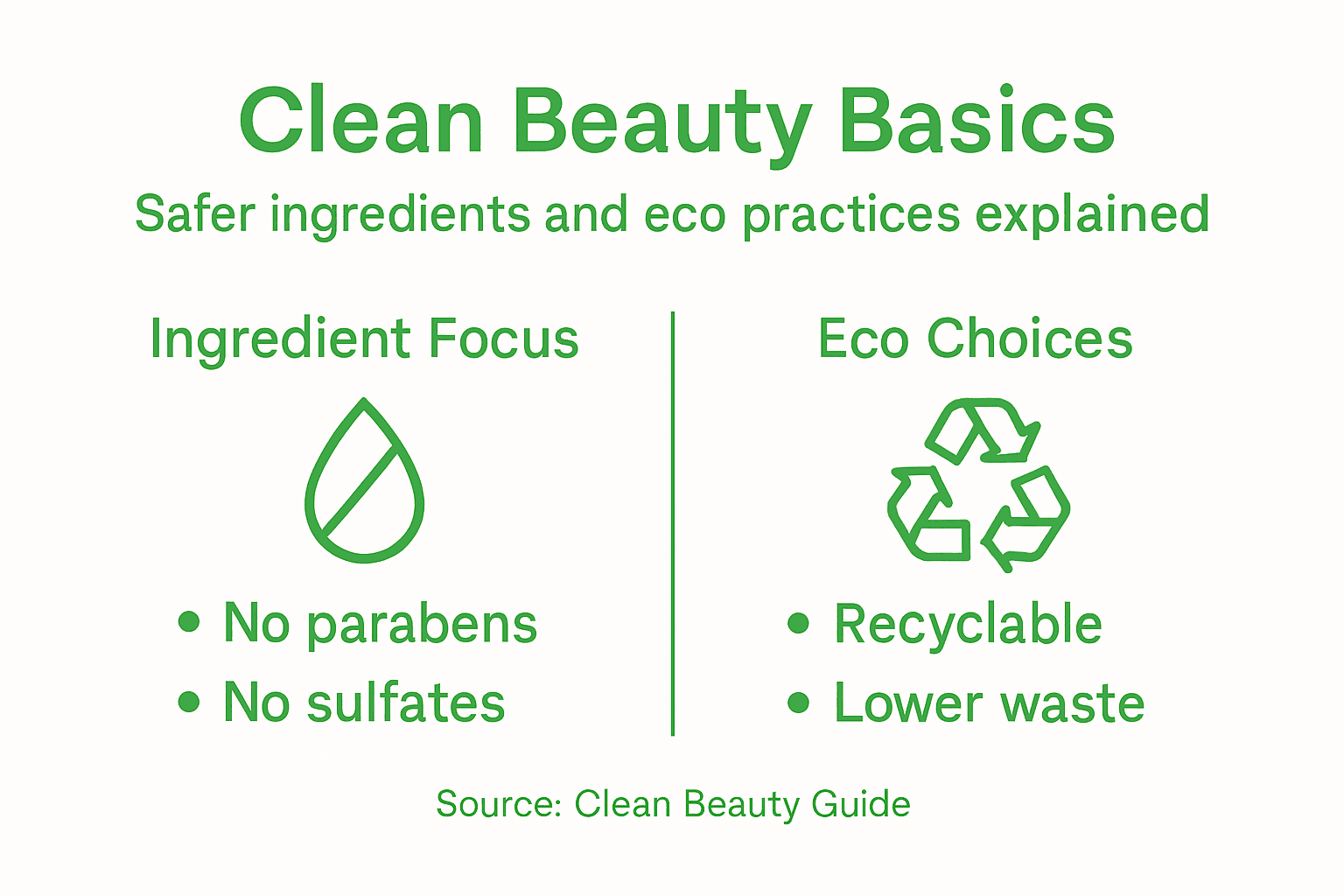
Eco-Friendly Packaging and Sustainability Practices
The clean beauty movement has evolved beyond ingredient safety to embrace comprehensive sustainability in packaging design, reflecting a holistic approach to environmental responsibility. Consumers now demand more than just safe ingredients; they expect packaging solutions that minimise ecological impact and demonstrate genuine commitment to planetary wellness.
Key sustainable packaging materials include:
- Recycled plastics
- Glass containers
- Metal tins
- Plant-based biodegradable plastics
- Minimalist packaging designs
- Refillable and reusable packaging systems
Life cycle analysis reveals significant environmental benefits when brands adopt strategic packaging approaches. Polypropylene (PP) demonstrates the lowest environmental impact, while renewable energy manufacturing processes further reduce carbon footprints.

The shift towards sustainable packaging represents more than a trend—it’s a fundamental reimagining of product design and corporate responsibility. Brands are increasingly recognising that packaging is not just a container, but a critical statement of their environmental values.
For a clearer perspective, see how eco-friendly packaging options compare:
| Packaging Material | Environmental Benefit | Potential Drawbacks |
|---|---|---|
| Recycled Plastics | Reduces plastic pollution | Can still release microplastics |
| Glass Containers | Reusable and fully recyclable | High energy cost in production and transport |
| Biodegradable Plastics | Breaks down under certain conditions | May require industrial composting |
| Metal Tins | Durable and highly recyclable | Can increase resource extraction impact |
| Refillable Systems | Significantly lowers waste | Depends on return and cleaning logistics |
Sustainable packaging is no longer optional—it’s a fundamental expectation of conscientious consumers.
Critical considerations for eco-friendly packaging include:
- Material recyclability
- Carbon emission during production
- Renewable resource usage
- Waste reduction potential
- Long-term environmental impact
Pro tip: Examine packaging beyond superficial ‘green’ claims by investigating a brand’s complete sustainability methodology and verifiable environmental commitments.
Benefits and Limitations of Choosing Clean Beauty
Clean beauty represents a nuanced approach to personal care that goes beyond simple ingredient selection, offering complex benefits and challenges for conscientious consumers. The movement aims to prioritise health, environmental responsibility, and ethical production practices while navigating an often ambiguous regulatory landscape.
Key benefits of clean beauty include:
- Reduced exposure to potentially harmful chemicals
- Enhanced skin health and sensitivity management
- Support for sustainable and ethical production practices
- Increased transparency in ingredient sourcing
- Alignment with personal wellness and environmental values
- Lower risk of long-term skin irritation
Consumer research highlights significant challenges within the clean beauty ecosystem. The lack of standardised regulations creates opportunities for greenwashing, making it crucial for consumers to develop critical evaluation skills and conduct thorough product research.
The movement’s primary limitations involve higher product costs, limited availability, and inconsistent quality standards. Consumers must balance their desire for safer, more sustainable products with practical considerations of accessibility and affordability.
Clean beauty is not about perfection, but about making progressively better choices for personal and planetary health.
Critical factors to consider when selecting clean beauty products:
- Ingredient transparency
- Third-party certifications
- Brand ethical standards
- Environmental impact
- Long-term product efficacy
Pro tip: Develop a discerning approach by researching brands’ complete sustainability methodologies rather than relying solely on surface-level marketing claims.
Navigating Risks and Greenwashing Concerns
The beauty industry confronts significant challenges with greenwashing, a practice where companies misrepresent their environmental credentials to appear more sustainable than they truly are. This deceptive marketing strategy undermines consumer trust and genuine sustainability efforts.
Common greenwashing tactics include:
- Using vague environmental terminology
- Making unsubstantiated eco-friendly claims
- Displaying misleading imagery suggestive of sustainability
- Highlighting minor environmental initiatives
- Concealing overall negative environmental impacts
- Selectively reporting positive environmental metrics
Assessment tools have been developed to detect corporate greenwashing practices specifically within the cosmetics sector. These tools focus on transparency, market integrity, and comprehensive sustainability evaluation.
The lack of harmonised global regulations creates significant challenges for consumers attempting to distinguish genuine sustainable practices from marketing manipulation. Companies exploit regulatory gaps to present misleading environmental narratives.
Genuine sustainability requires comprehensive commitment, not superficial marketing claims.
Strategies for identifying potential greenwashing include:
- Investigating third-party certifications
- Examining detailed sustainability reports
- Verifying specific environmental claims
- Understanding complete supply chain practices
- Researching independent sustainability assessments
Pro tip: Always cross-reference brands’ sustainability claims with independent research and look beyond glossy marketing materials to understand their true environmental commitment.
Embrace Clean Beauty with Confidence for Your Skin and the Planet
Navigating the clean beauty movement can feel overwhelming due to unclear definitions and concerns about greenwashing. This article highlights the importance of ingredient transparency, ethical sourcing, and sustainable packaging—all essential for safeguarding your skin and supporting our planet’s health. At Nature’s Soul Shop, we understand these challenges and are committed to providing genuine clean products that align with your wellness goals.
Discover our carefully curated range of organic and natural products featuring clean ingredients across skin care, home care, and more. Make informed choices today by exploring Nature’s Soul Shop to enjoy the benefits of safer formulations and eco-friendly packaging. Take the first step towards a healthier you and a greener planet now.
Frequently Asked Questions
What is clean beauty?
Clean beauty refers to a holistic approach to personal care that prioritises ingredient safety, transparency, environmental sustainability, and ethical production practices. It challenges traditional skincare norms and aims to minimise potentially harmful chemical exposures.
How does clean beauty differ from natural and organic beauty?
Clean beauty focuses on ingredient safety and transparency, whereas natural beauty relies on plant-derived ingredients and organic beauty includes certified organic agricultural content. Importantly, clean beauty is not synonymous with being completely chemical-free.
What are the benefits of using clean beauty products?
Clean beauty products can reduce exposure to potentially harmful chemicals, enhance skin health, support sustainable practices, and provide increased transparency in ingredient sourcing. They align with personal wellness and environmental values while lowering the risk of long-term skin irritation.
How can I identify greenwashing in beauty products?
To identify greenwashing, investigate third-party certifications, examine detailed sustainability reports, verify specific environmental claims, and understand a brand’s complete supply chain practices. Always cross-reference claims with independent research for accuracy.
Recommended
- Organic Skincare Benefits: Cleaner Living, Healthier Skin – naturessoulshop
- Achieve Radiant Skin with an Organic Skin Care Routine – naturessoulshop
- Natural Skin Care Benefits: Wellness for Sensitive Skin – naturessoulshop
- Eco Friendly Cleaning Solutions: For Safer Homes – naturessoulshop
- What is Organic Gardening? Understanding Sustainable Practices - Lushy Gardens


