


The fastest way to get organic fruit and veg to your door is a flexible weekly box from a dedicated organic supplier. Nature’s Soul Fresh is Naturessoulshop’s dedicated produce line, offering organic sourcing, flexible subscriptions you can skip or cancel, and clear delivery slots so you know exactly when to expect your order.
Get started now:
- Visit the Nature’s Soul Fresh page and browse box options or build your own
- Choose your delivery slot and frequency (one-off or weekly subscription)
- Complete checkout and manage your account to skip, pause, or personalise at any time
Key takeaways
Organic produce home delivery works best when you match your box type and delivery day to how your household actually cooks, then verify sourcing and flexibility before committing.
| Point | Details |
|---|---|
| Match box type to your household | Veg box for daily cooking, mixed box for variety, build-your-own for specific diets or preferences. |
| Check the five criteria first | Reliability, quality, transparency, flexibility, and total cost reveal whether a service is worth the commitment. |
| Sourcing transparency matters | Named farms, organic certification, and a seasonal produce calendar are the clearest signs of genuine quality. |
| Subscription flexibility reduces risk | Self-service skip, pause, and cancel options mean you are never locked in against your will. |
| Naturessoulshop’s Nature’s Soul Fresh | Covers organic produce delivery with freshness guidance, a service comparison, and a flexible subscription model. |
Table of Contents
- How does produce home delivery actually work?
- Which box type suits your household?
- What does produce home delivery actually cost?
- Where does the produce come from, and how fresh is it?
- How do you choose a reliable produce delivery service?
- Why Nature’s Soul Fresh meets these criteria
- A note from Naturessoulshop
- Getting started with Nature’s Soul Fresh
- Useful sources and further reading
How does produce home delivery actually work?
The basic flow is straightforward: you order online, the supplier packs your box, and a courier delivers it to your door on a scheduled day. What varies between services is how much control you have over each step.
Here is the typical order journey:
- Select your box or build your own. Most services offer pre-curated veg boxes, fruit boxes, or mixed options. Bespoke options let you choose individual items.
- Choose your frequency. A one-off order suits a trial run; a weekly subscription locks in your slot and often reduces the per-delivery cost.
- Pick a delivery slot. Reliable services publish specific windows (morning, afternoon, or a named day) rather than vague multi-day ranges.
- Pay and set up your account. Look for SSL-encrypted checkout, card and PayPal acceptance, and a clear account dashboard where you can skip weeks, pause, or cancel without phoning anyone.
- Receive and store your produce. Unpack promptly, refrigerate leafy greens and soft fruit immediately, and keep root vegetables in a cool, dark spot.
Understanding fresh food delivery workflows helps here: the best services pack on the day of dispatch and run early-morning van routes, which cuts transit time and keeps produce at its best by the time it reaches you.
Subscription features worth checking before you commit: the ability to swap individual items, a favourites list that carries over each week, and a no-penalty skip policy for holidays or busy weeks.
Pro Tip: Align your delivery day with your weekly meal-prep session. If you cook on Sundays, a Saturday delivery means nothing sits in the fridge unused. Scheduling deliveries to match weekly meal planning is one of the most effective ways to cut waste from a produce subscription.
Which box type suits your household?
There are four main categories, and the right one depends less on budget than on how you actually cook.
- Veg box. The workhorse option for households that cook from scratch most nights. Typically seasonal, which means variety changes week to week and prices stay lower than year-round imports.
- Fruit box. Best for snacking households, families with children, or anyone who wants to cut down on processed snacks without much planning effort.
- Mixed fruit and veg box. The most popular choice for couples and small families. You get variety without managing two separate deliveries.
- Build-your-own / bespoke order. Ideal if you follow a specific diet, have strong dislikes, or already have half a fridge of leftovers. You pick exactly what you want, nothing more.
Box sizes generally map to household size: a small box suits one or two people eating lightly, a medium box covers a couple cooking most meals at home, and a large box is designed for a family of four or more. Some services offer an extra-large or “catering” tier for households that batch-cook.
Beyond the box itself, most services let you add pantry staples (oils, pulses, grains), recipe kits, or dairy. These add-ons are worth considering if you want a single weekly delivery rather than a separate supermarket run. Naturessoulshop’s wider store covers dry grocery, dairy, and vegan and gluten-free options alongside produce, so you can consolidate in one order.
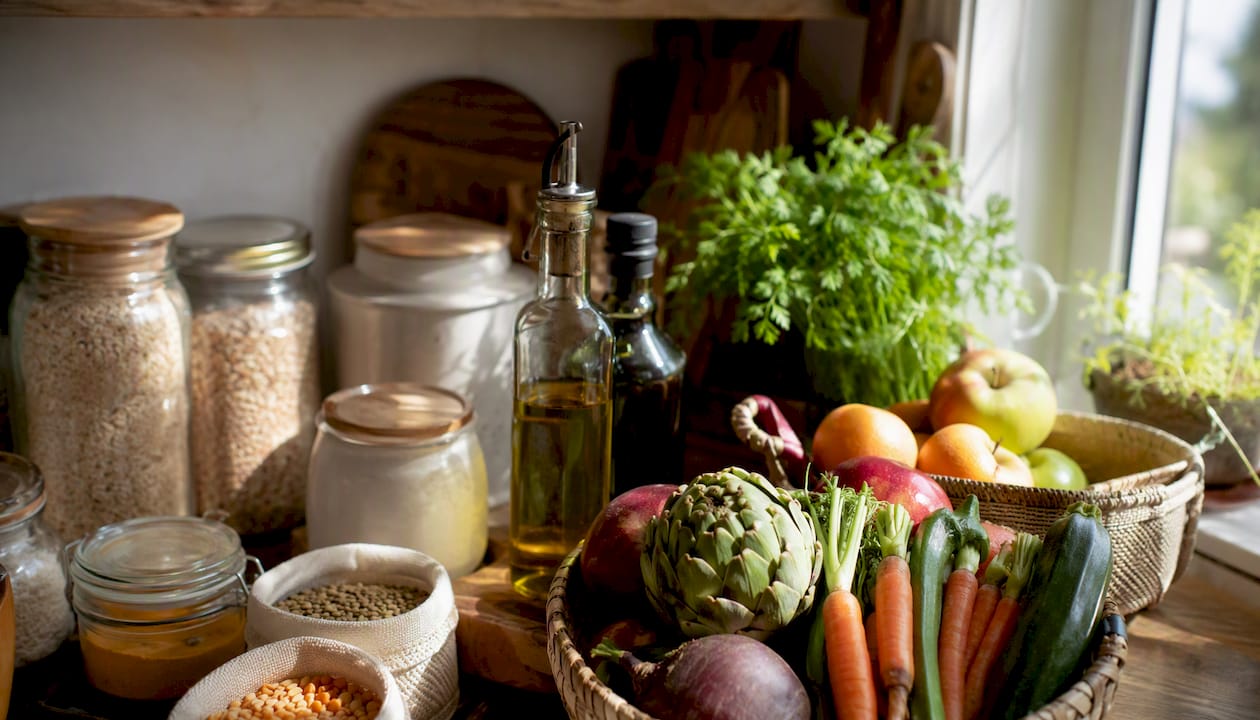
Personalisation features, specifically item swaps and opt-outs, are what separate a genuinely useful subscription from one that generates food waste. If a service does not let you exclude items you dislike, the novelty of a curated box wears off quickly.
What does produce home delivery actually cost?
The total cost has three components: the box price, the delivery fee, and any optional extras. Delivery fees are the most commonly overlooked part of the comparison.
| Order type | Typical box price range | Delivery fee | Notes |
|---|---|---|---|
| Small veg or fruit box | a typical price range for small veg or fruit boxes | £2–£5 | Often waived above a minimum spend |
| Medium mixed box | a typical price range for medium mixed boxes | £2–£5 | Subscription discounts commonly apply |
| Large family box | a typical price range for large family boxes | Free or reduced | Most services waive fees at this tier |
| Add-ons (pantry/extras) | a typical price range for add-ons | Bundled with main order | Check for minimum order thresholds |
Price ranges are illustrative industry benchmarks. Confirm current pricing directly with your chosen supplier before ordering.
A few things to watch for:
- Free-delivery thresholds. Many services waive the delivery fee once your order exceeds a set value, typically somewhere between a moderate minimum spend level for free delivery.
- Subscription discounts. A weekly subscription almost always costs less per delivery than a one-off order, sometimes by a modest percentage.
- Express or evening slot fees. Some services charge a premium for next-day or after-6pm delivery. If you need that flexibility regularly, factor it into your weekly cost.
- Payment surcharges. A small number of services add a fee for certain card types. Check the checkout page before you commit.
To calculate your real weekly cost per person: add the box price and delivery fee, divide by the number of people in your household, then compare that figure against what you currently spend on fresh produce at a supermarket. For most households cooking four or more evenings a week, a medium subscription box works out cheaper per portion than buying equivalent organic produce loose.
Where does the produce come from, and how fresh is it?
Sourcing models vary considerably, and the difference matters for both flavour and food miles. The three common models are: direct-from-farm (the supplier has named relationships with specific growers), local co-operative (a group of regional farms pools produce for distribution), and wholesale via certified organic suppliers (larger operations that source from multiple certified farms, sometimes internationally).
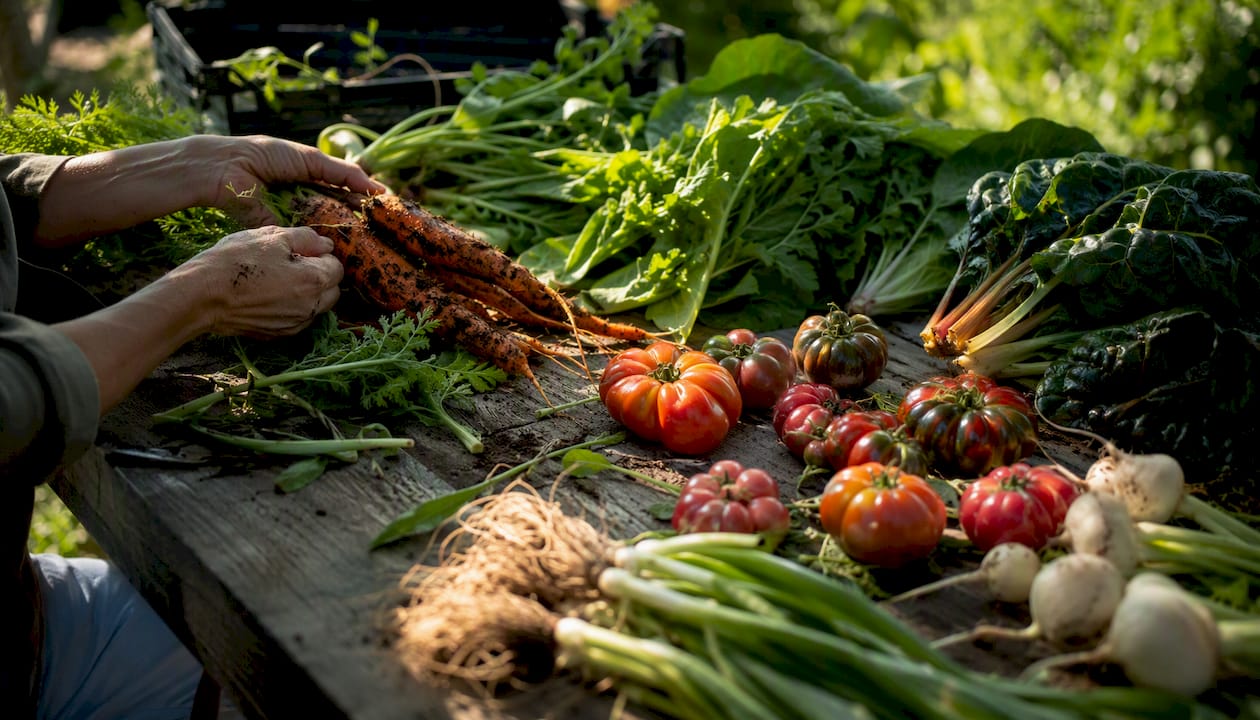
Local sourcing and transparent producer lists are the clearest indicators that a supplier prioritises freshness over convenience. Short supply chains reduce transit time and the need for cold storage, which is why locally sourced seasonal produce typically tastes noticeably better than the same variety shipped from overseas.
Trust signals to look for when evaluating sourcing claims:
- Named farms or growers on the website, not just generic “local farms” language
- A seasonal produce calendar that changes month to month
- Organic certification logos (look for recognised certifying bodies in your country)
- Packaging that states the country or region of origin per item
Freshness is preserved through a combination of chilled packing, day-of-harvest or next-day dispatch, insulated box liners, and courier timing that avoids weekend delays. Naturessoulshop publishes specific guidance on storing home-delivered produce to help you get the most from each delivery once it arrives.
Pro Tip: Ask any supplier two direct questions before subscribing: “What is the typical time between harvest and dispatch?” and “Can you name the farms your seasonal veg comes from this week?” A supplier confident in their sourcing will answer both without hesitation. Vague answers about “trusted partners” are a signal worth noting.
For packaging, reusable produce bags are an easy way to reduce single-use plastic once your box arrives, particularly for loose items like salad leaves or herbs.
How do you choose a reliable produce delivery service?
The five criteria that matter most are reliability, quality, transparency, flexibility, and cost, roughly in that order. A service that delivers on time every week but charges slightly more is almost always worth it over a cheaper one with inconsistent slots.
Before signing up, work through these questions:
- Reliability. Does the service publish specific delivery windows, or just a day? Can you see a delivery schedule before you commit?
- Quality. Are there customer reviews (on independent platforms) that specifically mention produce condition on arrival? One or two complaints about bruised items are normal; a pattern is not.
- Transparency. Does the website name its farms or certifying bodies? Is there a seasonal produce list you can check?
- Flexibility. Can you skip a week without penalty? Is cancellation self-service, or do you have to call?
- Cost. What is the total cost including delivery? Is there a free-delivery threshold, and does a subscription discount apply from week one?
Naturessoulshop has published a comparison of fruit and vegetable home delivery services that walks through these criteria in detail, which is worth reading alongside this guide.
Red flags that should give you pause:
- No named delivery slots, only a vague “within 3–5 days” window
- Customer reviews that repeatedly mention wrong items or missing substitutions
- A cancellation process that requires a phone call during business hours
- No refund or credit policy for damaged produce
Trust signals that genuinely matter: a published producer list, a clear refund or credit policy for damaged items, a self-service skip function, and a customer-service email or chat that responds within 24 hours.
Why Nature’s Soul Fresh meets these criteria
The publisher’s E-E-A-T credentials for produce delivery include:
- A dedicated organic produce home delivery blog post explaining the brand’s approach to seasonal and organic sourcing
- Published freshness guidance covering storage, handling, and how to get the most from each delivery
- A service comparison article demonstrating market knowledge and evaluation criteria
- A localised delivery comparison covering regional delivery windows
- Content on supporting local farmers that reflects the brand’s sourcing philosophy
The article is written by Arjit, drawing on Naturessoulshop’s expertise across organic produce, clean-ingredient grocery, and wellness categories.
A note from Naturessoulshop
At Naturessoulshop, we built Nature’s Soul Fresh because we believe getting organic, seasonal produce to your door should be straightforward, not a compromise. Every box we send reflects a commitment to clean ingredients and transparent sourcing. If a variety is out of season, we will tell you rather than substitute a long-haul import without explanation.
We know life is unpredictable, so skipping a week or adjusting your box is always self-service. Your first order is the easiest way to see whether the quality matches what we describe here.
Getting started with Nature’s Soul Fresh
Visit the Nature’s Soul Fresh page and you can be set up in under five minutes.
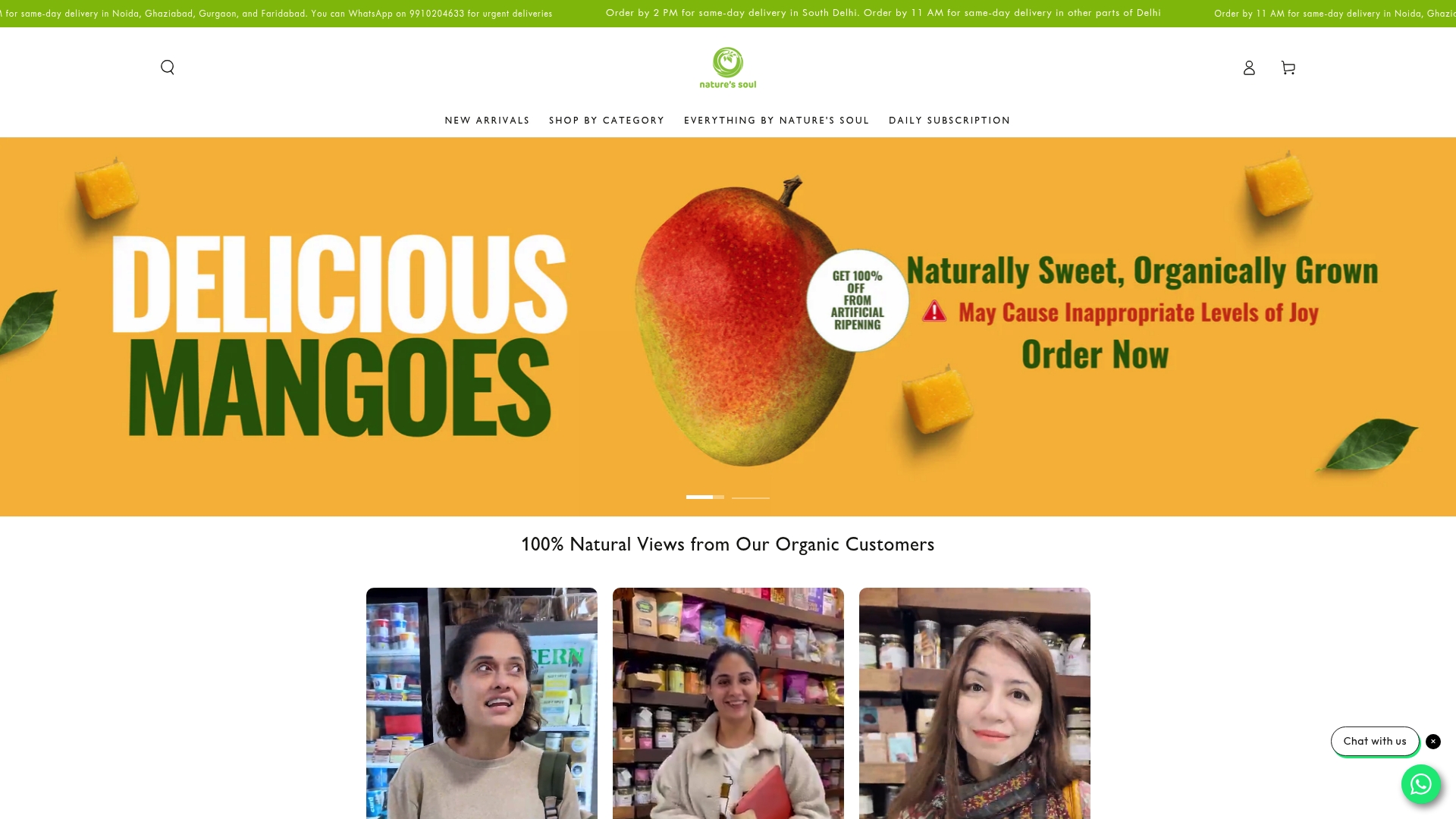
Practical first steps:
- Create your account on Naturessoulshop and navigate to the Nature’s Soul Fresh section
- Choose a pre-curated box or select individual items to build your own
- Set your delivery frequency (weekly subscription or one-off) and confirm your slot
- Apply any first-order offer at checkout
- Save your preferences so future orders reflect your household’s tastes from week one
Delivery windows are published in your account dashboard once your slot is confirmed. If anything arrives below standard, customer support is reachable by email and will arrange a credit or replacement. Skipping a week is self-service with no penalty.
Useful sources and further reading
The links below cover the publisher’s ordering pages, freshness guidance, and sourcing context that informed this guide.
- Ensure optimal freshness in home delivered produce — practical storage and handling tips for every delivery
- Best 5 fruit and vegetable home delivery services in 2025 — the publisher’s market comparison with evaluation criteria
- Local Food Delivery: What It Is and Why It Matters — independent commentary on local sourcing and short supply chains
- Fresh Food Delivery Explained — industry overview of dispatch workflows and courier timing


