


The most dependable route for organic produce home delivery in the UK is a certified box scheme that ships directly from farm to doorstep on a weekly or fortnightly schedule. Look for three things before you commit: a Soil Association or OF&G certification mark, a clear provenance statement naming the farm or region, and the ability to skip, pause, or amend your order without penalty.
- Certification: only subscribe to a scheme carrying a recognised organic certification. Without it, “natural” is a marketing word, not a guarantee.
- Provenance: the best services name the farms or counties their produce comes from, not just “UK-grown.”
- Flexibility: modern box schemes let you amend orders up to a cut-off point before dispatch, pause for holidays, and cancel without a lengthy notice period.
Pro Tip: Before subscribing, enter your postcode on the scheme’s website to confirm your delivery day. Many services operate fixed area-based days, so your slot may be Tuesday or Friday regardless of your preference.
Key takeaways
Choosing a certified organic box scheme with clear provenance, flexible account management, and transparent pricing is the most reliable way to get fresh organic produce delivered to your door in the UK.
| Point | Details |
|---|---|
| Verify certification first | Check for a Soil Association or OF&G logo and confirm the registration number on the certifying body’s website. |
| Match box size to your household | A small box suits one to two people for four to five days; a medium box covers two to three people for a full week. |
| Expect seasonal variation | Box contents and quantity shift through the year as part of the farm’s risk-sharing model; this is normal, not a service failure. |
| Check total cost before subscribing | Confirm the delivery fee, minimum order, and cancellation terms at checkout, not just the headline box price. |
| Naturessoulshop | Stocks certified organic produce alongside dairy, gluten-free, and pantry staples for a complete clean-ingredient weekly shop. |
Table of Contents
- What types of organic boxes can you get?
- How does organic produce home delivery actually work?
- What does organic produce delivery typically cost?
- Where does the produce come from and how is it certified?
- How do you choose the right organic delivery service?
- How to place your first order with Naturessoulshop
- What is an organic veg box delivery?
- Why organic box schemes are worth supporting
- Naturessoulshop: organic groceries delivered to your door
- Sources
What types of organic boxes can you get?
Box schemes have diversified well beyond the original “whatever’s in season” sack of muddy roots. Most services now offer several formats:
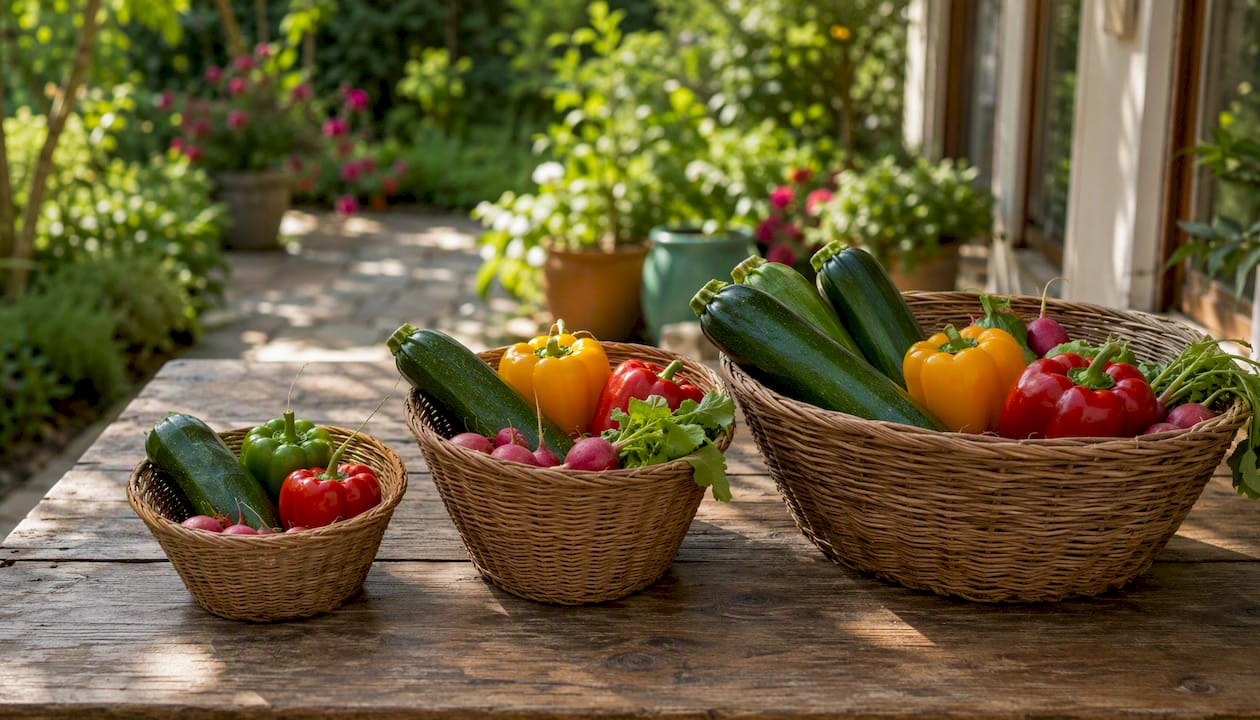
- Set seasonal veg box: the classic. Contents vary week to week based on what’s ready on the farm. You get no choice over what arrives, which is the point.
- Fruit and veg mixed box: combines a seasonal vegetable selection with a rotation of fruit. Useful if you want to replace a supermarket shop entirely.
- Family or large box: sized for four or more people, typically containing eight to twelve different items. A small or individual box suits one or two people and usually holds five to seven items.
- Build-your-own box: you select every item from a set list. More control, slightly less seasonal surprise.
- One-off or occasional box: no subscription required. Useful for testing a service before committing.
Seasonal variation is real and intentional. In glut months boxes may be fuller; in leaner periods, variety and quantity can fall as part of a risk-sharing model between the scheme and its growers. Common add-ons include eggs, dairy, bread, and pantry staples. If you want to build a fuller weekly shop around your box, guidance on pairing pantry staples with fresh produce is worth reading before you place your first order.
A rough portion guide: a small box feeds one to two people for roughly four to five days of cooking. A medium box covers two to three people for a full week. Scale up from there for larger households.
How does organic produce home delivery actually work?
The logistics vary by scheme, but the broad pattern is consistent across most UK services.
- Check postcode coverage first. Not every scheme delivers nationwide. Enter your postcode on the website before you choose a box. Some services operate fixed delivery days per area; others use national couriers with more flexible windows.
- Choose your cadence. Weekly is the most common option. Fortnightly suits smaller households or those who supplement with a supermarket shop. Some services offer flexible intervals you set yourself.
- Set your delivery preferences. Most accounts let you add a safe-place instruction (leave behind the gate, with a neighbour) and a delivery note. Boxes are insulated and can typically sit unattended for several hours.
- Amend before the cut-off. The majority of services allow you to swap items, add extras, or change your box size up to 24–48 hours before your delivery day. Miss the cut-off and the order goes as set.
- Skip or pause when needed. Going on holiday? Most schemes let you pause for one or more weeks through your account dashboard, no phone call required.
- Return or recycle packaging. Many services use recyclable cardboard and wool or paper insulation. Some run a box-return scheme where the driver collects the previous week’s packaging on the next delivery.
Pro Tip: If you find yourself regularly skipping weeks, switch to fortnightly rather than repeatedly pausing. It keeps your account active and often avoids any minimum-order complications.
For a broader look at how fresh food delivery services handle logistics and customer expectations, the partner resource from Wild Foodz covers the key features clearly.
What does organic produce delivery typically cost?
Independent reviews show sample box prices spanning roughly from the low teens to around £40 depending on size and contents. A small individual box tends to sit at the lower end; a large family box with add-ons pushes toward the top of that range.
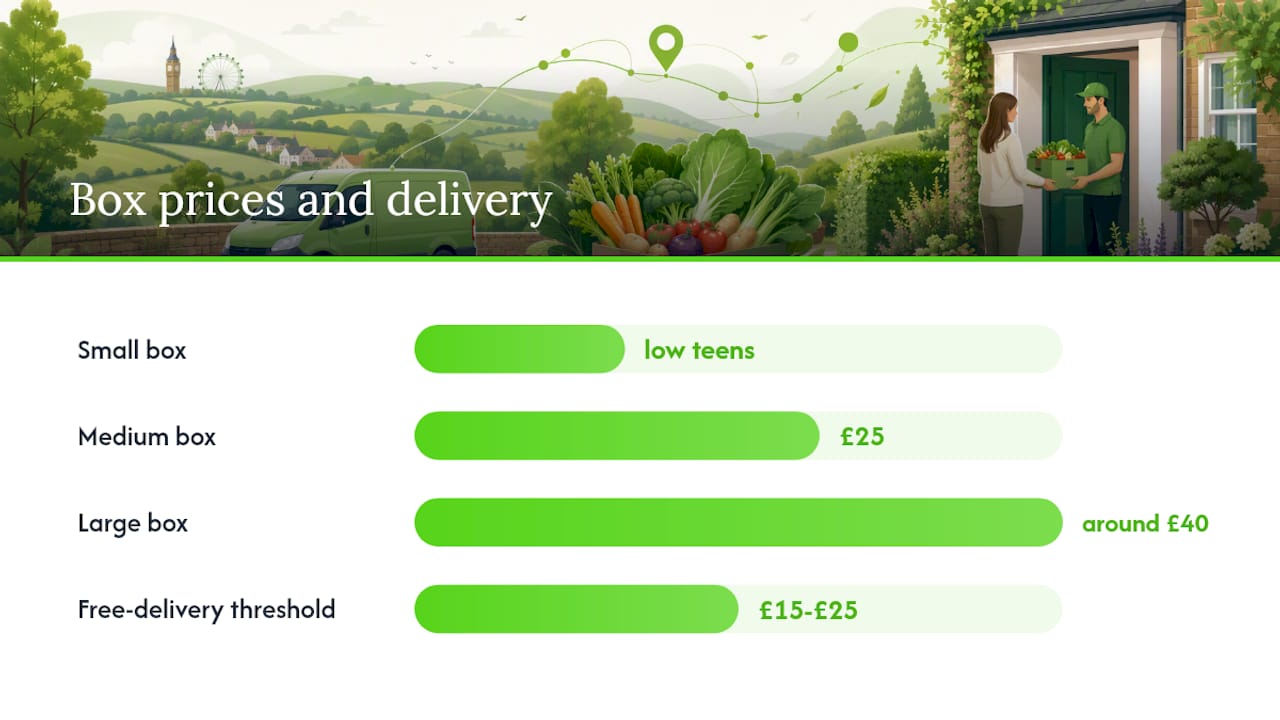
Delivery charges vary. Many schemes offer free delivery above a minimum order threshold, typically somewhere between £15 and £25. Orders below that threshold, remote postcodes, or added pantry items can attract a surcharge. Always check the total at checkout, not just the box price.
Per-person cost is a more useful metric than headline price. A £25 medium box feeding three people across five days of cooking works out at roughly £1.67 per person per meal for the vegetable component. Seasonal, locally grown items generally offer better value than imported out-of-season produce, which some schemes include to fill gaps.
Before subscribing, check these five things:
- Sample box contents for the current week (not a stock photo)
- Minimum order value and whether it includes delivery
- Delivery fee for your postcode
- Whether a trial offer or first-box discount applies
- Cancellation terms and notice period
Home delivery including box schemes accounts for about 19.5% of the organic market, which means competition is healthy and pricing is broadly comparable across reputable services.
Where does the produce come from and how is it certified?
Organic certification in the UK requires registration with an accredited body and an on-site inspection before any operator can use the word “organic” on their products. The two main bodies are the Soil Association and OF&G (Organic Farmers & Growers). Both require annual inspections and impose strict rules on pesticide use, soil management, and, where mixed processing occurs, contamination prevention.
Farm-to-door sourcing means the produce moves from harvest to your box with fewer intermediaries than a supermarket supply chain. The best schemes publish farm names, growing regions, and sometimes harvest dates on their product pages. That transparency is the provenance statement worth looking for.
Organic produce commonly lacks supermarket cosmetic uniformity. Expect odd shapes, soil traces, and the occasional field visitor. These are quality signals, not defects — they indicate field-grown produce that has not been washed, waxed, or treated for shelf appearance.
Shelf life for some items will be shorter than supermarket equivalents. Leafy greens and soft fruit in particular need using within a few days of delivery. Practical tips on storing home-delivered produce to maximise freshness are worth bookmarking alongside your first order. The Soil Association’s searchable directory is the most reliable way to verify that a scheme holds current certification.
How do you choose the right organic delivery service?
Run any service through this checklist before subscribing:
- Certification: Soil Association or OF&G logo, verifiable on the certifying body’s website
- Delivery area: postcode check confirms your area and your fixed delivery day
- Box types and size flexibility: at least small, medium, and large options; ideally a build-your-own option
- Order management: skip, pause, and amend without phoning customer service
- Pricing transparency: delivery fee and minimum order stated clearly before checkout
- Packaging: recyclable or returnable materials, no single-use plastic lining
- Customer support: email or phone contact with a stated response time
Red flags to avoid: no farm or region named anywhere on the site, subscriptions that require 30 days’ written notice to cancel, delivery fees that only appear at checkout, and no certification logo or registration number.
Naturessoulshop stocks certified organic produce and clearly labels product origins, making it straightforward to verify what you are buying before you add it to your order.
Pro Tip: Search the certifying body’s own website for the scheme’s registration number. A legitimate operator will have a current listing. If you cannot find it, ask the scheme directly before subscribing.
How to place your first order with Naturessoulshop
- Visit Naturessoulshop and enter your postcode to confirm delivery coverage.
- Browse the produce section and choose your box type: veg-only, fruit and veg mixed, or a curated seasonal selection.
- Select your box size based on household size and how many days of cooking you want to cover.
- Add any extras: eggs, dairy, gluten-free bread, or pantry staples.
- Set your delivery cadence: weekly or fortnightly.
- Enter a safe-place instruction and any delivery notes in the order form.
- Choose your payment method. Naturessoulshop accepts major debit and credit cards. Billing runs in line with your chosen delivery cadence.
- Confirm your first delivery date and place the order.
To place a one-off order rather than a subscription, select the single-delivery option at checkout. To pause or cancel later, log into your account and adjust your schedule before the weekly cut-off. For delivery problems or special requests, contact the Naturessoulshop support team via the help desk or email listed on the website.
What is an organic veg box delivery?
An organic veg box delivery is a subscription or one-off service that sends a curated selection of certified organic fruit and vegetables directly to your home, usually weekly. The produce is grown without synthetic pesticides or artificial fertilisers, certified by a recognised body, and packed for dispatch shortly after harvest. The box scheme model connects consumers directly to growers, cutting out the supermarket intermediary and allowing farmers to avoid supermarket price pressure while keeping a larger share of the retail price.
Why organic box schemes are worth supporting
Many UK consumers choose box schemes primarily to support local, nature-friendly farming and to reduce food miles. That motivation makes sense beyond the personal health argument. When you subscribe to a certified organic box, you are funding a farming model that prioritises soil health, biodiversity, and fair pay for growers over yield maximisation and cosmetic uniformity.
The environmental benefits of organic food choices extend beyond what ends up on your plate. Shorter supply chains mean lower transport emissions. Seasonal eating means less energy-intensive growing. And the direct relationship between subscriber and grower means farmers can plan crops with a degree of financial certainty that supermarket contracts rarely offer. That is the practical case for choosing a box scheme over picking up a bag of “organic” carrots at a supermarket with no information about where they came from.
Naturessoulshop: organic groceries delivered to your door
Naturessoulshop brings together certified organic produce, clean-ingredient groceries, and natural wellness products in one place, so you can build a complete weekly shop without switching between multiple services.
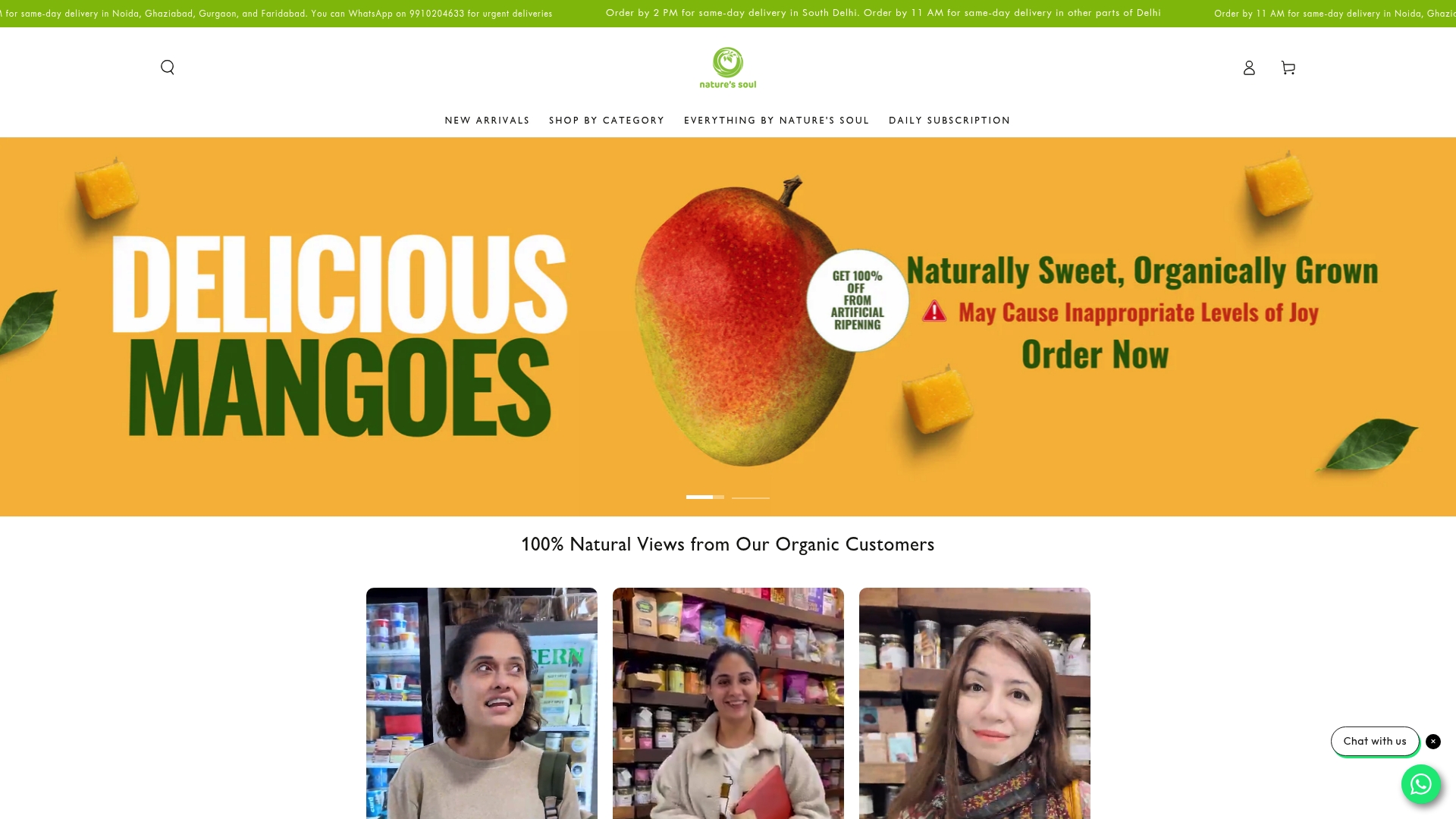
Where most box schemes limit you to fruit and vegetables, Naturessoulshop extends the range to include dairy, gluten-free bread, vegan pantry staples, and home care products, all held to the same clean-ingredient standard. That breadth matters if you want organic produce delivered to your home as part of a broader commitment to natural living rather than a standalone veg subscription. Browse the full range and place your first order at Naturessoulshop.
Sources
- Best veg boxes to buy
- Best fruit and veg boxes UK: top-rated subscriptions and delivery services - Which?
- Organic Sector Update
- What’s in a veg box? | Ethical Consumer
- 5 reasons to order an organic veg box


