


Over half of british adults admit to struggling with healthy home cooking during busy weeks. Meal prepping is not just a trend but a proven way to support better nutrition and save money. By learning step by step how to assess your personal needs and master the basics, you can turn overwhelming decisions into a simple routine that fits your lifestyle and supports your health goals.
Table of Contents
- Step 1: Assess Your Dietary Needs And Preferences
- Step 2: Choose Wholesome, Natural Ingredients
- Step 3: Plan Your Week’s Balanced Meals
- Step 4: Prepare And Portion Your Ingredients Efficiently
- Step 5: Store Meals Safely For Optimal Freshness
- Step 6: Review Your Results And Refine Your Routine
Quick Summary
| Key Point | Explanation |
|---|---|
| 1. Assess your dietary needs first | Understand your nutritional requirements based on health conditions, allergies, and lifestyle to tailor meal planning effectively. |
| 2. Choose wholesome, natural ingredients | Focus on whole, minimally processed foods like fresh produce, lean proteins, and whole grains for optimal nutrition and flavour. |
| 3. Create a balanced weekly meal plan | Structure your meals by theme each day to ensure variety and simplify the cooking process while meeting nutritional needs. |
| 4. Prepare ingredients efficiently | Organise and portion your ingredients ahead of time to save effort and maintain consistency with your nutritional goals. |
| 5. Store meals properly for freshness | Use airtight containers and appropriate food storage techniques to maintain meal quality and prevent waste. |
Step 1: Assess your dietary needs and preferences
Effective meal preparation begins with understanding your unique nutritional requirements and personal health goals. Before diving into meal planning, you need a comprehensive snapshot of your current dietary landscape that considers multiple factors beyond simple caloric intake.
Starting your meal prep journey requires a strategic approach to personalised nutrition, which involves examining several key dimensions. First, consider your current health status, including any existing medical conditions, allergies, or specific dietary restrictions. Are you managing diabetes, seeking weight management, or following a specific dietary protocol like plant-based or gluten-free? These factors will significantly influence your meal planning strategy. Next, evaluate your lifestyle factors such as activity level, work schedule, fitness goals, and energy requirements. An athlete will have dramatically different nutritional needs compared to someone with a sedentary office job.
A crucial aspect of assessment involves tracking your current eating patterns and identifying potential nutritional gaps. Consider keeping a food diary for a week, noting not just what you eat but how different foods make you feel. This approach allows you to develop preference-aware dietary recommendations that align with both your physiological needs and personal taste preferences. Remember that successful meal prep is not about rigid restrictions but creating a sustainable, enjoyable nutrition plan that supports your overall wellness.
Step 2: Choose wholesome, natural ingredients
Selecting the right ingredients is the cornerstone of creating nutritious and health-supporting meal preparations. Your ingredient choices will directly impact the nutritional value, flavour, and overall wellness potential of every meal you create.
To build a robust meal prep strategy, focus on optimising nutritional requirements through ingredient selection. Start by prioritising whole foods that are minimally processed and rich in natural nutrients. Look for fresh produce, lean proteins, whole grains, and unrefined ingredients that provide maximum nutritional density. When shopping, examine ingredient labels carefully and choose items with simple, recognisable components. Avoid products with lengthy lists of artificial additives or preservatives.
When evaluating food quality for meal preparation, consider ingredients that offer a balanced nutritional profile. Incorporate a diverse range of colourful vegetables, high-quality proteins, complex carbohydrates, and healthy fats. Opt for organic produce when possible, and prioritise seasonal ingredients that are at their peak nutritional value. This approach ensures that your meal prep not only supports your health goals but also provides a delightful culinary experience that makes healthy eating enjoyable and sustainable.
Step 3: Plan your week’s balanced meals
Creating a structured meal plan transforms your approach to nutrition from reactive to proactive. By strategically designing your weekly meals, you will streamline your cooking process, reduce stress, and ensure consistent nutritional intake.

Begin your meal planning by designing a balanced nutritional framework that incorporates diverse food groups. Allocate specific themes to different days to add variety and simplify decision making. For instance, designate Monday as a plant-based day, Tuesday for lean proteins, Wednesday for whole grain meals, and so forth. This approach prevents monotony and ensures comprehensive nutrient coverage.
When constructing your meal plan, prioritise variety and balance. Aim to include a colourful array of vegetables, complex carbohydrates, lean proteins, and healthy fats in each meal. Consider your personal schedule when planning preparation times, batch cooking opportunities, and potential busy days that might require simpler meal solutions. By anticipating your weekly nutritional needs in advance, you create a sustainable system that supports both your health goals and lifestyle demands.
Step 4: Prepare and portion your ingredients efficiently
Ingredient preparation is the backbone of successful meal prepping, transforming your kitchen experience from chaotic to controlled. Efficient preparation saves time, reduces waste, and ensures you have nutritious meals ready throughout the week.
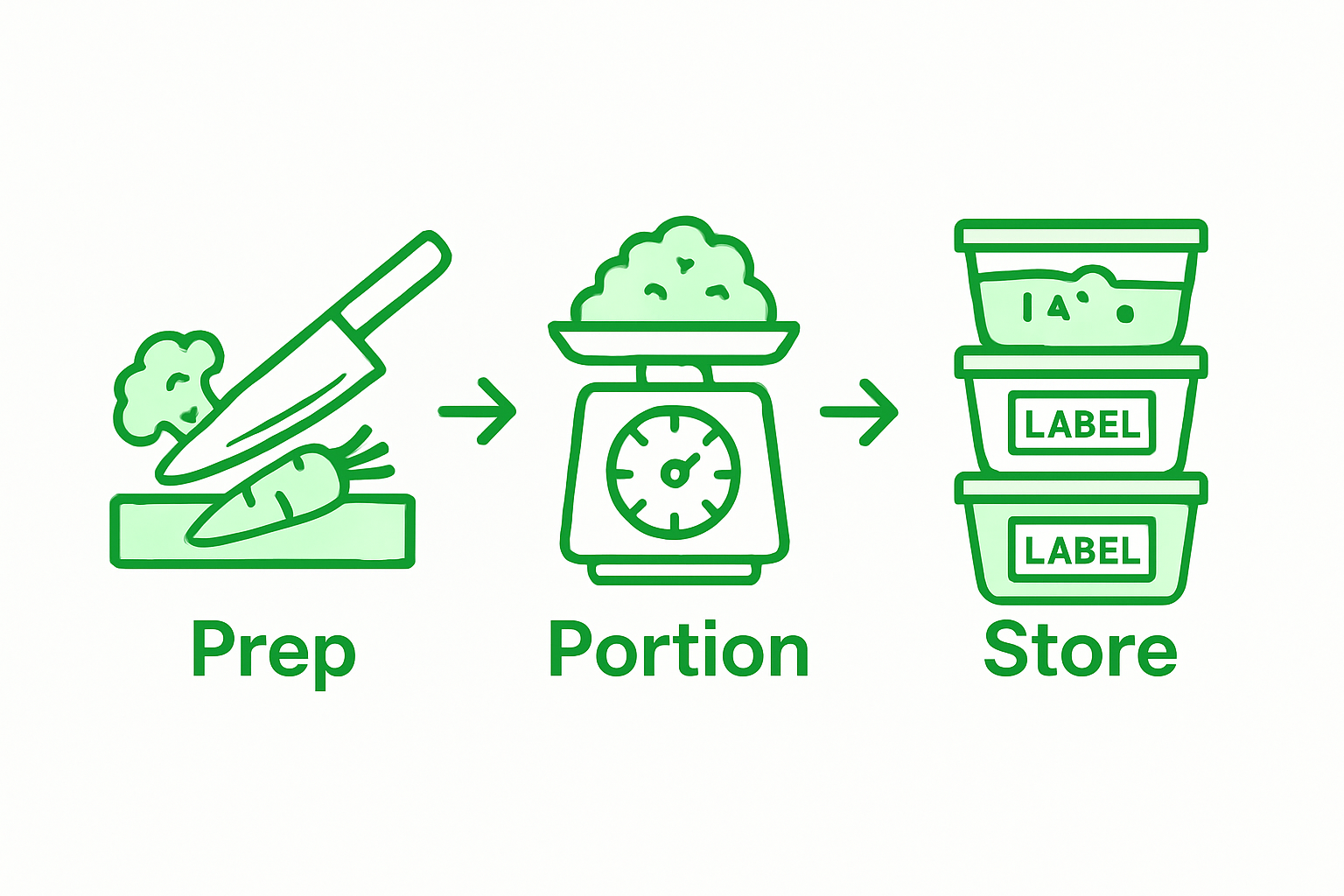
Advanced meal planning techniques emphasise the importance of strategic ingredient preparation that considers your personal nutritional requirements and energy intake. Begin by gathering all necessary equipment like sharp knives, cutting boards, storage containers, and measuring tools. Wash and chop vegetables, cook grains, and portion proteins in advance. Group ingredients by meal type or cooking method to streamline your preparation process.
When optimising ingredient portioning, focus on creating consistent serving sizes that match your nutritional goals. Use kitchen scales for precise measurements, invest in quality meal prep containers with compartments, and label everything with dates and contents. Consider batch cooking staple ingredients like quinoa, roasted vegetables, and grilled chicken that can be mixed and matched across different meals. This approach not only saves time but also provides flexibility in your weekly menu while maintaining nutritional balance.
Step 5: Store meals safely for optimal freshness
Proper meal storage is the final critical step in maintaining the nutritional integrity and safety of your carefully prepared meals. Understanding the right storage techniques will preserve your food quality, prevent bacterial growth, and extend the edible lifespan of your prepped meals.
Implementing strategic food storage practices requires careful attention to temperature, container selection, and timing. Invest in high quality airtight glass or BPA free containers with secure sealing mechanisms. Always allow hot meals to cool to room temperature before refrigerating to prevent condensation and potential bacterial growth. Separate wet and dry ingredients when possible to maintain optimal texture and prevent sogginess.
Refrigerator organisation is key to meal safety. Store cooked meals at or below 5 degrees Celsius, and consume within three to four days for maximum nutritional value and taste. Label each container with preparation date and contents, placing newer meals at the back and older meals at the front to ensure efficient rotation. Consider dedicating specific shelves for different meal types to streamline your storage system and make meal retrieval quick and easy.
Step 6: Review your results and refine your routine
Meal prepping is an evolving journey that requires consistent evaluation and adaptation. Tracking your progress ensures that your nutrition strategy remains aligned with your wellness goals and personal preferences.
Advanced dietary analysis techniques enable you to systematically assess your meal preparation outcomes. Start by maintaining a detailed food journal documenting how different meals impact your energy levels, satiety, and overall wellbeing. Note any patterns in your eating habits, such as times when you feel most satisfied or moments when your meal plan feels challenging to maintain.
Utilising personalised nutrition frameworks allows for precise adjustments to your meal prep routine. Evaluate your weekly meal plans against key metrics like nutritional balance, preparation time, cost efficiency, and enjoyment. Be willing to experiment with ingredient combinations, cooking methods, and portion sizes. Remember that your ideal meal prep strategy is dynamic and should adapt to your changing lifestyle, fitness objectives, and nutritional needs. Quarterly reviews can help you stay motivated and ensure your meal planning continues to support your long term wellness journey.
Transform Your Meal Prep Journey with Natural Wellness Solutions
Meal prepping healthy meals naturally can feel overwhelming when you face challenges like choosing wholesome ingredients and maintaining nutritional balance every day. The article highlights how selecting fresh, unprocessed foods and planning meals strategically are key to lasting wellness but finding reliable sources for these ingredients can be a hurdle. If you seek to simplify your routine while supporting your health goals with clean, organic products that align with personalised nutrition, your path starts here.
Discover the difference that thoughtfully sourced organic fruits, vegetables, meats, and pantry essentials make by exploring our comprehensive collection at Nature’s Soul Shop. We offer a wide selection of products free from artificial additives that empower your meal prep with natural goodness and genuine flavour. Start planning your balanced meals effortlessly by choosing from our carefully curated range designed to support vibrant health and sustainable wellness today.
Frequently Asked Questions
How do I assess my dietary needs before meal prepping?
Understanding your dietary needs involves evaluating your current health status, any medical conditions, and your personal goals. Start by keeping a food diary for a week to identify your eating patterns and feelings towards different foods, allowing you to tailor your meal prep accordingly.
What types of ingredients should I focus on for meal prepping?
Prioritise whole, minimally processed foods that are rich in nutrients, such as fresh produce, lean proteins, and whole grains. Aim to include a colourful variety of vegetables and high-quality ingredients to enhance both the nutritional value and flavour of your meals.
How can I plan balanced meals for the week?
Create a structured meal plan by allocating different themes to each day, focusing on variety and balance. For example, designate days for plant-based meals, lean proteins, or grain-based dishes, ensuring each meal includes a mix of vegetables, complex carbohydrates, and healthy fats.
What is the most effective way to prepare and portion my ingredients?
Efficient ingredient preparation involves washing, chopping, and cooking ahead of time, grouping them by meal type. Use kitchen scales to measure portions accurately, and store them in quality containers labelled with the contents and dates for easy identification.
How should I store my prepped meals to maintain freshness?
Always store cooked meals in airtight containers at temperatures below 5 degrees Celsius, consuming them within three to four days for the best quality. Ensure hot meals cool down before refrigerating to prevent bacterial growth, and organise your fridge for easy access to older meals.
How can I evaluate and improve my meal prepping routine?
Regularly review your meal prep by maintaining a food journal to track how meals affect your energy and satisfaction levels. Set aside time every few months to assess your routines and make necessary adjustments based on nutritional balance, preparation time, and personal enjoyment.
Recommended
- Quick Allergy-Safe Meals: A Step-by-Step Guide for 2025 - Probe IT


