


Sorting truth from myth around food sustainability often feels daunting for health-conscious expat families in Delhi NCR. With every trip to a local farmers’ market or organic shop, your choices shape more than just dinner—they influence your family’s wellness and the region’s future access to resources. At its heart, food sustainability means producing enough food to feed the global population whilst preserving the natural resources required to do so, ensuring your efforts at home genuinely contribute to healthier people and a healthier planet.
Table of Contents
- Defining Food Sustainability And Common Myths
- Key Types Of Sustainable Food Practices
- How Sustainable Food Systems Actually Work
- Costs, Benefits, And Health Implications
- Practical Steps For Family-Friendly Sustainable Eating
Key Takeaways
| Point | Details |
|---|---|
| Understanding Food Sustainability | Food sustainability involves producing enough food for the global population while conserving natural resources, promoting health, and supporting environmental integrity. |
| Debunking Myths | Many myths surround sustainable eating, including misconceptions about costs and the impact of individual choices; collective consumer demand can drive significant change. |
| Benefits of Local and Plant-Based Diets | Choosing local, seasonal, and plant-based foods can drastically reduce your carbon footprint while enhancing nutrition for your family. |
| Cost Considerations | While sustainable food often has a higher upfront cost, the long-term health benefits and hidden costs of conventional food systems make it a worthwhile investment. |
Defining Food Sustainability and Common Myths
Food sustainability isn’t a trendy buzzword for Delhi’s wellness circles. It’s a practical framework that directly impacts your family’s health and your purchasing decisions at the organic market. At its core, food sustainability means producing enough food to feed the global population whilst preserving the natural resources required to do so. This includes maintaining fertile land, protecting freshwater supplies, and stabilising climate conditions. When you choose sustainable food, you’re participating in a system that acknowledges these interconnections.
Consider what happens when you purchase conventional vegetables versus organic alternatives. The conventional route often relies on agricultural practices that deplete soil minerals, consume excessive water, and increase carbon emissions. Sustainable food systems, by contrast, encompass interconnected processes from cultivation through processing, distribution, and consumption. They’re designed to provide nutrition whilst supporting environmental health, economic viability, and social equity. For expats in Delhi NCR raising families on plant-based or organic diets, this means your food choices can directly reduce strain on India’s already challenged water systems and agricultural land.
Now, let’s address the myths that often confuse health-conscious parents here. The first myth suggests that sustainable food costs significantly more and remains inaccessible to middle-class families. Whilst organic produce does carry a premium, strategic purchasing through seasonal markets and direct farmer networks can make it economically feasible. The second myth claims that individual choices don’t matter—that only governments and large industries can drive change. This fundamentally misunderstands how food systems work. When enough consumers demand sustainable products, supply chains respond. Your decision to buy local, seasonal produce at farmers’ markets in Greater Noida or Gurgaon sends a clear market signal. The third myth presents sustainability and nutrition as separate concerns. They’re not. Sustainable food systems address nutrition security whilst reducing environmental impact, making them essential for families concerned with long-term wellness.
Another persistent myth suggests that small personal actions—composting kitchen waste, choosing plant-based proteins, reducing food waste at home—create negligible impact. But consider this: food waste contributes substantially to methane emissions in landfills, wasting the water and resources that produced that food. When you minimise waste in your household and support businesses that do the same, you’re reducing demand for resource-intensive food production. For plant-based families in Delhi NCR, choosing local legumes, grains, and vegetables over imported alternatives also dramatically reduces your carbon footprint. The final myth worth addressing is that all “organic” claims are equally valid. Not all certifications hold equal weight, and understanding labelling requirements matters when shopping for your family.
Pro tip: Start by identifying which three foods your family consumes most frequently, then research whether local sustainable alternatives exist—this focused approach reduces decision fatigue whilst creating measurable environmental impact without overhauling your entire purchasing routine.
Key Types of Sustainable Food Practices
Sustainable food practices aren’t one-size-fits-all solutions. They operate across multiple dimensions, from how food is grown to how it reaches your table. For health-conscious expats in Delhi NCR building sustainable food routines for your families, understanding these different approaches helps you make informed choices that align with your wellness goals. The major categories include farming methods, waste reduction, resource-efficient production, and dietary choices. Each plays a distinct role in creating food systems that can actually sustain long-term family health and environmental protection.
Regenerative and Resource-Efficient Farming Methods
The farming practices underlying your food matter enormously. Regenerative agriculture goes beyond simply avoiding harmful chemicals. It actively rebuilds soil health through crop rotation, reduced tillage, and composting practices that increase soil organic matter. This contrasts with conventional monoculture farming, which depletes soil year after year. When you purchase vegetables from local organic farmers in Delhi NCR who practise crop rotation, you’re supporting systems that preserve land for future generations. Organic farming eliminates synthetic pesticides and fertilisers, reducing water pollution and protecting the microbial ecosystems that soil depends on. Equally important are practices like drip irrigation and precision watering, which reduce water consumption substantially compared to conventional sprinkler systems. For a region facing water scarcity like India, this matters directly to your family’s long-term access to fresh, nutritious food.
Another emerging approach is vertical farming and controlled environment agriculture, particularly relevant for urban areas. Growing vegetables in climate-controlled indoor systems uses up to 95 per cent less water than traditional field agriculture. Whilst this technology isn’t yet mainstream in Delhi NCR markets, some premium organic suppliers are beginning to experiment with it. These methods are particularly valuable for growing leafy greens and herbs year-round, reducing dependence on seasonal availability and long-distance transportation.
Food Waste Reduction and Recovery Systems
Food waste represents a profound sustainability failure. You’re not just wasting the food itself; you’re wasting every drop of water, every unit of energy, and every farming effort that produced it. At the household level, this means composting kitchen scraps, using vegetable peels in stocks, and freezing surplus produce before it spoils. Many expat families in Gurgaon and Noida are discovering that intentional meal planning and proper food storage reduce waste by 40 to 60 per cent. At the supply chain level, sustainable systems include gleaning programs where farmers donate unmarketable but perfectly edible produce, and food banks that redistribute surplus from retailers. Novel protein sources and food waste management are increasingly recognised as critical levers for improving overall sustainability.
Some organic suppliers now offer “ugly produce” at discounted rates, reducing the waste that occurs when cosmetically imperfect vegetables are discarded. This is particularly relevant if you’re buying bulk produce for a family. Additionally, businesses that process organic vegetables into ready-to-use formats whilst using all parts of the plant minimise waste throughout the value chain.
Plant-Based and Diversified Diets
Dietary choices represent perhaps the most direct lever you control as a consumer. Plant-based diets require significantly fewer resources than meat-intensive ones. Growing one kilogramme of beef requires roughly 15 times more water than growing one kilogramme of beans. For plant-based families already eating legumes, grains, nuts, and seasonal vegetables, you’re already making one of the highest-impact sustainability choices available. The key is ensuring variety. Rotating between chickpeas, lentils, mung beans, and seasonal vegetables prevents soil depletion and creates nutritional diversity for your family.

Local legumes like masoor dal and chickpeas grown in India have vastly lower carbon footprints than imported quinoa or vegan proteins shipped from overseas. Choosing locally-grown plant-based staples aligns both your sustainability values and your wellness goals. Similarly, reducing food miles by selecting seasonal produce from nearby farmers’ markets in Greater Noida, Gurgaon, or Delhi reduces transportation emissions whilst supporting regional agriculture.
Supply Chain and Distribution Efficiency
Supply chain transparency matters more than most shoppers realise. Sustainable food systems address nutrition security whilst minimising environmental impact through efficient distribution networks. Direct relationships between consumers and producers, like community-supported agriculture schemes or farmer cooperatives, eliminate unnecessary middlemen and reduce refrigeration requirements. When you purchase directly from organic farmers’ groups in Delhi NCR, you’re removing multiple storage and transportation steps that would otherwise consume energy and generate emissions.
Certifications matter here too, though not all equally. Look for farms that report actual water usage, carbon footprint data, or soil health metrics rather than relying solely on vague “sustainability” claims. Some progressive organic suppliers now provide supply chain information, showing exactly which farms grew your vegetables and what practices they used.
Pro tip: Join a community-supported agriculture scheme or connect with local organic farmer groups through social media networks specific to Delhi NCR expats; this single decision typically reduces your food-related carbon footprint by 20 to 30 per cent whilst simultaneously lowering costs and increasing freshness.
How Sustainable Food Systems Actually Work
Sustainable food systems aren’t simply about growing organic vegetables and hoping everything sorts itself out. They’re complex, interconnected networks where decisions at every point, from farm to your kitchen, shape outcomes for your family’s health and the environment. Think of a food system like a human body. Your digestive system doesn’t work in isolation. It depends on your nervous system sending signals, your circulatory system delivering nutrients, and your immune system protecting against harm. Similarly, sustainable food systems require coordination across production, processing, distribution, consumption, and waste management, all operating within economic, social, and environmental constraints.
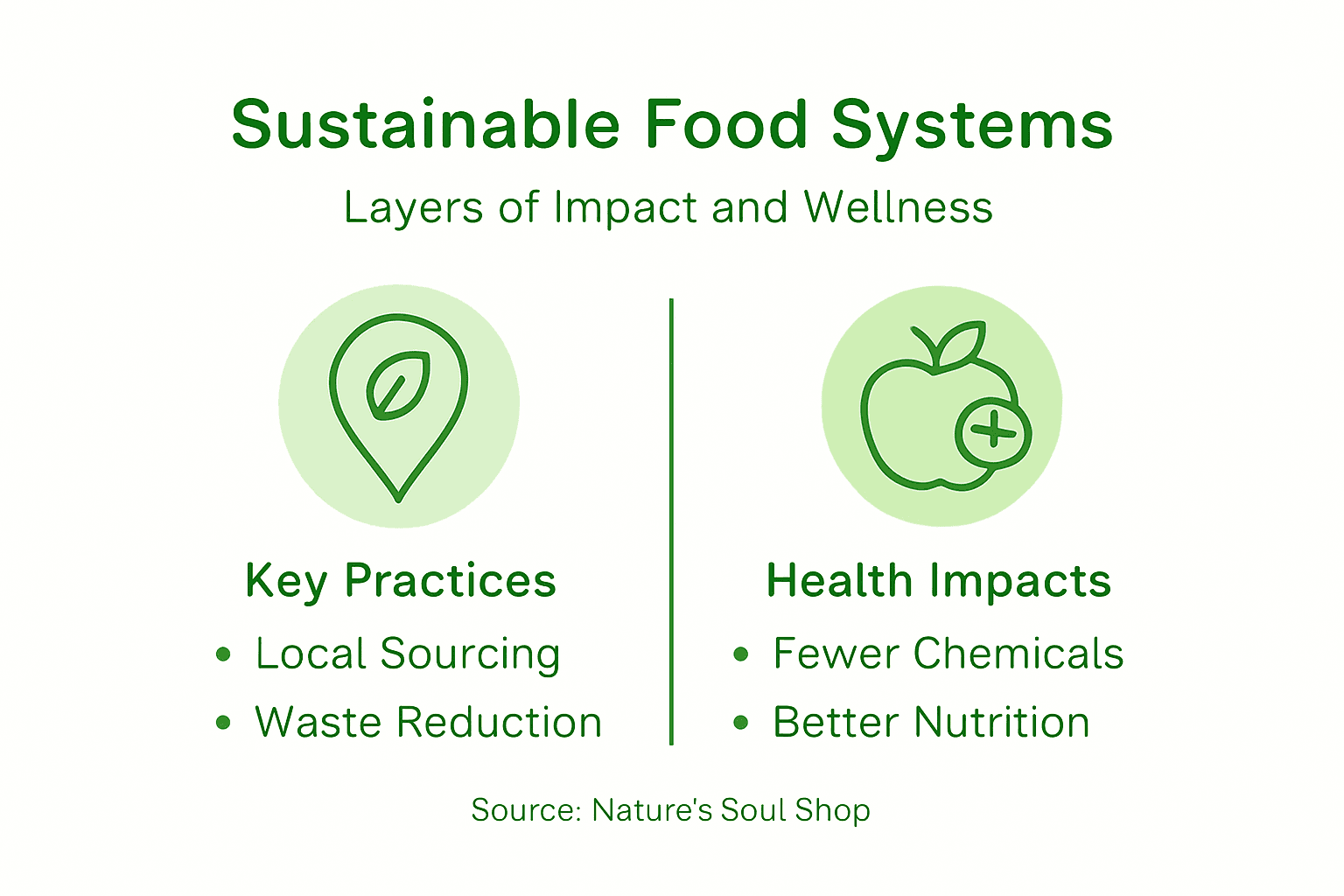
The reality is that unsustainable food systems persist because multiple interconnected barriers maintain current practices. These barriers include political economy factors (government subsidies favouring industrial agriculture over organic), socio-technical factors (supply chain infrastructure designed for processed foods), socio-cultural factors (marketing normalising convenience over sustainability), biophysical factors (soil degradation making industrial inputs temporarily necessary), and socio-economic factors (cost pressures on retailers and consumers). For health-conscious expat families in Delhi NCR, this means you’re not simply choosing between “sustainable” and “unsustainable” options. You’re navigating a system designed to make unsustainable choices easier and cheaper. Understanding this context helps you make realistic decisions rather than feeling guilty when perfect choices aren’t available.
The Interconnected Nature of Food Systems
Consider what happens when you purchase locally-grown organic chickpeas from a farmer in Haryana. That single purchase triggers cascading effects. The farmer receives fairer compensation, incentivising him to continue organic practices. He reduces synthetic fertiliser use, protecting groundwater that other communities depend on. He maintains soil health, ensuring productivity for years to come. Meanwhile, your family consumes nutritious protein without pesticide residues. The shorter supply chain means less packaging waste and lower transportation emissions. But this chain breaks if cold storage infrastructure doesn’t exist to preserve the chickpeas, or if your local market doesn’t have reliable supply, or if government policies suddenly shift subsidy structures. This illustrates why sustainable food systems function as interconnected components across production through consumption and require coordinated action rather than isolated individual choices.
Another crucial insight is that changes in one part of the system ripple throughout. If energy policies in India shift to prioritise renewable energy, agricultural processing becomes cleaner. If water pricing policies recognise scarcity, farmers invest in drip irrigation. If government procurement policies require schools to source 50 per cent local organic vegetables for mid-day meals, entire market segments transform. Conversely, if fossil fuel subsidies increase, industrial agriculture becomes cheaper, undermining organic farmers’ competitive position. Your personal purchasing choices matter, but they operate within these larger system dynamics.
Why Individual Choices Matter Within Systemic Constraints
This might sound discouraging. You might think: why bother changing my food choices if the system itself is broken? The answer is that systemic change happens through accumulation of individual and collective choices. When enough consumers demand sustainable products, suppliers respond. Local farmer groups in Greater Noida report that demand from expat health-conscious families drives 30 to 40 per cent of their growth. This creates economic incentives for other farmers to adopt organic practices. Simultaneously, organised consumer groups advocating for better policies influence government decisions on pesticide regulation and agricultural subsidy structures.
Your choices also protect your family’s immediate health. Reducing pesticide exposure through organic produce directly benefits your children’s developing neurological systems. Choosing locally-grown foods reduces your family’s carbon footprint whilst supporting your regional food security. Reducing household food waste demonstrates values to your children that shape their lifelong consumption patterns. These benefits exist independent of broader system transformation.
The key is recognising that sustainable food systems work through layered interventions. Individual household choices matter. Community-level coordination through farmer groups and consumer cooperatives matters. Regional policy decisions about water management and agricultural subsidies matter. National food security policies matter. International trade agreements matter. Rather than viewing these as separate domains, effective sustainability requires understanding how your choices fit within and influence these interconnected layers.
Pro tip: Map three food items your family purchases weekly, identify whether local sustainable alternatives exist for each, and commit to switching one per month rather than attempting complete overnight transformation, allowing the market to respond gradually whilst your household builds new purchasing routines.
Costs, Benefits, and Health Implications
Let’s address the elephant in the room: sustainable food costs more upfront. A kilogramme of organic spinach from a Delhi NCR farmer market typically costs 40 to 60 per cent more than conventional spinach from a supermarket chain. Organic lentils run higher. Free-range plant-based proteins command premium prices. For expat families already stretching budgets across international school fees, property rental in Gurgaon, and healthcare costs, this price differential feels genuinely painful. But the complete financial picture extends beyond what you pay at checkout. It includes health costs you avoid, environmental costs you don’t create, and long-term food security costs you don’t incur. When you understand these hidden dimensions, the economics shift dramatically.
Start with health benefits. Diets lower in meat and ultra-processed foods reduce environmental impact whilst improving health outcomes. For your family specifically, this means reduced risk of type 2 diabetes, cardiovascular disease, and certain cancers. Your children exposed to fewer pesticide residues develop stronger immune systems. When you factor in avoided medical costs, fewer doctor visits, and reduced prescription medication expenses, the premium paid for organic produce shrinks considerably. Consider a family spending £4,500 annually on groceries. If shifting to 50 per cent organic and plant-based foods costs an additional £900 yearly but prevents one serious health event requiring hospitalisation, you’ve recouped that investment many times over. Most critically, you’ve protected your children’s developing bodies from chronic exposure to synthetic chemicals during crucial developmental windows.
The True Cost Accounting
Conventional food prices hide enormous costs they don’t appear in. When industrial agriculture depletes groundwater in Punjab and Haryana, someone eventually pays to remediate that damage or import water from elsewhere. When pesticides contaminate drinking water supplies, municipalities spend millions on filtration systems. When agricultural runoff creates dead zones in coastal areas, fisheries collapse and livelihoods disappear. When soil erosion reduces agricultural productivity, food prices rise across the board. These are real costs. They’re simply borne by society rather than reflected in your supermarket receipt. Economists call these “externalities.” By purchasing sustainable food, you’re actually paying these true costs upfront rather than deferring them to future generations.
The nutritional dimension matters profoundly for your family’s wellness. Sustainable diets can reduce chronic disease risks and environmental pressures simultaneously. Organic vegetables contain higher concentrations of certain micronutrients compared to conventional alternatives grown in depleted soils. Locally-grown, seasonally-harvested produce retains more nutritional density because it’s picked ripe and consumed within days rather than weeks. Plant-based proteins from legumes grown without synthetic pesticides provide complete amino acid profiles whilst supporting gut microbiome diversity through higher fibre content. For children particularly, these nutritional differences compound over years. A child consuming pesticide-free, nutrient-dense organic food from age three onwards develops fundamentally different health trajectories than a child consuming conventional processed foods.
Environmental and Social Costs Translated to Family Impact
Climate change directly threatens your family’s food security and health. Rising temperatures stress water systems across India. Erratic monsoon patterns disrupt planting seasons. Heat waves trigger crop failures. When you purchase food from sustainable systems that reduce carbon emissions, you’re purchasing insurance for your family’s future food access. This isn’t abstract environmental philosophy. It’s practical risk management for families planning to live in India long-term. Local sustainable farmers build soil carbon, improving water retention during droughts. Diversified organic farms prove more resilient to climate shocks than monocultures. Your purchasing decisions today influence which farming systems exist in 2035 when your teenagers need affordable nutritious food.
Social sustainability matters equally. Fair-trade organic suppliers ensure farmer families earn living wages and maintain dignity. When you purchase from farmer cooperatives in Haryana or Punjab, you’re funding education for farmers’ children, healthcare access, and community stability. You’re building relationships with people who grow your food rather than purchasing anonymous commodities. For expat families, this connection grounds you in your adopted country’s reality and teaches your children about interconnection and responsibility.
Budgetary barriers are real. However, strategic approaches make sustainable food economically feasible: buying whole foods rather than processed versions, purchasing seasonal produce when prices dip, joining community-supported agriculture schemes that offer discounts, growing herbs and greens at home. The transition doesn’t require perfection or bankrupting your family. It requires intention.
Here’s a comparison of sustainable versus conventional food systems impacting family well-being:
| Factor | Conventional Systems | Sustainable Systems |
|---|---|---|
| Nutritional Value | Lower, due to soil depletion | Higher, thanks to soil health |
| Water Use | Excessive, often wasteful | Conserved, prioritises efficiency |
| Environmental Impact | High emissions, soil degradation | Low emissions, preserves resources |
| Long-term Cost | Lower at checkout, higher hidden costs | Higher upfront, lower societal cost |
| Farmer Livelihood | Prone to debt cycles | Fair compensation, supports communities |
| Food Security | Vulnerable to shocks | More resilient to climate |
Pro tip: Track your family’s current food spending for one month, identifying which items consume the largest budget, then research whether affordable local organic alternatives exist for those three items; replacing just your highest-consumption foods with sustainable versions typically reduces overall spending whilst dramatically improving nutrition because you eliminate processed food markups.
Practical Steps for Family-Friendly Sustainable Eating
Sustainable eating doesn’t require becoming a purist overnight or abandoning every convenience your family currently enjoys. It requires intentional, incremental shifts that fit your actual life rather than some idealised version of it. For expat families in Delhi NCR juggling work pressures, school schedules, and cultural transitions, perfection is both impossible and unnecessary. What matters is direction. You’re aiming to gradually shift your household’s food consumption patterns towards choices that nourish your family whilst respecting environmental boundaries. This happens through small, stackable decisions made repeatedly until they become routine.
Start with the most impactful leverage point: what your family eats most frequently. Actionable steps include reducing consumption of foods with high greenhouse gas emissions and increasing plant-based food intake. For most families, this means identifying three to five staple foods consumed weekly and finding sustainable alternatives. If your family eats chicken three times weekly, research whether a local organic farm raises poultry humanely. If you purchase imported vegan protein powders, experiment with local lentils and chickpeas cooked fresh or pressure-cooked in bulk. If your children consume packaged snacks daily, identify one snack to replace with whole foods like seasonal fruit or homemade energy balls using dates and nuts. These aren’t dramatic transformations. They’re strategic substitutions at your highest-consumption points. The carbon reduction from replacing one weekly beef meal with legumes exceeds the reduction from occasionally eating perfect salads. The pesticide exposure reduction from switching one frequently-consumed vegetable to organic matters more than sporadic organic purchases.
Building Routines That Stick
Consider the weekly rhythm of your household. Monday morning meal planning takes 15 minutes but prevents Wednesday panic-purchasing from the supermarket. Thursday farmers’ market visits become family outings where your children learn food origins. Embedding values in daily family routines fosters sustainable eating patterns with social and environmental benefits. When your children help select seasonal vegetables, they develop preferences for them. When they learn that masoor dal comes from specific farmers in Haryana rather than mysterious industrial sources, they understand interconnection. When they participate in composting kitchen scraps, they grasp consequences of waste.
Practical household routines that work for expat families in Delhi NCR include:
Below is a summary of practical strategies to build family-friendly sustainable eating routines:
| Routine | Benefit | Pro Sustainability Tip |
|---|---|---|
| Planning weekly meals | Reduces impulse buying and waste | Focus on local, seasonal options |
| Batch cooking legumes | Saves time, boosts nutrition | Substitute for packaged meals |
| Home herb growing | Minimises packaging, fresher ingredients | Use balcony or kitchen space |
| Substitute processed snacks | Reduces additives and cost | Opt for simple whole foods |
- Seasonal produce shopping: Purchase what’s abundant and affordable now rather than importing expensive alternatives. Bottle gourd in summer, leafy greens in winter, mangoes in May. This reduces cost, improves nutrition, and minimises transportation emissions.
- Batch cooking legumes: Pressure-cook a large batch of chickpeas or moong beans on Sunday. Portion and freeze for weekday meals. This eliminates packaged convenience products whilst saving time.
- Vegetable storage protocols: Understand how to store different vegetables to extend freshness. Leafy greens in damp cloth in coldest part of fridge. Root vegetables in cool dry place. This prevents waste and reduces shopping frequency.
- Plant herbs at home: Grow coriander, mint, and parsley in small pots on your balcony. These herbs are costly at markets but nearly free to grow, reducing packaging waste and improving freshness.
- Reduce processed foods systematically: Identify your family’s top three packaged food purchases. Replace one this month, another next month. This pace prevents overwhelm whilst building new habits.
Practical Meal Planning and Shopping Strategies
You don’t need complicated recipe systems. You need structure that acknowledges your family’s actual preferences. If your children won’t eat lentil dal, forcing it creates conflict rather than behaviour change. Instead, find legume preparations they enjoy. Perhaps chickpea curry, or mung bean pancakes, or lentil pasta. When your family requests meals they actually like, compliance becomes automatic rather than enforced.
Choosing seasonal and local foods whilst minimising food waste represents the core strategy. This means:
- Plan three to five dinner ideas before shopping
- Buy only ingredients for those meals plus breakfast and lunch staples
- Communicate the plan to family members so expectations align
- Prep vegetables immediately after purchase to prevent spoilage
- Freeze surplus before it deteriorates
- Use vegetable scraps for stocks rather than discarding them
Connection to food sources matters profoundly. Rather than purchasing organic vegetables anonymously from premium supermarket chains, develop relationships with local farmer groups. Many operate WhatsApp groups in Delhi NCR where you can pre-order weekly produce boxes. You know which farms grew your vegetables. You understand seasonal availability. Prices often undercut supermarket markups. Your children learn real food systems rather than receiving sanitised supermarket versions.
Remember that sustainability operates on a spectrum rather than binary categories. A family eating 70 per cent plant-based food from local sources 80 per cent of the time is making substantial environmental and health impact. Perfectionism paralyses. Progress compounds. Start with your family’s highest-consumption foods, establish new routines around them, then expand gradually to other areas.
Pro tip: Choose one meal type your family eats weekly, commit to making it plant-based and locally sourced for just four weeks until it becomes automatic, then expand to a second meal type, allowing each routine to solidify before adding complexity.
Embrace Sustainable Wellness with Every Choice
Understanding the profound impact of food sustainability on your family’s health and the environment is the first step towards meaningful change. This article highlights the challenges of navigating complex food systems and the importance of choosing organic, local, and plant-based options to safeguard your loved ones’ wellbeing amid Delhi NCR’s environmental constraints. If you seek to reduce exposure to pesticides, support regenerative farming, and minimise your ecological footprint, you deserve a partner that shares these values.
At Nature’s Soul Shop, we offer a curated selection of organic and natural products spanning fruits, vegetables, vegan and gluten-free staples, meats, dairy, and more – all sourced with transparency and care. Explore how our commitment to clean ingredients and sustainable supply chains can help your family enjoy nutritious, toxin-free meals that align perfectly with modern wellness goals. Start transforming your daily choices today with organic and natural products designed for conscious consumers, and discover practical ways to build long-term health and environmental resilience. Visit us now and empower your family’s sustainable journey.
Frequently Asked Questions
What is food sustainability?
Food sustainability refers to the production of food that meets current needs without compromising the ability of future generations to meet their own needs. It focuses on maintaining natural resources, promoting health, and ensuring economic viability.
How do sustainable farming methods differ from conventional ones?
Sustainable farming methods, like regenerative agriculture, focus on restoring soil health and reducing the use of harmful chemicals, whereas conventional methods often rely on synthetic fertilisers and pesticides that can deplete soil and pollute water sources.
Why is reducing food waste important for sustainability?
Reducing food waste is crucial as it conserves the resources used in food production, such as water and energy, and minimises methane emissions from landfills, contributing to a healthier environment and sustainable food systems.
How can individual food choices impact broader sustainability efforts?
Individual food choices collectively shape market demand; when consumers choose sustainable options, they encourage suppliers to adopt environmentally friendly practices, driving systemic change in food production and distribution.
Recommended
- Plant-Based Diet and Environment – Real Benefits for Wellness – naturessoulshop
- Complete Guide to Sustainable Food Choices – naturessoulshop
- Sustainable Wellness Brands: Complete Expert Guide – naturessoulshop
- Ethical Sourcing Practices: Impact on Family Wellness – naturessoulshop
- Understanding Eco Friendly Signage Solutions - PromoSigns.co.uk
- Waste Reduction for SMEs: Practical UK Strategies for 2025 - Venture Waste


