


Swapping out eggs in your favourite recipes does not have to get complicated or compromise taste. For many home cooks across Delhi NCR, going vegan or gluten free means rethinking ingredient choices without sacrificing texture or rise. Knowing the exact function eggs serve in your dish helps you pick the right plant-based alternative, whether you are baking fluffy cakes or cooking creamy custards. These steps set you up for delicious, healthier results at home.
Table of Contents
- Step 1: Assess Recipe Needs For Egg Replacement
- Step 2: Choose Suitable Natural Egg Substitutes
- Step 3: Prepare Your Selected Egg Alternative
- Step 4: Mix Substitutes Correctly Into Your Recipe
- Step 5: Check Texture And Consistency Before Cooking
- Step 6: Verify Finished Dish For Taste And Quality
Quick Summary
| Key Point | Explanation |
|---|---|
| 1. Identify egg functions in recipes | Understanding why eggs are used helps select the right substitute to match texture and flavour. |
| 2. Choose suitable natural substitutes | Depending on the egg’s role, opt for alternatives like chia for binding or aquafaba for leavening. |
| 3. Prepare substitutes correctly | Each substitute has unique preparation needs; ensure proper mixing and hydration for best results. |
| 4. Mix substitutes with care | Different substitutes require different mixing methods to integrate well without affecting texture. |
| 5. Assess finished dish quality | Evaluate the final dish’s appearance, texture, and flavour to determine the success of the substitute used. |
Step 1: Assess recipe needs for egg replacement
Understanding the specific role eggs play in your recipe is crucial before selecting a substitute. Determining egg function requires careful examination of the ingredients and desired culinary outcome.
Eggs serve three primary functions in cooking: binding ingredients together, providing leavening to help foods rise, and acting as a thickening agent. By closely analysing your recipe, you can identify which of these roles the eggs are playing. Look for clues such as the presence of acidic ingredients, liquid ratios, and the type of dish you are preparing. A cake might need eggs for structure and lift, while a quiche requires eggs for binding and richness.
Examining the recipe holistically allows you to select the most appropriate natural egg replacement. Understanding egg substitution techniques helps ensure your final dish maintains its intended texture and flavour profile. Some recipes with extremely high egg content might not be suitable for substitution and could require a completely different approach.
Expert Suggestion: Keep a small notebook or digital document tracking which egg substitutes work best for different types of recipes to build your personal culinary reference guide.
Step 2: Choose suitable natural egg substitutes
Selecting the right egg substitute requires understanding the unique properties of various natural alternatives. Natural egg replacement options range from fruit purées to seeds and plant-based ingredients that can mimic eggs’ essential culinary functions.
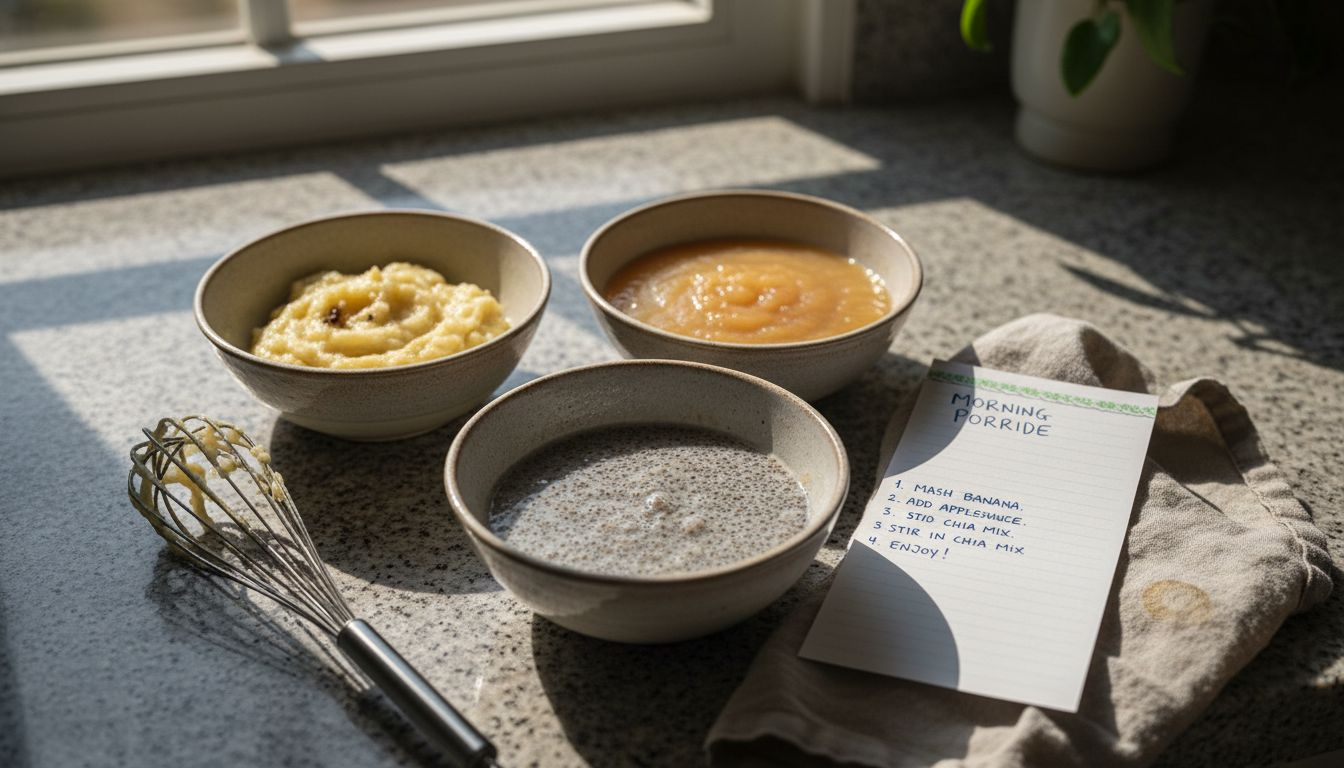
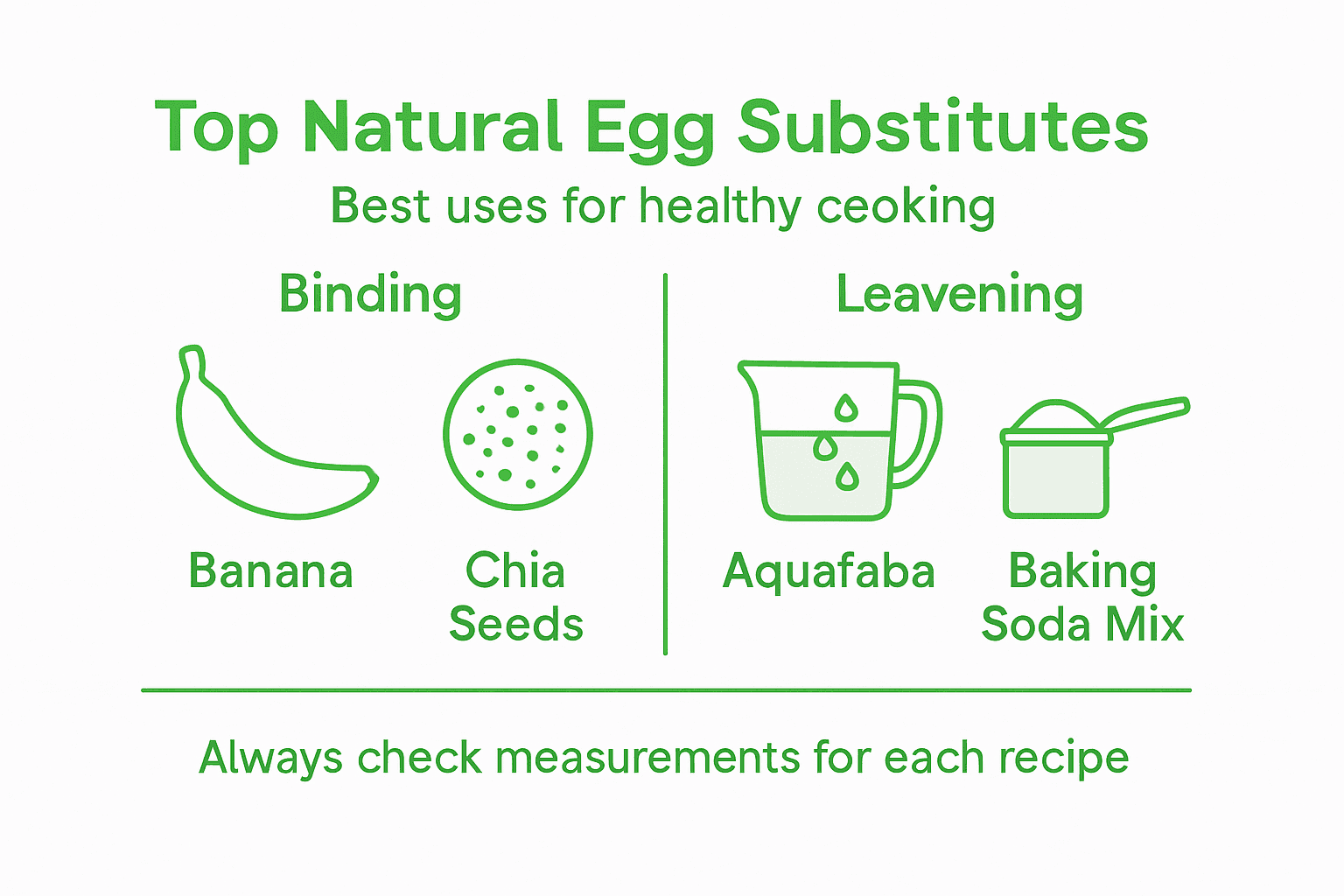
Your choice depends entirely on the specific role eggs play in your recipe. For binding purposes, mashed bananas, applesauce, and ground chia or flax seeds mixed with water work brilliantly. When you need leavening, consider aquafaba (chickpea liquid) or carbonated water. Some alternatives like tofu provide protein and moisture, while nut butters offer richness and structure. Vegan egg alternatives also include specialised egg substitute powders that can help maintain volume in baked goods.
Experimenting with different substitutes will help you discover which works best for various dishes. Some alternatives like black salt can even impart an egg-like flavour for those missing the traditional taste. Always consider the specific textural and flavour requirements of your recipe when making your selection.
Expert Suggestion: Create a small reference chart tracking which egg substitutes work best for different cooking methods to streamline your future culinary adventures.
Here is a comparison of popular natural egg substitutes and their best uses:
| Substitute | Best For | Unique Benefit |
|---|---|---|
| Mashed banana | Cakes, muffins | Adds natural sweetness and binds |
| Aquafaba | Meringues, mousses | Whips into stiff peaks |
| Chia/flax egg | Pancakes, brownies | Provides strong binding |
| Silken tofu | Quiches, custards | Gives rich, creamy texture |
| Applesauce | Cookies, quick breads | Keeps baked goods moist |
| Nut butter | Cookies, brownies | Adds richness and structure |
Step 3: Prepare your selected egg alternative
Preparing your chosen egg substitute requires precision and understanding of its unique properties. Egg substitute preparation techniques vary significantly depending on the ingredient you have selected.
For seed-based alternatives like chia or flaxseeds, you will need to mix them thoroughly with water and allow them to rest for several minutes. This resting period enables the seeds to develop a gel-like consistency that mimics egg binding properties. Natural egg replacement methods suggest precise measuring and hydration are critical for achieving the right texture. Aquafaba requires careful whipping to replicate egg white volume, while fruit purées like mashed banana should be blended until completely smooth. Tofu works best when pureed or crumbled, depending on your specific recipe requirements.
Remember that each substitute behaves differently. Some will thicken quickly, while others require gentle handling to maintain their structural integrity. Always prepare your egg alternative just before incorporating it into your recipe to ensure maximum effectiveness and optimal performance.
Expert Suggestion: Consider keeping a small kitchen scale handy to measure your egg substitutes precisely for consistent results in your cooking and baking.
Step 4: Mix substitutes correctly into your recipe
Successfully incorporating egg substitutes requires careful attention to mixing technique and ingredient interactions. Egg substitute mixing strategies demand understanding the specific role eggs play in your original recipe.
Different substitutes require unique mixing approaches. Egg replacement mixing techniques suggest blending fruit purées thoroughly with wet ingredients to ensure even distribution. Flax eggs need to be prepared in advance and allowed to gel, while aquafaba requires gentle folding to maintain its delicate structure. When using vinegar and baking soda combinations as leavening agents, timing becomes crucial. Mix these components just before adding to your batter to capture maximum rising potential.
Pay close attention to your substitute’s consistency and integration. Some alternatives might require slightly different mixing times or techniques compared to traditional eggs. Always fold or mix gently to prevent overmixing, which can result in dense or tough baked goods. Observe how your substitute behaves and be prepared to make minor adjustments to achieve the desired texture.
Expert Suggestion: Start with smaller recipe batches when experimenting with new egg substitutes to perfect your mixing technique without wasting ingredients.
Step 5: Check texture and consistency before cooking
Evaluating your egg substitute’s performance requires careful observation and understanding of how alternative ingredients interact. Texture measurement techniques are critical for ensuring your recipe maintains its intended quality and appeal.
Examine your batter or mixture closely for key texture indicators. Egg substitute consistency parameters/07%3A_Eggs/7.04%3A_The_Function_of_Eggs) suggest paying attention to moisture content and structural integrity. Since eggs are approximately 75% water, your substitute might require additional liquid or chemical leavening to compensate. Look for signs of proper binding such as a uniform mixture, appropriate thickness, and smooth incorporation of ingredients. If the batter appears too dry, consider adding a small amount of water or plant based milk. Conversely, if it seems overly wet, introduce a bit more flour or binding agent.
Remember that each egg substitute behaves differently. Some will create a slightly different texture compared to traditional eggs, which is perfectly normal. Trust your culinary instincts and be prepared to make minor adjustments to achieve the desired consistency.
The following table summarises common troubleshooting steps when using egg substitutes:
| Issue Detected | Likely Cause | Quick Solution |
|---|---|---|
| Batter too dense | Insufficient leavening | Add baking soda or aquafaba |
| Texture too crumbly | Not enough binding agent | Increase chia/flax or add banana |
| Mixture too wet | Excess liquid substitute | Add more flour or dry ingredients |
| Lacks egg flavour | Mild-tasting substitute | Add black salt for authenticity |
Expert Suggestion: Keep a small notebook documenting how different egg substitutes perform in various recipes to build your personal reference guide.
Step 6: Verify finished dish for taste and quality
The ultimate test of any egg substitute is its performance in the final dish. Sensory evaluation techniques help determine whether your substitute successfully mimics the original recipe’s texture, flavour, and appearance.
Egg substitute quality assessment involves carefully examining multiple aspects of your finished product. Start by checking the visual appearance look for even browning, proper rise, and consistent texture. Then evaluate the mouthfeel paying attention to moisture, density, and structural integrity. Taste becomes crucial when assessing how well the substitute integrates with other ingredients. Some alternatives might introduce subtle flavour variations that require minor recipe adjustments. If the result differs significantly from your original expectations, consider experimenting with different proportions or alternative substitutes.
Remember that achieving the perfect egg substitute is often an iterative process. Not every attempt will be flawless, but each experiment brings you closer to understanding how different alternatives interact with various ingredients. Approach each cooking experience as a learning opportunity to refine your technique.
Expert Suggestion: Create a simple scoring system to track the performance of different egg substitutes across various recipes, helping you build a personalised reference guide.
Discover Natural Egg Alternatives for Healthier Cooking Today
If you have ever struggled with finding the perfect natural egg substitute that balances texture, flavour, and nutrition you are not alone. Many home cooks face challenges such as achieving the right binding, leavening, and moisture while maintaining the taste they love. This article highlights how understanding egg functions and selecting the right alternatives like chia eggs, aquafaba, or mashed bananas can transform your cooking experience without compromising quality.

Take the next step in your wellness journey by exploring our extensive range of organic and natural products at Nature’s Soul Shop. Whether you need fresh fruits and vegetables, plant-based ingredients, or gluten-free essentials we have everything to help you create delicious, egg-free meals with clean ingredients. Don’t wait to make your healthy cooking effortless with trusted, high-quality products. Visit us now and unlock the full potential of natural cooking with Nature’s Soul Shop and learn more about how to substitute eggs naturally for healthy cooking.
Empower your kitchen with nature’s best since wholesome cooking begins with pure ingredients.
Frequently Asked Questions
How do I determine the role of eggs in my recipe before substituting?
Understanding the role of eggs in your recipe is key to finding the right substitute. Assess whether eggs provide binding, leavening, or thickening and note other ingredients that might influence the choice. Typically, cakes need eggs for structure and lift, while dishes like quiches require eggs for binding.
What are some natural egg substitutes I can use for binding in my cooking?
For binding purposes, consider using mashed bananas, applesauce, or a mixture of ground chia or flax seeds with water. To replace one egg, combine 1 tablespoon of chia or flax seeds with 3 tablespoons of water and allow it to sit for about 5 minutes until it forms a gel-like consistency.
How do I prepare aquafaba as an egg substitute?
To use aquafaba, simply whip the reserved liquid from a can of chickpeas until it forms soft peaks, similar to whipped egg whites. Aim for about 3 tablespoons of aquafaba to replace one egg in recipes that require leavening or aeration.
What should I look for in texture when using egg substitutes?
Pay attention to your mixture’s moisture content and structural integrity. If the batter appears too dry, consider adding a small amount of water or plant-based milk; conversely, if too wet, introduce extra flour or another dry binding agent.
How can I ensure my finished dish has the right flavour and texture using egg substitutes?
After cooking, evaluate your dish for even browning, rise, and texture satisfaction. If flavours differ from your expectations, try adjusting the proportions of your egg substitute or experiment with additional seasonings to enhance the overall taste.
Is there a simple way to track which egg substitutes work best in my recipes?
Yes, you can keep a small notebook or digital document to document your attempts with various egg substitutes across different recipes. Note the specific substitute used and how it performed to create your personalised culinary reference guide.
Recommended
- 7 Essential Vegan Baking Tips for Clean Organic Treats – naturessoulshop
- 8 Best Natural Protein Sources for a Healthy Lifestyle – naturessoulshop
- 7 Best Dairy Alternatives for Vegans: Healthy Choices Explained – naturessoulshop
- Vegan Cooking for Beginners: A Step-by-Step Starter Guide – naturessoulshop


