


Almost 80 percent of shoppers say they want products that support both their health and the environment. Today, choosing a wellness brand is no longer just about what works for you—it’s about finding options that respect the planet and the people behind every item. Discover how sustainable wellness brands are changing the definition of health by connecting your well-being to a broader vision of social and environmental responsibility.
Table of Contents
- Defining Sustainable Wellness Brands And Concepts
- Types Of Sustainable Wellness Brands And Their Focus
- Key Features And Certification Standards
- Evaluating Eco-Friendly Ingredients And Practices
- Costs, Benefits, And Common Consumer Pitfalls
Key Takeaways
| Point | Details |
|---|---|
| Holistic Approach | Sustainable wellness brands emphasize integrated health perspectives, addressing physical, mental, and environmental wellbeing. |
| Certification Standards | These brands adhere to rigorous certification standards covering environmental impact, social responsibility, and product integrity. |
| Consumer Education | Understanding sustainable claims is crucial; consumers should educate themselves to avoid pitfalls like greenwashing and ensure informed decisions. |
| Long-Term Benefits | While initial costs may be higher, sustainable wellness brands can lead to reduced healthcare expenses and lower long-term environmental costs. |
Defining Sustainable Wellness Brands and Concepts
Sustainable wellness brands represent an innovative approach to consumer health that goes beyond traditional product offerings. According to research from Wikipedia, these brands create and maintain an identity reflecting environmental and social value, strategically addressing more than just product performance.
At their core, sustainable wellness brands distinguish themselves through comprehensive commitment. Unlike conventional brands focused solely on immediate health outcomes, these organisations consider the entire ecosystem of product development, usage, and impact. As Wikipedia highlights, sustainable consumer behaviour examines not just product selection, but the entire consumption process - from initial purchase through disposal.
Key characteristics of sustainable wellness brands include:
- Holistic health perspectives that integrate physical, mental, and environmental wellbeing
- Transparent supply chains demonstrating ethical sourcing and production
- Clean ingredient commitments prioritizing natural, minimally processed components
- Regenerative practices that contribute positively to ecological systems
- Social responsibility embedded in business models
These brands recognize that true wellness extends far beyond individual product benefits. They create meaningful connections between personal health, community welfare, and global environmental sustainability. By prioritizing conscious consumption, they invite consumers to participate in a more intentional, interconnected approach to personal and planetary wellbeing.
Types of Sustainable Wellness Brands and Their Focus
Sustainable wellness brands represent a diverse ecosystem of organisations committed to holistic health and environmental responsibility. As highlighted by Wellnewtime, these brands often emerge from specific regional contexts, bringing unique approaches to sustainable product development.
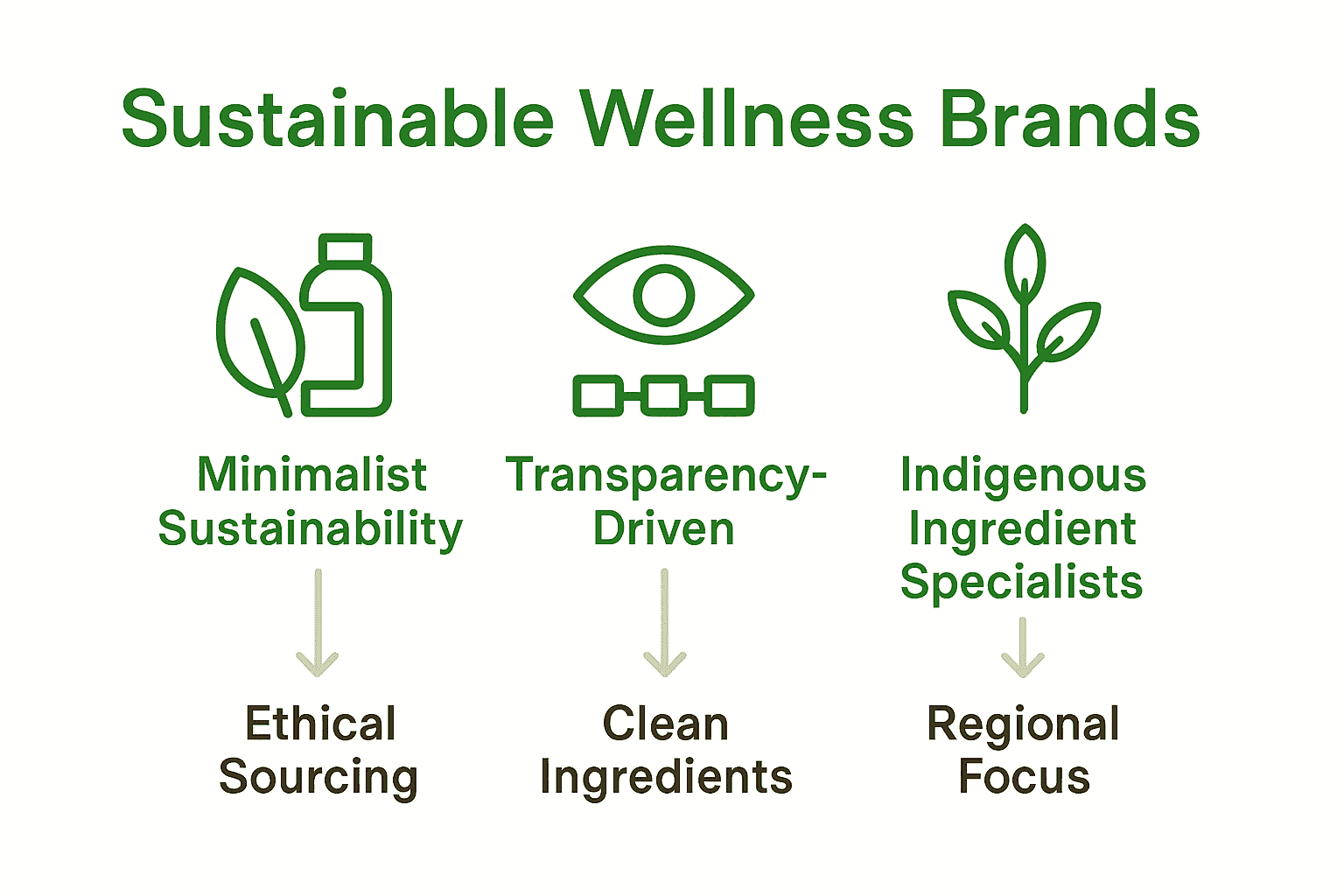
The landscape of sustainable wellness brands can be categorised into several distinctive types:
- Minimalist Sustainability Brands
- Exemplified by Scandinavian brands like L:A Bruket
- Focus on wild-harvested ingredients
- Utilise renewable energy in production
- Emphasise clean, simple product design
- Transparency-Driven Wellness Brands
- Prioritise complete supply chain visibility
- Demonstrate ethical sourcing practices
- Provide comprehensive ingredient information
- Brands like Rituals Nordic and Ecooking represent this approach

- Indigenous Ingredient Specialists
- Leverage unique local natural resources
- Create products using region-specific botanicals
- Example: Norwegian brand Eleni & Chris using cloudberry and glacier water
Clean ingredient commitment and environmental stewardship form the core philosophy across these brand types. By focusing on more than just product performance, these organisations are redefining wellness as an interconnected experience that respects both human and planetary health.
 For consumers seeking a more intentional approach to wellness, sustainable food choices guide can provide deeper insights into making holistic, responsible purchasing decisions.
Key Features and Certification Standards
Sustainable wellness brands distinguish themselves through rigorous certification standards that go beyond traditional quality metrics. The Natural Step, a pioneering non-profit organisation, has developed a comprehensive framework for strategic sustainable development that many brands now use as a benchmark for their practices.
Key certification standards typically encompass multiple dimensions of sustainability:
-
Environmental Impact Metrics
-
Carbon footprint measurement
-
Renewable energy usage
-
Waste reduction strategies
-
Biodiversity preservation
-
Social Responsibility Indicators
-
Fair labour practices
-
Ethical supply chain management
-
Community engagement initiatives
-
Transparent wage structures
-
Product Integrity Criteria
-
Clean ingredient verification
-
Minimal processing standards
-
Traceable sourcing documentation
-
Third-party ingredient audits
Interestingly, the concept extends beyond product development. As Wikipedia highlights in the context of healthy building, sustainability is about creating holistic environments that support physical, psychological, and social well-being. This principle applies equally to wellness brands, which must demonstrate a commitment that transcends mere product manufacturing.
For consumers seeking deeper understanding, our sustainable food choices guide offers comprehensive insights into making informed, responsible purchasing decisions that align with these rigorous certification standards.
Evaluating Eco-Friendly Ingredients and Practices
Sustainable ingredient evaluation requires a comprehensive approach that goes beyond surface-level assessments. Recent research from arXiv introduces the groundbreaking concept of sustainability value, which measures a process’s true contribution to sustainable development by examining its impact across multiple dimensions.
Key criteria for evaluating eco-friendly ingredients include:
-
Origin and Sourcing
-
Organic certification
-
Regenerative agricultural practices
-
Local and regional procurement
-
Minimal transportation footprint
-
Production Impact
-
Water conservation methods
-
Energy efficiency
-
Waste reduction techniques
-
Carbon emission minimisation
-
Lifecycle Assessment
-
Biodegradability
-
Packaging sustainability
-
Recyclability of materials
-
End-of-life product management
Interestingly, arXiv research emphasizes the critical need to consider sustainability throughout an entire product lifecycle, not just at individual stages. This holistic perspective requires designers and brands to integrate environmental considerations into every step of ingredient selection and product development.
For consumers looking to make more informed choices, our guide to understanding clean ingredients provides deeper insights into identifying truly sustainable product components and their broader environmental implications.
Costs, Benefits, and Common Consumer Pitfalls
Navigating the landscape of sustainable wellness brands requires a nuanced understanding of economic and ethical considerations. Research from arXiv highlights the importance of evaluating sustainability beyond simple financial metrics, emphasizing core domains like equity, quality, and long-term responsiveness.
Cost Analysis of Sustainable Wellness Brands:
-
Initial Investment
-
Higher upfront product prices
-
Premium for ethical sourcing
-
Increased research and development costs
-
Long-Term Financial Benefits
-
Reduced healthcare expenses
-
Lower environmental impact costs
-
Potential health insurance incentives
-
Decreased personal wellness expenditure
Common Consumer Pitfalls:
- Misunderstanding ‘sustainable’ marketing claims
- Overlooking total product lifecycle
- Assuming higher price equals better quality
- Ignoring personal health compatibility
- Falling for greenwashing tactics
As arXiv research suggests, consumer education plays a crucial role in understanding sustainable systems. This means being critical, asking questions, and looking beyond surface-level marketing promises.
For consumers seeking practical guidance, our guide to understanding clean ingredients offers valuable insights into making informed, responsible purchasing decisions.
Embrace Truly Sustainable Wellness with Nature’s Soul Shop
Navigating the world of sustainable wellness brands can feel overwhelming when trying to balance clean ingredients, ethical sourcing and genuine environmental impact. As this expert guide reveals, consumers need more than marketing claims — you deserve transparent, certified products that align with your values and support holistic wellbeing. Discover solutions that address key challenges like greenwashing and complex sustainability standards while nurturing your health and the planet.
Start your conscious journey today by exploring our range of organic and natural products crafted with care and integrity. From fresh fruits and vegetables to gluten free skincare, every item on Nature’s Soul Shop reflects the principles of transparent supply chains and clean ingredients highlighted in the guide. Don’t wait to make wellbeing a complete experience — visit our guide to understanding clean ingredients and the sustainable food choices guide for expert insights, then choose products you can trust for your health and planet.
Make the switch now and be part of a wellness movement that truly cares.
Frequently Asked Questions
What are sustainable wellness brands?
Sustainable wellness brands are organizations that prioritize health and environmental responsibility, offering products that focus on holistic wellbeing and ethical sourcing.
How do I evaluate if a wellness brand is truly sustainable?
To evaluate a sustainable wellness brand, consider their ingredient sourcing, production impact, lifecycle assessment, and adherence to certification standards that promote environmental and social responsibility.
What common pitfalls should I watch out for when purchasing sustainable wellness products?
Common pitfalls include misunderstanding marketing claims of sustainability, overlooking the total product lifecycle, assuming a higher price means better quality, and falling for greenwashing tactics.
What are the benefits of investing in sustainable wellness products?
Investing in sustainable wellness products can lead to long-term financial benefits such as lower healthcare costs, reduced environmental impact expenses, and improved personal health outcomes.


