


More than two million Americans have celiac disease, yet myths about gluten-free diets continue to spread rapidly. Many believe cutting out gluten will make them healthier or slimmer, but the real story is far more complicated. Navigating the world of gluten-free eating means separating science from popular trends, understanding who truly needs this diet, and learning how to avoid common nutritional pitfalls along the way.
Table of Contents
- Defining Gluten Free Diets And Common Myths
- Who Really Needs A Gluten Free Diet
- Debunking Popular Gluten Free Misconceptions
- Health Risks And Benefits Of Gluten Free Eating
- Comparing Gluten Free, Vegan, And Plant Based Diets
Key Takeaways
| Point | Details |
|---|---|
| Medical Necessity | A gluten-free diet is essential for individuals with celiac disease, wheat allergies, and non-celiac gluten sensitivity, not a dietary trend for everyone. |
| Myth Busting | Common misconceptions include the belief that gluten-free diets are universally healthier or guarantee weight loss, which is not substantiated by evidence. |
| Nutritional Planning | Those adopting a gluten-free diet must ensure proper nutritional intake, as many gluten-free products can be lower in essential nutrients and higher in sugars and fats. |
| Consult Professionals | It’s crucial to consult healthcare professionals or registered dietitians when considering a gluten-free lifestyle to avoid nutritional deficiencies. |
Defining Gluten Free Diets And Common Myths
A gluten-free diet is far more complex than many people realise. According to Mayo Clinic, a gluten-free diet requires completely eliminating gluten, a protein naturally found in wheat, barley, and rye. This dietary approach isn’t just a trendy lifestyle choice - it’s a medical necessity for individuals with specific health conditions.
Johns Hopkins Medicine emphasises that gluten-free diets are critically important for people with celiac disease and wheat allergies. These individuals cannot process gluten without experiencing significant health complications. Unlike popular misconceptions, going gluten-free isn’t automatically healthier or a guaranteed weight loss strategy.
Common myths surrounding gluten-free diets include:
- Gluten-free diets are inherently more nutritious
- Everyone should avoid gluten
- Gluten-free automatically means healthier food choices
- Weight loss is guaranteed by eliminating gluten
In reality, a balanced diet requires careful planning. Simply removing gluten doesn’t improve nutritional intake. Some gluten-free products are actually higher in calories and lower in essential nutrients compared to their gluten-containing counterparts. Individuals considering a gluten-free lifestyle should consult healthcare professionals to ensure they’re meeting their nutritional needs.
For those genuinely requiring a gluten-free diet, understanding food labels becomes crucial. Gluten can hide in unexpected places like sauces, processed meats, and even some medications. Careful ingredient screening and working with nutrition experts can help manage this dietary restriction effectively.
Who Really Needs A Gluten Free Diet
Medical conditions specifically require a gluten-free diet, and not everyone should automatically adopt this restrictive eating plan. Harvard Health emphasizes that for the general population, avoiding gluten offers no proven health advantages and might actually create nutritional challenges.
University of Minnesota Medical School identifies three primary groups who genuinely need a gluten-free diet:
- Celiac Disease Patients: Individuals with this autoimmune disorder cannot tolerate gluten, which triggers severe intestinal damage
- Wheat Allergy Sufferers: People with specific wheat protein allergies must avoid gluten completely
- Non-Celiac Gluten Sensitivity: Those experiencing digestive issues or inflammatory responses after consuming gluten
Beyond these specific medical conditions, adopting a gluten-free diet without professional guidance can lead to significant nutritional gaps. Whole grains containing gluten often provide essential nutrients like B vitamins, fiber, and minerals. Individuals contemplating this dietary change should consult healthcare professionals to ensure they’re maintaining proper nutritional balance.
For those with confirmed gluten-related health issues, working closely with a registered dietitian becomes crucial. They can help design a comprehensive nutrition plan that replaces potential nutrient losses while managing gluten sensitivity effectively. To learn more about understanding your personal gluten sensitivity, check out our guide on testing for gluten sensitivity naturally.
Debunking Popular Gluten Free Misconceptions
National Geographic highlights a crucial reality about gluten-free diets: they are not automatically healthier. Many people mistakenly believe that eliminating gluten will instantly improve their overall health and wellness. However, the truth is far more nuanced and complex.
Common Gluten-Free Myths include:
- Gluten-free automatically means healthier
- All gluten-free products are nutritionally superior
- Eliminating gluten guarantees weight loss
- Everyone should avoid gluten
Healthline clarifies that gluten is actually safe for most individuals. The misconception that gluten is universally harmful stems from limited understanding about how this protein affects different people. For those without specific medical conditions like celiac disease, gluten remains a normal part of a balanced diet.
Interestingly, many gluten-free processed foods can be less nutritious than their traditional counterparts. These products often contain higher amounts of sugar, fat, and calories to compensate for texture and taste changes. Consumers should carefully read nutritional labels and understand that “gluten-free” does not inherently mean “healthy”.

To gain deeper insights into understanding gluten’s role in nutrition, explore our comprehensive guide on gluten and gut health. Making informed dietary choices requires understanding the science behind nutrition, not just following trendy health narratives.
Health Risks And Benefits Of Gluten Free Eating
Medical News Today reveals that a gluten-free diet is not a one-size-fits-all solution. While crucial for individuals with specific medical conditions, this dietary approach carries potential risks and complexities that require careful consideration.
Potential Benefits of a gluten-free diet include:
- Symptom management for celiac disease patients
- Reduced inflammation for gluten-sensitive individuals
- Potential improvement in digestive comfort
- Alternative eating strategies for specific health conditions
PubMed research highlights significant challenges for adults following a gluten-free diet. The study emphasizes that while essential for managing certain health conditions, this dietary approach can lead to nutritional deficiencies and social complications. Individuals must carefully plan their nutrient intake to compensate for eliminated food groups.
Nutritional challenges are particularly notable. Gluten-free diets often lack essential nutrients like fiber, B vitamins, and minerals typically found in whole grains. Processed gluten-free products frequently contain higher sugar and fat content, potentially offsetting potential health benefits.
For those considering this dietary change, professional guidance becomes crucial. Consulting a registered dietitian can help design a balanced nutrition plan that addresses individual health needs. To understand more about gluten’s complex role in nutrition, explore our guide on understanding gluten’s impact and make informed dietary decisions.
Comparing Gluten Free, Vegan, And Plant Based Diets
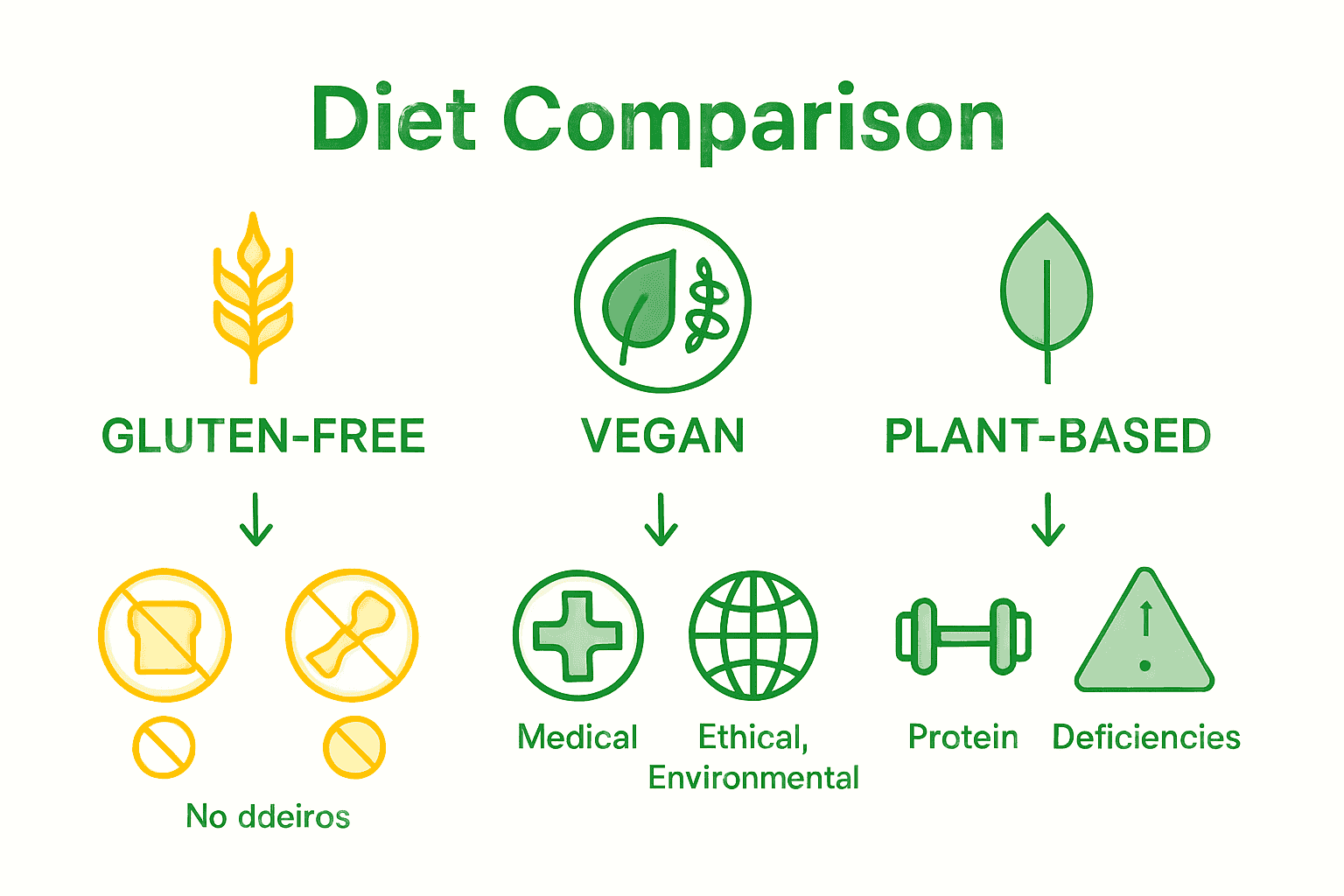
Verywell Fit provides critical insights into the nuanced world of specialized diets. While gluten-free, vegan, and plant-based approaches might seem similar, they each have distinct motivations, health implications, and nutritional considerations.
Key Differences Between Dietary Approaches:
- Gluten-Free Diet: Medical necessity for celiac patients
- Vegan Diet: Ethical choice eliminating all animal products
- Plant-Based Diet: Focus on whole, minimally processed plant foods
- Nutritional Goals: Varies from health management to environmental consciousness
Healthline highlights that these dietary choices require meticulous nutritional planning. Each approach carries unique challenges - gluten-free diets demand careful grain selection, vegan diets need strategic protein supplementation, and plant-based diets emphasize whole food nutrition.
Nutritional complexity is paramount. Gluten-free diets are typically designed for medical management, whereas vegan and plant-based diets often stem from ethical, environmental, or holistic health perspectives. Individuals must understand that simply adopting these diets doesn’t guarantee optimal nutrition.
To dive deeper into understanding plant-based nutrition strategies, explore our comprehensive guide to plant-based protein. Making informed dietary choices requires understanding the nuanced differences between these nutritional approaches.
Embrace a Truly Healthful Gluten-Free Lifestyle Today
Navigating the complexities of a gluten-free diet can be overwhelming when myths and misconceptions cloud your path. This article highlights the crucial need for balanced nutrition and careful ingredient awareness especially if you face challenges like celiac disease or gluten sensitivity. Don’t risk nutritional gaps or unnecessary restrictions when managing your wellness.

Discover how you can support your health with genuinely natural and organic choices at Nature’s Soul Shop. Our range of carefully selected gluten-free, vegan, and clean ingredient products empowers you to enjoy wholesome foods that respect your body’s needs. Act now to reshape your diet with confidence and find expert guidance through our guide on testing for gluten sensitivity naturally and deepen your understanding with our comprehensive gluten and gut health guide.
Take the first step to a balanced, healthful gluten-free experience by exploring our selection today at https://naturessoulshop.com and feel the difference clean, natural nutrition can make now.
Frequently Asked Questions
Do gluten-free diets guarantee better health?
No, a gluten-free diet is not automatically healthier. Many gluten-free products can be less nutritious than their gluten-containing counterparts, and the diet can lead to nutritional deficiencies if not carefully managed.
Who should consider a gluten-free diet?
A gluten-free diet is essential for individuals with specific medical conditions such as celiac disease, wheat allergies, or non-celiac gluten sensitivity. It is not necessary for everyone.
Are all gluten-free products nutritionally superior?
No, not all gluten-free products are nutritionally superior. Many processed gluten-free foods can be high in sugar, fat, and calories, making them less healthy options than their traditional counterparts.
What are the potential risks of adopting a gluten-free diet without medical necessity?
The potential risks include nutritional deficiencies, as gluten-containing whole grains provide essential vitamins, minerals, and fiber. Individuals may also face social complications and challenges in meal planning.


