


Nearly one third of global greenhouse gas emissions come from food production, making dietary choices a serious environmental issue for british expats in Delhi NCR. Many health-conscious professionals want options that align with their values while fitting their wellness routines abroad. This guide offers practical, planet-friendly approaches to plant-based eating, spotlighting how small nutrition shifts can make a big impact on both your personal health and the world around you.
Table of Contents
- Defining Plant-Based Diets And Environmental Impact
- Comparing Plant-Based Diet Varieties And Features
- Health Benefits And Risks For Individuals
- How Plant-Based Diets Lower Environmental Harm
- Processed Foods And Common Sustainability Misconceptions
- Practical Steps For Adopting A Sustainable Diet
Key Takeaways
| Point | Details |
|---|---|
| Plant-Based Diet Overview | A plant-based diet prioritises foods from plants while allowing varying levels of animal product inclusion, supporting both individual health and environmental sustainability. |
| Nutritional Considerations | Different plant-based diets need careful planning to ensure adequate nutrient intake, particularly for Vitamin B12, iron, and protein. |
| Environmental Impact | Plant-based diets help significantly reduce greenhouse gas emissions and resource consumption, making dietary choices crucial for ecological preservation. |
| Choosing Wisely | Not all plant-based products are equally sustainable; focus on whole, minimally processed foods to maximise health benefits while supporting environmental objectives. |
Defining Plant-Based Diets and Environmental Impact
A plant-based diet represents a holistic dietary approach focused on consuming foods predominantly derived from plants, with varying degrees of animal product inclusion. These diets fundamentally prioritise fruits, vegetables, whole grains, legumes, nuts, and seeds while minimising or eliminating animal-derived products. The environmental implications of such dietary choices are profound, particularly when considering that food production contributes approximately one-third of global greenhouse gas emissions.
The spectrum of plant-based diets ranges from flexible approaches like flexitarianism, which allows occasional meat consumption, to stricter vegetarian and vegan practices. Each variation offers unique environmental benefits by reducing agricultural land use, water consumption, and carbon footprint. Shifting away from animal-based protein sources towards plant-derived alternatives can dramatically decrease individual carbon emissions, making dietary choices a powerful tool for environmental sustainability.
Scientific research increasingly highlights the interconnectedness between personal nutrition and planetary health. Plant-based diets not only support individual wellness but also contribute to broader ecological preservation. By reducing demand for livestock production, these dietary patterns help mitigate deforestation, minimise water resource depletion, and lower greenhouse gas emissions associated with industrial animal agriculture.
Pro Tip: Start transitioning to a plant-based diet gradually by introducing one meat-free meal per week and progressively increasing plant-based food proportions in your daily nutrition.
Comparing Plant-Based Diet Varieties and Features
Plant-based diets represent a diverse spectrum of nutritional approaches, each characterised by unique parameters of animal product consumption. Plant-based dietary patterns range from completely vegan to more flexible approaches, offering individuals multiple options for aligning their dietary choices with personal health, ethical, and environmental objectives.
The primary varieties of plant-based diets include strict vegan diets, which exclude all animal products, and more nuanced approaches like lacto-ovo vegetarianism (consuming dairy and eggs), pesco-vegetarianism (including fish), and flexitarian diets that permit occasional meat consumption. Each variant presents distinct nutritional profiles and environmental impacts. Vegan diets typically demonstrate the most significant reduction in carbon footprint, while more flexible approaches offer easier transitional pathways for individuals seeking to modify their dietary habits.
Nutritional considerations vary significantly across these dietary approaches. Vegan diets require careful planning to ensure adequate protein, vitamin B12, iron, and calcium intake, often necessitating strategic supplementation or fortified food choices. Conversely, lacto-ovo vegetarian diets provide more straightforward nutritional balance through dairy and egg consumption. Flexitarian diets offer the most adaptable framework, allowing individuals to reduce meat consumption without complete elimination, potentially supporting both personal health goals and environmental sustainability.
Pro Tip: Gradually explore different plant-based diet varieties by experimenting with meat-free meals and tracking how each approach impacts your energy levels, nutrition, and overall wellbeing.
Here is a comparison of common plant-based diet types and their nutritional and environmental features:
| Diet Type | Animal Products Included | Key Nutritional Considerations | Typical Environmental Impact |
|---|---|---|---|
| Vegan | None | B12, iron, calcium, protein balance | Largest reduction in carbon footprint |
| Lacto-ovo Vegetarian | Dairy, eggs | Calcium, B12, protein | Moderate land and water savings |
| Pesco-vegetarian | Dairy, eggs, fish | Omega-3s, B12, iron | Still lower GHG emissions |
| Flexitarian | Occasional meat, animal products | Diet diversity, gradual adaptation | Variable but noticeably reduced |
Health Benefits and Risks for Individuals
Plant-based diets offer a comprehensive approach to personal health, presenting a range of potential benefits and considerations for individuals seeking nutritional optimisation. Research indicates that adherence to plant-based dietary patterns can significantly contribute to weight management, cardiovascular health, and diabetes prevention, making them an attractive option for those prioritising long-term wellness.
The health advantages of plant-based nutrition extend beyond disease prevention. Individuals embracing these dietary approaches often experience improved metabolic markers, reduced inflammation, and enhanced gut microbiome diversity. Cardiovascular benefits are particularly notable, with studies demonstrating lower risks of heart disease, reduced cholesterol levels, and improved blood pressure regulation. Moreover, plant-based diets typically provide higher fibre intake, increased antioxidant consumption, and more nutrient-dense food selections compared to traditional omnivorous eating patterns.
However, transitioning to a plant-based diet requires careful nutritional planning to mitigate potential risks. Micronutrient deficiencies can emerge if dietary diversity and strategic supplementation are not implemented. Critical nutrients such as vitamin B12, iron, calcium, omega-3 fatty acids, and complete protein sources demand particular attention. Consulting with nutritional professionals, conducting regular health screenings, and understanding individual metabolic requirements become essential strategies for maintaining optimal health while following plant-based dietary approaches.
Pro Tip: Conduct a comprehensive nutritional assessment and work with a registered dietitian to develop a personalised plant-based nutrition strategy that addresses your specific health requirements and potential micronutrient concerns.
How Plant-Based Diets Lower Environmental Harm
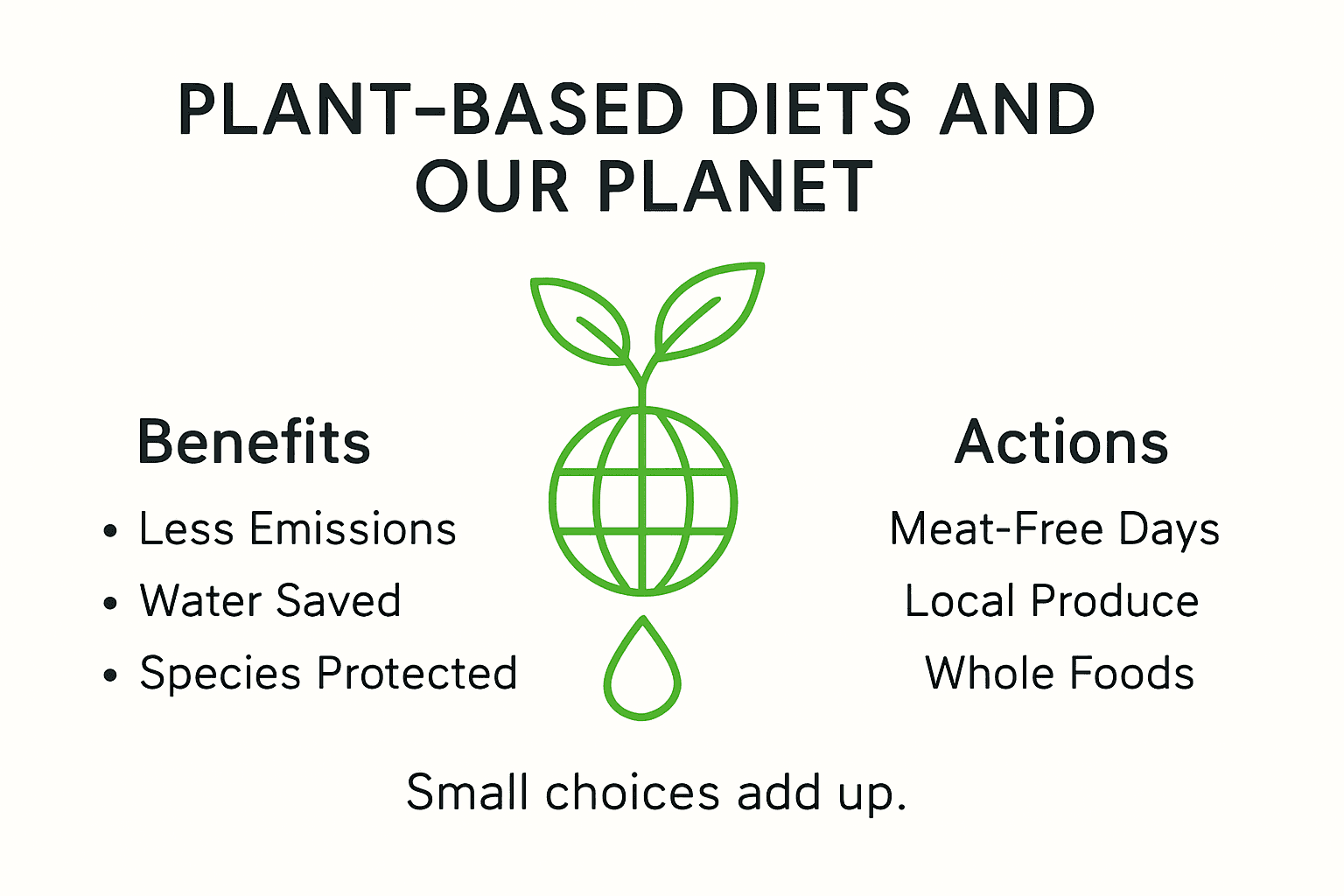
Comprehensive scientific research demonstrates that plant-based diets offer substantial environmental benefits, presenting a powerful strategy for reducing humanity’s ecological footprint. By systematically replacing animal-derived food products with plant-based alternatives, individuals can significantly contribute to greenhouse gas emission reduction, land conservation, and water resource preservation.

The environmental impact of dietary choices extends far beyond individual consumption. Animal agriculture represents a major contributor to global carbon emissions, with livestock production generating substantial methane and carbon dioxide outputs. Plant-based diets dramatically reduce these environmental pressures by requiring considerably less land, water, and agricultural resources. Transitioning towards plant-rich nutrition can potentially decrease an individual’s carbon footprint by up to 70%, making dietary choices a critical lever for climate change mitigation.
Beyond carbon emissions, plant-based dietary approaches support broader ecological preservation objectives. Reducing animal product consumption directly contributes to mitigating deforestation, protecting biodiversity, and supporting ecosystem resilience. The interconnected benefits extend from personal health to global environmental sustainability, demonstrating how individual nutritional choices can generate meaningful planetary impact. Critical environmental advantages include reduced land degradation, decreased water consumption, and lower agricultural greenhouse gas emissions.
Pro Tip: Start your environmental impact reduction journey by introducing one fully plant-based meal per week, gradually increasing plant-based food proportions to minimise your personal ecological footprint.
For a quick overview, here’s how plant-based dietary choices can influence key areas of environmental sustainability:
| Environmental Aspect | Plant-Based Diet Effect | Example Outcome |
|---|---|---|
| Greenhouse Gas Emissions | Significant reduction | Up to 70% lower by replacing meat |
| Land Use | Decreases substantially | More land available for nature |
| Water Consumption | Lower usage overall | Less water needed for crop irrigation |
| Biodiversity Preservation | Strongly supported | Reduced habitat loss from livestock |
Processed Foods and Common Sustainability Misconceptions
Ultra-processed plant-based foods increasingly challenge traditional sustainability narratives, revealing complex nuances in dietary choices that extend beyond simple environmental assumptions. While plant-based diets are often perceived as inherently sustainable, the rising consumption of processed plant-based products introduces significant complications for both nutritional quality and ecological impact.
Contrary to popular belief, not all plant-based foods contribute equally to environmental and health objectives. Ultra-processed plant foods frequently contain high levels of sugar, salt, and artificial additives, potentially undermining the fundamental health benefits associated with whole food plant-based nutrition. Research indicates that younger vegetarians and newer plant-based diet adopters are particularly prone to consuming these convenience-oriented processed alternatives, which can generate comparable greenhouse gas emissions to traditional processed foods.
Navigating the landscape of plant-based nutrition requires critical evaluation of food processing techniques and their broader implications. While some processed plant foods can offer improved nutrient bioavailability and sustainable protein alternatives, consumers must distinguish between minimally processed whole foods and heavily engineered products that merely mimic plant-based principles. Understanding these distinctions becomes crucial for maintaining the environmental and health integrity of plant-based dietary approaches.
Pro Tip: Prioritise whole, minimally processed plant foods and carefully read ingredient labels to ensure your plant-based choices genuinely support both personal wellness and environmental sustainability.
Practical Steps for Adopting a Sustainable Diet
Transitioning towards a sustainable diet requires strategic planning and incremental lifestyle modifications, addressing both personal nutritional needs and broader environmental considerations. Successful dietary transformation involves understanding individual barriers, developing practical skills, and creating supportive nutritional environments that facilitate meaningful change.
The foundation of a sustainable plant-based diet centres on selecting diverse, nutrient-dense whole foods while minimising processed alternatives. Nutritional diversity becomes paramount, necessitating careful macro and micronutrient considerations. Practical adoption strategies include gradual dietary transitions, comprehensive meal planning, and consistent nutritional education, ensuring individuals maintain optimal health while reducing their ecological footprint.
Beyond individual dietary choices, systemic support plays a critical role in sustainable nutrition adoption. This encompasses policy interventions, improved food accessibility, cultural adaptation of dietary recommendations, and enhanced consumer education programmes. Addressing affordability, cultural preferences, and nutritional knowledge can significantly reduce resistance to plant-based dietary transitions, making sustainable eating more achievable for diverse populations.
Pro Tip: Begin your sustainable diet journey by introducing one plant-based meal weekly, progressively expanding your repertoire while tracking your nutritional intake and energy levels.
Embrace a Plant-Based Lifestyle That Supports Your Wellness and Our Planet
Struggling to balance personal health goals with the urgent need to reduce environmental harm? This article highlights the challenges of adopting a truly sustainable plant-based diet while avoiding processed foods and common nutritional pitfalls. If you aim to improve your wellbeing and lower your ecological footprint, prioritising clean, organic ingredients is key. At Nature’s Soul Shop, we offer a curated selection of natural and organic products across fruits, vegetables, vegan, and gluten-free categories that align perfectly with your plant-based journey.
Discover the difference of choosing products made with pure ingredients that nourish your body and protect the environment. Start now with our range of wholesome dry groceries and fresh produce to craft meals that empower your health and reduce your carbon footprint. Take the first step towards a healthier you and a healthier planet by visiting Nature’s Soul Shop today and explore our natural options designed to support your sustainable diet goals.
Frequently Asked Questions
What is a plant-based diet?
A plant-based diet focuses on consuming foods primarily derived from plants, including fruits, vegetables, whole grains, legumes, nuts, and seeds, while minimising or eliminating animal products.
How does a plant-based diet benefit the environment?
Plant-based diets can significantly reduce greenhouse gas emissions, decrease land and water use, and help mitigate deforestation, thereby contributing to environmental sustainability and conservation.
What health benefits are associated with a plant-based diet?
Research shows that plant-based diets can help with weight management, improve cardiovascular health, reduce the risk of diabetes, and enhance overall wellness due to their nutrient-dense and high-fibre content.
What are the different types of plant-based diets?
Common varieties include vegan (no animal products), lacto-ovo vegetarian (includes dairy and eggs), pesco-vegetarian (includes fish), and flexitarian (occasional meat consumption), each offering distinct nutritional and environmental impacts.
Recommended
- Why Go Plant Based: Health, Sustainability, and Living Well – naturessoulshop
- Vegan vs Vegetarian – Impact on Health and Lifestyle – naturessoulshop
- Complete Guide to Vegan Diet – naturessoulshop
- The Essential Guide to Plant Based Protein – naturessoulshop
- Energy Saving for Homes: Step-by-Step Guide to Slash Costs | ReVroom


