


Every parent faces the worry of what really goes into their child’s food choices. Around 8% of children worldwide develop food allergies, a statistic echoed by both Indian and British health authorities. For health-conscious first-time parents in Delhi NCR, navigating safe and natural diets while avoiding major food triggers can be overwhelming. This guide breaks down the common allergens, the hidden risks in everyday meals, and practical tips to keep your child safe with confidence.
Table of Contents
- Defining Common Food Allergies In Children
- Recognising Symptoms And Allergy Triggers
- Major Food Allergens And Dietary Impact
- Choosing Natural And Organic Food Safely
- Managing Allergic Reactions At Home
Key Takeaways
| Point | Details |
|---|---|
| Understanding Food Allergies | Approximately 8% of children experience food allergies, which involve immune responses to specific food proteins. Identifying common allergens is crucial for effective management. |
| Recognising Symptoms | Food allergy symptoms can vary widely, including gastrointestinal, cutaneous, and respiratory reactions. Early recognition is vital for effective medical intervention. |
| Dietary Management | Children with food allergies require careful dietary planning to ensure nutritional adequacy while avoiding allergens. Consultation with nutrition specialists is recommended. |
| Emergency Preparedness | An up-to-date emergency action plan, including access to emergency medication like epinephrine auto-injectors, is critical for managing severe allergic reactions. Education of family and caregivers enhances safety. |
Defining Common Food Allergies in Children
Food allergies represent a complex immune system response that impacts millions of children worldwide. Current research indicates that approximately 8% of children experience some form of food-related allergic reaction, making understanding these conditions crucial for parental wellness and child health.
At its core, a food allergy occurs when the body’s immune system mistakenly identifies specific food proteins as harmful, triggering a defensive response. This reaction can manifest through various symptoms ranging from mild skin irritations to severe anaphylactic responses. The most common food allergies in children include reactions to proteins found in milk, eggs, peanuts, tree nuts, fish, shellfish, soy, and wheat.
Diagnosing food allergies requires careful medical assessment. Paediatric allergists typically employ multiple diagnostic strategies, including detailed medical history, skin prick tests, blood tests measuring specific immunoglobulin E (IgE) antibodies, and controlled food challenge examinations. These comprehensive evaluations help distinguish between true allergic reactions and other food sensitivities or intolerances.
Pro tip: Keep a detailed food and symptom diary to help healthcare professionals accurately track potential allergic reactions and identify specific trigger foods.
Recognising Symptoms And Allergy Triggers
Food allergies manifest through a complex range of symptoms that can vary significantly between individual children. Clinical research highlights that symptoms typically fall into three primary categories: gastrointestinal, cutaneous, and respiratory reactions. Understanding these manifestations is crucial for early recognition and appropriate medical intervention.
Gastrointestinal symptoms represent one of the most common allergy responses, including stomach cramps, nausea, vomiting, and diarrhoea. Skin reactions such as hives, eczema, and immediate swelling can also indicate an allergic response. More severe symptoms might include respiratory challenges like wheezing, difficulty breathing, or throat constriction - these potentially signal a life-threatening anaphylactic reaction requiring immediate medical attention.

Critical triggers vary widely but medical documentation consistently identifies common culprits including milk, eggs, peanuts, tree nuts, fish, and shellfish. Each child’s specific triggers can differ, making personalised medical assessment essential. Environmental factors, genetic predisposition, and previous exposure can all influence potential allergic reactions.
Pro tip: Maintain a detailed food diary documenting every meal, symptom, and potential reaction to help healthcare professionals accurately identify specific allergy triggers.
Major Food Allergens And Dietary Impact
Global health research identifies eight primary food groups responsible for the majority of allergic reactions worldwide. These major allergens include milk, eggs, peanuts, tree nuts, fish, shellfish, soy, and wheat, which collectively account for approximately 90% of documented food allergy cases among children and adults.
The dietary impact of these allergens extends far beyond immediate health concerns. Nutritional restrictions can significantly influence meal planning, social interactions, and overall quality of life for affected families. Children with multiple food allergies often require carefully designed nutritional strategies to ensure they receive adequate nutrients while avoiding potential trigger foods. This complexity demands comprehensive dietary management and ongoing nutritional consultation.
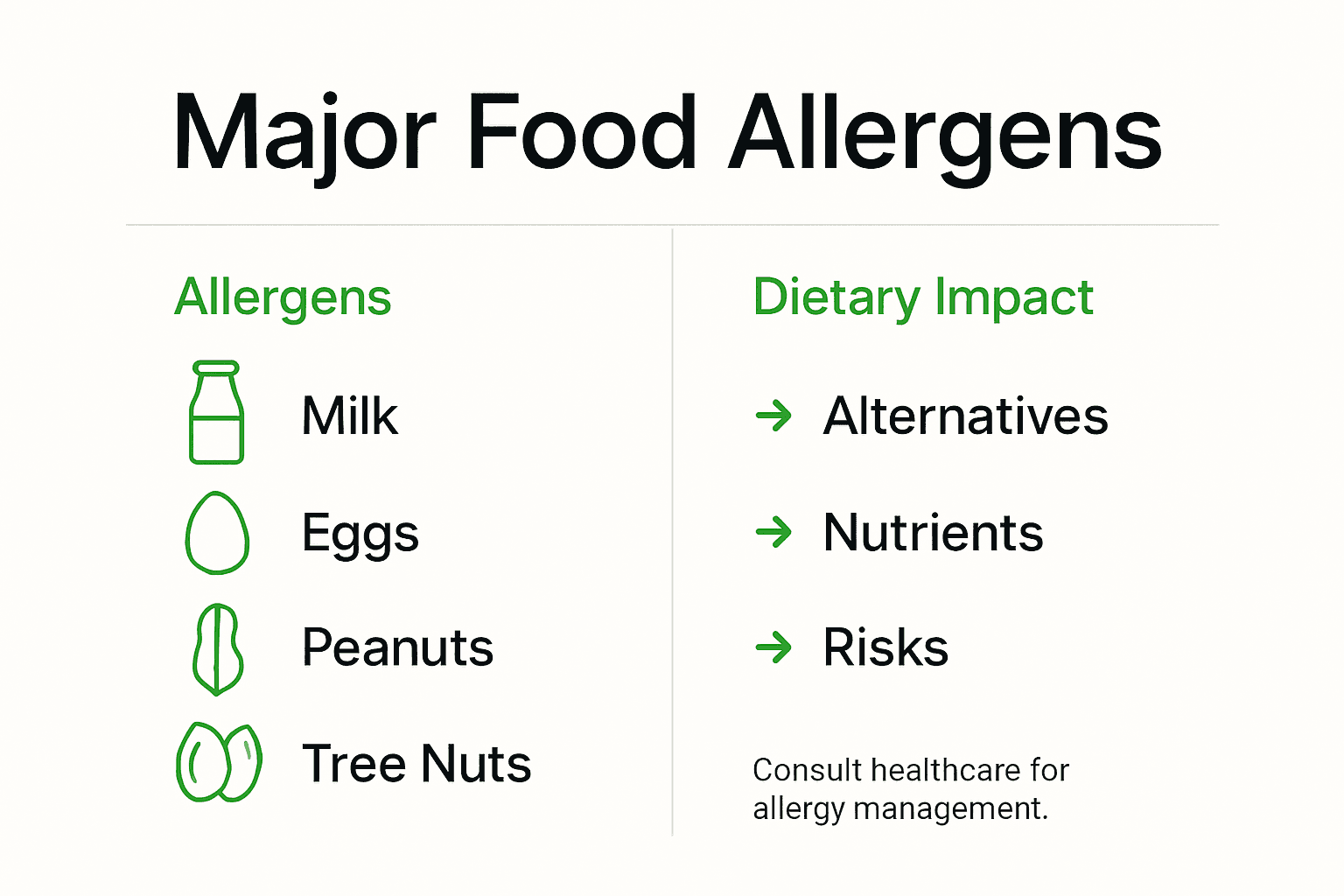
Below is a summary of major food allergens and their potential nutritional alternatives to support balanced diets for children:
| Allergen | Common Alternatives | Key Nutrients Provided |
|---|---|---|
| Cow’s milk | Fortified plant-based milk (oat, soya, pea) | Calcium, vitamin D, protein |
| Eggs | Flaxseed or chia seed mix, apple purée | Protein, omega-3, B vitamins |
| Peanuts | Roasted chickpeas, sunflower seed butter | Protein, vitamin E, fibre |
| Tree nuts | Pumpkin or hemp seeds, tiger nuts | Magnesium, healthy fats, zinc |
| Fish | Algae-based omega-3, lean meats | Omega-3, protein, selenium |
| Shellfish | Beans, pulses, seaweed snacks | Iron, vitamin B12, zinc |
| Soya | Pea protein, lentils, quinoa | Protein, iron, magnesium |
| Wheat | Gluten-free grains (rice, maize, quinoa) | Carbohydrates, B vitamins, fibre |
Recent lifestyle studies suggest that global dietary patterns and environmental shifts are contributing to increasing food allergy prevalence. Factors such as changes in food processing, agricultural practices, and childhood immune system development appear to play crucial roles in allergy emergence. Understanding these interconnected dynamics becomes essential for developing effective prevention and management strategies.
Pro tip: Consult a registered dietitian specialising in paediatric nutrition to develop a balanced, allergen-safe meal plan that meets your child’s unique dietary requirements.
Choosing Natural And Organic Food Safely
University research on organic food standards reveals critical insights for families navigating dietary choices for children with food allergies. Understanding the nuanced differences between natural, organic, and conventional food products becomes essential in creating safe nutritional environments.
Organic certification represents a rigorous process that ensures foods are produced without synthetic pesticides, genetic modifications, or harmful chemical interventions. For families managing food allergies, this approach offers an additional layer of dietary safety, reducing potential exposure to unknown chemical triggers that might exacerbate allergic responses. Careful label reading and understanding certification marks become crucial strategies in selecting appropriate food products.
The selection process extends beyond simply choosing organic labels. Parents must consider cross-contamination risks, detailed ingredient listings, and potential trace allergens that might not be immediately apparent. Developing a comprehensive understanding of food production methods, ingredient sourcing, and manufacturing practices helps create more informed nutritional choices that protect children with complex dietary requirements.
Pro tip: Contact food manufacturers directly to request detailed allergen information and production process specifics before introducing new products into your child’s diet.
Managing Allergic Reactions At Home
International clinical guidelines emphasise that effective management of allergic reactions requires comprehensive preparation and immediate, strategic intervention. Families must develop a proactive approach that combines prevention, recognition, and swift response strategies to protect children with food allergies.
Emergency preparedness is paramount. Anaphylaxis response protocols should include maintaining an up-to-date emergency action plan, keeping prescribed medications like epinephrine auto-injectors readily accessible, and ensuring all family members understand precise steps for recognising and treating severe allergic reactions. This includes understanding subtle symptom variations and knowing exactly when to administer medication or seek medical assistance.
Public health resources from the CDC recommend creating a multi-layered support system that involves healthcare providers, family members, school personnel, and caregivers. Communication becomes crucial, with clear documentation of individual allergy profiles, potential triggers, and specific management strategies tailored to each child’s unique medical requirements.
The following table highlights key actions for home management of food allergies in children:
| Action Step | Why It Matters | Who Should Be Informed |
|---|---|---|
| Keep emergency medication accessible | Immediate response reduces severe outcomes | Family, school staff, carers |
| Update emergency plan regularly | Reflects current triggers and treatments | GP, teachers, caregivers |
| Document reactions | Facilitates accurate medical follow-up | Parents, healthcare team |
| Educate on symptoms | Ensures early recognition and intervention | Siblings, friends, nursery staff |
Pro tip: Create a laminated emergency response card detailing your child’s specific allergies, medication instructions, and emergency contact information to share with key caregivers and institutions.
Embrace Allergy-Safe Wellness with Natural and Organic Choices
Managing food allergies in children is a constant challenge that impacts family wellbeing deeply. The article highlights critical pain points such as avoiding major allergens like milk, eggs, peanuts and wheat while ensuring balanced nutrition through safe dietary alternatives. It also raises concerns about cross-contamination and exposure to synthetic chemicals that can worsen allergic reactions. If you seek peace of mind combined with clean, trusted ingredients, making informed food and lifestyle choices is essential.
At Nature’s Soul Shop, we understand these needs and offer a wide selection of organic and natural products crafted without harmful additives or artificial substances. From gluten-free grains to plant-based dairy alternatives, every item supports your child’s unique dietary requirements while enhancing overall family wellness.
Discover our carefully sourced range designed to minimise allergens and chemical exposures.

Take control today by exploring our collection of organic food products that help reduce allergy risks and nourish your loved ones safely. Visit Nature’s Soul Shop now and create a cleaner, safer environment for your child’s health and happiness.
Frequently Asked Questions
What are the most common food allergies in children?
The most common food allergies in children include cow’s milk, eggs, peanuts, tree nuts, fish, shellfish, soy, and wheat. These allergens account for approximately 90% of documented food allergy cases.
How can I recognise symptoms of food allergies in my child?
Symptoms of food allergies can manifest in various ways, including gastrointestinal issues (stomach cramps, nausea, vomiting), skin reactions (hives, eczema), and respiratory problems (wheezing, difficulty breathing). Severe symptoms may indicate anaphylaxis, which requires immediate medical attention.
What dietary alternatives can I provide for children with food allergies?
For children with food allergies, there are several nutritional alternatives. For instance, fortified plant-based milk can replace cow’s milk, flaxseed or chia seed mixes can serve as egg substitutes, and legumes can be alternatives for peanuts.
How can I manage allergic reactions at home?
Managing allergic reactions at home involves keeping emergency medication accessible, regularly updating an emergency action plan, documenting allergic reactions, and educating family members on recognising symptoms and proper response actions.


