


Nearly half of health-conscious parents in Delhi NCR discover that adding enough healthy fat to a plant-based family diet is surprisingly difficult. This challenge feels even bigger for first-time parents aiming for wholesome meals that meet global standards, often emulating british nutritional trends. Exploring the truth about dietary fats can help you sort facts from myths, so your family enjoys both flavour and nutrition from everyday plant-based staples.
Table of Contents
- Healthy Fats Defined And Common Myths
- Types Of Plant-Based Fats Explained
- Key Functions In Childhood And Family Health
- How To Incorporate Healthy Fats Safely
- Plant-Based Fat Sources And What To Avoid
- Mistakes To Avoid And Label Reading Tips
Key Takeaways
| Point | Details |
|---|---|
| Healthy Fats Are Essential | Dietary fats, particularly unsaturated fats from plant sources, are vital for overall health and cannot be disregarded. |
| Choose Whole Food Sources | Prioritise minimally processed fats like nuts, seeds, and cold-pressed oils for optimal nutrition. |
| Be Wary of Trans Fats | Avoid trans fats found in ultra-processed foods, as they are harmful to heart health. |
| Proper Label Reading Is Key | Develop skills to interpret nutrition labels to avoid unhealthy fat sources and ensure nutrient quality. |
Healthy Fats Defined and Common Myths
Understanding healthy fats is crucial for optimal nutrition, particularly in plant-based diets. Contrary to popular misconceptions, fat is not an enemy but a vital macronutrient essential for bodily functions. The World Health Organization’s 2023 guidelines clarify that dietary fat quality matters significantly more than total fat consumption, challenging long-standing nutritional myths.
Scientific research reveals that not all fats are created equal. Unsaturated fats, prevalent in plant sources like nuts, seeds, and avocados, offer numerous health benefits. Research from Johns Hopkins Medicine confirms that specific fat types can support heart health and metabolic processes, directly countering the outdated narrative that all dietary fat leads to weight gain or health complications.
The primary categories of dietary fats include saturated, monounsaturated, polyunsaturated, and trans fats. Plant-based diets predominantly feature heart-healthy monounsaturated and polyunsaturated fats, which can help reduce bad cholesterol levels, support brain function, and provide essential fatty acids. Trans fats, often found in processed foods, remain the sole universally acknowledged harmful fat type that nutritionists recommend avoiding completely.
Expert Tip: Aim to incorporate a diverse range of plant-based fat sources like chia seeds, walnuts, olive oil, and flaxseeds to ensure comprehensive nutritional coverage and optimal health benefits.
Types of Plant-Based Fats Explained
Plant-based diets offer a rich spectrum of dietary fats, each with unique nutritional profiles and health benefits. Scientific research explores the intricate landscape of plant-based fatty acids, revealing a complex world beyond simplistic dietary recommendations. These fats can be categorised into four primary types: polyunsaturated, monounsaturated, saturated, and trans fats, each playing a distinct role in human nutrition.
Monounsaturated and polyunsaturated fats emerge as nutritional champions in plant-based eating. Sources like olive oil, walnuts, chia seeds, and avocados provide essential fatty acids that support cardiovascular health and metabolic processes. Comprehensive studies from The Lancet highlight the crucial distinction between added and intrinsic plant fats00194-7/fulltext), emphasising that not all plant-based fats are created equal. Some processed plant oils might undergo treatments that compromise their nutritional integrity, making whole food sources preferable.
Nutritional experts recommend prioritising omega-3 and omega-6 rich plant sources, which include flaxseeds, hemp seeds, and algae-based supplements. These essential fatty acids cannot be produced by the human body and must be obtained through diet. By strategically combining different plant fat sources, individuals can create a balanced fatty acid intake that supports overall wellness, brain function, and cellular health.
Here is a comparison of the main plant-based fat types and their typical sources:
| Fat Type | Common Plant Sources | Main Health Role |
|---|---|---|
| Monounsaturated | Olive oil, avocados, almonds | Lowers bad cholesterol |
| Polyunsaturated | Flaxseeds, walnuts, chia seeds | Essential for brain and cells |
| Saturated | Coconut oil, cacao, palm oil | Energy source, limit intake |
| Trans (rare in plants) | Ultra-processed foods | Avoid entirely, harms heart health |
Pro Nutrition Tip: Rotate your plant-based fat sources weekly to ensure a diverse nutrient intake and prevent potential nutritional monotony.
Key Functions in Childhood and Family Health
Dietary fats play a fundamental role in childhood development, serving far more than a simple energy source. Children’s nutritional requirements reveal the critical importance of selecting appropriate fat sources for optimal growth and wellness, particularly in plant-based family nutrition. Essential fatty acids are crucial building blocks for brain development, cellular structure, and metabolic processes during the most formative years of human life.

The physiological significance of dietary fats extends beyond basic nutrition. Scientific research from the Food and Agriculture Organization highlights how specific fatty acids contribute to neurological development, hormone production, and overall cellular function. Plant-based sources like chia seeds, flaxseeds, and algae-derived omega-3 supplements provide critical nutrients that support brain growth, immune system function, and long-term metabolic health for children and adults alike.
Families adopting plant-based diets must strategically incorporate diverse fat sources to ensure comprehensive nutritional coverage. Omega-3 and omega-6 fatty acids are particularly important, supporting cognitive development, reducing inflammation, and maintaining healthy cell membranes. By prioritising whole food sources and minimising processed oils, parents can create nutritional foundations that support lifelong health and wellness.
Pro Nutrition Tip: Introduce a variety of plant-based fat sources gradually into your family’s diet, focusing on whole foods like nuts, seeds, and avocados to ensure balanced nutrient absorption.
How to Incorporate Healthy Fats Safely
Practical strategies for integrating plant-based fats safely into family nutrition04099-0/fulltext) require careful planning and understanding of dietary balance. Portion control remains critical when introducing healthy fats, as even nutritious sources can contribute excessive calories if consumed indiscriminately. Plant-based families should aim to replace saturated and trans fats with nutrient-dense unsaturated fat sources like nuts, seeds, avocados, and carefully selected vegetable oils.
Nutritional experts recommend a systematic approach to fat incorporation, emphasising food diversity and mindful preparation. Comprehensive research on plant-based dietary strategies highlights the importance of unrefined plant oils and strategic meal planning to ensure balanced fat intake. Families should focus on integrating whole food sources rather than relying exclusively on processed supplements, creating meals that naturally include essential fatty acids through ingredients like chia seeds, hemp hearts, and cold-pressed olive oil.
Successful fat integration involves understanding individual nutritional needs and potential micronutrient interactions. Rotating fat sources weekly prevents monotony and ensures a broad spectrum of nutrients, while monitoring portion sizes prevents overconsumption. Parents should prioritise organic, minimally processed plant-based fats and consider periodic nutritional consultations to verify dietary adequacy, particularly for growing children and individuals with specific metabolic requirements.
Pro Nutrition Tip: Create a weekly meal rotation that introduces different plant-based fat sources, ensuring nutritional variety and preventing potential nutrient fatigue.
Plant-Based Fat Sources and What to Avoid
Comprehensive understanding of plant-based fat sources requires careful navigation between nutritious whole foods and potentially harmful processed options00194-7/fulltext). Healthy fat sources include whole food options like avocados, nuts, seeds, and minimally processed plant oils, which provide essential nutrients without compromising nutritional integrity. These natural sources offer a rich spectrum of omega-3 and omega-6 fatty acids, supporting cellular health and metabolic functions.
Nutritional research warns that not all plant-based fat products meet optimal health standards, emphasising the critical importance of label reading and ingredient scrutiny. Consumers should be wary of industrially produced foods with hydrogenated oils, excessive additives, and refined vegetable oils. Ideal sources include extra virgin olive oil, cold-pressed coconut oil, unrefined hemp seed oil, and whole food sources like chia seeds, walnuts, almonds, and flaxseeds.
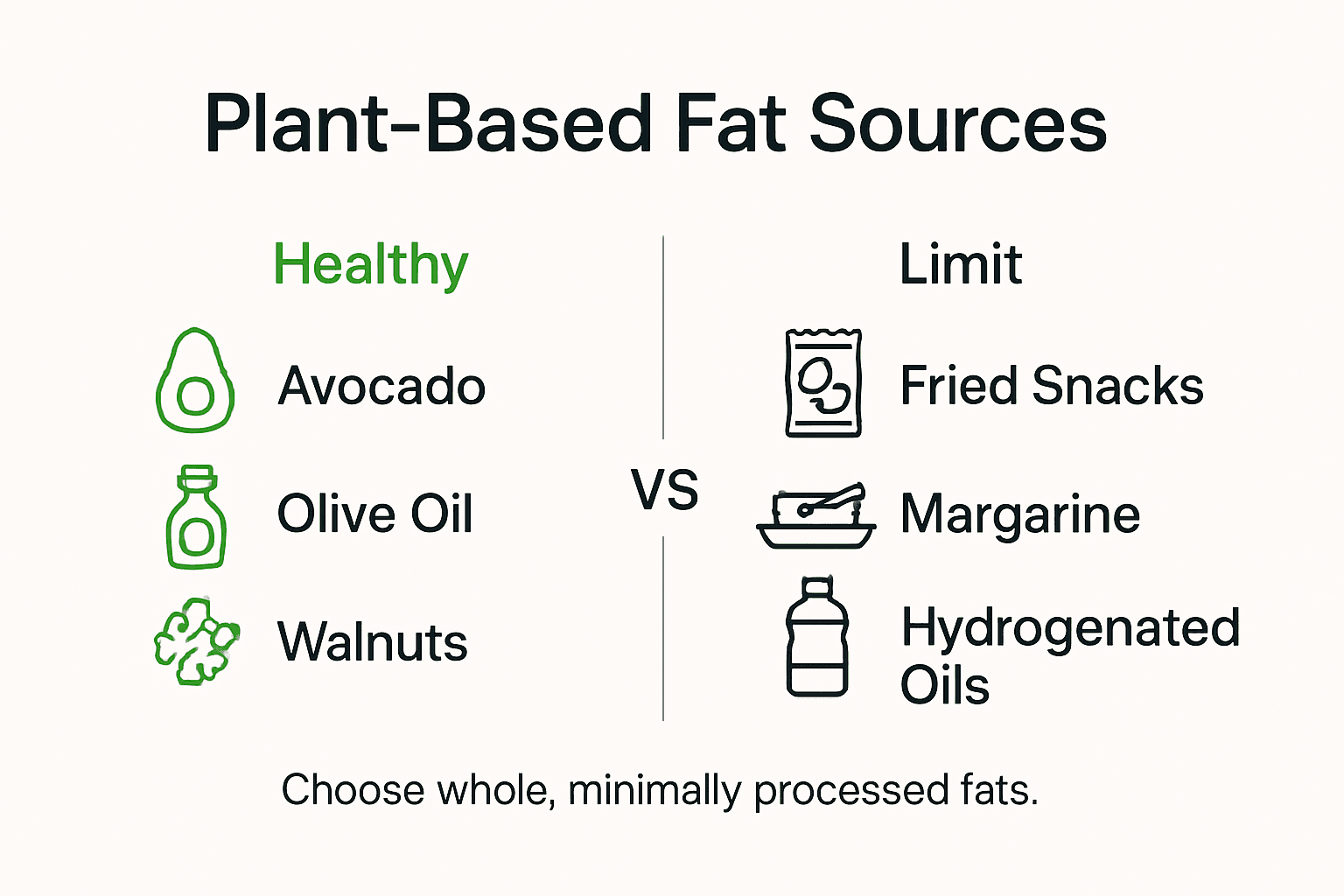
Strategic fat selection involves understanding processing methods and potential nutritional degradation. Avoid trans fats, highly refined oils, and ultra-processed plant-based products that might contain hidden unhealthy ingredients. Instead, prioritise organic, cold-pressed, and minimally processed fat sources that retain their natural nutritional profile and support overall metabolic wellness.
Use this guide to distinguish healthy and less healthy plant-based fat products:
| Product Type | Processing Level | Nutrition Tip |
|---|---|---|
| Whole nuts/seeds | Minimal | Choose for best nutrient profile |
| Cold-pressed oils | Low | Favour for cooking and dressing |
| Refined oils | Moderate-High | Use sparingly, less nutritional value |
| Hydrogenated fats | Industrial/High | Avoid due to harmful trans fats |
Pro Nutrition Tip: Always check ingredient lists for whole, recognisable fat sources and prioritise unrefined, minimally processed options in your plant-based diet.
Mistakes to Avoid and Label Reading Tips
Understanding nutrition label complexities is crucial for making informed dietary choices, particularly in plant-based nutrition. Label reading requires a strategic approach that goes beyond casual scanning. Consumers must develop skills to decode ingredient lists, identify hidden unhealthy fats, and distinguish between genuinely nutritious products and marketing-driven health claims.
Comprehensive nutrition label interpretation involves multiple critical considerations, including serving size analysis, understanding daily value percentages, and recognising potentially misleading nutritional information. Plant-based consumers should pay special attention to terms like ‘partially hydrogenated’, ‘refined’, and ‘processed’, which often indicate compromised nutritional quality. Scrutinise ingredient lists for trans fats, excessive sodium, and unnecessary additives that might undermine the potential health benefits of plant-based products.
Common mistakes include assuming all plant-based products are inherently healthy, overlooking serving size details, and failing to compare nutrition panels critically. Practical strategies involve checking total fat content, examining the ratio of saturated to unsaturated fats, and prioritising whole food sources over processed alternatives. Be particularly cautious of products marketing themselves as ‘low-fat’ or ‘heart-healthy’, as these claims often mask nutritional deficiencies or hidden unhealthy ingredients.
Pro Nutrition Tip: Develop a 30-second label-reading routine that focuses on ingredient quality, fat composition, and serving sizes before making purchasing decisions.
Embrace Healthy Plant-Based Fats for Your Family’s Wellness
Choosing the right fats is a vital step in supporting your family’s health and development as highlighted in our article on plant-based family nutrition. Many families struggle with integrating diverse and nutrient-rich plant fats such as omega-3 and omega-6 sources, while also avoiding processed and harmful fats. You deserve easy access to organic, unrefined, and clean ingredient options that nourish your loved ones with every meal.
Discover a trusted source for wholesome plant-based fats and naturally nutritious foods at Nature’s Soul Shop. Our carefully selected range supports your goal to incorporate whole food fats like nuts, seeds, and cold-pressed oils safely into daily life. Take control of your family’s nutrition today by exploring expert-approved products that align with your wellness journey. Visit Nature’s Soul Shop now and begin creating meals full of vitality and balance.
Frequently Asked Questions
What are the different types of plant-based fats?
Plant-based fats can be categorised into four primary types: monounsaturated, polyunsaturated, saturated, and trans fats. Monounsaturated and polyunsaturated fats are considered the healthiest options, commonly found in foods like olive oil, avocados, and nuts.
How can I incorporate healthy fats into my family’s diet?
Incorporate healthy fats by adding whole food sources such as nuts, seeds, and avocados to meals. Use cold-pressed oils for cooking and dressings, and aim to include a variety of fat sources weekly to ensure balanced nutrient intake.
What should I avoid when choosing plant-based fat products?
Avoid highly refined oils, hydrogenated fats, and ultra-processed plant-based products. Look for organic, cold-pressed, and minimally processed fat sources that retain their nutritional quality, such as extra virgin olive oil and whole nuts.
How do I read nutrition labels to choose healthy fats?
When reading nutrition labels, focus on ingredient quality, total fat content, and the ratio of saturated to unsaturated fats. Be cautious of terms like ‘partially hydrogenated’ or ‘refined’, which indicate potentially unhealthy fats. Always check for hidden additives that may compromise the product’s health benefits.
Recommended
- The Essential Guide to Plant Based Protein – naturessoulshop
- Plant Based Diet Guide: Complete Wellness Resource – naturessoulshop
- Why Go Plant Based: Health, Sustainability, and Living Well – naturessoulshop
- Healthy Family Meal Planning for Balanced Living – naturessoulshop
- 7 Peanut Free Snack Options for Canadian Schools and Cafes - Probe IT


