


Nearly half of British shoppers consider organic skincare safer, yet many misunderstand what ‘organic’ truly means. Choosing clean products is not just a trend in the United Kingdom as it has become a priority for health-conscious consumers everywhere. This guide explains what sets organic formulas apart, highlights key myths, and reveals how ingredient choices actually impact your skin’s health.
Table of Contents
- Defining Organic Skincare And Common Misconceptions
- Key Organic Ingredients And Their Role
- How Organic Skincare Supports Skin Health
- Allergy Risks And Safe Ingredient Choices
- Comparing Organic With Conventional Skincare
Key Takeaways
| Point | Details |
|---|---|
| Understanding Organic Skincare | Organic skincare consists of products made from ingredients grown without synthetic chemicals, but does not guarantee complete purity. |
| Importance of Ingredient Knowledge | Consumers should read labels carefully to differentiate between organic and non-organic ingredients due to varying regional regulations. |
| Allergy Considerations | Individuals must be cautious of potential allergens in organic products, as natural ingredients can also provoke reactions. |
| Differences from Conventional Skincare | Organic skincare prioritises long-term health and environmental sustainability, whereas conventional skincare often focuses on immediate visible results. |
Defining Organic Skincare And Common Misconceptions
Understanding organic skincare requires navigating a complex landscape of ingredients, regulations, and consumer expectations. Organic skincare involves products made from ingredients grown without synthetic fertilizers, pesticides, or genetically modified organisms, but the terminology can often be more nuanced than it initially appears.
Many consumers mistakenly believe that organic automatically means completely pure or chemical-free. In reality, organic products can still contain natural chemicals, and not all natural ingredients are universally safe for every individual. The term ‘organic’ indicates a specific cultivation approach rather than a guarantee of absolute safety or comprehensive natural composition.
Key characteristics of authentic organic skincare include:
- Ingredients sourced from farms avoiding synthetic chemical interventions
- Minimally processed natural components
- Environmentally conscious production methods
- Transparent ingredient sourcing and manufacturing processes
Regulatory frameworks surrounding organic labelling vary significantly across different regions, which means consumers must remain vigilant. A product labelled ‘organic’ might contain a mix of organic and non-organic ingredients, depending on local standards. Careful label reading and understanding certification marks become crucial for those seeking truly organic skincare solutions.
Key Organic Ingredients And Their Role
Organic skincare ingredients represent a sophisticated world of natural botanical extracts, essential oils, and nutrient-rich components designed to nourish and protect skin. Key organic skincare ingredients include botanical extracts, essential oils, and natural butters that offer targeted therapeutic benefits, each playing a unique role in skin health and rejuvenation.

Some of the most potent organic ingredients demonstrate remarkable properties for different skin concerns. Botanical powerhouses such as chamomile extract provide anti-inflammatory support, while ingredients like shea butter deliver profound moisturising benefits. These natural components work synergistically to address various skin challenges without relying on synthetic chemicals or harsh compounds.
Primary organic ingredients and their specific roles include:
- Chamomile Extract: Reduces skin inflammation and soothes irritation
- Shea Butter: Provides deep hydration and supports skin barrier function
- Rosehip Oil: Promotes skin regeneration and reduces hyperpigmentation
- Aloe Vera: Offers cooling, healing, and moisturising properties
Understanding the nuanced benefits of these organic ingredients enables consumers to make informed skincare choices. The complete guide to organic ingredients highlights how natural components can effectively replace synthetic alternatives, providing a holistic approach to skincare that prioritises both personal health and environmental sustainability.
How Organic Skincare Supports Skin Health
Skin health represents a delicate ecosystem that requires thoughtful, holistic care and protection. Organic skincare products may offer benefits such as reduced exposure to synthetic chemicals and potential allergens, providing a nuanced approach to maintaining skin’s natural balance and resilience.
The fundamental mechanism of organic skincare involves supporting the skin’s inherent regenerative processes through carefully selected natural ingredients. These components work synergistically to nourish, protect, and restore skin function without introducing harsh synthetic compounds that might disrupt the skin’s microbiome or cause long-term irritation. By prioritising ingredients sourced from organic farming practices, these skincare solutions minimise the risk of chemical interactions that could potentially compromise skin integrity.
Key ways organic skincare supports skin health include:
- Minimising exposure to artificial preservatives
- Providing nutrient-rich botanical extracts
- Supporting natural skin healing mechanisms
- Reducing potential inflammatory responses
Switching to organic skincare represents a comprehensive approach to personal wellness, acknowledging that skin health extends beyond surface-level treatments. By selecting products with transparent ingredient profiles and minimal processing, individuals can actively contribute to both personal health and environmental sustainability.
Allergy Risks And Safe Ingredient Choices
Navigating the world of organic skincare requires a nuanced understanding of potential allergenic components and individual sensitivities. Natural ingredients in organic skincare can be allergens, similar to synthetic ones, with products potentially containing substances like nuts or essential oils that provoke allergic reactions, underscoring the critical importance of informed product selection.
Individuals with sensitive skin or known allergies must approach organic skincare with careful consideration and proactive strategies. The misconception that ‘natural’ automatically means ‘safe’ can lead to unexpected skin reactions. Essential oils, botanical extracts, and nut-based ingredients, while organic, can trigger significant immune responses in susceptible individuals. Comprehensive label reading and understanding ingredient profiles become paramount in preventing potential adverse skin interactions.
Key strategies for managing allergy risks include:
- Conducting thorough patch tests before full application
- Researching individual ingredient sensitivities
- Consulting dermatological professionals for personalised advice
- Maintaining a detailed record of skin reactions
Understanding preservative-free approaches can help minimise potential allergenic interactions, empowering consumers to make informed choices about their skincare routine. The goal is not to fear organic ingredients but to approach them with knowledge, mindfulness, and a personalised understanding of one’s unique skin chemistry.
Comparing Organic With Conventional Skincare
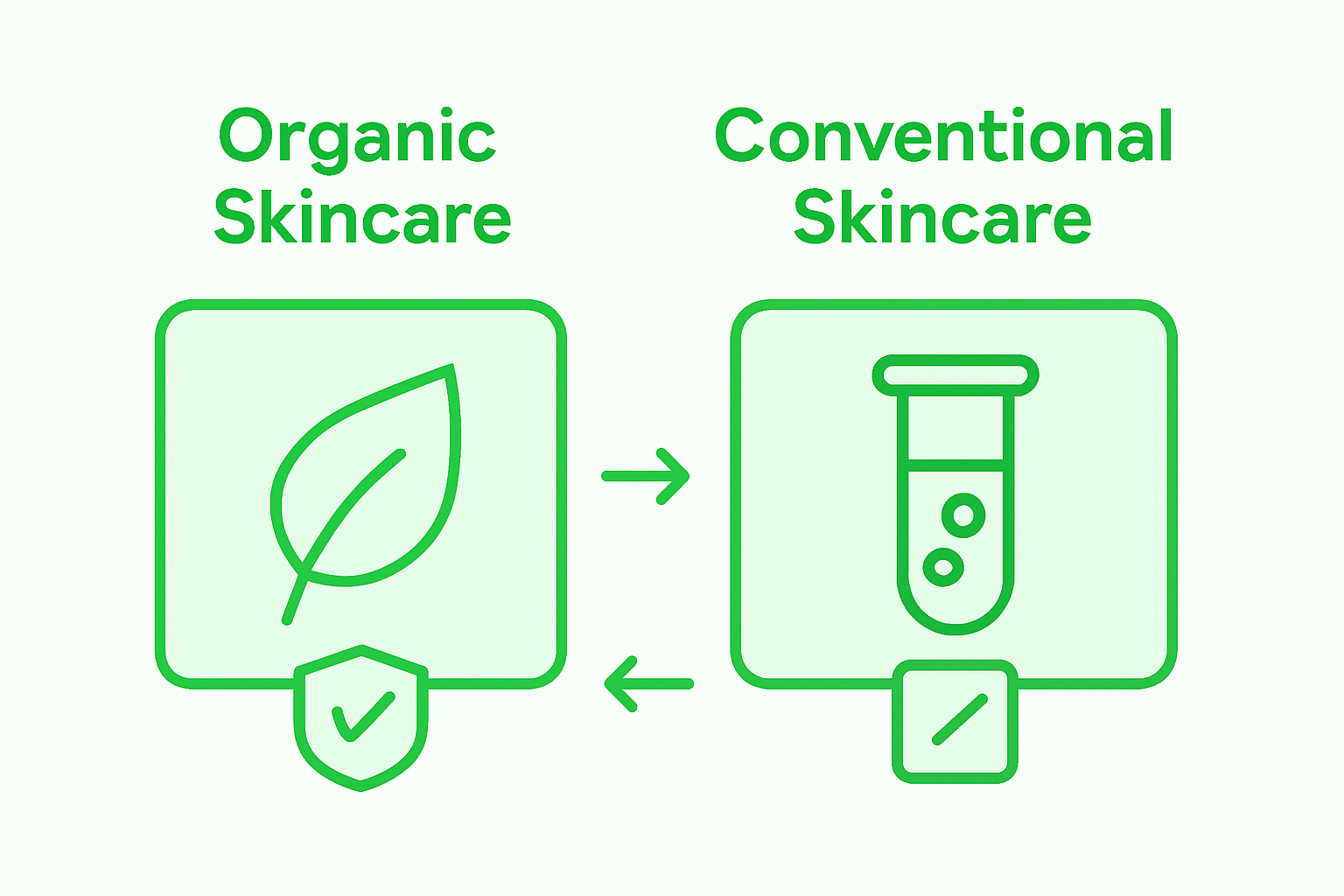
Skincare philosophies diverge significantly between organic and conventional approaches, representing fundamentally different perspectives on skin health and ingredient selection. Conventional skincare products often contain synthetic chemicals that can cause skin irritation or other adverse effects, whereas organic skincare focuses on natural ingredients, potentially reducing the risk of such reactions.
Organic skincare products must meet strict certification requirements, unlike some ‘natural’ products that may still contain harmful chemicals. This regulatory scrutiny ensures a higher standard of ingredient purity and environmental responsibility. Conventional skincare typically prioritises immediate visual results through advanced chemical formulations, while organic alternatives emphasise long-term skin health through gentler, more holistic approaches.
Key differences between organic and conventional skincare include:
- Ingredient sourcing and processing methods
- Potential for skin sensitivity and irritation
- Environmental impact of production
- Long-term versus short-term skin health approaches
- Regulatory oversight and certification standards
Understanding the comprehensive differences between organic and conventional product approaches empowers consumers to make informed choices aligned with their personal health goals and ethical considerations. The ultimate objective is selecting skincare solutions that support both individual wellness and broader environmental sustainability.
Experience True Organic Skincare for Healthier Skin and Cleaner Living
Struggling with skin sensitivities or overwhelmed by misleading “organic” labels The article highlights the importance of understanding authentic organic skincare ingredients and the risks involved with synthetic chemicals and allergens. If you seek clean ingredients that truly respect your skin’s natural balance and overall wellness, our selection at Nature’s Soul Shop offers carefully sourced organic products designed to nourish without compromise.

Take control of your skin health today by choosing verified organic options that protect your skin and support environmental sustainability. Explore our comprehensive range at Nature’s Soul Shop and discover how simple it is to embrace a skincare routine free from harsh chemicals and harmful allergens. Start your journey now and enjoy the benefits of cleaner living and healthier skin.
Frequently Asked Questions
What are the main benefits of using organic skincare products?
Organic skincare products offer several benefits, including reduced exposure to synthetic chemicals, improved skin health through natural ingredients, and a lower risk of irritation and allergic reactions. They also promote environmentally sustainable practices during production.
How do organic ingredients differ from conventional ingredients in skincare?
Organic ingredients are sourced from farms that avoid synthetic fertilizers and pesticides, focusing instead on natural cultivation methods. In contrast, conventional ingredients often contain synthetic chemicals, which can cause skin irritation and other adverse effects.
Can organic skincare really support long-term skin health?
Yes, organic skincare is designed to nourish and protect the skin naturally, supporting its regenerative processes. Over time, this can lead to improved skin health and reduced risks associated with harsh synthetic compounds that may disrupt the skin’s natural balance.
Are organic skincare products suitable for all skin types?
While organic skincare products generally are gentler on the skin, individuals with sensitive skin or known allergies should proceed with caution. It’s essential to read ingredient labels carefully and conduct patch tests to avoid potential allergic reactions.
Recommended
- Complete Guide to Importance of Organic Matter – naturessoulshop
- Switching to Organic: Step-by-Step Guide for Healthier Living – naturessoulshop
- Understanding What Are Clean Ingredients and Their Benefits – naturessoulshop
- Complete Guide to Organic vs Conventional Products – naturessoulshop
- Eco Friendly Cleaning Tips For Busy European Mums – The Zoofamily


