


Most shoppers would be surprised to learn that over 80 percent of packaged foods in British stores contain a mix of natural and artificial flavours. With growing interest in health-conscious eating across the United Kingdom, understanding how these flavour sources differ is more important than ever. This article clearly explains the science behind flavour labelling, the real differences between origins, and how British consumers can make more confident choices about what they eat.
Table of Contents
- Natural And Artificial Flavours Defined Clearly
- Sources Of Flavours: Plant, Animal Or Synthetic
- Key Differences In Production And Labelling Laws
- Health Impacts And Scientific Concerns
- Choosing Safe, Clean-Label Products
Key Takeaways
| Point | Details |
|---|---|
| Understanding Flavours | Distinction between natural and artificial flavours is crucial for health-conscious consumers, with natural flavours derived from real sources and artificial flavours chemically synthesised. |
| Ingredient Transparency | Consumers should closely examine ingredient labels, as ‘natural’ does not guarantee superior quality or health benefits. |
| Health Considerations | Both natural and artificial flavourings are regulated for safety, but individual sensitivities can vary, necessitating informed dietary choices. |
| Clean-label Selection | Prioritising minimally processed ingredients and understanding extraction methods can help consumers make healthier food decisions. |
Natural And Artificial Flavours Defined Clearly
Understanding the nuanced world of flavours involves distinguishing between natural and artificial taste enhancers that impact our daily nutrition. As consumers become increasingly health-conscious, comprehending these flavour categories becomes crucial. Scientific definitions reveal that natural flavours are extracted directly from plant or animal sources, while artificial flavours are chemically synthesised to mimic natural taste profiles.
Natural flavours originate from genuine ingredients like fruits, herbs, spices, roots, or animal derivatives. These extracts undergo processing that maintains their fundamental chemical structure. For instance, a strawberry flavour derived naturally would come from actual strawberry essence, capturing the plant’s original aromatic compounds. Conversely, artificial flavours are laboratory-created molecular replicas designed to imitate specific taste experiences without using the original source ingredient.
The critical distinction lies not just in origin, but in complexity and potential health implications. While both natural and artificial flavours aim to enhance taste, they differ significantly in composition. Understanding clean ingredients becomes paramount for health-conscious individuals seeking transparency in their nutritional choices. Natural flavours typically contain more complex molecular structures and potentially retain trace nutritional benefits, whereas artificial flavours are precise chemical reconstructions focused purely on sensory replication.
Consumers should recognise that “natural” does not automatically guarantee superior quality or healthiness. Both flavour categories undergo extensive processing, and regulatory standards ensure safety. The key is informed selection, understanding ingredient lists, and making personalised nutritional decisions aligned with individual wellness goals.
Sources Of Flavours: Plant, Animal Or Synthetic
Flavour sources represent a fascinating spectrum of culinary and nutritional innovation, ranging from botanical extracts to animal derivatives and synthetic chemical compounds. Scientific research reveals that these sources fundamentally differ in their origin, extraction methods, and molecular composition. Understanding these diverse flavour origins enables consumers to make more informed dietary choices.
Plant-based flavour sources dominate the natural flavour landscape, offering remarkable diversity. Herbs, spices, fruits, vegetables, and botanical extracts provide rich, complex aromatic profiles. Plant based diet enthusiasts often appreciate these natural flavour sources for their holistic nutritional benefits. Ingredients like vanilla beans, citrus peels, ginger roots, and essential herb extracts represent classic examples of plant-derived flavouring agents that capture authentic taste experiences.

Animal-derived flavour sources include ingredients extracted from meat, dairy, eggs, and other animal products. These include chicken or beef stock concentrates, dairy essences, and seafood extracts. Each animal source contributes unique molecular structures that create distinct taste sensations. Synthetic flavour sources, by contrast, are precisely engineered chemical compounds created in laboratory settings to mimic natural taste profiles, offering consistency and cost-effectiveness that natural extracts cannot always provide.
The selection between plant, animal, and synthetic flavour sources ultimately depends on individual dietary preferences, nutritional goals, and sensory experiences. While natural sources often retain more complex nutritional profiles, synthetic alternatives can offer greater stability, longer shelf life, and more predictable taste consistency. Consumers are encouraged to examine ingredient labels, understand extraction methods, and choose flavour sources that align with their personal wellness philosophies and dietary requirements.
Key Differences In Production And Labelling Laws
Flavour production and labelling represent complex regulatory landscapes with stringent requirements governing how manufacturers describe and create taste-enhancing ingredients. Scientific research illuminates the intricate distinctions between natural and artificial flavour sources, highlighting critical nuances in production methodologies and legal documentation.
Production processes for natural flavours involve extracting essence directly from plant or animal sources through mechanical pressing, steam distillation, or solvent extraction techniques. These methods preserve the fundamental molecular structure of original ingredients. In contrast, synthetic flavour production relies on precise chemical engineering, combining molecular compounds to recreate specific taste profiles. Organic product standards emphasise transparency in these production methods, requiring manufacturers to disclose extraction and synthesis techniques.
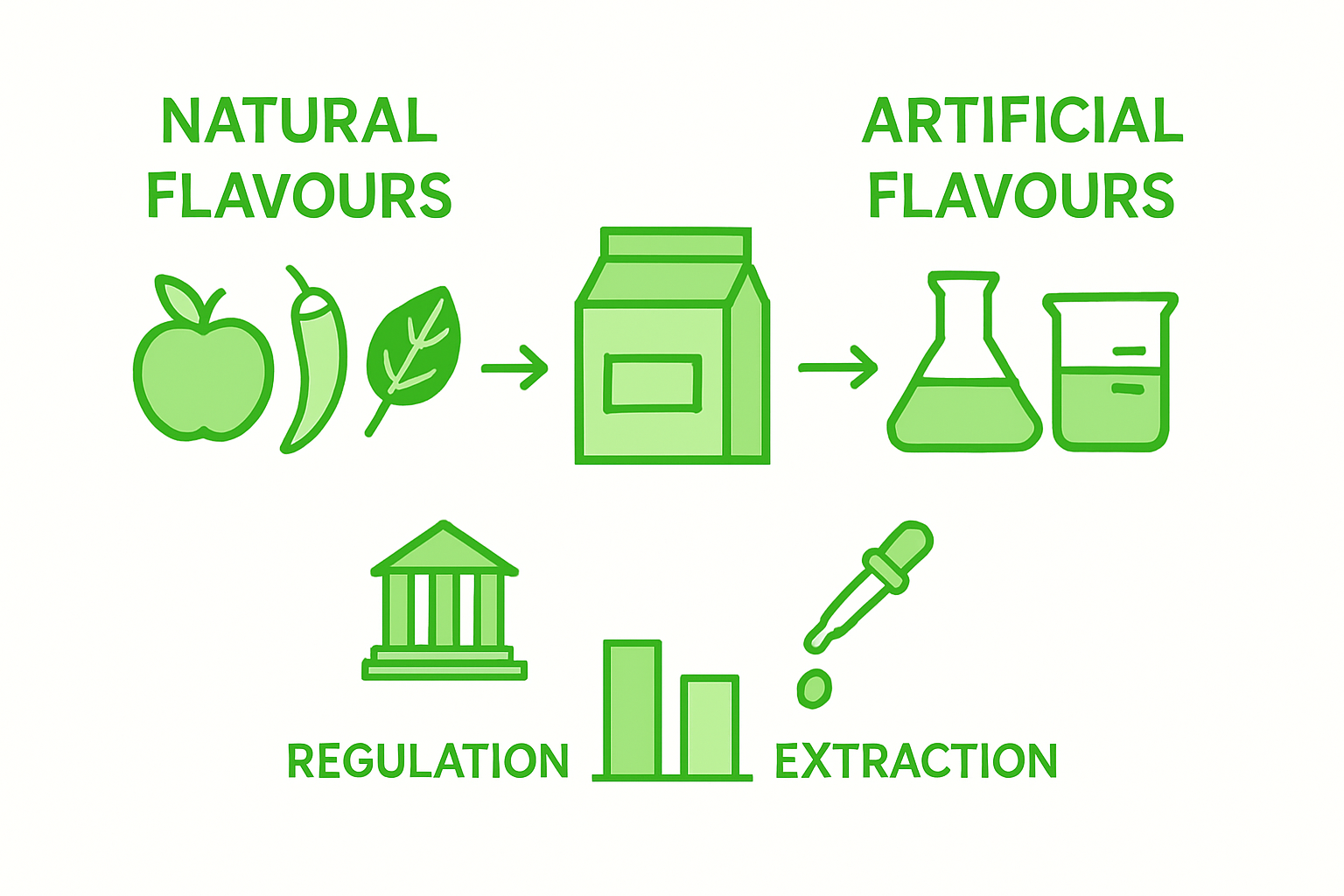
Labelling regulations mandate strict categorisation and disclosure of flavour origins. Natural flavour labels must demonstrate that ingredients are derived from recognisable biological sources, while artificial flavour labels require clear indication of chemical synthesis. Regulatory bodies like the Food and Drug Administration (FDA) enforce guidelines ensuring consumers receive accurate information about product composition, molecular structure, and potential allergen interactions.
Consumers navigating these complex labelling standards should examine ingredient lists carefully, understanding that ‘natural’ does not automatically guarantee superior nutritional value. The key lies in comprehending production methods, molecular compositions, and individual dietary requirements. Ultimately, informed choice involves looking beyond marketing terminology and understanding the intricate scientific processes behind flavour creation.
Health Impacts And Scientific Concerns
Flavour additives represent a complex terrain of potential health implications that demand careful scientific scrutiny. Respiratory research indicates that certain artificial food additives may potentially trigger respiratory complications, including conditions such as asthma and chronic obstructive pulmonary disease (COPD). These findings underscore the critical importance of understanding molecular interactions between synthetic compounds and human physiological systems.
Medical investigations have revealed nuanced perspectives on flavour-related health concerns. Clinical observations suggest that both natural and artificial flavourings are generally considered safe by regulatory standards, yet individual sensitivities can manifest unexpectedly. Some individuals may experience allergic reactions or subtle inflammatory responses, particularly those with pre-existing metabolic sensitivities or compromised immune systems.
The scientific community continues to explore long-term molecular interactions between synthetic flavour compounds and human biological systems. Emerging research focuses on potential endocrine disruption, neurological impacts, and cumulative effects of prolonged exposure to artificially engineered taste molecules. Researchers are particularly interested in understanding how these compounds interact with genetic predispositions and metabolic pathways.
Consumers are advised to adopt a balanced, informed approach. While comprehensive scientific consensus remains ongoing, prudent strategies include diversifying dietary sources, selecting minimally processed ingredients, and maintaining awareness of individual physiological responses. Consulting healthcare professionals can provide personalised insights into potential sensitivities and recommended dietary modifications.
Choosing Safe, Clean-Label Products
Navigating the complex landscape of food additives requires careful scrutiny and informed decision-making. Consumer research emphasises that ‘natural’ labels do not automatically guarantee superior nutritional value or safety. Consumers must develop a critical approach to ingredient analysis, understanding that marketing terminology can often obscure fundamental product characteristics.
Clean-label product guidelines recommend examining ingredient lists with meticulous attention to detail. Critical evaluation involves looking beyond surface-level descriptors and understanding the molecular origins and processing techniques of flavour additives. This approach requires examining not just the ingredient name, but its sourcing, extraction methods, and potential interactions with individual metabolic systems.
Practical strategies for selecting clean-label products include prioritising minimally processed ingredients, seeking transparent supply chains, and understanding extraction methodologies. Consumers should look for products with shorter ingredient lists, recognisable whole food components, and clear provenance information. Organic gluten-free food selections often provide additional assurance of rigorous ingredient standards and comprehensive quality control.
Ultimately, making informed nutritional choices requires ongoing education and personal research. While no single approach guarantees absolute safety, developing a nuanced understanding of ingredient sourcing, processing techniques, and individual health requirements empowers consumers to make more conscious dietary decisions. Consulting nutritional experts, staying updated on scientific research, and maintaining a curious, critical perspective can significantly enhance one’s ability to select high-quality, health-supportive food products.
Choose True Wellness With Transparent, Clean Flavours
Understanding the challenge of distinguishing natural from artificial flavours empowers you to take control of your wellbeing. This article highlights key concerns such as the complexity of flavour sources, production methods, and potential health impacts of synthetic additives. If you want to avoid hidden artificial compounds and prioritise transparent, clean ingredients that align with your health goals, it is essential to choose products carefully.
At Nature’s Soul Shop, we live by the principles of purity and authenticity offering a wide range of organic and natural products with clean ingredients. Whether you seek fresh fruits and vegetables or vegan & gluten free options, our selections reflect true natural flavours without compromising your health.
Experience the difference of mindful consumption today
Make the decision to nourish your body with trusted, wholesome ingredients now. Visit Nature’s Soul Shop to explore our full collection and learn more about clean ingredient choices. Embrace natural flavour transparency and support your wellbeing with every bite.
Frequently Asked Questions
What is the difference between natural and artificial flavours?
Natural flavours are derived from real plant or animal sources, retaining their original chemical structure, whereas artificial flavours are chemically synthesised in laboratories to replicate natural tastes.
Are natural flavours healthier than artificial flavours?
While natural flavours may retain more complex molecular structures and potential trace nutritional benefits, both types undergo extensive processing. “Natural” does not always equate to superior health benefits or quality.
How do flavour production methods affect my food choices?
Natural flavours are extracted through processes like steam distillation and pressing, preserving the essence of the original ingredients. Artificial flavours are created through chemical engineering. Understanding these methods can help consumers make informed dietary choices.
What are the potential health impacts of consuming artificial flavours?
Some studies suggest that certain artificial flavour additives may cause sensitivities or health concerns, including respiratory complications. It’s essential to be aware of individual responses and consult healthcare professionals regarding potential sensitivities.
Recommended
- Natural Alternatives to Sugar: Complete Guide – naturessoulshop
- Understanding Are Preservatives Bad for You? – naturessoulshop
- Understanding What Are Clean Ingredients and Their Benefits – naturessoulshop
- Sustainable Wellness Brands: Complete Expert Guide – naturessoulshop
- What Ingredients to Avoid in Dog Food for Healthier Pups – Ultimate Pet Foods


