


Staying well hydrated is essential because water underpins every major body process, from regulating your temperature to keeping your brain sharp. The British Dietetic Association treats hydration as fundamental to a healthy diet, not an optional extra, and NIH-funded research led by Dr Natalia Dmitrieva has linked poor hydration habits in middle age with measurably higher risk of chronic disease. Naturessoulshop exists precisely for people who want to support that daily need through clean, organic choices rather than sugary shortcuts.
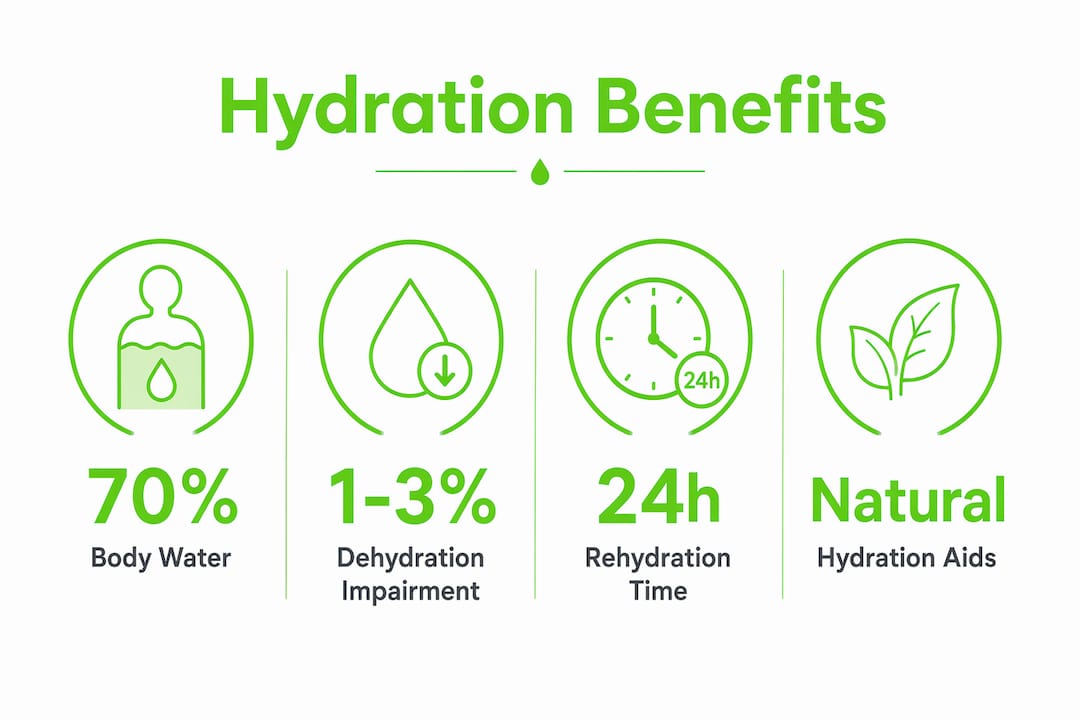
Quick fact: Mild dehydration — defined as a 1–3% loss of bodyweight in fluids — is enough to impair mood, memory and concentration and to increase headache frequency. You do not need to feel thirsty for the effects to show up.
Table of Contents
- How does water actually support your body?
- What does mild dehydration do to your mind and mood?
- What are the long-term risks of persistent under-hydration?
- Does drinking more water actually improve your skin?
- Practical ways to stay hydrated using natural options in the UK
- How can you tell if you’re hydrated, and how long does rehydration take?
- Naturessoulshop makes natural hydration straightforward
- Key takeaways
- The part most hydration advice gets wrong
- Sources and further reading
How does water actually support your body?
Water makes up roughly two-thirds of body weight and is the base for virtually every bodily fluid. That single fact explains why even small shortfalls produce symptoms so quickly.
Core roles water plays every day:
- Temperature regulation — sweat cools you down, but only if you have enough fluid to produce it
- Nutrient and oxygen transport — water carries vitamins, minerals and oxygen through the bloodstream to cells
- Waste removal — kidneys filter waste via urine; bowels need adequate fluid to prevent constipation
- Joint lubrication — cartilage is roughly 80% water; low hydration increases joint discomfort
- Saliva and digestion — saliva breaks down food and helps dissolve nutrients for absorption
- Blood volume — adequate hydration helps the heart pump more easily, reducing cardiac strain during heat or exercise
During a hot British summer or a heated gym session, that last point becomes particularly relevant. Dehydration thickens the blood slightly, forcing the heart to work harder to maintain circulation. Drinking before you feel thirsty is the practical takeaway.
What does mild dehydration do to your mind and mood?
The effects arrive faster than most people expect. At a 1–3% loss of bodyweight in fluids, measurable cognitive and mood changes appear before most people register thirst.
Short-term effects of mild dehydration:
- Reduced concentration and alertness
- Worse short-term memory
- Mood shifts, including increased anxiety and irritability
- Higher headache frequency
- Reduced physical endurance and exercise capacity
- Fatigue and a sense of mental fog
Older adults, frequent travellers and athletes are especially vulnerable. Older adults have a blunted thirst response, so they can be meaningfully dehydrated before the urge to drink kicks in. Travellers face dry cabin air and disrupted routines. Athletes lose fluid rapidly through sweat during intense activity, pushing well past the mild-dehydration threshold.
The practical implication is simple: do not wait for thirst. Sip steadily through the day rather than gulping large amounts infrequently.
What are the long-term risks of persistent under-hydration?
Short-term symptoms are uncomfortable. Chronic under-hydration is a different matter.
NIH-funded research led by Dr Natalia Dmitrieva found that inadequate hydration in middle age is statistically associated with higher future risk of heart failure, type 2 diabetes, chronic lung disease and dementia, as well as markers of accelerated biological ageing. Dr Dmitrieva describes persistent under-hydration as a potential chronic stressor on the body’s systems, one that compounds quietly over years.
Beyond those associations, the more immediate long-term risks include urinary tract infections, kidney stones and chronic constipation. Mayo Clinic guidance notes that adequate water intake helps the kidneys filter waste efficiently and reduces kidney stone formation.
Pro Tip: Small, persistent fluid shortfalls matter because the body treats them as a low-grade stressor. You may never feel dramatically thirsty, yet the cumulative physiological load adds up over months and years. Treating hydration as a daily non-negotiable, like sleep or nutrition, is the most protective approach.
Does drinking more water actually improve your skin?
Drinking enough water supports skin physiology in real ways: it maintains circulation to skin cells, supports wound repair and contributes to elasticity. What it cannot do is reverse surface dryness on its own. The skin’s outer barrier loses moisture to the environment constantly, and internal hydration alone does not fully compensate for that.
Topical products fill the gap that drinking water leaves:
- Restore the skin barrier — ingredients such as ceramides and plant oils seal the surface against moisture loss
- Lock in water — humectants like aloe vera and glycerin draw moisture into the upper skin layers
- Soothe dryness and irritation — botanical extracts calm inflammation at the surface level
The same principle applies to hair. The Nature’s Soul Hydrating Shampoo is a topical product designed to deliver moisture-supporting ingredients directly to the hair shaft and scalp. It addresses surface dryness in a way that drinking an extra glass of water simply cannot, because the scalp’s barrier function is a local issue. For healthy skin from within, the combination of consistent internal hydration and a targeted topical routine produces noticeably better results than either approach alone.
Pro Tip: A simple two-step routine: drink a glass of water first thing in the morning to start replacing overnight losses, then apply your topical moisturiser or hydrating hair product to damp skin or hair to seal in surface moisture. The timing matters — topicals work best when there is already water present at the surface.
Practical ways to stay hydrated using natural options in the UK
Building consistent hydration habits does not require expensive products. It mostly requires removing friction.
Daily habits that work:
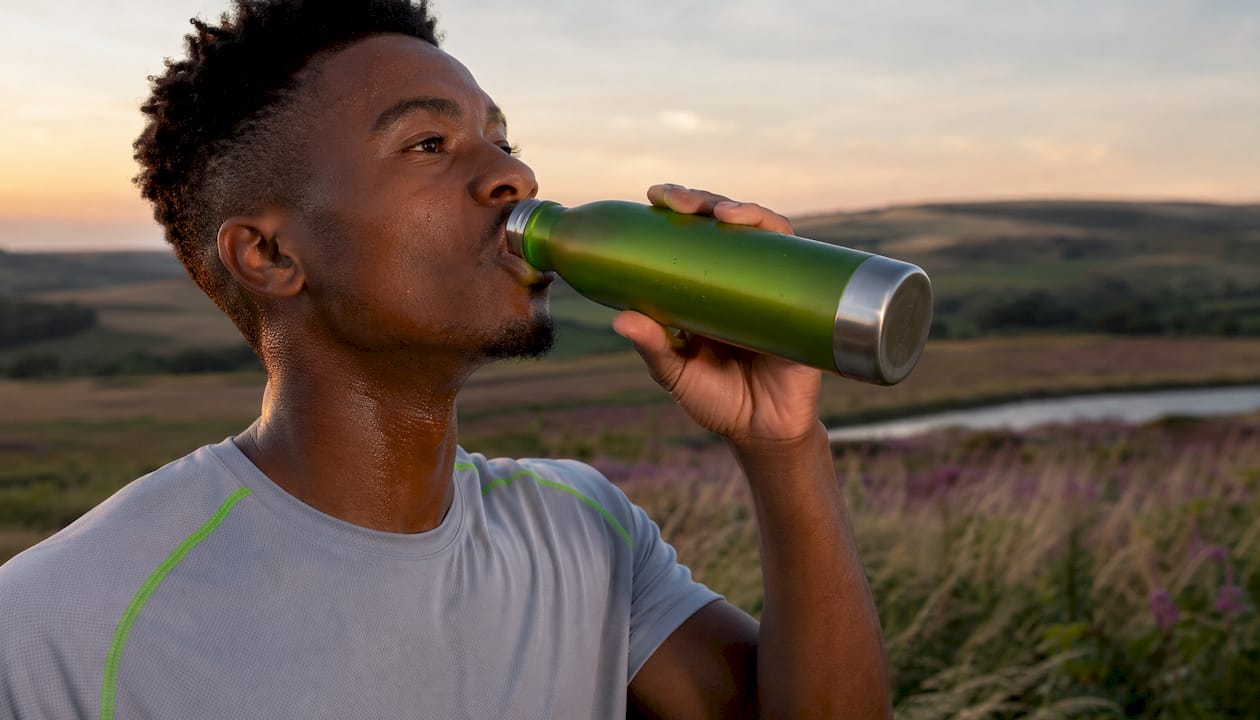
- Carry a refillable bottle and keep it visible on your desk or bag
- Drink a glass of water before each meal and before any physical activity
- Set gentle phone reminders if you tend to forget during busy working days
- Include water-rich whole foods: cucumber (96% water), watermelon, celery, courgette, soups and broths
- Favour plain water and low-calorie herbal teas over sugary drinks
On the beverage side, Professor Walter Willett at Harvard T.H. Chan School of Public Health warns that many people are “malhydrated” because they rely on sugar-sweetened drinks as their main fluid source. Those drinks add calories without meaningfully improving hydration, and they undermine wellness goals over time.
Electrolytes and natural sources:
When you sweat heavily, plain water replaces volume but not electrolytes. Natural sources work well for most people: milk, vegetable broths, salted soups and water-rich whole foods all provide sodium, potassium and magnesium without the sugar load of commercial sports drinks. Sports drinks are mainly warranted for high-intensity exercise lasting more than an hour; for everyday activity, they are unnecessary. For those who want a convenient functional option, hydration mixes can supplement plain water during intense training, though they are not a substitute for a food-first approach.
Pro Tip: The UK’s climate creates two underappreciated hydration challenges: hot spells in summer push fluid needs up sharply, while central heating in winter dries indoor air and increases insensible water loss through the skin and breath. Adjust upward in both conditions, not just when it feels hot outside.
How can you tell if you’re hydrated, and how long does rehydration take?
Practical checks:
- Urine colour — pale straw colour indicates good hydration; darker urine signals the need to drink more
- Thirst — a useful signal, but not an early one; by the time you feel thirsty, mild dehydration may already be present
- Bodyweight change — a drop of 1% or more after exercise suggests meaningful fluid loss
- Performance and mood — difficulty concentrating or unusual fatigue mid-afternoon is often a hydration signal
| Situation | Typical rehydration timeframe |
|---|---|
| Mild everyday dehydration | Cognitive symptoms often improve within 1–2 hours of adequate fluid intake |
| Post-exercise fluid loss | Full rehydration typically takes 1 hour, depending on fluid and electrolyte replacement |
| Illness-related loss (vomiting, fever) | Varies; oral rehydration solutions speed recovery; seek medical advice if prolonged |
Warning: Severe dehydration — signs include extreme thirst, no urination for eight or more hours, rapid heartbeat, confusion or dizziness — requires prompt medical attention, not just extra water.
Individual needs shift with age, pregnancy, illness and medication. Pregnant women, those taking diuretics and anyone with kidney conditions should follow personalised guidance from their GP rather than general population targets.
Naturessoulshop makes natural hydration straightforward
Knowing why hydration matters is one thing; finding clean, organic products that actually support it is another.

Naturessoulshop stocks a curated range of organic and natural products built around the same principles this guide covers: plain hydration, real food, and clean ingredients with no unnecessary additives. That includes organic herbal teas and broths for daily fluid intake, water-rich fresh produce through Nature’s Soul Fresh, and topical hydrating products such as the Nature’s Soul Hydrating Shampoo for surface moisture. Every product uses clean, traceable ingredients, which matters when you are trying to build a wellness routine you can actually trust.
Browse the full range at Naturessoulshop and find the natural hydration options that fit your daily routine. This article is general information only and is not a substitute for medical or dietetic advice. For personalised guidance, consult a qualified healthcare professional or registered dietitian.
Key takeaways
Water supports every major body process, and even mild shortfalls in daily fluid intake produce measurable effects on cognition, mood and long-term health.
| Point | Details |
|---|---|
| Mild dehydration has real costs | Just 1–3% bodyweight loss in fluids impairs memory, mood and concentration. |
| Urine colour is your simplest check | Pale straw colour means you are well hydrated; darker urine means drink more. |
| Prefer water and water-rich foods | Plain water, herbal teas and whole foods like cucumber and soups beat sugary drinks for hydration. |
| Combine internal and topical care | Drinking enough water supports skin physiology; topical products address surface moisture loss. |
| Naturessoulshop supports a natural approach | Organic teas, fresh produce and hydrating skincare from Naturessoulshop align with evidence-based hydration habits. |
Supported by British Dietetic Association guidance and NIH-funded research (Dmitrieva et al.).
The part most hydration advice gets wrong
Most hydration content focuses on a daily target — eight glasses, two litres, whatever the current figure is — and leaves it there. That framing misses the point. The number is not the hard part. The hard part is that hydration is a continuous process, not a daily quota you tick off by 6 PM.
What Dr Dmitrieva’s NIH research actually shows is that the body’s hydration markers reflect habits built over years, not a single good day. Chronic small shortfalls accumulate. The person who drinks adequately on weekends but runs dry during busy working weeks is not “mostly fine.” They are applying a low-grade stressor repeatedly, and the research suggests that matters for long-term outcomes.
The other thing most guides understate is the interaction between internal hydration and topical skin and hair care. Drinking more water will not fix a compromised skin barrier. A good moisturiser will not compensate for chronic dehydration. Both matter, and they work on different mechanisms. Treating them as interchangeable, or as though one makes the other unnecessary, is where a lot of wellness advice goes wrong.
The simplest reframe: think of hydration as infrastructure, not a supplement. It is the baseline everything else runs on.
Sources and further reading
The claims in this article draw on the following primary and authoritative sources:
- The importance of hydration — British Dietetic Association — UK dietetic authority; used for physiological roles, urine colour guidance and short-term symptom evidence
- Middle-aged adults’ hydration habits linked to future health risks — NIH — Dr Natalia Dmitrieva’s research; used for long-term chronic disease associations
- Hydrating for health — NIH News in Health — used for physiological grounding and body-water composition
- The importance of hydration — Harvard T.H. Chan School of Public Health — Professor Walter Willett commentary; used for guidance on sugar-sweetened drinks
- 7 health benefits of water — Healthline — used for mild dehydration cognitive effects and exercise fluid loss figures
- How much water should you drink every day? — Mayo Clinic — used for kidney stone risk, sports drink guidance and water-rich foods
- Staying hydrated, staying healthy — American Heart Association — used for cardiac strain, pre-exercise hydration and caffeinated drinks guidance


