


Settling in India often means adjusting not just to a new environment, but also to unique health needs. For many expatriates in the Delhi NCR region, maintaining vibrant well-being through organic, plant-based diets is a daily priority. Micronutrients are the unsung heroes, required in minute quantities yet vital for everything from immune function to metabolism and cellular health. This guide maps out practical strategies and organic food choices that help optimise micronutrient intake and support holistic daily wellness.
Table of Contents
- Micronutrients: Definition And Core Principles
- Types Of Micronutrients And Key Functions
- Organic Sources For Optimal Micronutrient Intake
- Micronutrients’ Role In Immune Health And Well-Being
- Risks And Impacts Of Micronutrient Deficiencies
- Best Practices: Maximising Micronutrient Absorption
Key Takeaways
| Point | Details |
|---|---|
| Micronutrient Importance | Micronutrients are essential for various physiological functions and cannot be synthesized by the body, necessitating dietary intake to maintain health. |
| Types of Micronutrients | They are divided into categories: water-soluble vitamins, fat-soluble vitamins, macrominerals, and trace minerals, each with unique health benefits. |
| Food Sources | A diverse diet of organic, nutrient-dense foods like fruits, vegetables, whole grains, and legumes is vital for optimal micronutrient intake. |
| Immune Function Support | Key micronutrients significantly influence immune health; deficiencies can compromise immune responses and overall well-being. |
Micronutrients: Definition and Core Principles
Micronutrients represent essential nutrients required in minute quantities that play pivotal roles in human physiological functioning. Trace nutrients critical for metabolism encompass a diverse range of vitamins and minerals fundamental to maintaining optimal health across all life stages.
These microscopic nutritional powerhouses are categorised into two primary groups:
- Vitamins: Organic compounds divided into fat-soluble (A, D, E, K) and water-soluble types
- Minerals: Inorganic elements essential for numerous biochemical processes
Unlike macronutrients, micronutrients cannot be synthesised by the human body in adequate amounts, necessitating consistent dietary intake. Essential nutrients supporting physiological balance are crucial for maintaining enzymatic reactions, hormone production, and overall metabolic efficiency.
Historically, the importance of micronutrients was first recognised through specific deficiency diseases like scurvy and rickets, highlighting their critical role in human development. Modern nutritional science emphasises that these trace nutrients are fundamental across all life stages, supporting immune function, cellular metabolism, and developmental processes.
Pro tip: Incorporate a diverse range of organic, nutrient-dense foods to ensure comprehensive micronutrient intake and support holistic wellness.
Types of Micronutrients and Key Functions
Micronutrients represent a sophisticated network of essential nutrients categorised into distinct groups, each playing a unique and critical role in human physiological processes. Vitamins and minerals essential for health can be systematically divided into four primary classifications that support diverse bodily functions.
The primary categories of micronutrients include:
- Water-Soluble Vitamins
- Vitamin B complex (B1, B2, B3, B6, B12)
- Vitamin C
- Rapidly metabolised and not extensively stored in the body
- Support energy metabolism and cellular health
- Fat-Soluble Vitamins
- Vitamins A, D, E, and K
- Stored in fatty tissues
- Critical for immune function and bone health
- Aid in nutrient absorption and cellular protection
- Macrominerals
- Calcium
- Magnesium
- Potassium
- Sodium
- Regulate muscle and nerve functions
- Support bone density and fluid balance
- Trace Minerals
- Iron
- Zinc
- Copper
- Selenium
- Essential for enzymatic activities
- Support immune defence mechanisms
Micronutrient groups supporting physiological processes work synergistically to maintain optimal health. Each category contributes uniquely to metabolic functions, cellular repair, and systemic balance, demonstrating the intricate complexity of nutritional requirements.

Understanding these micronutrient categories enables individuals to develop targeted nutrition strategies, ensuring comprehensive dietary intake and supporting long-term physiological wellness.
The table below summarises the four main micronutrient categories and their core physiological benefits:
| Micronutrient Group | Main Examples | Key Benefits |
|---|---|---|
| Water-Soluble Vitamins | Vitamins B & C | Energy production, immune support |
| Fat-Soluble Vitamins | Vitamins A, D, E, K | Bone health, cell protection |
| Macrominerals | Calcium, Magnesium | Nerve, muscle, bone regulation |
| Trace Minerals | Iron, Zinc, Selenium | Enzyme function, defence support |
Pro tip: Consult a nutritional specialist to create a personalised micronutrient profile that addresses your specific health requirements and potential deficiencies.
Organic Sources for Optimal Micronutrient Intake
Nutrient-dense organic foods represent the cornerstone of comprehensive micronutrient intake, offering a natural and holistic approach to maintaining optimal health. Consuming a diverse range of whole foods ensures the body receives essential vitamins and minerals through bioavailable sources that support metabolic functions and cellular regeneration.
Key organic micronutrient sources include:
-
Dark Green Leafy Vegetables
- Spinach
- Kale
- Rich in iron, magnesium, and folate
- Support cellular metabolism and immune function
-
Vibrant Fruits and Vegetables
- Carrots
- Sweet potatoes
- Berries
- Citrus fruits
- Packed with vitamins A, C, and antioxidants
- Enhance immune system and cellular protection
-
Whole Grains and Legumes
- Quinoa
- Oats
- Beans
- Lentils
- Provide complex carbohydrates and trace minerals
- Support sustained energy and metabolic health
-
Nuts and Seeds
- Almonds
- Chia seeds
- Excellent sources of zinc and magnesium
- Support cellular repair and immune function
Comprehensive dietary strategies emphasise the importance of consuming a well-rounded selection of organic foods to meet micronutrient requirements. By prioritising whole, minimally processed ingredients, individuals can naturally enhance their nutritional intake and support long-term physiological wellness.
Understanding the intricate relationship between diverse organic food sources and micronutrient absorption enables more targeted and effective nutritional approaches, ultimately promoting holistic health and preventing potential deficiencies.
To guide food choices, this table links top organic food categories with highlighted micronutrient content:
| Food Group | Key Micronutrients | Primary Health Advantages |
|---|---|---|
| Leafy Greens | Iron, Folate, Magnesium | Supports blood and immune health |
| Colourful Vegetables | Vitamins A, C, Antioxidants | Improves vision, boosts immunity |
| Whole Grains & Legumes | Zinc, B Vitamins, Fibre | Aids metabolism, digestive health |
| Nuts & Seeds | Magnesium, Zinc, Vitamin E | Repairs tissues, enhances defences |
Pro tip: Rotate your food choices weekly to ensure a broad spectrum of micronutrient intake and maximise nutritional diversity.
Micronutrients’ Role in Immune Health and Well-being
Micronutrients’ critical immune support mechanisms represent a sophisticated biological defence system that protects and enhances human physiological resilience. These essential nutrients function as sophisticated biochemical regulators, orchestrating complex immune responses and maintaining cellular health through intricate metabolic interactions.
Key micronutrients supporting immune function include:
-
Vitamins with Immune-Boosting Properties
- Vitamin A: Supports mucosal barrier integrity
- Vitamin C: Enhances white blood cell production
- Vitamin D: Modulates immune cell responses
- Vitamin E: Provides antioxidant protection
-
Minerals Critical for Immune Defence
- Zinc: Supports immune cell development
- Selenium: Regulates inflammatory responses
- Iron: Enables immune cell proliferation
- Copper: Supports white blood cell function
Synergistic immune system interactions demonstrate how micronutrients work collaboratively to strengthen physiological defence mechanisms. These nutrients act as essential cofactors in complex immunological processes, helping to differentiate immune cells, regulate inflammatory responses, and enhance overall systemic resilience.
Nutrient deficiencies can significantly compromise immune function, increasing susceptibility to infections and chronic inflammatory conditions. By maintaining a balanced, nutrient-dense diet, individuals can support their body’s natural defence mechanisms and promote long-term wellness.
Pro tip: Consume a diverse range of colourful, whole foods to ensure comprehensive micronutrient intake and support robust immune function.
Risks and Impacts of Micronutrient Deficiencies
Hidden hunger’s global health challenges represent a critical public health concern affecting millions worldwide, particularly in low- and middle-income regions. Micronutrient deficiencies create a complex web of physiological disruptions that compromise individual and community health across multiple dimensions.
Key micronutrient deficiency impacts include:
-
Developmental Consequences
- Impaired childhood growth
- Reduced cognitive function
- Stunted mental development
- Decreased learning capabilities
-
Physiological Disruptions
- Compromised immune system
- Increased infection susceptibility
- Reduced energy metabolism
- Higher mortality risks
-
Specific Nutritional Deficiency Outcomes
- Iron deficiency: Anaemia
- Vitamin A deficiency: Vision impairment
- Iodine deficiency: Cognitive limitations
- Folate deficiency: Neural tube complications
Comprehensive public health strategies emphasise multi-sectoral approaches addressing nutritional gaps. These include targeted interventions such as dietary diversification, food fortification, supplementation programmes, and nutrition education to mitigate the far-reaching consequences of micronutrient insufficiencies.
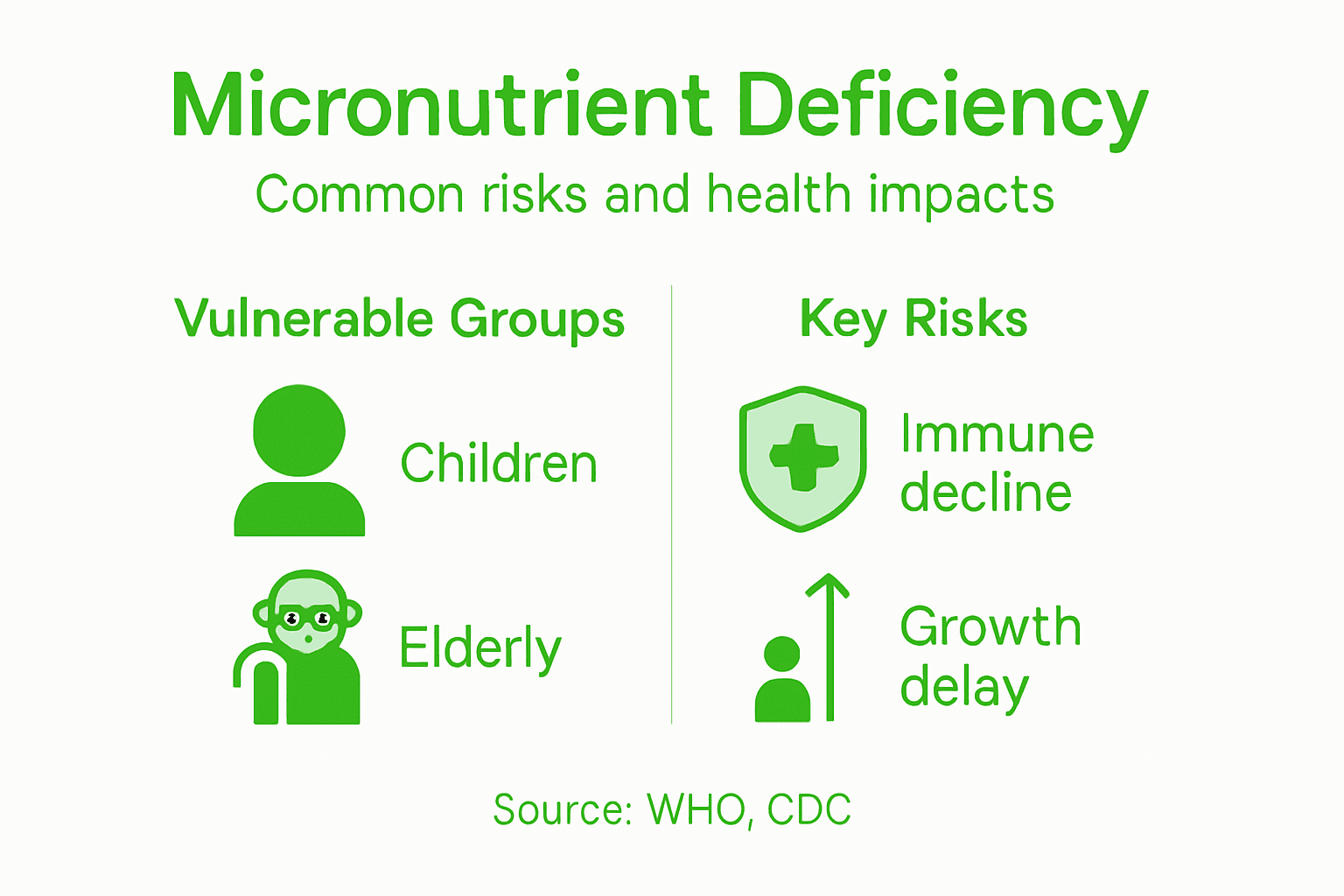
Vulnerable populations, including children, pregnant women, and elderly individuals, remain disproportionately affected by these nutritional challenges. Addressing micronutrient deficiencies requires holistic, integrated approaches that combine medical, nutritional, and socio-economic interventions.
Pro tip: Conduct regular health check-ups to monitor micronutrient levels and proactively address potential nutritional gaps before they develop into serious health complications.
Best Practices: Maximising Micronutrient Absorption
Strategic nutrient absorption techniques represent a sophisticated approach to optimising dietary intake and supporting comprehensive physiological wellness. Understanding the intricate mechanisms of micronutrient bioavailability enables individuals to develop targeted nutritional strategies that enhance nutrient uptake and utilisation.
Key strategies for maximising micronutrient absorption include:
-
Food Pairing Techniques
- Combine fat-soluble vitamins with dietary fats
- Pair vitamin C with non-heme iron sources
- Use complementary nutrient combinations
- Enhance absorption through strategic food relationships
-
Preparation Methods
- Soak legumes to reduce phytate content
- Ferment grains to improve mineral availability
- Use gentle cooking techniques
- Minimise nutrient destruction during food processing
-
Digestive Health Optimisation
- Maintain robust gut microbiome
- Consume probiotic-rich foods
- Support digestive enzyme production
- Reduce inflammatory responses
Personalised nutrition approaches emphasise the importance of individual genetic factors, age, and health status in determining optimal nutrient absorption. By understanding personal physiological variations, individuals can develop targeted strategies that enhance micronutrient uptake and support long-term wellness.
Consistent implementation of these absorption-enhancing techniques can significantly improve the body’s ability to extract and utilise essential micronutrients, ultimately supporting metabolic functions, immune health, and overall physiological performance.
Pro tip: Consult a registered nutritionist to develop a personalised micronutrient absorption strategy tailored to your specific health requirements and genetic profile.
Unlock the Power of Micronutrients with Organic Wellness Solutions
Micronutrient deficiencies can silently affect your immune health, energy levels, and overall well-being. The article highlights key challenges such as impaired metabolism, compromised immune defence, and the need for diverse organic sources rich in vitamins and minerals. At NaturesSoulShop, we understand how critical it is to provide clean, nutrient-dense foods and natural products that support your body’s demand for essential micronutrients like Vitamin A, C, D, Zinc, and Iron. Our range includes carefully selected fruits, vegetables and wholesome groceries that naturally enhance your daily nutrient intake while avoiding harmful additives.

Experience the difference of prioritising your health with organic and natural products designed for maximised nutrient absorption and holistic wellness. Start transforming your immune function and vitality today by exploring our offerings at NaturesSoulShop. Remember, consistent access to clean ingredients is fundamental in avoiding hidden hunger and fostering long-term health. Take the first step now and embrace the power of nature with NaturesSoulShop.
Frequently Asked Questions
What are micronutrients and why are they essential for health?
Micronutrients are essential nutrients such as vitamins and minerals that the body requires in minute quantities for various physiological functions. They play key roles in processes like metabolism, immune function, and cell repair, and cannot be adequately synthesised by the body, necessitating dietary intake.
How can I ensure I get enough micronutrients in my diet?
To ensure sufficient micronutrient intake, incorporate a diverse range of organic, nutrient-dense foods into your meals. Focus on consuming dark leafy greens, vibrant fruits and vegetables, whole grains, legumes, nuts, and seeds to maximise your intake of essential vitamins and minerals.
What are the consequences of micronutrient deficiencies?
Micronutrient deficiencies can lead to a variety of health issues, including impaired immune function, developmental delays, and increased susceptibility to infections. Specific deficiencies like iron can cause anaemia, while lack of vitamin A may result in vision problems.
How can I optimise the absorption of micronutrients from my food?
Optimising micronutrient absorption can be achieved through specific food pairing techniques, such as consuming fat-soluble vitamins with dietary fats and pairing vitamin C with non-heme iron sources. Additionally, using gentle cooking methods and maintaining digestive health can further enhance nutrient uptake.
Recommended
- Complete Guide to Importance of Organic Matter – naturessoulshop
- Immune Boosting Foods: Enhancing Family Wellness – naturessoulshop
- Nutrient Dense Foods: Elevating Daily Wellbeing – naturessoulshop
- Holistic Wellness Tips: Empowering Daily Wellbeing – naturessoulshop
- Why Manage Diabetes Proactively: Life-Changing Results | Diacontext


