


Choosing food in Delhi NCR often means juggling health needs and environmental concerns, especially for first-time parents eager to create a sustainable home. Every bite we take has far-reaching effects, as agriculture generates over 25 percent of global greenhouse gas emissions and uses half of the world’s habitable land. Understanding these impacts empowers families to make more conscious decisions. This guide reveals how your dietary choices can shape a healthier future for your family and the planet.
Table of Contents
- Defining Environmental Impact of Food Choices
- Major Food Categories and Their Effects
- Understanding Life Cycle Assessment in Food
- Global and Local Environmental Implications
- Making Healthier, More Sustainable Choices
Key Takeaways
| Point | Details |
|---|---|
| Environmental Impact of Food Choices | Food production generates over 25% of global greenhouse gas emissions and occupies approximately 50% of habitable land, leading to significant biodiversity loss and resource depletion. |
| Plant-Based Foods vs. Animal Products | Plant-based diets have markedly lower environmental impacts, reducing greenhouse gas emissions by about 75% compared to meat-heavy diets, while also requiring less land and water. |
| Importance of Life Cycle Assessment | Life Cycle Assessment provides a comprehensive framework to evaluate environmental impact across all production stages, helping in identifying improvement areas for sustainability. |
| Making Sustainable Choices | Individuals can significantly influence environmental health by increasing plant-based food consumption, sourcing locally, and minimising food waste. |
Defining Environmental Impact of Food Choices
Food choices have profound implications for our planet’s environmental health, extending far beyond personal nutrition. Environmental impact represents the total ecological consequences of producing, transporting, consuming, and disposing of food products across their entire lifecycle.
According to research, agriculture’s global environmental footprint is substantial and multifaceted:
- Generates over 25% of global greenhouse gas emissions
- Occupies approximately 50% of the world’s habitable land
- Drives significant biodiversity loss through habitat destruction
- Contributes to substantial water pollution and resource depletion
The environmental consequences of food production involve complex interactions between agricultural practices, ecosystems, and human consumption patterns. Food system emissions encompass multiple stages, including:
- Agricultural production
- Transportation and distribution
- Processing and packaging
- Waste management
- Consumer consumption behaviours
Environmental sustainability labels play a critical role in guiding consumer awareness, helping individuals make more informed and environmentally conscious food choices.
Pro tip: Start tracking the carbon footprint of your weekly grocery purchases to understand your personal environmental impact and make more sustainable food selections.
Major Food Categories and Their Effects
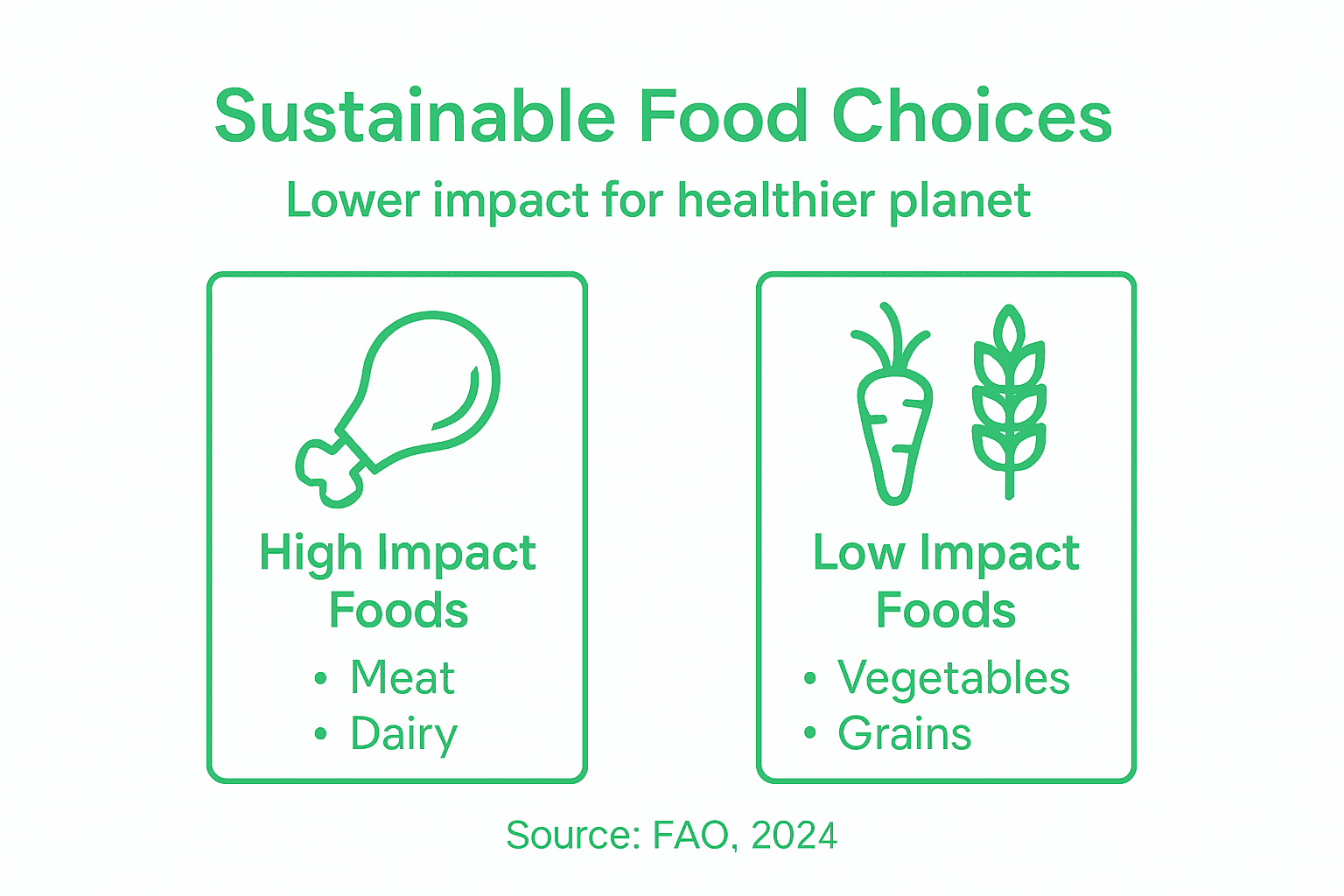
Understanding the environmental impact of different food categories is crucial for making sustainable dietary choices. Food’s environmental consequences vary dramatically across different food groups, with some categories creating significantly more ecological strain than others.
The primary food categories and their environmental impacts include:
-
Meat Products:
- Highest carbon footprint
- Substantial water and land usage
- Significant greenhouse gas emissions
-
Dairy Products:
- Moderate environmental impact
- High water consumption
- Notable methane emissions
-
Plant-Based Foods:
- Lowest environmental footprint
- Minimal land and water requirements
- Significantly reduced emissions
Plant-based diets demonstrate markedly lower environmental impacts compared to meat-heavy dietary patterns. Vegan and vegetarian diets can reduce greenhouse gas emissions by approximately 75%, consuming substantially less water and land resources.

The production practices within each food category also create variability in environmental consequences. Factors such as agricultural methods, transportation, processing, and waste management play critical roles in determining the overall ecological footprint of food products.
Here is a comparison of key food categories for environmental impact at a glance:
| Food Category | Typical Water Use | Greenhouse Gas Emissions | Resource Efficiency |
|---|---|---|---|
| Meat Products | Very high, especially beef | Greatest contributor | Least efficient per calorie |
| Dairy Products | High, primarily for cows | Moderate to high | Moderate efficiency |
| Plant-Based Foods | Low, varies by crop | Minimal emissions | Most efficient overall |
Pro tip: Consider gradually reducing meat consumption and incorporating more plant-based protein sources to minimise your personal dietary environmental impact.
Understanding Life Cycle Assessment in Food
Life Cycle Assessment (LCA) represents a comprehensive analytical approach for evaluating the environmental impact of food products from production to consumption. LCA quantifies environmental consequences across multiple stages of the food supply chain, providing a holistic understanding of ecological implications.
The key stages of a food product’s life cycle include:
-
Production Stage:
- Agricultural practices
- Resource utilisation
- Seed and crop selection
-
Processing Stage:
- Manufacturing techniques
- Energy consumption
- Waste generation
-
Distribution Stage:
- Transportation methods
- Packaging materials
- Storage conditions
-
Consumption Stage:
- Consumer behaviour
- Food waste management
- Disposal practices
Each stage contributes unique environmental challenges, with significant variations in ecological footprints depending on specific production methods and geographical contexts. These assessments help identify potential improvement areas and sustainable intervention points throughout the food system.
By meticulously tracking multiple environmental indicators, LCA provides nuanced insights into the complex interactions between food production and ecological systems. This approach enables consumers, producers, and policymakers to make more informed decisions about sustainable food choices.
Below is a summary of how each stage of a food’s life cycle influences environmental impact:
| Life Cycle Stage | Main Environmental Challenge | Key Improvement Approach |
|---|---|---|
| Production | Soil and water depletion | Increase sustainable farming |
| Processing | High energy consumption | Optimise manufacturing |
| Distribution | Transport emissions | Source ingredients locally |
| Consumption | Food waste generation | Promote mindful consumption |
Pro tip: Request environmental impact reports from food producers and choose brands that transparently communicate their Life Cycle Assessment metrics.
Global and Local Environmental Implications
Food systems represent complex networks with profound environmental consequences that extend far beyond individual consumption choices. Global food waste trends reveal significant ecological challenges, with projections indicating substantial environmental pressures if current practices continue unchanged.
The interconnected environmental implications encompass multiple dimensions:
-
Global Scale Impacts:
- Greenhouse gas emissions
- Climate change acceleration
- Resource depletion
-
Local Ecosystem Effects:
- Soil degradation
- Water contamination
- Biodiversity reduction
-
Agricultural Transformation Requirements:
- Sustainable farming practices
- Reduced chemical interventions
- Regenerative land management
Food production systems significantly impact environmental health through complex interactions between agricultural practices, ecosystem dynamics, and global climate patterns. These systemic challenges demand integrated approaches that balance nutritional needs with ecological preservation.
Transitioning towards more sustainable food systems requires collaborative efforts from governments, producers, and consumers. By understanding the intricate relationships between food choices and environmental outcomes, societies can develop more responsive and responsible agricultural strategies.
Pro tip: Engage with local agricultural initiatives and support farming practices that prioritise environmental sustainability and ecosystem restoration.
Making Healthier, More Sustainable Choices
Individual dietary decisions significantly impact personal and planetary health, creating powerful opportunities for positive environmental transformation. Sustainable food choices represent a comprehensive approach that balances nutritional needs with ecological responsibility.
Key strategies for making healthier, sustainable food selections include:
-
Dietary Composition:
- Increase plant-based food consumption
- Reduce processed and meat-based products
- Prioritise whole, nutrient-dense foods
-
Procurement Practices:
- Choose locally sourced ingredients
- Support sustainable agricultural practices
- Minimise food packaging waste
-
Consumption Habits:
- Practice portion control
- Reduce food waste
- Compost organic materials
Food environment shapes dietary choices through complex interactions of availability, affordability, and cultural influences. Understanding these dynamics helps individuals make more informed and environmentally conscious nutritional decisions.
Transitional approaches that gradually incorporate sustainable practices can create lasting positive impacts. By making mindful selections, consumers can simultaneously improve personal health and contribute to broader environmental conservation efforts.
Pro tip: Start by replacing one meat-based meal per week with a plant-based alternative to reduce your personal carbon footprint and explore new nutritional possibilities.
Make Sustainable Food Choices That Protect Our Planet Today
The article highlights the urgent challenge of reducing the environmental footprint of our diets, particularly by addressing high-impact food categories such as meat and dairy. With growing concerns about greenhouse gas emissions, water usage and waste, many readers seek practical ways to embrace sustainable eating habits without compromising wellness. The key is choosing organic, natural products with clean ingredients that support both personal health and the planet’s future.
Explore how you can start this important journey by visiting Nature’s Soul Shop where every product is carefully selected to align with sustainable principles. Whether you are looking for fresh organic fruits and vegetables, vegan and gluten-free groceries or environmentally responsible dairy and meats, you will find options that reduce your carbon footprint while nourishing your body. Take action now to transform your food choices and make a positive impact on global and local ecosystems by shopping sustainably at Nature’s Soul Shop. Discover clean, wholesome foods that support a healthier lifestyle and a healthier planet today.
Frequently Asked Questions
What is the environmental impact of food production?
Food production generates over 25% of global greenhouse gas emissions, occupies nearly 50% of habitable land, and contributes to biodiversity loss and water pollution.
How do different food categories impact the environment?
Meat products have the highest carbon footprint and resource usage, dairy products have a moderate impact, while plant-based foods have the lowest environmental footprint and emissions.
What is a Life Cycle Assessment (LCA) in relation to food?
A Life Cycle Assessment (LCA) is an analytical method that evaluates the environmental impact of food products throughout their entire lifecycle, from production to consumption, identifying areas for improvement.
How can individuals make more sustainable food choices?
Individuals can increase plant-based food consumption, reduce processed and meat-based products, support local sourcing, minimise food packaging waste, and practice mindful consumption habits.
Recommended
- Environmental Impact of Food – Why Organic Matters – naturessoulshop
- Plant-Based Diet and Environment – Real Benefits for Wellness – naturessoulshop
- Complete Guide to Sustainable Food Choices – naturessoulshop
- Food Sustainability: Impact on Modern Wellness Choices – naturessoulshop
- Beste duurzame rietjes 2025 – Expert Vergelijking | Earth Saver Straws


