


TL;DR:
- Composting strategically reduces landfill waste, greenhouse gas emissions, and rebuilds degraded soils, benefiting the environment.
- It enhances soil structure, supports microbial life, and produces a steady release of nutrients, improving plant growth and yields.
Composting is defined as the controlled biological decomposition of organic materials into a stable, nutrient-rich soil amendment known as compost. The importance of composting extends far beyond tidying up kitchen scraps. It is one of the most direct actions a household can take to reduce landfill waste, cut greenhouse gas emissions, and rebuild degraded soils. The US EPA confirms that compost closes the soil-to-soil loop, addressing soil degradation that affects 33% of soils globally. Purdue University research shows home composting reduces household waste sent to landfill by 18 to 40%. That is a meaningful shift any family can make starting this week.
Why composting matters for soil health and plant growth
Compost transforms the physical structure of soil in ways that synthetic fertilisers simply cannot replicate. Adding organic matter increases soil porosity, which means water and air move through it more freely. This directly improves root development and reduces the waterlogging that kills plants during heavy rain.
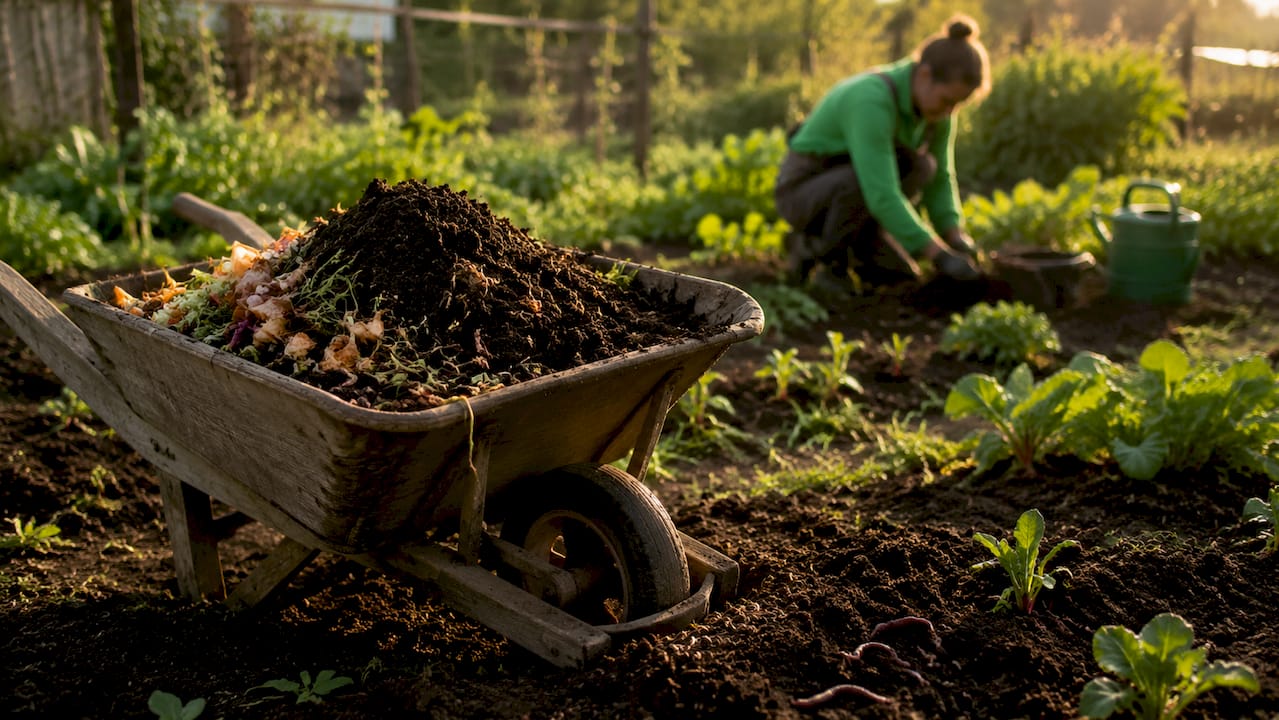
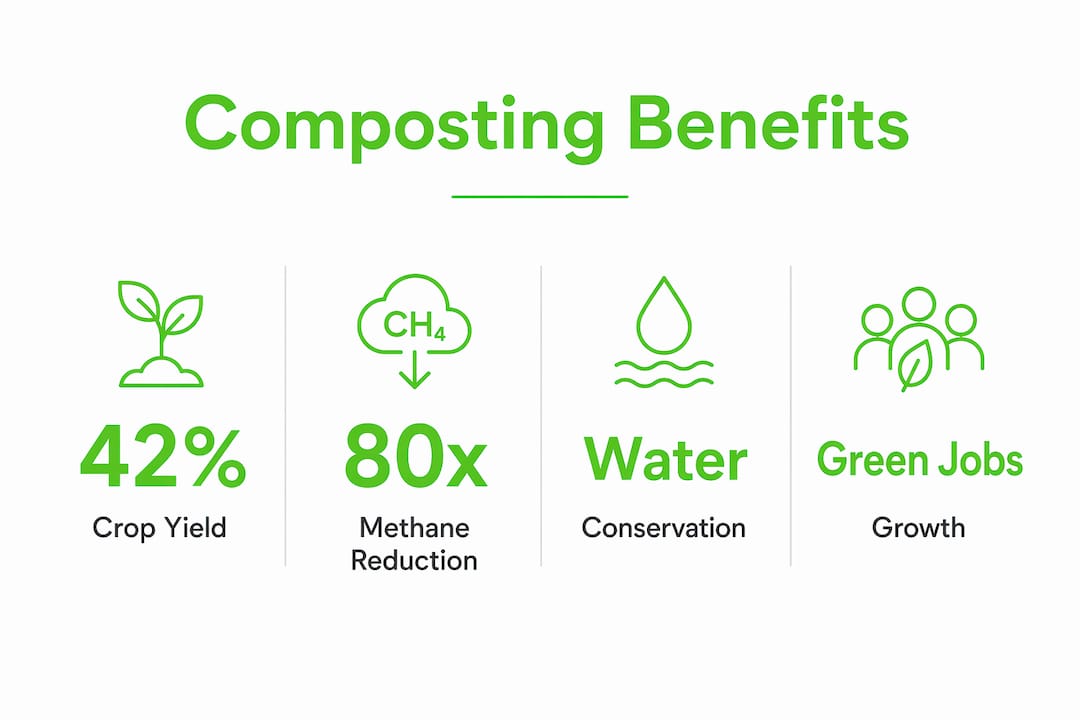
The nutrient release from compost is slow and steady, unlike the sharp spike and rapid runoff associated with synthetic fertilisers. This means plants receive a consistent supply of nitrogen, phosphorus, and potassium across the growing season, with far less lost to waterways. A meta-analysis published in Processes found that compost amendments boost crop yields by up to 42%, alongside measurable improvements in plant biomass and photosynthesis rates. That figure represents a genuine agricultural shift, not a marginal gain.
Compost also supports the microbial communities that make soil alive. Bacteria, fungi, and earthworms thrive in compost-rich soil, breaking down organic matter further and making nutrients available to plant roots. Synthetic fertilisers, by contrast, can suppress these communities over time, leaving soil structurally depleted.
Compost vs synthetic fertilisers: a direct comparison
| Factor | Compost | Synthetic fertiliser |
|---|---|---|
| Nutrient release | Slow, sustained | Fast, short-lived |
| Soil structure | Improves over time | No structural benefit |
| Microbial life | Supports and feeds | Can suppress over time |
| Runoff risk | Low | High |
| Cost over time | Reduces input costs | Ongoing purchase required |
Pro Tip: Chop or shred kitchen scraps and garden trimmings before adding them to your compost bin. Smaller pieces break down faster and produce finished compost in weeks rather than months. Read more about composting kitchen scraps for a practical starting point.
How does composting help the environment beyond the garden?
Organic waste buried in landfill decomposes without oxygen, producing methane, a greenhouse gas roughly 80 times more potent than carbon dioxide over a 20-year period. The EPA is direct on this point: diverting food scraps from landfills prevents methane emissions that actively harm the climate. Every bag of kitchen waste you compost instead of bin is a measurable climate action.
Compost also sequesters carbon in the soil itself. When organic matter is incorporated into the ground, carbon that would otherwise enter the atmosphere is locked into stable soil compounds. This is one reason composting for environmental health is increasingly discussed alongside renewable energy and electric vehicles in climate policy circles.
Water quality is another underappreciated benefit. The EPA links compost use in stormwater management to preventing eutrophication and toxic algal blooms in rivers and lakes. Compost stabilises soil pH and filters sediments before they reach waterways. For families living near streams or in areas prone to flooding, this is a direct local benefit.
“Composting reframes organic materials not as waste but as valuable resources that close nutrient and soil cycles, supporting sustainability.” — US EPA
Compost-amended soil also retains moisture far more effectively, which conserves water resources and reduces the need for irrigation. In a summer drought, a garden bed enriched with compost can survive on significantly less watering than one relying on bare soil or synthetic inputs alone.
What are the practical steps to compost effectively at home?
Getting composting right is a matter of managing four variables: carbon, nitrogen, oxygen, and moisture. The University of Georgia Extension identifies the ideal carbon-to-nitrogen ratio as 25:1 to 30:1 for efficient microbial decomposition. In practical terms, this means roughly two to three parts brown material (cardboard, dried leaves, straw) to one part green material (vegetable peelings, grass clippings, coffee grounds).
Here are the four key steps to producing quality compost at home:
- Layer your materials. Alternate brown and green layers to maintain the correct carbon-to-nitrogen balance. Avoid adding meat, dairy, or cooked food, which attract pests and create odour problems.
- Manage moisture carefully. Your compost pile should feel like a wrung-out sponge. Too dry and microbial activity stalls. Too wet and the pile turns anaerobic, producing unpleasant smells.
- Turn the pile regularly. Oxygen is critical for aerobic decomposition. Turning the pile every one to two weeks introduces fresh air and speeds up the process considerably.
- Monitor temperature. A compost thermometer is a worthwhile investment. The UGA Extension stresses that maintaining pile temperature between 131 and 160°F (55 to 71°C) accelerates decomposition and kills pathogens and weed seeds. A pile that never heats up is a sign of imbalance, usually too much carbon or too little moisture.
Particle size matters more than most beginners realise. The UGA Extension recommends cutting materials to between ¼ inch and 2 inches in size. Smaller pieces give microbes more surface area to work on, but pieces that are too fine can compact and restrict airflow.
Pro Tip: If your pile smells of ammonia, it has too much nitrogen. Add more brown material such as torn cardboard or dried leaves and turn the pile. The smell should clear within 48 hours.
If you are just starting out, the home composting for beginners guide from Naturessoulshop walks through the setup process in plain, practical terms.
Community composting: social, economic, and environmental impact
Community composting scales up the benefits of composting and distributes them across entire neighbourhoods. When organic waste is processed locally rather than trucked to a distant landfill, transport emissions drop and the resulting compost stays within the community that produced it. The EPA confirms that community composting creates jobs and enhances social equity through education and local engagement. These are not abstract policy outcomes. They are real positions in green infrastructure that communities can build deliberately.
The social benefits are equally tangible:
- Food sovereignty. Community compost feeds urban growing spaces, allotments, and school gardens, reducing dependence on commercially grown produce.
- Education. Composting sites become outdoor classrooms where children and adults learn about nutrient cycles, soil biology, and waste reduction.
- Social connection. Shared composting schemes bring neighbours together around a common, practical goal.
- Reduced isolation. Particularly in urban areas, community composting programmes give residents a reason to interact and collaborate regularly.
The EPA also highlights community composting as a green job training site, supporting equitable access to environmental employment. This is composting operating as genuine social infrastructure, not just a gardening technique.
Community composting benefits at a glance
| Benefit area | What it delivers |
|---|---|
| Environmental | Reduced transport emissions, lower methane output |
| Economic | Local green jobs, reduced waste disposal costs |
| Social | Education, food access, community cohesion |
| Agricultural | Local compost supply for urban growing spaces |
For families already thinking about reducing food waste at home, joining or starting a community composting scheme is the logical next step. It multiplies the impact of individual action without requiring any additional effort per household.
Key takeaways
Composting is the single most accessible action a household can take to simultaneously improve soil health, cut greenhouse gas emissions, and reduce landfill waste.
| Point | Details |
|---|---|
| Soil health gains | Compost boosts crop yields by up to 42% and feeds beneficial soil microbes. |
| Climate impact | Diverting organic waste from landfill prevents potent methane emissions. |
| Correct C:N ratio | Aim for 25:1 to 30:1 carbon to nitrogen for efficient decomposition. |
| Community value | Local composting creates jobs, education, and food sovereignty. |
| Water conservation | Compost-amended soil retains moisture and reduces irrigation needs. |
Why I think composting is the most underrated sustainable habit
Most conversations about sustainable living focus on what you stop doing: stop flying, stop buying fast fashion, stop eating meat. Composting is different. It is something you actively build, and the results are visible within weeks. I started composting vegetable peelings and cardboard in a simple plastic bin in my back garden, and within three months the soil in my raised beds looked and felt completely different. Darker, looser, and alive in a way that bagged compost from a garden centre never quite achieves.
What surprised me most was how little effort it actually required once the system was running. The biggest mistake I see people make is treating composting as an all-or-nothing practice. You do not need a perfect setup. A corner of the garden, a basic bin, and a rough understanding of browns versus greens is enough to start producing genuinely useful compost.
The community dimension changed how I think about waste entirely. When I joined a local composting group, I realised that the organic matter leaving my kitchen was not rubbish. It was a resource that my neighbourhood could use. That shift in perspective is, I think, the real importance of composting. It is not just about soil or climate. It is about seeing your household as part of a living system rather than a consumer of it.
If you are hesitant, start small. A countertop caddy for kitchen scraps and a basic outdoor bin is all you need. The how to compost at home guide is a good place to begin.
— Arjit
Start your sustainable living journey with Naturessoulshop
Composting works best when it sits alongside a broader commitment to clean, organic living. Naturessoulshop stocks a full range of organic groceries and natural products across fruits, vegetables, dry goods, dairy, vegan and gluten-free options, home care, and skin care. Every product is chosen for clean ingredients and minimal environmental impact, which aligns directly with the values behind composting and organic waste recycling.

Whether you are building a composting habit, sourcing organic produce to reduce pesticide residues in your kitchen scraps, or looking for eco-conscious home care products, Naturessoulshop brings it all together in one place. Sustainable living is not a single action. It is a collection of choices that reinforce each other, and the right products make each choice easier. Explore the full range at Naturessoulshop and take the next step toward a genuinely circular household.
FAQ
What is composting and why is it important?
Composting is the controlled decomposition of organic materials into nutrient-rich compost used to improve soil. It is important because it diverts waste from landfill, prevents methane emissions, and rebuilds soil health that supports food production and ecosystems.
How does compost improve soil compared to synthetic fertilisers?
Compost improves soil structure, water retention, and microbial life over time, while synthetic fertilisers deliver a short nutrient spike with no structural benefit and a higher risk of nutrient runoff into waterways.
What is the correct carbon-to-nitrogen ratio for composting?
The University of Georgia Extension identifies the ideal ratio as 25:1 to 30:1. In practice, this means roughly two to three parts brown material to one part green material in your compost pile.
Can composting really reduce greenhouse gas emissions?
Yes. Organic waste in landfill decomposes anaerobically and produces methane, a potent greenhouse gas. Composting the same material aerobically prevents those emissions and sequesters carbon in the soil instead.
How much household waste can composting divert from landfill?
Purdue University research shows home composting can divert 18 to 40% of household waste from landfill, making it one of the most impactful waste reduction steps a family can take at home.


