


Every parent faces busy days when some vegetables wilt unnoticed at the back of the fridge. For health-conscious families in Delhi NCR embracing organic and plant-based choices, reducing food waste means more than saving money—it supports long-term wellness and the environment. By adopting simple habits like mindful shopping, thoughtful storage and meal planning, you can create a kitchen where fresh ingredients stay vibrant and meals are both sustainable and delicious. Start reclaiming control over your household’s food journey with systematic food waste tracking and practical storage strategies.
Table of Contents
- Step 1: Assess Current Shopping And Storage Habits
- Step 2: Organise Your Fridge And Pantry For Freshness
- Step 3: Plan Balanced, Waste-Reducing Meals
- Step 4: Transform Leftovers Into New Dishes
- Step 5: Monitor Progress And Celebrate Savings
Quick Summary
| Key Point | Explanation |
|---|---|
| 1. Track food purchases and consumption | Monitoring buying habits helps identify waste patterns and areas for improvement in your shopping routine. |
| 2. Organise storage for efficiency | Properly arranging your fridge and pantry maximises food freshness and reduces spoilage. |
| 3. Plan meals with existing ingredients | Creating a meal plan using current items minimises duplicate purchases and promotes ingredient versatility. |
| 4. Repurpose leftovers creatively | Transforming leftover meals into new dishes prevents waste and adds variety to family meals. |
| 5. Monitor progress and celebrate savings | Tracking food waste reduction fosters motivation and provides tangible evidence of your sustainability efforts. |
Step 1: Assess current shopping and storage habits
Reducing food waste begins with understanding your current household purchasing and storage patterns. By taking a systematic approach to examining how you shop, store, and consume food, you can dramatically minimise unnecessary waste and save money in the process.
Start by tracking your food purchases and consumption for one week. Record everything you buy, noting quantities purchased, expiration dates, and how much actually gets consumed. This detailed food waste tracking method helps identify precise patterns of overbuying or inefficient storage. Pay close attention to items that frequently spoil before use such as fresh produce, dairy products, and prepared meals. Look for recurring themes like purchasing excess quantities, forgetting about items in the back of the refrigerator, or buying ingredients without a specific meal plan.
Review your findings critically and identify specific improvement areas. Are you purchasing more than you need? Do certain storage methods contribute to faster spoilage? Are impulse purchases causing unnecessary waste? Understanding these nuanced consumption patterns will help you develop targeted strategies for more efficient food management.
Professional Insight: Keep a small whiteboard in your kitchen to track perishable items and their expiration dates to prevent forgotten food becoming waste.
Here’s a summary of common food storage mistakes and their impact:
| Mistake | Example | Consequence |
|---|---|---|
| Overbuying major items | Buying too much produce | Increased spoilage |
| Ineffective storage | Leaving dairy uncovered | Faster deterioration |
| Poor inventory control | Forgetting food at the back | Accidental binning |
| Impulse purchases | Buying without meal plans | Unused ingredients |
Step 2: Organise your fridge and pantry for freshness
Creating an efficiently organised refrigerator and pantry is crucial for maintaining food quality and extending the shelf life of your groceries. By implementing strategic storage techniques, you can significantly reduce food waste and ensure your ingredients remain fresh for longer periods.
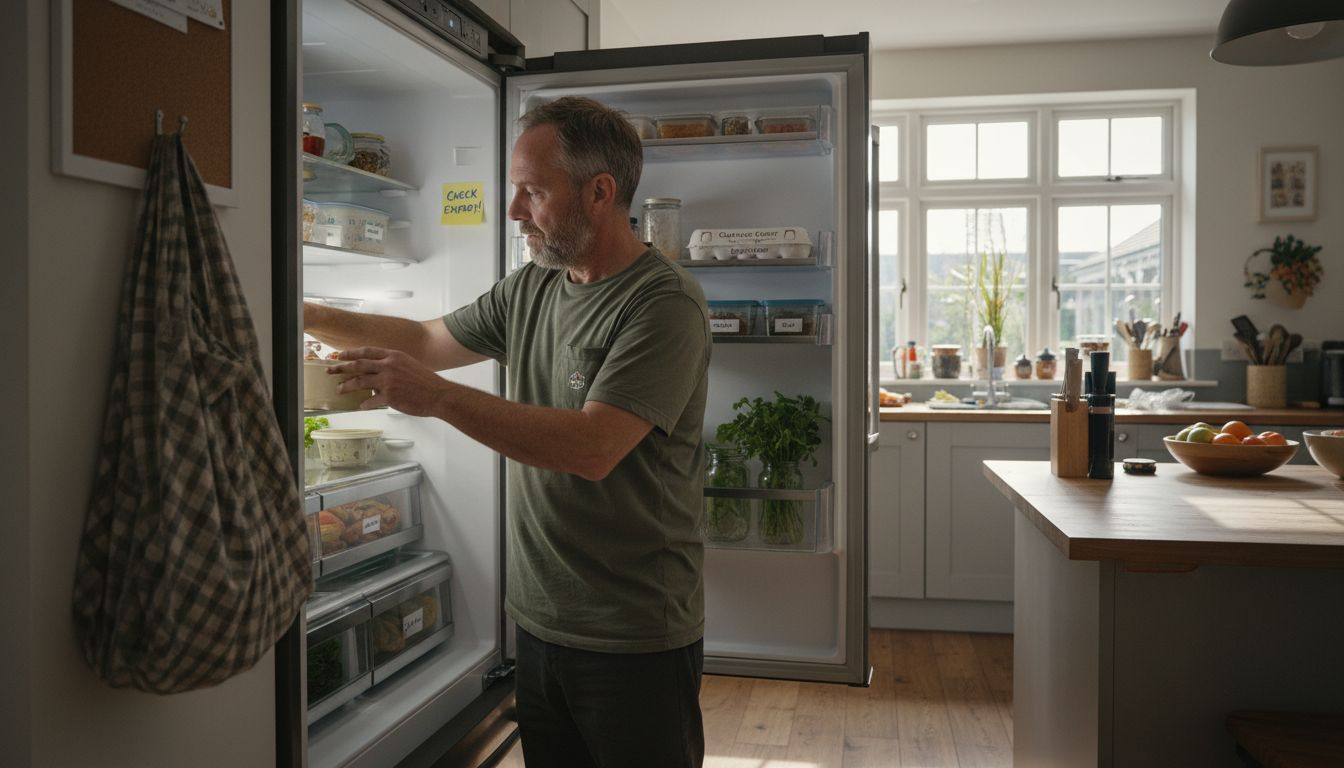
Start by implementing systematic food storage principles that maximise space and preserve food quality. Arrange your refrigerator strategically by storing raw meats on the lowest shelves to prevent potential cross contamination, and place dairy products and prepared foods on upper shelves. Use clear containers with tight fitting lids to store leftovers and prepped ingredients, which helps maintain freshness and allows you to easily see what food is available. In your pantry, organise items by type and expiration date, employing the first-in first-out method to ensure older items are used before newer purchases.
Pay special attention to your produce storage. Separate fruits and vegetables that release ethylene gas (like apples and bananas) from those sensitive to it, as this can accelerate ripening and spoilage. Use dedicated crisper drawers with appropriate humidity settings to extend the life of your fresh produce. Regularly check and rotate items, discarding anything showing signs of decay to prevent potential contamination.
Professional Insight: Invest in clear stackable storage containers and label them with purchase or opening dates to track food freshness more effectively.
Step 3: Plan balanced, waste-reducing meals
Meal planning is a strategic approach to minimising food waste while ensuring your family receives optimal nutrition. By thoughtfully designing your menu, you can transform your kitchen into an efficient, sustainable environment that saves money and reduces unnecessary food disposal.
Start by adopting healthy meal planning strategies that focus on balanced nutritional intake and ingredient efficiency. Create a weekly menu that considers your household’s actual eating patterns, planning meals that use similar ingredients across different dishes. For instance, roasted vegetables from dinner could become part of a lunch salad, or leftover grilled chicken might feature in a weekend frittata. This approach ensures that every ingredient serves multiple purposes, dramatically reducing the likelihood of unused food.
When developing your meal plan, take a comprehensive inventory of your current pantry and refrigerator contents before shopping. This prevents duplicate purchases and helps you design recipes around ingredients you already own. Prioritise recipes that can be easily scaled, frozen, or transformed into different meals. Consider batch cooking techniques that allow you to prepare larger quantities which can be portioned and stored for future consumption, further minimising potential waste.
Professional Insight: Create a dedicated meal planning whiteboard in your kitchen to track ingredients, planned meals, and potential leftover transformations.
Step 4: Transform leftovers into new dishes
Transforming leftovers into creative new meals is an art that can dramatically reduce food waste while keeping your family’s meals exciting and nutritious. By reimagining yesterday’s dishes, you can breathe new life into seemingly mundane ingredients and prevent unnecessary food disposal.
Learn to master leftover transformation techniques that turn remnant ingredients into delightful new culinary experiences. Proteins like roasted chicken can be shredded into salads, transformed into sandwiches, or incorporated into hearty soups. Leftover rice becomes a perfect base for fried rice or risotto, while roasted vegetables can be blended into sauces, tossed into frittatas, or mixed into grain bowls. The key is viewing leftovers not as remnants, but as opportunities for culinary creativity.
Prioritise food safety when repurposing meals by storing leftovers correctly and understanding proper reheating temperatures. Always refrigerate cooked foods within two hours, use airtight containers, and consume refrigerated leftovers within three to four days. When reheating, ensure foods reach an internal temperature of 74 degrees Celsius to eliminate potential bacterial growth. These practices not only prevent food waste but also protect your family’s health.
Professional Insight: Designate a specific container in your refrigerator for potential transformation ingredients, making it easy to track and reimagine leftover components.
Step 5: Monitor progress and celebrate savings
Tracking your food waste reduction journey transforms sustainable practices from a concept into a tangible, rewarding experience. By systematically measuring and acknowledging your achievements, you create positive reinforcement that motivates continued environmental consciousness.
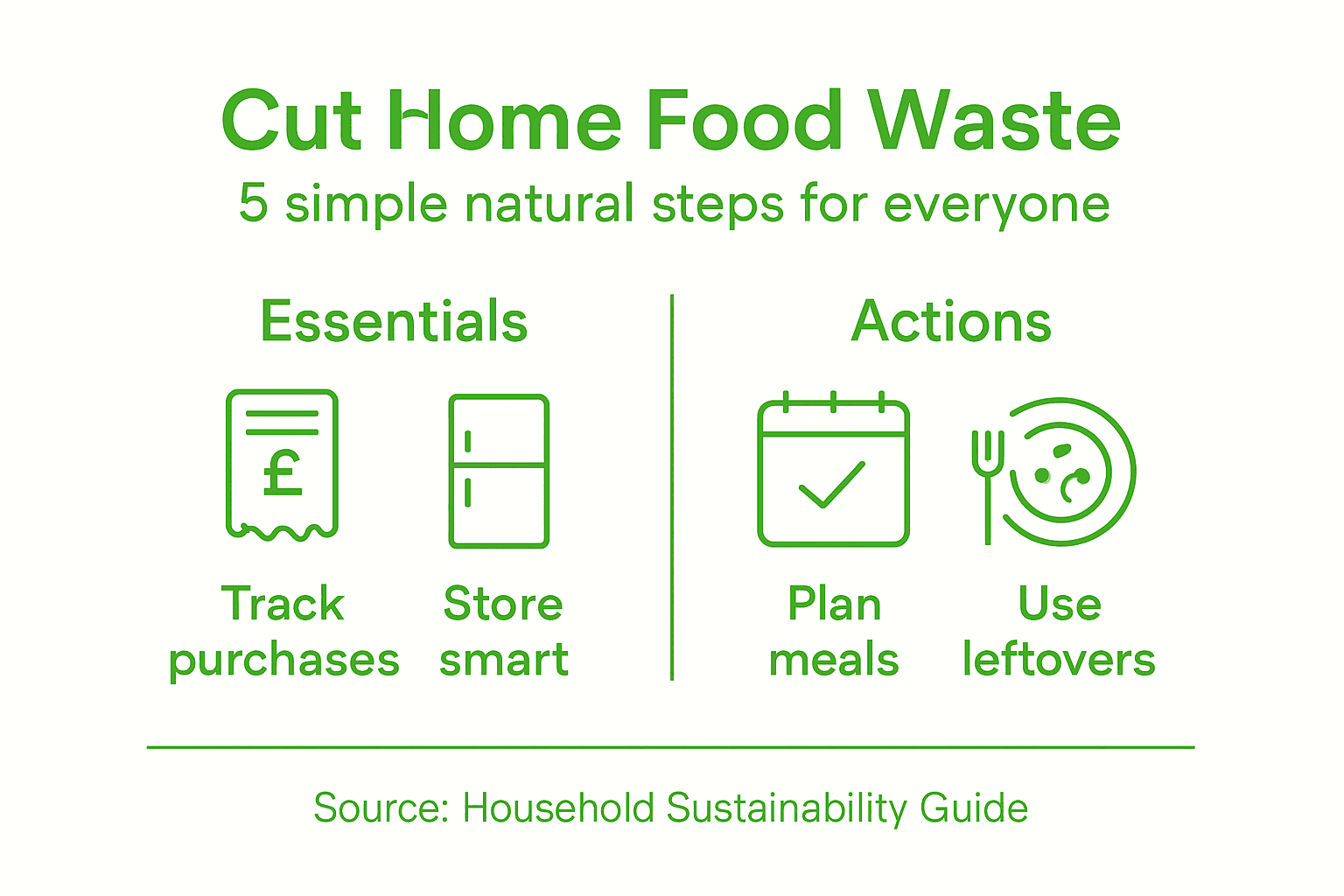
Utilise digital technologies for food tracking to gain precise insights into your waste reduction progress. Start by establishing a baseline measurement of weekly food waste, then record your improvements through simple methods like weighing discarded food or tracking grocery spending. Create a visual tracker perhaps using a spreadsheet or dedicated app that allows you to log food purchases, track consumption patterns, and calculate monetary and environmental savings. This approach not only provides concrete evidence of your efforts but also transforms abstract sustainability goals into clear, achievable metrics.
Encourage family participation by making progress tracking a collaborative and celebratory experience. Set realistic monthly goals, discuss strategies during family meals, and create small rewards for meeting waste reduction targets. Consider translating your savings into meaningful comparisons such as equivalent trees saved or water conservation, which can make your efforts feel more impactful and motivating. Remember that every kilogram of food waste prevented represents a meaningful contribution to environmental sustainability.
Professional Insight: Create a visible progress chart in your kitchen that transforms waste reduction data into an engaging, motivational visual narrative.
The following table compares methods for tracking household food waste and their key advantages:
| Tracking Method | Description | Benefit |
|---|---|---|
| Whiteboard | List perishables with expiry dates | Quick daily reference |
| Spreadsheet tracking | Log purchases and waste amounts | Detailed analytics |
| Mobile application | Use food waste reduction apps | Automated notifications |
| Physical notebook | Manually record consumption | Flexible and portable |
Take Control of Food Waste with Natural Solutions
The challenge of reducing food waste at home naturally calls for smart organisation, mindful meal planning and transforming leftovers creatively. If you want to overcome issues like overbuying fresh produce or forgetting perishables in your fridge, embracing natural and organic products can make a significant difference. By choosing clean ingredients from trusted sources, you not only enjoy fresher, longer-lasting food but also support a sustainable lifestyle that honours both your health and the planet.
Explore our wide selection of organic fruits, vegetables, dairy and dry groceries at Nature’s Soul Shop. Start today and transform your kitchen habits by incorporating wholesome products that keep well and inspire delicious, waste-free meals. Visit now to discover how easy it is to reduce waste while nurturing your family’s wellbeing. Take the first step towards a sustainable home and shop at Nature’s Soul Shop, your partner in natural living.
Frequently Asked Questions
How can I assess my current food shopping and storage habits to reduce waste at home?
Assess your shopping and storage habits by tracking your food purchases and consumption for one week. Record the quantities purchased, expiration dates, and what gets consumed to identify patterns of overbuying or ineffective storage.
What are some effective ways to organise my fridge and pantry to extend food shelf life?
Organise your fridge and pantry by employing systematic food storage principles. Store raw meats on the lowest shelves, use clear containers for leftovers, and arrange items by type and expiration date to ensure that older items are consumed first.
How can I create balanced meals that help minimise food waste?
Plan meals by designing a weekly menu that utilises similar ingredients across different dishes to optimise use. For example, leftover roasted vegetables can be transformed into a lunch salad to ensure minimal unused food.
What are some creative methods for transforming leftovers into new dishes?
Transform leftovers into new meals by reimagining them creatively. For instance, shredded roasted chicken can become part of salads or soups, turning what would be waste into exciting new meals.
How can I effectively monitor my food waste reduction progress at home?
Monitor your food waste progress by establishing a baseline measurement of weekly waste and tracking improvements over time. Create a visual tracker or use a chart to log purchases and consumption patterns, aiming to reduce waste by at least 20% within a month.
What simple tools can I use to track my food purchases and consumption effectively?
Utilise simple tracking methods like a whiteboard for perishables or a spreadsheet for logging purchases. These tools allow for quick reference and detailed analysis, helping you maintain awareness of your food use and waste.
Recommended
- Composting Kitchen Scraps for Rich Organic Soil at Home – naturessoulshop
- Master Zero Waste Grocery Shopping: A Practical Guide – naturessoulshop
- How to Store Fresh Food Naturally for Maximum Freshness – naturessoulshop
- Complete Guide to Eco Friendly Food Storage – naturessoulshop
- 7 Duurzame alternatieven voor plastic voor horeca en events – Earth Saver Straws


