


Settling into life in Delhi NCR often means adapting your family’s routine to a different food culture and new daily pressures. Gut health can easily take a back seat, especially when juggling busy schedules and diverse dietary options. Learning about prebiotics and probiotics gives you the knowledge to make thoughtful food choices that support well-being for you and your loved ones. Discover how simple changes in your diet can nurture a healthy gut and foster long-term vitality.
Table of Contents
- Prebiotic And Probiotic Foods Explained
- Key Distinctions And Scientific Basis
- Dietary Sources And Functional Benefits
- Common Misconceptions And Mistakes
- How To Incorporate For Optimal Gut Health
Key Takeaways
| Point | Details |
|---|---|
| Probiotics and Prebiotics Serve Distinct Roles | Probiotics introduce live beneficial bacteria, while prebiotics nourish these bacteria, both contributing to gut health. |
| Synbiotics Enhance Well-being | The combination of probiotics and prebiotics can create a synergistic effect that improves digestive function and immune resilience. |
| Diversity Is Crucial | Incorporating a wide variety of both prebiotic and probiotic foods into your diet fosters a robust and diverse gut microbiome. |
| Consult Professionals for Personalised Advice | Seeking guidance from a nutritional specialist can help develop a tailored strategy for optimal digestive health. |
Prebiotic and probiotic foods explained
Understanding probiotics and prebiotics is essential for maintaining optimal digestive wellness. These microorganisms play a critical role in supporting gut health, with each serving a unique function in our complex digestive ecosystem. Probiotic microorganisms are live beneficial bacteria that contribute positively to our internal microbial balance.
Probiotics are primarily found in fermented foods like yoghurt, kefir, and kimchi. These live microorganisms help restore and maintain healthy gut flora, potentially alleviating digestive issues and supporting immune function. Prebiotics, in contrast, are nondigestible carbohydrates that serve as food for these beneficial bacteria. They are typically high-fibre components found in foods like garlic, onions, bananas, and whole grains.
When probiotics and prebiotics work together, they create what nutritionists call synbiotics. This powerful combination ensures that beneficial bacteria not only populate the gut but also receive the necessary nutrients to thrive. Digestive health research continues to explore the intricate relationships between these microorganisms and various health conditions.
Pro tip: Incorporate a diverse range of fermented and high-fibre foods into your daily diet to naturally support your gut microbiome’s health and balance.
To clarify their roles in digestive wellness, here is a concise comparison of prebiotics, probiotics, and synbiotics:
| Component | Main Role | Typical Food Sources | Key Benefit |
|---|---|---|---|
| Prebiotics | Nourish beneficial bacteria | Garlic, onions, whole grains | Promote gut bacteria growth |
| Probiotics | Add live beneficial bacteria | Yoghurt, kefir, kimchi | Restore gut flora balance |
| Synbiotics | Combine both for synergy | Yoghurt with inulin, supplements | Enhance digestive function |
Key distinctions and scientific basis
Understanding the nuanced differences between prebiotics and probiotics requires a deep dive into their unique biological mechanisms and scientific characteristics. Nutritional science) reveals that these microbiome components operate through distinctly different pathways, each playing a crucial role in digestive health.
Prebiotics are nondigestible food ingredients that specifically stimulate beneficial microorganism growth. These complex carbohydrates act as selective fuel sources for helpful gut bacteria, including notable variants like inulin and fructooligosaccharides. In contrast, probiotics are live microorganisms like Lactobacillus and Bifidobacterium that directly introduce beneficial bacterial strains into the digestive system. Probiotic microbial strains demonstrate remarkable functional diversity, with each strain potentially offering unique health benefits such as immune system modulation and digestive function improvement.

The scientific complexity lies in how these microbial components interact within our gut ecosystem. While prebiotics provide nutritional support for beneficial bacteria, probiotics actively colonise and contribute to the microbiome’s functional balance. This intricate relationship suggests that consuming both can create a synergistic effect, potentially enhancing overall digestive wellness and immune system resilience.
Pro tip: Consult a nutritional specialist to develop a personalised prebiotic and probiotic strategy tailored to your specific digestive health requirements.
Dietary sources and functional benefits
A robust gut microbiome depends on strategic dietary choices that support beneficial bacterial growth and diversity. Healthy microbiome nutrition emphasises consuming a wide range of nutrient-dense foods that nourish our internal ecosystem.
Prebiotics are predominantly found in high-fibre plant-based foods such as garlic, onions, leeks, asparagus, bananas, and whole grains. These complex carbohydrates serve as essential fuel for beneficial gut bacteria, promoting their multiplication and metabolic activities. Probiotic sources include fermented foods like yoghurt, kefir, sauerkraut, kimchi, and kombucha, which directly introduce live beneficial microorganisms into the digestive system.
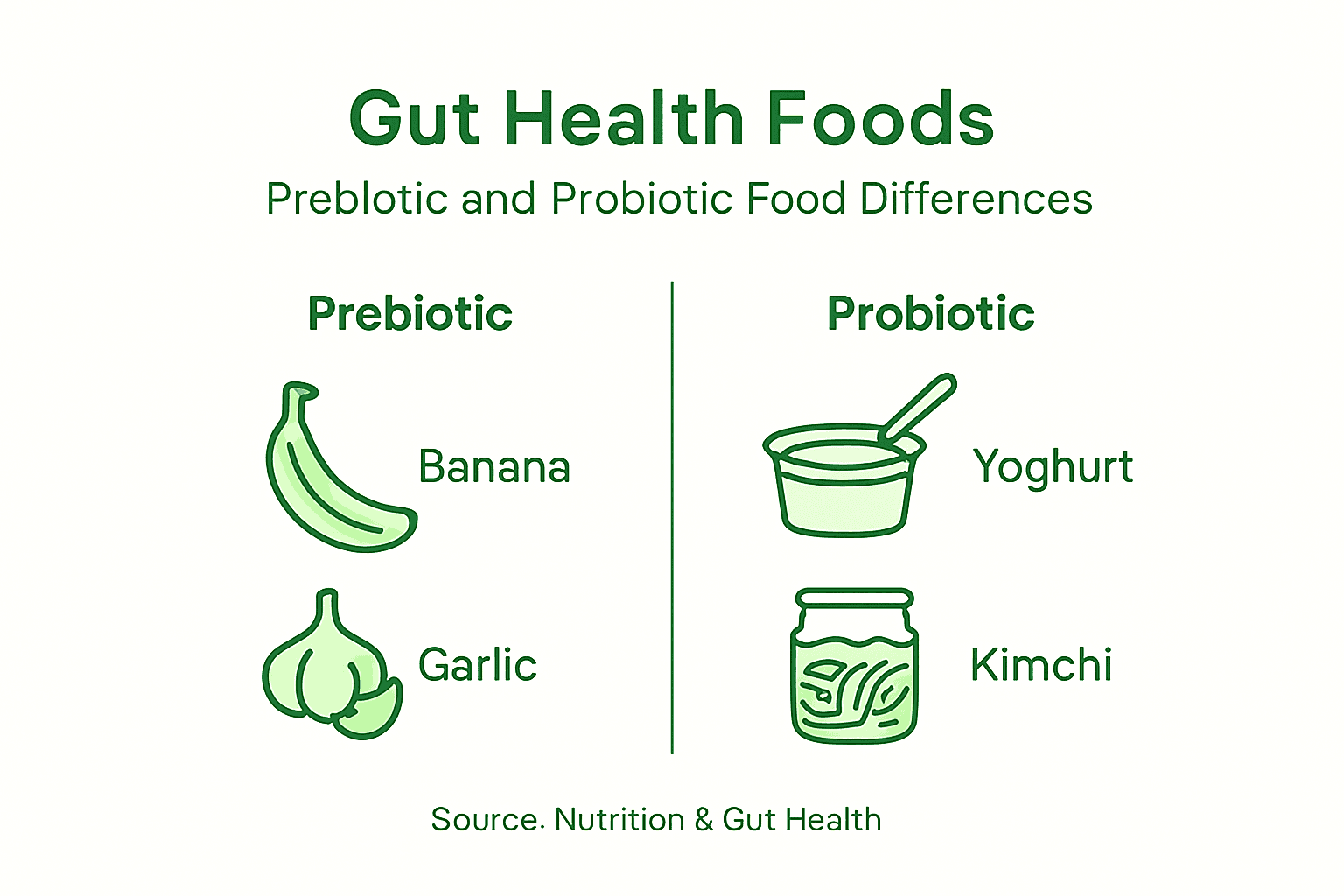
Nutritional strategies that support gut health involve reducing processed foods and increasing intake of diverse plant-based ingredients. Consuming a variety of fruits, vegetables, legumes, and fermented products helps create a resilient microbiome capable of supporting overall metabolic and immune functions. The key is diversity - no single food can provide comprehensive microbial support.
Pro tip: Aim to incorporate at least five different prebiotic and probiotic food sources into your weekly diet to maximise microbial diversity and gut health.
Common misconceptions and mistakes
Misunderstandings about probiotics and prebiotics can lead to ineffective health strategies and potentially misguided dietary choices. Probiotic consumer information highlights several critical misconceptions that many people unknowingly perpetuate about these essential microorganisms.
One prevalent myth is that all probiotic supplements and fermented foods provide identical health benefits. In reality, different bacterial strains offer unique functionalities, and not every probiotic will address specific health concerns. Fermented food misconceptions reveal that simply consuming fermented products does not guarantee probiotic benefits, as many microbes may not survive digestive processes or lack scientifically verified health claims.
Another significant error is assuming probiotics are universally safe and suitable for everyone. Individual responses to probiotic strains vary considerably, and people with compromised immune systems or specific health conditions should consult healthcare professionals before introducing new supplements. Many consumers also mistakenly believe that more probiotics equate to better health, when in fact, balanced and targeted microbial support is far more important than quantity.
Pro tip: Always verify probiotic supplement strain specifics and consult a healthcare professional to ensure the most appropriate and personalised microbial support for your individual health needs.
How to incorporate for optimal gut health
Gut microbiome nutrition requires a strategic and gradual approach to integrating prebiotic and probiotic foods into your daily diet. The key is diversity, balance, and mindful introduction of new food sources to support beneficial bacterial growth.
Begin by introducing fermented foods like yoghurt, kefir, sauerkraut, and kimchi, which naturally contain live probiotic cultures. Simultaneously, increase your intake of prebiotic-rich foods such as garlic, onions, leeks, asparagus, and whole grains. Microbiome health strategies recommend implementing these changes gradually to allow your digestive system to adapt and minimise potential discomfort.
Consider creating a weekly meal plan that incorporates a variety of probiotic and prebiotic sources. This might include starting your day with a yoghurt smoothie, adding sauerkraut to lunch salads, and including roasted Jerusalem artichokes or whole grain sides with dinner. For individuals with sensitive digestive systems or specific health conditions, consulting a nutritional specialist can help develop a personalised approach to gut health optimization.
For practical planning, here is a summary of methods to increase microbiome diversity within a typical week:
| Strategy | Example Action | Expected Outcome |
|---|---|---|
| Rotate prebiotic sources | Vary vegetables each day | Greater bacterial diversity |
| Include daily fermented foods | Alternate probiotic-rich items | Consistent microbial support |
| Limit processed foods | Choose whole grains over white bread | Reduces harmful bacteria |
| Track food responses | Maintain a food diary | Identify digestive triggers |
Pro tip: Maintain a food diary to track how different probiotic and prebiotic foods impact your digestive comfort and overall well-being.
Support Your Gut Health Naturally with Quality Organic Choices
The article highlights the challenge of maintaining a balanced digestive ecosystem through probiotic and prebiotic foods to relieve discomfort and build long-term gut wellness. Many readers seek effective ways to nourish beneficial bacteria and achieve microbial diversity without compromising on clean, natural ingredients. At Natures Soul Shop, you can explore a wide variety of organic and natural products that align perfectly with this goal. From fresh high-fibre fruits and vegetables rich in prebiotics to fermented and probiotic-friendly options, our range supports your journey to optimal gut health.
Take control of your digestive wellness today by choosing thoughtfully sourced foods that truly nurture your microbiome. Visit Natures Soul Shop to enrich your diet with pure, clean ingredients. Discover specialised options designed for gut support and experience the benefits of nature’s best for your digestive balance and overall well-being.
Frequently Asked Questions
What are the main differences between prebiotics and probiotics?
Prebiotics are nondigestible carbohydrates that nourish beneficial gut bacteria, while probiotics are live beneficial bacteria that help restore and balance gut flora.
How can I incorporate prebiotic and probiotic foods into my diet?
Introduce a variety of fermented foods, such as yoghurt and kimchi, along with prebiotic-rich foods like garlic, onions, and whole grains into your meals for optimal gut health.
Do all probiotic supplements provide the same health benefits?
No, different probiotic strains offer unique functionalities, and not every probiotic will address specific health concerns effectively.
Can prebiotics and probiotics be taken together for better gut health?
Yes, consuming prebiotics and probiotics together creates a synergistic effect that supports the growth of beneficial bacteria and enhances overall digestive wellness.
Recommended
- 10 Must-Know Prebiotic Foods List for Better Gut Health – naturessoulshop
- Understanding Digestive Health Foods for Optimal Wellbeing – naturessoulshop
- Fermented Plant Foods: Complete Guide for Wellness – naturessoulshop
- 7 Essential Fermented Vegan Foods for Better Health – naturessoulshop
- How Does A Food Intolerance Test Improve My Gut Health? | Blog


