


TL;DR:
- Nutrients like vitamins A, C, D, E, and essential fatty acids are fundamental for supporting skin hydration, barrier function, collagen production, and inflammation control through dietary intake. Consistent, whole-food-based approaches over several weeks are more effective than isolated supplements in improving skin health and appearance. Balancing omega-6 and omega-3 fats and maintaining a low-GI, anti-inflammatory diet further enhances skin clarity, resilience, and aging processes.
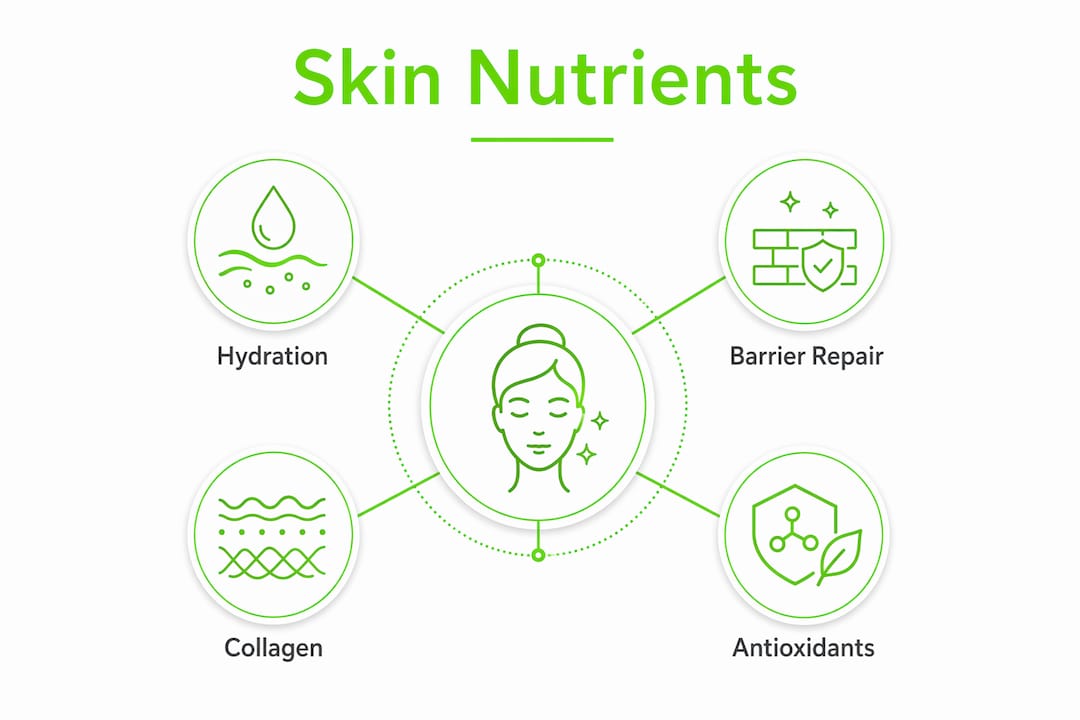
Nutrients for skin health are compounds that directly support the skin’s hydration, structural integrity, and defence mechanisms through antioxidant, anti-inflammatory, and collagen-promoting actions. The four core mechanisms they influence are barrier function, transepidermal water loss (TEWL), collagen synthesis, and inflammation control. Getting these right through diet is not a cosmetic afterthought. It is the biological foundation your skin depends on every day. The key nutrient categories to understand are antioxidants, vitamins A, C, D, and E, and essential fatty acids, each with a distinct and measurable role in how your skin looks and behaves.
Which vitamins are most critical for skin health?
Vitamins A, C, D, and E each target a different layer of skin function, and vitamins support skin through hydration, collagen synthesis, and protection against oxidative damage. That breadth of action is why no single vitamin can do the job alone. Each one fills a gap the others cannot.

Vitamin A drives cell turnover and skin repair. Without adequate retinol or beta-carotene intake, the skin’s renewal cycle slows, leading to dullness, rough texture, and slower wound healing. Food sources include liver, eggs, sweet potato, and leafy greens. Topical retinoids are derived from vitamin A, but dietary intake supports the systemic pool that topical products cannot fully replace.
Vitamin C is the most studied of the group for structural skin support. It acts as a required enzymatic cofactor for collagen hydroxylation, meaning collagen maturation depends directly on vitamin C availability. Without it, newly synthesised collagen fibres cannot be properly stabilised. Citrus fruits, kiwi, red peppers, and broccoli are among the richest dietary sources.
Vitamin D is less discussed but clinically significant. Vitamin D supplementation at doses of 400 IU to 800 IU daily over 12 weeks effectively addresses insufficiency below 20 ng/mL, which is the threshold linked to impaired skin hydration and immune modulation. This matters because a large proportion of adults in northern climates are deficient without realising it.
Vitamin E functions primarily as a fat-soluble antioxidant in the skin’s lipid layers. It absorbs UV-induced free radicals before they can damage cell membranes, offering a degree of photoprotection from within. Nuts, seeds, and cold-pressed plant oils are the most concentrated dietary sources.
- Vitamin A: supports cell renewal and repair via retinol and beta-carotene
- Vitamin C: required for collagen stabilisation and photoprotection
- Vitamin D: improves skin hydration and immune response when serum levels are corrected
- Vitamin E: neutralises lipid-soluble free radicals and reduces UV-related oxidative stress
Pro Tip: Have your serum vitamin D level tested before supplementing. Personalised dosing based on a baseline below 20 ng/mL is far more effective than a standard off-the-shelf dose, and it avoids unnecessary supplementation if your levels are already sufficient.
Vitamins also work best when integrated into a broader strategy. Vitamins form part of a comprehensive skin care approach that spans topical application, procedural treatments, and systemic dietary intake. Relying on topical vitamin C serum alone, for example, misses the systemic collagen support that oral intake provides.
How do essential fatty acids affect the skin barrier?
Essential fatty acids for skin are not optional extras. They are structural components of the skin barrier itself, and their absence shows up quickly as dryness, redness, and increased sensitivity.
The distinction between omega-6 and omega-3 fatty acids matters here. Omega-6 and omega-3 have complementary but distinct roles in skin barrier maintenance and inflammation control, requiring balanced intake for optimal skin nutrition. They are not interchangeable, and excess of one without the other creates problems.
-
Linoleic acid (omega-6) is the primary fatty acid used in ceramide synthesis. Ceramides are the lipid molecules that seal the gaps between skin cells, preventing water from escaping. When linoleic acid is deficient, ceramide production falls, TEWL rises, and the skin becomes chronically dry and reactive. Sunflower oil, hemp seeds, and evening primrose oil are reliable sources.
-
Alpha-linolenic acid and EPA/DHA (omega-3) target the inflammatory side of skin health. These fatty acids feed into resolution pathways that switch off inflammatory signals, making them particularly relevant for conditions like eczema, psoriasis, and acne. Oily fish such as mackerel and sardines, flaxseed, and walnuts are the primary dietary sources.
-
Balanced intake is the critical variable most people miss. Western diets typically deliver omega-6 to omega-3 ratios of 15:1 or higher, when a ratio closer to 4:1 is associated with better inflammatory control. Correcting this imbalance through dietary change, rather than simply adding an omega-3 supplement on top of an already omega-6-heavy diet, produces more consistent results.
-
Inflammatory skin conditions such as atopic dermatitis respond to fatty acid nutrition because omega-3 targets inflammation resolution pathways while omega-6 fosters ceramide and barrier lipids. Long-term balance matters far more than short-term supplementation.
Pro Tip: If you are using a fish oil supplement for skin, pair it with a conscious reduction in refined seed oils like sunflower or corn oil in your cooking. This shifts the ratio rather than just adding to one side of it.
For practical guidance on building an anti-inflammatory food pattern that supports fatty acid balance, the Naturessoulshop blog covers specific food choices and their mechanisms in detail.
Do antioxidants really improve skin hydration and reduce damage?
Antioxidants for skin health work by neutralising reactive oxygen species (ROS) before they can degrade collagen, damage cell membranes, or disrupt the skin barrier. The clinical evidence for this is stronger than most people realise.
A 2026 systematic review and meta-analysis found that antioxidant-rich foods improve skin hydration with a clinical mean difference of 2.12 and reduce TEWL with a mean difference of negative 0.68 in clinical studies. These are not trivial effect sizes. They represent measurable improvements in barrier function that translate to less dryness, less irritation, and more resilient skin over time.
| Antioxidant source | Primary skin benefit | Evidence level |
|---|---|---|
| Green tea (EGCG) | Reduces UV-induced oxidative damage | Clinical and preclinical |
| Berries (polyphenols) | Improves skin hydration markers | Meta-analysis supported |
| Leafy greens (carotenoids) | Supports barrier lipid integrity | Preclinical, Hedges’ g = 1.75 |
| Vitamin C-rich foods | Collagen synthesis and photoprotection | Clinical RCT evidence |
The timing of antioxidant benefits is worth understanding. Antioxidant effects are measurable over weeks rather than days, meaning consistent dietary intake is the mechanism, not a single high-dose intervention. Skin barrier improvements correlate well with reduced subjective dryness and irritation symptoms once the intervention is sustained.
Green tea deserves specific mention. Its primary active compound, epigallocatechin gallate (EGCG), has been shown to reduce UV-induced inflammation and support barrier recovery in multiple studies. Two to three cups daily represents a practical and low-cost addition to a skin-focused diet. For a broader view of antioxidant food sources and their rankings, Naturessoulshop has published a detailed 2026 guide.
A multi-nutrient, whole-food approach consistently outperforms isolated antioxidant supplements. The synergistic interactions between polyphenols, carotenoids, and vitamins in whole foods produce effects that single-compound supplements cannot replicate.
What dietary strategies help with acne and skin ageing?
The most effective dietary approach to common skin concerns combines a low glycaemic index (GI) eating pattern with anti-inflammatory food choices, rather than eliminating a single food group or taking an isolated supplement.
A 2026 crossover study found that an anti-inflammatory, low-GI diet significantly reduced acne severity after four weeks, with 73.91% of participants showing improvement and mean acne severity scores dropping from 3.3 to 2.4. That is a meaningful clinical reduction achieved through diet alone in under a month. The mechanism involves reduced insulin-like growth factor 1 (IGF-1) signalling, which directly lowers sebum production and follicular inflammation.
For skin ageing, the nutrient priorities shift slightly but the dietary pattern logic remains the same:
- Collagen-supporting nutrients: vitamin C, zinc, and copper work together in collagen synthesis. Oysters, pumpkin seeds, and citrus fruits cover all three in a single dietary pattern.
- Carotenoids: beta-carotene from carrots, sweet potato, and mango accumulates in the skin and provides a degree of UV protection from within, reducing photoageing over time.
- Polyphenols: found in olive oil, dark chocolate, and red grapes, these compounds reduce the oxidative stress that accelerates collagen breakdown and fine line formation.
- Hydration through food: cucumber, watermelon, and courgette contribute to skin hydration through their high water and electrolyte content, supporting the skin’s moisture gradient.
One important nuance on dairy and acne: a low-dairy diet did not produce statistically significant changes in systemic inflammatory markers during acne treatment in one controlled study. This suggests dairy elimination alone is not a reliable strategy. The combined low-GI and anti-inflammatory pattern, as a whole, is what drives results.
Dietary changes affect skin condition relatively quickly, but they require a combined approach focusing on glycaemic load and anti-inflammatory foods rather than single nutrient elimination. This is the evidence-based position, and it holds across both acne and ageing concerns. For a deeper look at how diet connects to skin ageing and collagen, the Naturessoulshop blog explores the science behind systemic skin nutrition in detail.
Key takeaways
The most effective nutrients for skin health work through four mechanisms: hydration support, barrier repair, collagen synthesis, and inflammation control, and they deliver the best results through whole dietary patterns rather than isolated supplements.
| Point | Details |
|---|---|
| Vitamins A, C, D, and E | Each targets a distinct skin function; systemic intake supports what topical products cannot. |
| Essential fatty acid balance | Omega-6 builds ceramides; omega-3 resolves inflammation; the ratio between them matters more than total intake. |
| Antioxidant consistency | Skin barrier improvements from antioxidants are measurable over weeks, not days; sustained intake is the mechanism. |
| Low-GI dietary pattern | A combined low-GI and anti-inflammatory diet reduced acne severity in 73.91% of participants within four weeks. |
| Whole foods over supplements | Multi-nutrient food sources consistently outperform isolated supplements for skin hydration and barrier outcomes. |
Why I think the single-supplement approach is holding your skin back
Arjit’s perspective
After years of working with people who are genuinely committed to improving their skin, the pattern I see most often is this: someone reads about vitamin C, takes a high-dose supplement for a month, sees modest results, and concludes that nutrition does not really move the needle. The problem is not the nutrient. It is the strategy.
The research is clear that a whole-food approach outperforms isolated nutrients for skin barrier and hydration outcomes. But the deeper issue is duration and dietary context. A vitamin C capsule taken alongside a high-GI diet, poor sleep, and chronic stress is fighting against a much larger set of variables. It cannot win that battle alone.
What I have found actually works is building a dietary pattern first, then layering in targeted supplements where genuine gaps exist. Correct your omega-3 to omega-6 ratio through cooking oil choices and oily fish intake. Get your vitamin D tested and dose to your actual baseline. Eat two to three antioxidant-rich foods at every meal, not as a supplement, but as a food habit. Then, if you want to add a supplement, it is filling a specific gap rather than doing all the heavy lifting.
The other thing I would say plainly: consistency over eight to twelve weeks is the minimum timeframe for dietary changes to show up visibly in your skin. Most people give up at week three. The biology has not failed them. The timeline expectation has.
— Arjit
Support your skin with Naturessoulshop’s organic range
Naturessoulshop brings together organic, clean-ingredient products that align with exactly the kind of nutrient-focused approach this article describes. Whether you are looking to support skin hydration from within or complement your diet with a targeted supplement, the range is built around transparency and whole-food principles.
The Beautiful Skin Capsules by Organic India are formulated to support hydration, collagen synthesis, and antioxidant defences using key vitamins and botanical ingredients. For topical support that mirrors the barrier-repair principles covered here, the Rose Bergamol skin cream is enriched with jojoba wax and sal butter, both of which support the lipid barrier without synthetic additives. Explore the full organic wellness range at Naturessoulshop.
FAQ
What are the most important nutrients for skin health?
Vitamins A, C, D, and E, alongside omega-3 and omega-6 essential fatty acids and antioxidants from whole foods, are the most evidence-backed nutrients for skin health. They collectively support collagen synthesis, barrier function, hydration, and inflammation control.
How long does it take for dietary changes to improve skin?
Clinical studies show antioxidant and dietary interventions produce measurable skin improvements over weeks rather than days, with meaningful changes typically visible after four to twelve weeks of consistent intake.
Can a low-GI diet really reduce acne?
Yes. A 2026 crossover study found that a low-GI, anti-inflammatory diet reduced acne severity in 73.91% of participants within four weeks, with mean severity scores dropping from 3.3 to 2.4.
Are omega-3 supplements enough for skin barrier support?
Omega-3 supplements alone address inflammation but do not replace the ceramide-building role of omega-6 linoleic acid. Balanced intake of both fatty acid types, ideally through diet, is required for full barrier support.
Do I need supplements or can diet alone cover skin nutrients?
Whole dietary patterns consistently outperform isolated supplements in clinical evidence. Supplements are most useful for correcting specific deficiencies, such as low serum vitamin D, rather than as a primary skin nutrition strategy.


