


TL;DR:
- Prebiotics and probiotics are essential for a healthy gut microbiome, with prebiotics feeding beneficial microbes and probiotics providing live beneficial bacteria. Consuming fermented foods and fibrous plant-based foods from natural sources offers the most benefits, while gradual introduction is advised to avoid discomfort. A combined, food-first approach tailored to individual needs yields better gut health than relying solely on supplements.
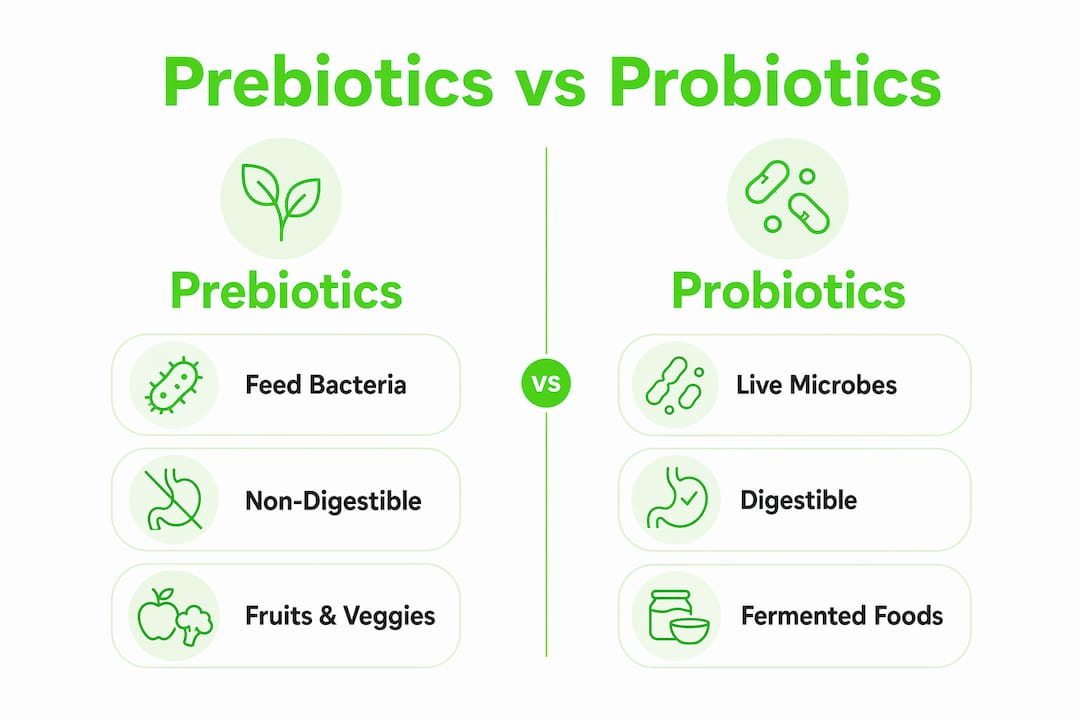
Prebiotics and probiotics are defined as the two core components of a healthy gut microbiome. Probiotics are live beneficial microbes that support digestion and immune function, while prebiotics are non-digestible fibres that feed those microbes through fermentation in the colon. Together, they form a system that keeps your digestive tract balanced, your immune response calibrated, and your overall wellbeing on track. Understanding the difference between the two, where to find them in food, and how to use them safely is the most practical thing you can do for your gut health right now.
What are the best dietary sources of prebiotics and probiotics?
The most reliable way to get both prebiotics and probiotics is through whole, minimally processed foods. Supplements have their place, but food sources deliver fibre, micronutrients, and microbial diversity that no capsule replicates.
Top prebiotic foods to include in your diet
Prebiotics are commonly found in inulin, oligosaccharides, and pectin, which are present in everyday foods you likely already buy. The richest sources include:
- Onions and garlic — both contain high levels of fructooligosaccharides (FOS), which selectively feed beneficial bacteria such as Bifidobacterium
- Bananas — particularly slightly underripe bananas, which are higher in resistant starch before it converts to sugar
- Oats — a source of beta-glucan, a prebiotic fibre with additional cholesterol-lowering properties
- Legumes — lentils, chickpeas, and black beans provide both prebiotic fibre and plant protein
- Jerusalem artichokes and chicory root — among the highest natural sources of inulin per gram
Cooking affects prebiotic availability. Raw garlic and onions deliver more intact FOS than their cooked counterparts. For a full breakdown of prebiotic-rich foods and their specific fibre profiles, Naturessoulshop has a detailed guide worth bookmarking.
Probiotic-rich foods worth eating regularly
Fermented foods are the original probiotic delivery system. Yogurt with live active cultures, kefir, sauerkraut, kimchi, miso, and tempeh all contain live bacteria that survive digestion and reach the colon. Kefir is particularly notable because it contains a broader range of bacterial strains than most yogurts, including Lactobacillus kefiri, which is unique to kefir fermentation. Kombucha adds a fermented tea option with a different microbial profile, though its bacterial counts vary considerably by brand and batch.

If you follow a dairy-free diet, options such as coconut yogurt, water kefir, and fermented vegetables are strong alternatives. Naturessoulshop covers the best non-dairy options in a dedicated guide for those avoiding animal products.
Pro Tip: Pair a prebiotic food with a probiotic food at the same meal. A bowl of oat porridge topped with live yogurt, or a kimchi side dish alongside a lentil salad, gives the beneficial bacteria both the microbes and the fuel they need at the same time.
How do prebiotics and probiotics benefit gut health?
The health effects of these two components are well-documented, though the degree of benefit depends on the specific strains, doses, and the individual’s existing microbiome. Here is what the research confirms:
- Digestive support. Probiotics improve stool consistency, reduce transit time, and support the gut barrier by strengthening tight junctions between intestinal cells. This reduces the likelihood of harmful substances crossing into the bloodstream.
- Immune modulation. Roughly 70% of the immune system is located in the gut. Probiotics interact with gut-associated lymphoid tissue to regulate inflammatory responses, which has implications for conditions ranging from allergies to autoimmune disorders.
- Metabolic benefits of prebiotics. Prebiotic fermentation produces short-chain fatty acids (SCFAs) such as butyrate, which serve as the primary fuel for colonocytes (the cells lining the colon). Butyrate production is linked to reduced colorectal cancer risk and improved blood sugar regulation.
- IBS symptom management. Synbiotic combinations of prebiotics and probiotics show superior results for gastrointestinal disorders, including IBS, compared to either component alone. They enhance mucus production and reduce pro-inflammatory cytokines.
- Mental health connection. The gut-brain axis means that microbial balance influences mood and cognition. Strains such as Lactobacillus rhamnosus have shown measurable effects on anxiety markers in animal studies, with human trials ongoing.
“Probiotics have strain-specific effects; some improve gut barrier function and fatigue in IBS patients, but primary symptom relief may be limited or variable.” — Frontiers in Nutrition, 2025
This finding matters because it challenges the assumption that any probiotic product will deliver the same outcome. A Bifidobacterium breve trial showed measurable fatigue score improvements in IBS patients without significant changes to primary IBS symptoms. The gut is complex, and single-strain interventions rarely produce uniform results across a population.
Prebiotics vs probiotics: what is the difference?
The terminology around gut health has expanded considerably. The International Scientific Association for Probiotics and Prebiotics (ISAPP) has harmonised consensus definitions to reduce confusion across scientific and regulatory contexts. Understanding these distinctions helps you read product labels accurately and make informed choices.
| Term | Definition | Primary source |
|---|---|---|
| Probiotic | Live microorganisms that confer a health benefit when administered in adequate amounts | Fermented foods, supplements |
| Prebiotic | Non-digestible substrate selectively utilised by host microorganisms to confer a health benefit | Fibrous plant foods |
| Synbiotic | A combination of probiotics and prebiotics that work together synergistically | Combined food pairings or supplements |
| Postbiotic | Inanimate microorganisms or their components that confer a health benefit | By-products of fermentation |
The critical distinction between prebiotics and probiotics is biological role. Probiotics are living organisms that must survive manufacturing, storage, and digestion to reach the colon alive. Prebiotics are structural carbohydrates that are not digested by the host but are fermented by gut bacteria. Neither works optimally without the other, which is why the synbiotic concept has gained traction in clinical research.
One common misconception is that all probiotic products are equivalent. Strain identity and dose determine outcomes, not total colony-forming unit (CFU) count alone. A product listing “10 billion CFUs” without specifying the strain is clinically uninformative. Look for genus, species, and strain designation on the label (for example, Lactobacillus acidophilus NCFM).
Pro Tip: When buying a probiotic supplement, check the label for the full three-part strain name. If the product only lists a genus and species without a strain code, the clinical evidence behind it is likely generic rather than specific.
For a side-by-side breakdown of prebiotic vs probiotic foods and how they interact in the diet, Naturessoulshop has a practical comparison resource.
How to safely introduce prebiotics and probiotics into your diet
Starting too aggressively with either prebiotics or probiotics is the most common mistake people make. Adding many new prebiotic or probiotic foods at once causes gas, bloating, and gut discomfort in most people. The gut microbiome needs time to adapt.
Follow these principles for a safe and effective introduction:
- Start with small amounts. Add one new fermented food or one additional prebiotic food per week rather than overhauling your diet in one go.
- Watch for FODMAP sensitivity. Many prebiotics are classified as FODMAPs, which can worsen symptoms in people with IBS. If you have IBS, work with a dietitian before significantly increasing prebiotic intake.
- Choose supplements carefully. Probiotic effectiveness depends on specific strains and doses; no universal recommendation exists for daily probiotic use in healthy people. Supplements are most evidence-backed for post-antibiotic recovery and specific gastrointestinal conditions.
- Consider vulnerable populations. Rare but serious infections have been reported in immunocompromised and critically ill patients using probiotics. Clinical supervision is non-negotiable for these groups.
- Prioritise food over supplements where possible. Whole foods deliver prebiotic fibre alongside vitamins, minerals, and phytonutrients that supplements do not replicate.
If you want to go further with fermented foods at home, Naturessoulshop has a practical guide on fermenting vegetables that covers safety, timing, and the best vegetables to start with.
Pro Tip: If you experience bloating when you increase prebiotic foods, reduce the portion size by half and hold at that level for two weeks before increasing again. This “start low, go slow” approach is the same method used in low-FODMAP dietary protocols.
Key takeaways
Prebiotics feed beneficial gut bacteria while probiotics are the live microbes themselves, and combining both through food is the most effective strategy for lasting digestive wellness.
| Point | Details |
|---|---|
| Definitions matter | Probiotics are live microbes; prebiotics are non-digestible fibres that fuel them. |
| Food first | Fermented foods and fibrous plants deliver more than supplements alone can replicate. |
| Strain specificity | Probiotic benefits depend on strain identity and dose, not CFU count alone. |
| Gradual introduction | Adding too many new foods at once causes bloating; increase intake slowly over weeks. |
| Synbiotics outperform | Combined prebiotic and probiotic intake produces superior gut health outcomes to either alone. |
Why I think most people are approaching gut health backwards
Most people I speak with start with a probiotic supplement and then wonder why they see little change. The supplement is not the problem. The missing piece is almost always the prebiotic foundation. You cannot sustain a thriving microbial community if you are not feeding it. It is like buying fish for a tank and never adding food.
What I have found, both personally and through years of following the research, is that the food-first approach consistently outperforms the supplement-first approach for people without a specific clinical condition. A diet rich in garlic, oats, legumes, fermented vegetables, and live yogurt does more for most people’s gut health than any capsule. Supplements fill gaps; they do not build foundations.
The other thing I would push back on is the idea that more is always better. Doubling your prebiotic intake overnight is a reliable way to spend a week feeling uncomfortable. The gut microbiome adapts, but it adapts on its own schedule. Patience is not optional here.
Where I do think supplements earn their place is post-antibiotic recovery and in people with diagnosed gastrointestinal conditions under clinical guidance. In those contexts, strain-specific products with clinical evidence behind them are genuinely useful. Outside of those contexts, your kitchen is a better starting point than your supplement shelf.
— Arjit
Support your gut health with Naturessoulshop
At Naturessoulshop, the focus has always been on clean, organic ingredients that do the work without unnecessary additives. Whether you are looking for probiotic starter cultures to make your own live yogurt at home, organic prebiotic-rich produce such as garlic, oats, and legumes, or a broader range of health-focused foods that support digestive wellness, the range is built around exactly that.
Every product in the gut health range is sourced with clean ingredients and no hidden fillers. If you are ready to build a diet that genuinely supports your microbiome, Naturessoulshop is a practical place to start.
FAQ
What is the difference between prebiotics and probiotics?
Probiotics are live microorganisms that benefit your health when consumed in adequate amounts, while prebiotics are non-digestible fibres that feed those microorganisms. Think of probiotics as the beneficial bacteria and prebiotics as their food source.
Which foods are highest in prebiotics?
Garlic, onions, Jerusalem artichokes, chicory root, oats, bananas, and legumes are among the richest natural prebiotic sources. Raw preparation generally preserves more prebiotic fibre than cooking.
How should I take probiotics for gut health?
Start with a small amount from fermented foods such as yogurt, kefir, or kimchi, and increase gradually to avoid bloating. For supplements, choose products that list the full strain name and dose, and seek clinical guidance if you have a specific health condition.
Are prebiotics and probiotics safe for everyone?
For most healthy adults, both are safe when introduced gradually. However, probiotic use in immunocompromised patients carries a small but real risk of infection and requires clinical supervision. People with IBS should also be cautious with high-prebiotic foods due to their FODMAP content.
What is a synbiotic?
A synbiotic is a product or dietary approach that combines both prebiotics and probiotics in a way that the two components work together. Synbiotic combinations show stronger gut health outcomes than either component used alone, particularly for IBS and other gastrointestinal conditions.


