


The most effective at-home stress relief combines a two-minute breathing technique, a short burst of movement, a wind-down sleep routine, five minutes of mindfulness, better food choices, and a quick call to someone you trust. None of these need a gym membership or an hour you don’t have. The CDC notes that short daily relaxation practices and regular activity in manageable chunks genuinely improve emotional wellbeing, and Harvard Health and Johns Hopkins back that with physiological evidence. Pick one or two of these and start today rather than waiting to feel ready.
TL;DR:
- Short, daily relaxation practices like breathing exercises, movement, and mindfulness significantly lower stress hormones and improve emotional wellbeing.
- Combining routines such as morning breathing, midday walks, and evening journaling helps build lasting stress resilience over weeks.
- Improving diet by reducing caffeine, sugar, alcohol, and processed foods, and increasing vegetables and lean proteins can reduce stress symptoms.
- Creating a calm home environment, limiting screens before bed, and maintaining consistent sleep routines enhance sleep quality and reduce daily stress.
- Incorporating natural scents like lavender or chamomile and engaging in hobbies without judgment provide additional simple, low-effort stress relief options.
Table of Contents
- Quick stress busters: breathing, movement and mindfulness techniques you can use today
- Building a daily routine that actually reduces stress over weeks
- What you eat and drink changes how stressed you feel
- Your home environment matters more than you’d think
- When to seek professional help for stress
- Why these techniques work
- Can aromatherapy and calming scents actually reduce stress?
- Why hobbies and creative activities lower stress
- Cutting screen time to actually calm your nervous system
- A note on making these habits stick
- Simple products that can support your home stress routine
- Sources
Quick stress busters: breathing, movement and mindfulness techniques you can use today
You don’t need to book a session or download an app to get relief in the next five minutes. The techniques below work because they interrupt the body’s stress response directly, and Johns Hopkins Medicine explains that relaxation practices lower cortisol and adrenaline while slowing heart rate and breathing. That’s the mechanism behind every technique on this list.
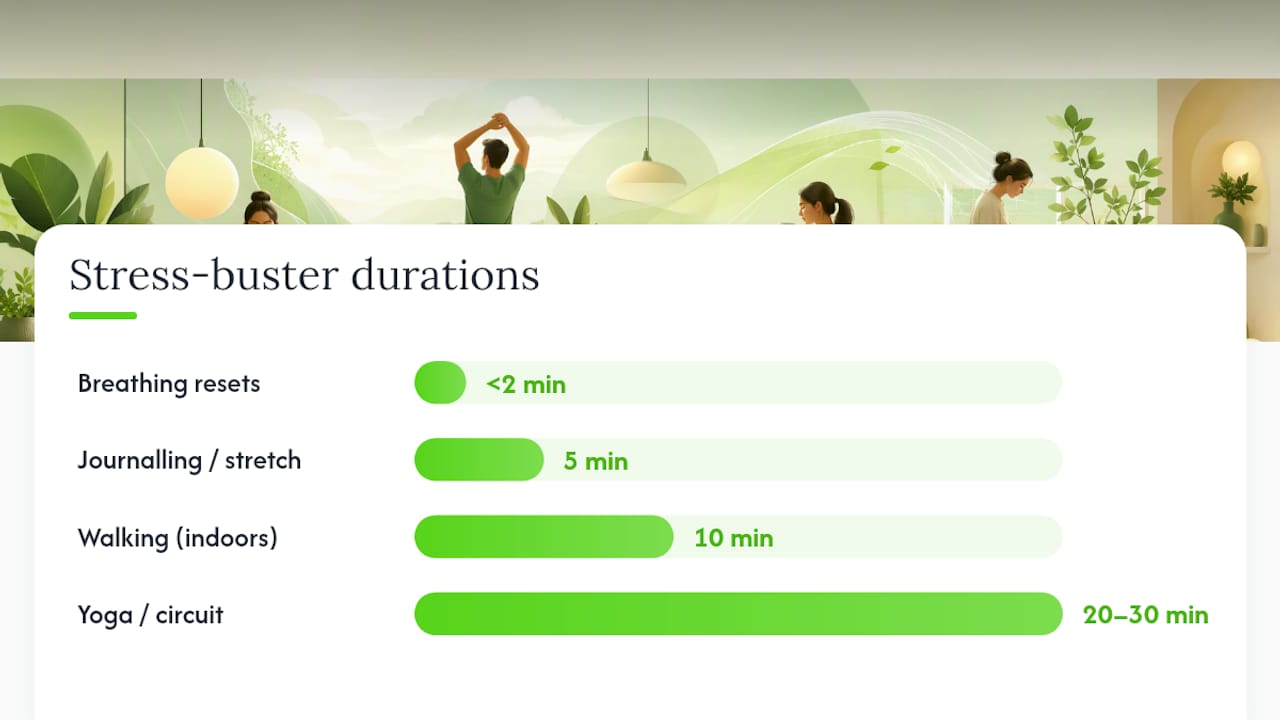
Breathing resets (use when you need calm in under two minutes):
- Box breathing: inhale for four counts, hold for four, exhale for four, hold for four. Repeat for four rounds.
- 4-4-4 breathing: a simpler variant. Inhale four seconds, exhale four seconds, pause four seconds. Good for beginners who find holding their breath uncomfortable.
- 3-3-3 grounding: name three things you can see, three sounds you can hear, and move three parts of your body. This pulls attention out of a racing mind and back into the room.
Progressive muscle relaxation takes a little longer but works well before bed or after a tense meeting. Starting at your feet, tense each muscle group for five seconds, then release and notice the difference. Work up through calves, thighs, stomach, hands, shoulders, and face. A body scan does the same job without the tensing: lie down, and mentally move attention slowly from your toes to your scalp, simply noticing sensation without trying to change anything.
Short movement “snacks” count too. Harvard Health lists breath focus, body scan, guided imagery and mindfulness among six relaxation techniques worth practising regularly, and movement pairs naturally with several of them:
- A five-minute stretch sequence by your desk or bed
- Ten minutes of walking, even indoors or on the spot
- Twenty to thirty minutes of yoga or a bodyweight circuit if you have more time and want a bigger physiological reset
Guided imagery works by picturing a calming scene in detail (a beach, a forest path) and letting your senses fill it in. Journalling, sometimes called a “brain dump,” is different again: set a timer for five minutes and write whatever is looping in your head, without editing. Mayo Clinic includes journalling among its practical stress relievers, and it’s particularly useful when the stress is a specific worry rather than general tension.
Pro Tip: Match the method to the moment. Use box breathing for sudden spikes, a body scan for physical tension, journalling for a mind that won’t stop replaying the same thought, and guided imagery when you need distance from a specific stressor rather than relief from it.
Building a daily routine that actually reduces stress over weeks
One good breathing exercise helps for ten minutes. A routine changes your baseline. Harvard Health frames this as building “a reserve of calm” through regular practice of relaxation techniques rather than one-off fixes, and Stanford Medicine researchers make a similar point: treating self-care as a fixed appointment rather than something to fit in “if there’s time” is what stops it being dropped under workload pressure.
A realistic day might look like this:
- Morning (5 minutes): box breathing before checking your phone, or a short stretch while the kettle boils.
- Daytime (2 to 10 minutes): a walk at lunch, or the 3-3-3 grounding technique before a difficult call.
- Evening (10 to 20 minutes): journalling or a body scan as part of winding down for sleep.
Start with one habit stacked onto something you already do daily, such as breathing exercises while your coffee brews. Track it loosely (a tick on a calendar is enough) and only add a second habit once the first feels automatic, usually after two to three weeks. Protect that slot the way you’d protect a meeting; if a week gets chaotic, shrink the practice to two minutes rather than skipping it entirely.
What you eat and drink changes how stressed you feel
Diet isn’t a side note to stress management, it’s a lever you can pull today with practical nutrition and mindful eating tips for your holiday. The CDC’s guidance on managing stress specifically recommends limiting alcohol and tobacco alongside eating a nutrient-rich diet, and the reasoning is straightforward: blood sugar crashes mimic and worsen anxiety symptoms, and both nicotine and alcohol disrupt the sleep that your nervous system needs to recover.
Practical swaps worth trying this week:
- Replace a second or third coffee with herbal tea (chamomile or peppermint both work well in the afternoon slump).
- Snack on nuts, fruit, or yoghurt rather than sugary options that spike and crash your energy; these low sugar snack ideas are a useful starting list.
- Build meals around vegetables, whole grains, and lean protein, per general APA guidance on healthy coping, rather than relying on convenience food when you’re already stretched.
Supplements can help some people, but talk to a GP or pharmacist first, particularly if you take other medication, since interactions are more common than people assume.
Your home environment matters more than you’d think
Small physical changes have an outsized effect on how your body handles stress. Mayo Clinic notes that removing screens from the bedroom and keeping the room cool and dark measurably shortens the time it takes to fall asleep, which matters because poor sleep amplifies every other stressor the next day.
Beyond the bedroom:
- Clear one surface (a desk or kitchen counter) so at least one space in your home feels calm rather than cluttered.
- Get outside or sit near a window with natural light for a few minutes daily; even brief nature exposure lowers baseline tension.
- Keep a consistent sleep and wake time, and skip caffeine and alcohol within six hours of bed.
Pro Tip: A wind-down routine works best when it’s boring on purpose: dim lights, no screens, the same two or three steps every night, so your body learns to associate the sequence with sleep.
When to seek professional help for stress
Self-help techniques handle everyday tension, but some signs need more than a breathing exercise. Watch for persistent insomnia lasting weeks, real decline in your ability to work or manage daily tasks, or any thoughts of self-harm or hallucinations, which need urgent attention.
Contacting a GP typically starts with a short conversation about symptoms and duration, sometimes followed by a referral to talking therapy or, where appropriate, medication. If you’re at immediate risk, contact emergency services or a crisis line without delay. Reaching out is common, and treatment for stress and anxiety works well for most people who try it.
Why these techniques work
The relaxation response, first characterised in stress research, is the physiological opposite of the fight-or-flight state. Johns Hopkins Medicine explains that practising it regularly reduces cortisol and adrenaline release and slows heart rate and breathing, which is why the same techniques improve both daytime calm and night-time sleep.
Meditation doesn’t require achieving a thought-free mind. The actual skill is noticing when your attention has wandered and gently bringing it back, which is exactly what makes it accessible to complete beginners.
The CDC’s emphasis on regular activity and short daily practices lines up with this research, and Naturessoulshop’s own guide to natural remedies for stress covers complementary options in more depth. If you’re considering supplements alongside these techniques, check with a clinician first, since some interact with existing medication.
Can aromatherapy and calming scents actually reduce stress?
Scent has a more direct route to the emotional brain than most people realise: smell signals bypass the usual relay stations and connect straight to the amygdala and hippocampus, the regions handling emotion and memory. That’s a plausible reason lavender, chamomile, and bergamot are consistently reported as calming, though the evidence here is more anecdotal than the data behind breathing or sleep hygiene.
In practice, aromatherapy at home is low effort and low risk, which makes it worth trying even without strong clinical backing. A few approaches:
- Diffusers: a few drops of lavender or chamomile essential oil running for 20 to 30 minutes in a room you’re using.
- Pillow sprays: a light mist on bedding as part of your wind-down routine, pairing the scent with sleep over time.
- Handwash and soap: swapping in something like a neem and lemon soap turns a daily routine task into a small sensory reset.
Use essential oils sparingly and always diluted if applying to skin, and check with a doctor before using them around infants, pregnant people, or pets, since some oils aren’t safe for all of these groups. Scent won’t replace sleep, movement, or social connection as a stress lever, but stacked onto an existing routine, it’s a genuinely pleasant addition rather than a gimmick.
Why hobbies and creative activities lower stress
Time spent on something absorbing, with no productivity goal attached, does something breathing exercises can’t: it gives your mind a genuine break from problem-solving mode. Painting, knitting, playing an instrument, gardening, or cooking from scratch all work for the same reason. They demand just enough attention to crowd out rumination without the pressure of performance.
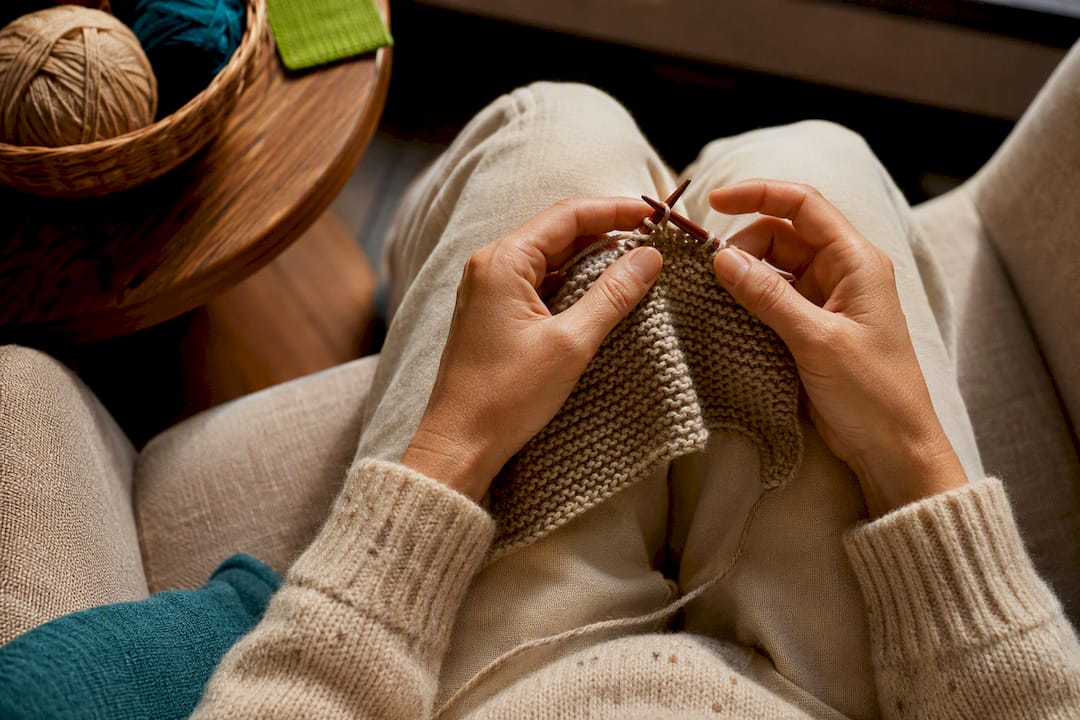
The mechanism matters here. Chronic stress keeps you in a state of vigilance, scanning for problems. A hobby that has no “right answer” and no deadline lets that vigilance switch off, at least for a while. Stanford Medicine’s coping research points to a related idea: tackling a small, solvable piece of a problem restores a sense of agency faster than avoiding it, and a hobby with visible, incremental progress (a finished row of knitting, a tray of bread) gives you exactly that kind of small win.
You don’t need to be good at it. The stress-relief value comes from the absorption, not the output. Fifteen minutes of sketching badly is still fifteen minutes your nervous system spent somewhere other than your inbox.
Practical ways to build this in without it becoming another obligation:
- Keep materials visible and ready to go, since decision fatigue kills spontaneous hobby time before it starts.
- Set a low bar (ten minutes, not two hours) so it fits into an already full week.
- Rotate between a physical hobby (gardening, cooking) and a quiet one (reading, drawing) depending on whether you need to burn energy or slow down.
Cutting screen time to actually calm your nervous system
Screens don’t just steal time, they keep your stress response switched on. Scrolling news or social media triggers the same vigilance loop as an unresolved problem, because your brain treats bad news as a threat worth monitoring, even when there’s nothing you can do about it. Evening screen use compounds this by delaying sleep, which then makes the next day’s stress harder to handle.
A digital detox doesn’t need to mean deleting apps for a month. Smaller, sustained changes work better because they’re realistic:
- Set a screen curfew 30 to 60 minutes before bed, replacing that window with reading, journalling, or a wind-down stretch.
- Turn off non-essential notifications rather than trying to check your phone less through willpower alone, which tends to fail under stress.
- Batch news checking to once or twice a day instead of leaving it open in the background, since constant exposure to distressing headlines has an outsized effect relative to the actual information gained.
- Try one screen-free meal a day, even if it’s just breakfast, to rebuild the habit of unstructured attention.
The goal isn’t zero screen time. It’s breaking the automatic reach for your phone during the exact moments (waiting, boredom, low-level anxiety) when your nervous system would otherwise get a chance to settle. Cut that reflex even partially, and the other techniques in this guide, breathing, journalling, movement, get far more room to actually work.
A note on making these habits stick
The hardest part isn’t knowing what helps, it’s sticking with it past the first missed day. Expect setbacks. A skipped week doesn’t undo progress, it just means picking one micro-habit and starting again, smaller than before if needed. For food swaps and calming products to try alongside these routines, our other guides on mindful eating are worth a look.
— Arjit
Simple products that can support your home stress routine
None of this replaces breathing exercises, sleep, or movement, but the right food and drink choices make those habits easier to sustain, and that’s where Naturessoulshop fits in: a source of clean, additive-free ingredients for the swaps this guide actually recommends, without you having to scrutinise every label yourself.

Herbal teas without added sugar or artificial flavouring, nutrient-dense snacks that keep blood sugar steady, and simple personal care products like a neem and lemon soap all slot into the routines described above without adding another decision to your day. Our Health category covers calming teas and wellness staples worth stocking in the kitchen, and if you want deeper reading on natural options, the natural remedies for stress guide is a good next stop. As always, check with a clinician before starting any new supplement, especially if you’re on existing medication. Browse the full shop to build your own stress-easing kitchen shelf.
Sources
- Managing Stress | Mental Health | CDC
- Sleepless nights? Try stress relief techniques | Johns Hopkins Medicine
- Six relaxation techniques to reduce stress - Harvard Health
- Stress relievers: Tips to tame stress - Mayo Clinic


