


Fill your trolley with rice, fresh vegetables, eggs, fresh meat or fish, canned beans, and a certified gluten-free oats or flour blend, and you’ve covered every meal for your first week. Most whole foods are naturally free of gluten, so you’re safer than you think once you stick to fresh produce and plain proteins. The one habit to build immediately: check every packaged item for a “gluten-free” label or certification seal before it goes in the trolley.
TL;DR:
- Building a gluten-free pantry primarily from whole foods like rice, vegetables, plain meats, eggs, and dairy is cost-effective and safer than relying on branded substitutes.
- Always check labels for a gluten-free certification logo and avoid products with ingredients like malt, barley, or rye, especially if they lack explicit gluten-free claims.
- Cross-contact risks at home and in stores, such as shared utensils or slicers, require careful kitchen management to prevent gluten contamination.
- Confirm the safety of packaged goods by verifying certified gluten-free seals and rechecking ingredient labels periodically, as formulations can change.
- Buying from curated stores that offer comprehensive gluten-free staples with same-day delivery simplifies shopping and reduces brand research time.
Table of Contents
- Quick gluten-free grocery essentials and budgeting tips for beginners
- How to read labels and understand gluten-free certification
- The full gluten-free grocery list, aisle by aisle
- Cross-contact and kitchen safety beginners overlook
- Turning your shopping list into simple meals
- Your printable one-page gluten-free shopping card
- What Nature’s Soul Shop sees beginners get wrong
- Where to buy your gluten-free staples without the guesswork
- Sources
Quick gluten-free grocery essentials and budgeting tips for beginners
You don’t need a specialist health shop or a trolley full of £6 substitute breads to eat safely. The cheapest, safest gluten-free grocery list is built almost entirely from foods that were never made with wheat in the first place: rice, potatoes, fruit, vegetables, eggs, plain meat, fish, beans, and dairy. Cost analyses of gluten-free diets consistently find that leaning on these whole foods costs less than replacing every wheat product with a branded gluten-free version.
A compact starter pantry looks roughly like this:
- Fresh vegetables and fruit (any variety, unseasoned)
- Fresh or frozen plain meat, poultry, fish, and eggs
- Rice, potatoes, and canned beans or lentils
- Plain dairy: milk, natural yoghurt, hard cheese
- A certified gluten-free oats or flour blend for baking
Nutrition guidance from the Academy of Nutrition and Dietetics recommends exactly this approach: build the bulk of your grocery list around naturally gluten-free foods, then add certified specialty items only where you genuinely need them, like bread or pasta.
Shop the edges of the shop first. Produce, meat, dairy, and eggs live on the perimeter of most supermarkets, and that’s where the naturally safe food is. Plan meals for two weeks at a time rather than buying reactively, and stock your freezer with plain frozen vegetables. They’re often a third of the price of fresh and carry zero gluten risk. For a fuller rundown of what belongs in a starter pantry, this beginner’s guide to gluten-free pantry staples is worth bookmarking.
Pro Tip: Before buying any branded gluten-free substitute (bread, pasta, biscuits), ask in an online coeliac or gluten-free community group which brand people actually rate. It saves you from binning an expensive loaf after one bite.
How to read labels and understand gluten-free certification
The number that matters is 20. In the United States, the FDA defines “gluten-free” as containing fewer than 20 parts per million of gluten, and that threshold underpins most certification schemes shoppers rely on worldwide. This is why “wheat-free” on a label tells you almost nothing. A product can be free of wheat and still contain barley or rye, both of which carry gluten.
Certification seals exist because label reading alone is unreliable. A logo from a recognised gluten-free certification programme means the product has been tested against that 20 ppm standard, not just formulated without wheat by guesswork. Beyond Celiac’s shopping guidance points shoppers toward these certified logos specifically because they remove the guesswork from ingredient lists that would otherwise take minutes to decode per item.
Run this shelf check on anything packaged:
- Look for an explicit “gluten-free” claim or certification logo on the front or back
- Scan the allergen statement for “contains wheat,” which is mandatory on most labels where wheat is present
- Watch for malt, malt vinegar, malt flavouring, barley, and rye, none of which are always obvious from a product name
- Be suspicious of vague terms like “natural flavours,” “modified food starch,” or “hydrolysed protein” if there’s no gluten-free claim nearby
- Recheck labels periodically. Manufacturers reformulate products without warning, and a previously safe item can change
Statistic to remember: the 20 ppm FDA threshold isn’t a rough guideline. It’s the specific bar that separates a genuinely low-risk product from one that simply avoids the word “wheat” on its ingredient list.
The full gluten-free grocery list, aisle by aisle
This is the list to work through methodically on your first few shops, rather than trying to memorise everything at once. Print it, save it to your phone, or copy the categories into a notes app.
1. Fresh produce
Every plain fruit and vegetable is naturally gluten-free, with no exceptions. That includes potatoes, sweet potatoes, leafy greens, peppers, onions, tomatoes, berries, apples, and citrus. The risk only appears once produce is seasoned, breaded, or sauced before you buy it. Pre-marinated meats, seasoned frozen chips, and stir-fry vegetable mixes with sauce packets can all carry hidden gluten from thickeners or soy sauce, so buy plain and season it yourself at home.
2. Fresh proteins
Plain fresh meat, poultry, and fish are gluten-free by nature, as are eggs, tofu, and tempeh. The trap here is processing. Sausages, burgers, deli meats, breaded fish, and marinated chicken often contain wheat-based fillers, breadcrumbs, or soy sauce as a flavour carrier. Check the ingredients on anything pre-formed or pre-flavoured, and when in doubt, buy the plain cut and add your own herbs and spices.
3. Grains, starches, and gluten-free flours
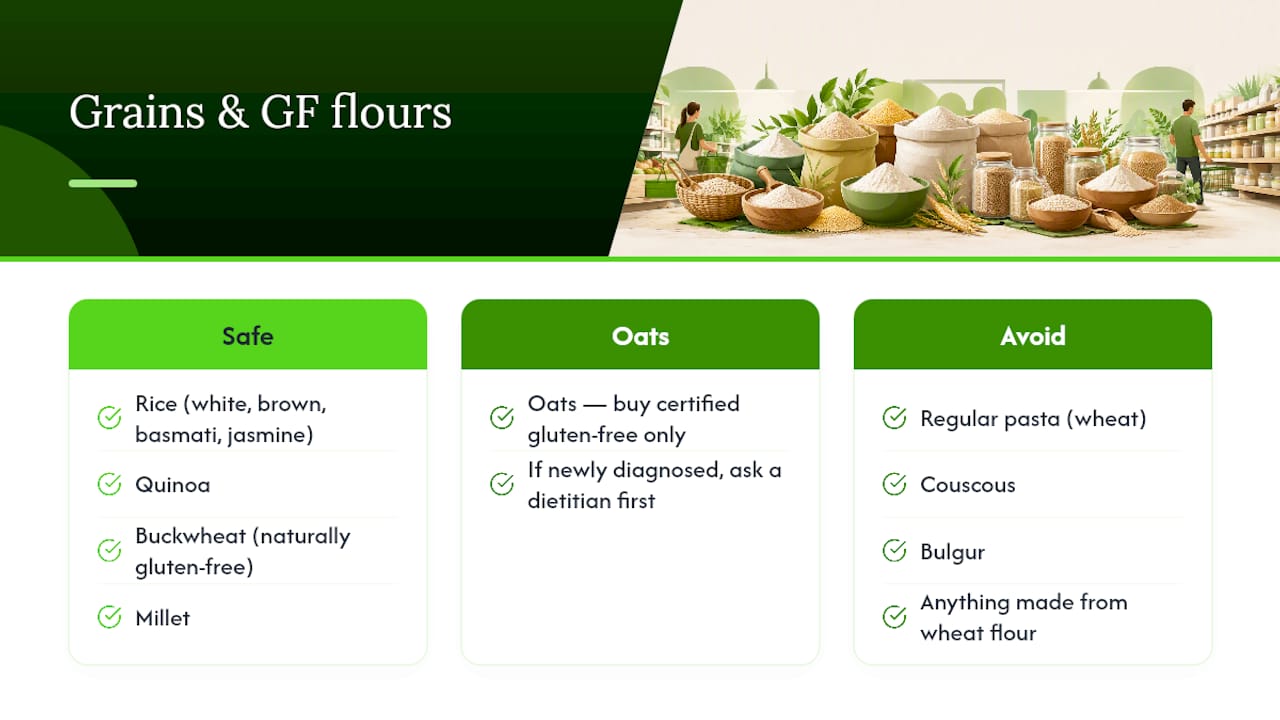
This is the aisle beginners find most confusing, largely because so many grains are safe and a few similar-sounding ones aren’t. Rice (white, brown, basmati, jasmine), quinoa, buckwheat, millet, sorghum, and teff are all naturally gluten-free grains, despite buckwheat’s misleading name. Polenta and cornmeal are safe. Regular pasta, couscous, bulgur, and anything made from wheat flour are not.
Oats deserve their own note. Oats themselves don’t contain gluten, but they’re very frequently cross-contaminated during farming and milling because they’re often grown or processed near wheat. Buy oats specifically labelled and certified gluten-free, never a generic bag from a regular cereal aisle, and if you’re newly diagnosed with coeliac disease, ask a dietitian about oats before introducing them.
For flours, look for gluten-free all-purpose blends built from rice flour, tapioca starch, potato starch, or almond flour. Charity pantry guidance lists these blends, alongside rice, quinoa, and gluten-free pasta, as core starter items worth having on hand from week one.
4. Baking essentials and substitutes
If you plan to bake at all, a few specialty items make a real difference:
- A gluten-free all-purpose flour blend (rice, tapioca, and potato starch based blends work well for most recipes)
- Xanthan gum, which replaces the binding structure gluten normally provides in bread and cakes
- Gluten-free baking powder (most are safe, but some contain wheat starch as an anti-caking agent)
- Almond flour or coconut flour for denser bakes
- Certified gluten-free vanilla extract, since some cheaper extracts use grain alcohol without confirming gluten status
5. Pantry staples, sauces, and condiments
This is where hidden gluten does the most damage, because these products don’t look risky. Regular soy sauce is brewed with wheat and is not gluten-free. Tamari is the gluten-free equivalent, but only if the label confirms it, since some tamari blends still include a small amount of wheat. Many stock cubes, gravy granules, and broths use wheat flour as a thickener, so check every stock and gravy product individually rather than assuming.
Other pantry checks worth doing every time:
- Canned beans and lentils in plain water or brine are safe; flavoured or sauced versions need a label check
- Vinegars are almost all gluten-free except malt vinegar, which is made from barley
- Salad dressings and marinades frequently use wheat-based thickeners or soy sauce
- Curry pastes and spice blends occasionally include wheat flour as a filler
- Certified gluten-free tamari, coconut aminos, and rice vinegar are reliable substitutes for regular soy sauce
6. Frozen and convenience foods
Plain frozen vegetables, frozen fruit, and frozen plain meat or fish are as safe as their fresh counterparts, and considerably cheaper per portion. Frozen convenience meals are a different story. Ready meals, frozen pizza, breaded frozen items, and pre-made sauces frequently contain wheat somewhere in the recipe, so treat every frozen ready meal as guilty until the label proves otherwise. A certified gluten-free frozen range is worth seeking out specifically for busy weeks, since it removes the need to check every single item.
7. Snacks
Plain nuts, seeds, popcorn, rice cakes, corn-based crisps, and fresh or dried fruit are naturally safe snack options and usually cheaper than branded “free-from” snacks. Flavoured crisps, pretzels, and most crackers need a label check, since seasoning powders and coatings are common gluten carriers. Buying a few certified gluten-free snack staples for convenience is reasonable, but building your everyday snacking around naturally gluten-free options keeps both your risk and your grocery bill lower.
Cross-contact and kitchen safety beginners overlook
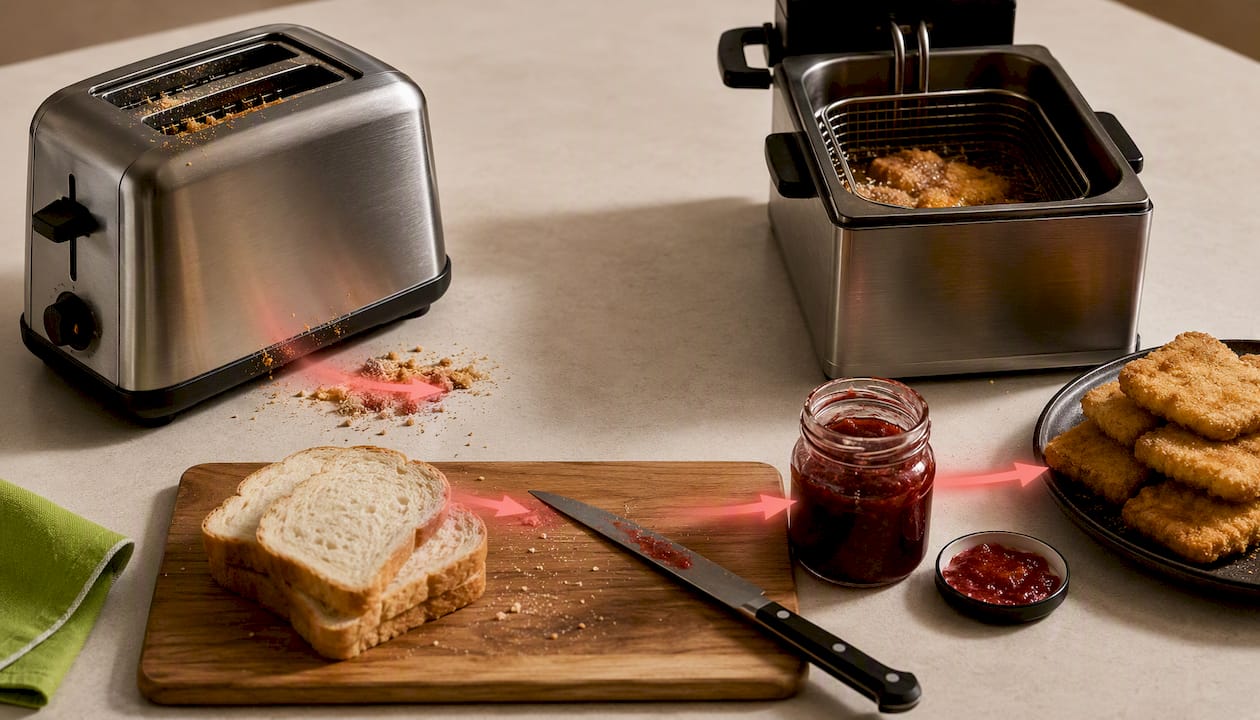
Cross-contact happens when a gluten-free food picks up gluten from contact with a gluten-containing one, even in tiny amounts. It’s invisible, and it’s one of the most common reasons someone eats “safe” food and still reacts. Gluten.org’s guidance on cross-contact points to everyday scenarios most beginners never think about: a shared toaster, a knife dipped into the jam jar after touching regular bread, or a shared fryer used for breaded and non-breaded food.
In the shop itself, treat bulk bins with caution. A bin of naturally gluten-free rice or oats can still be contaminated by a scoop that’s touched a wheat-based product earlier in the day. Pantry guidance from gluten health organisations recommends avoiding bulk bins entirely unless the store can confirm dedicated, tested handling. Bakery counters and self-serve sample stations carry similar risk from shared tongs and airborne flour.
At home, a handful of changes remove most of the risk:
- Keep a separate toaster, or use toaster bags if space is tight
- Use dedicated utensils, chopping boards, and colanders for gluten-free cooking
- Switch shared condiments like butter, jam, and peanut butter to squeeze bottles or use separate labelled jars
- Label gluten-free items clearly in a shared kitchen so nobody double-dips a knife by mistake
- Wash surfaces and equipment thoroughly between cooking gluten and gluten-free food
Pro Tip: A modest investment in squeeze bottles for butter, jam, and mayonnaise solves the single most common cross-contact mistake in shared kitchens: the double-dipped knife.
Deli counters deserve particular caution, since slicers are rarely dedicated to one type of meat and crumbs travel easily between products. Certified gluten-free ready meals are a safer bet than a deli counter when you’re short on time, precisely because they’ve been tested against a known standard rather than handled on shared equipment.
Turning your shopping list into simple meals
A shopping list only helps if you know what to cook with it. Three template meals cover most of the week using nothing more exotic than what’s already on your list:
- Grain bowl: rice or quinoa, roasted vegetables, a plain protein, and a squeeze of lemon or a gluten-free tamari dressing
- One-pan protein and veg: any fresh meat or fish, roasted or pan-fried with seasonal vegetables and olive oil
- Quick pasta swap: a rice or corn-based gluten-free pasta with a simple tomato or olive oil sauce, ready in the same time as regular pasta
Cook grains and proteins in batches on a Sunday and freeze portions. It cuts food waste, and it means a busy Wednesday doesn’t tempt you into a risky takeaway decision. A frozen batch of rice, roasted chicken, and pre-chopped vegetables turns into dinner in ten minutes with no packaging to check. For a fuller weekly structure, this guide to gluten-free meal planning walks through building a full rotation from a single shop.
For packed lunches and snacks, rice cakes with nut butter, hard-boiled eggs, plain yoghurt with fruit, and leftover grain bowls all travel well without needing anything specialty. If you want to widen your repertoire beyond the basics, seed-based meal ideas offer straightforward ways to build extra nutrition into meals you’re already making from this list.
Your printable one-page gluten-free shopping card
Keep this structure on your phone or print it and stick it to the fridge. It’s built to be scanned quickly in a shop aisle, not read cover to cover.
- Must-buy column: fresh vegetables and fruit, plain meat and fish, eggs, rice, potatoes, canned beans, plain dairy, certified gluten-free oats
- May-buy column (check label first): stock cubes and gravy, sauces and dressings, deli meat, flavoured crisps, frozen ready meals, curry pastes
- Shelf-check reminders: look for a gluten-free seal on anything packaged; avoid malt, barley, and rye; treat “natural flavours” with suspicion if there’s no gluten-free claim nearby
- Avoid by default: bulk bins, deli counter slicers, bakery samples, regular soy sauce
For the digital version, take a photo of a brand’s ingredient label the first time you confirm it’s safe, and build a simple photo album on your phone titled “safe brands.” It turns repeat shops from a full label-reading exercise into a five-second glance. A print-friendly aisle-by-aisle grocery guide is also worth keeping as a backup reference for products not yet on your personal safe list.
What Nature’s Soul Shop sees beginners get wrong
The two mistakes come up more than any others. First, overbuying specialty substitutes in the first shop, filling a trolley with gluten-free bread, biscuits, and pasta before confirming which brands are actually worth the money. Second, underestimating cross-contact at home, assuming a naturally gluten-free ingredient stays safe once it touches a shared toaster or a jam jar that’s seen regular bread.
The fix for both is the same: start narrow. Build your first two weeks around naturally gluten-free whole foods, confirm two or three brands you actually like before expanding, and fix the obvious cross-contact points in your kitchen before worrying about anything more advanced. Curated starter packs help precisely because they remove the trial-and-error phase, giving you a tested set of staples rather than a guess. If you’re eating outside the home soon after starting, this guide to gluten-free dining out covers the same caution that applies at deli counters and shared kitchens, just in a restaurant setting.
— Arjit
Where to buy your gluten-free staples without the guesswork
Naturessoulshop exists so you don’t have to hunt through five different shops to fill this list. Every category on it, fresh produce, plain proteins, certified gluten-free grains, and baking essentials, sits under one roof, with same-day delivery in supported areas so a forgotten item doesn’t derail your week.
Rather than guessing which brand of gluten-free oats or flour blend is worth trying, browse the curated starter packs built specifically for people in their first few weeks of gluten-free shopping. They shortcut the brand-research phase this guide just walked through. For fresh produce and perishables, head to Nature’s Soul Fresh for same-day options; for the full catalogue of pantry staples, gluten-free groceries, and wellness essentials, start at Nature’s Soul Shop. If budgeting is your main concern right now, this guide to shopping gluten-free without overspending is a natural next read before you place your first order.
Sources
- Gluten and food labelling | FDA
- Gluten-free diet: building the grocery list | EatRight (Academy of Nutrition and Dietetics)
- Gluten
- The ultimate gluten-free grocery list (print-friendly guide) | CheckGluten


