


Most british adults admit they find habits hard to change, yet studies show that just tracking small daily actions can drive lasting wellness improvements. Understanding your routines matters because every decision shapes your energy, focus, and quality of life. This guide reveals practical steps based on research to assess your current habits, set clear goals, and transform your environment for better health—helping you build momentum towards a lifestyle you can sustain.
Table of Contents
- Step 1: Assess Your Current Lifestyle Patterns
- Step 2: Identify and Set Clear Habit Goals
- Step 3: Design Your Supportive Environment
- Step 4: Integrate New Habits Into Daily Routines
- Step 5: Monitor Progress and Celebrate Success
Quick Summary
| Key Message | Explanation |
|---|---|
| 1. Assess Current Lifestyle | Conduct a self-audit of physical activity, nutrition, and stress to identify areas needing change. |
| 2. Set SMART Goals | Define goals that are Specific, Measurable, Achievable, Relevant, and Time-bound to ensure focus. |
| 3. Design Supportive Environment | Create an environment that promotes healthy choices and reduces temptation. |
| 4. Integrate New Habits | Link new positive behaviours to existing routines for seamless adoption. |
| 5. Monitor and Celebrate Progress | Track achievements and employ a reward system for motivation while acknowledging incremental success. |
Step 1: Assess Your Current Lifestyle Patterns
Before crafting a path towards lasting wellness, understanding your existing lifestyle patterns becomes crucial. This assessment serves as a foundational blueprint for meaningful personal transformation, helping you identify areas requiring intentional change.
To comprehensively evaluate your current lifestyle, begin by conducting an honest self-audit across multiple dimensions. Lifestyle intervention frameworks suggest tracking key behavioral domains including physical activity, nutrition, stress management, sleep quality, and mental wellbeing. Consider maintaining a detailed journal documenting your daily routines, highlighting patterns of behaviour that might be hindering or supporting your overall health.
Start by tracking specific metrics like daily step count, hours of sleep, dietary composition, screen time, and emotional states. Look for recurring patterns that reveal deeper insights into your lifestyle. Are you consistently skipping breakfast? Do you find yourself sedentary for extended periods? Are stress levels impacting your sleep quality? These nuanced observations will help you develop targeted strategies for sustainable wellness.
Here is a summary of key lifestyle domains to assess for wellness:
| Domain | Why It Matters | Example Metric |
|---|---|---|
| Physical Activity | Supports cardiovascular health | Daily step count |
| Nutrition | Influences energy and balance | Fruit/vegetable intake |
| Stress Management | Impacts emotional wellbeing | Number of relaxation breaks |
| Sleep Quality | Affects recovery and focus | Average hours slept nightly |
| Mental Wellbeing | Shapes motivation and mood | Mood rating journal entries |
Professional Insight: Make your lifestyle assessment a judgment free exploration. View this process as gathering data, not critiquing yourself harshly.
Step 2: Identify and Set Clear Habit Goals
Transforming your wellness journey requires more than good intentions. You need a strategic approach to defining meaningful and achievable goals that will drive sustainable lifestyle changes.
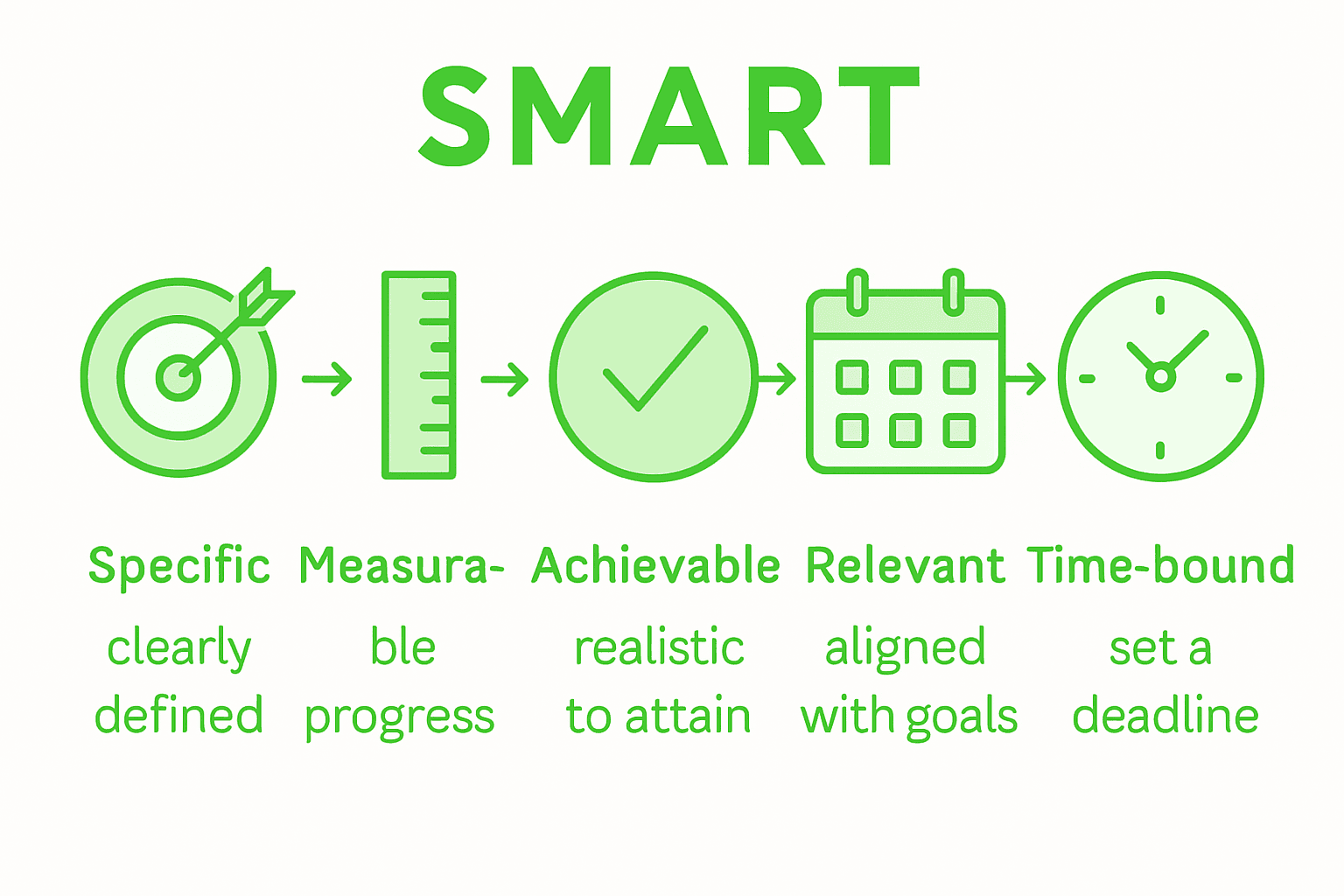
The SMART criteria offer an excellent framework for crafting precise habit objectives. This method ensures your goals are Specific, Measurable, Achievable, Relevant, and Time-bound. Instead of vague statements like “I want to get healthier,” create targeted goals such as “I will walk 10,000 steps daily for the next three months” or “I will incorporate two plant-based meals into my diet each week.”
This table highlights how SMART criteria refine wellness goals:
| SMART Attribute | How It Shapes Goals | Example Application |
|---|---|---|
| Specific | Clarifies expectations | “Walk 10,000 steps daily” |
| Measurable | Tracks clear progress | Use step counter app |
| Achievable | Sets realistic targets | Choose attainable numbers |
| Relevant | Aligns with aspirations | Pick habits supporting aim |
| Time-bound | Adds deadline/frequency | “For three months” |
Break down your broader wellness aspirations into smaller, actionable milestones. This approach prevents overwhelm and creates opportunities for consistent progress. Consider creating a visual goal tracker where you can map out your objectives, track your achievements, and celebrate incremental victories. Remember that flexibility is key personal growth is rarely linear, so design goals that challenge you while remaining realistic and compassionate.
Professional Insight: Design goals that excite and motivate you, not goals that feel like punishment.
Step 3: Design Your Supportive Environment
Creating an environment that naturally supports your wellness goals is fundamental to sustainable habit formation. Your physical and social surroundings play a critical role in either facilitating or undermining your health transformation journey.
Implementation intentions provide a strategic approach to designing supportive environments by helping you pre determine how you will respond to specific situations. This means creating clear if-then plans that guide your behaviour. For instance, if you want to improve nutrition, you might establish an intention like “If I feel hungry between meals, then I will eat a piece of fruit” or “If I arrive home tired, then I will prepare a pre planned healthy meal instead of ordering takeaway.”
Focus on making positive habits convenient and negative habits challenging. Reorganise your living and working spaces to nudge yourself towards healthier choices. Place workout clothes near your bed, stock your kitchen with nutritious ingredients, remove tempting unhealthy snacks, and create dedicated spaces for activities that support your wellness goals. The key is making the right behaviour the path of least resistance.
Professional Insight: Your environment is more powerful than willpower. Design it intentionally to support your health aspirations.
Step 4: Integrate New Habits into Daily Routines
Transforming your wellness journey requires strategic integration of new habits into your existing lifestyle. Successfully embedding positive behaviours means understanding how to seamlessly weave them into your daily rhythm without causing unnecessary disruption.

Implementation intentions offer a powerful approach to habit integration by creating specific if-then plans that link new behaviours to existing routines. This means identifying precise moments within your current schedule where you can naturally introduce a new habit. For instance, if you want to start meditating, you might establish an intention like “After I finish my morning coffee, I will meditate for five minutes” or “Immediately after arriving home from work, I will change into workout clothes.”
Leverage the concept of habit stacking to make new behaviours feel more intuitive. Choose an established habit as an anchor and attach your new behaviour immediately before or after it. This technique reduces cognitive load by piggybacking on neural pathways you have already developed. Your existing routines become powerful triggers for introducing positive changes, making habit adoption feel more organic and less like a deliberate intervention.
Professional Insight: Consistency matters more than perfection. Start small and focus on maintaining your new habit, even if you can only manage it imperfectly.
Step 5: Monitor Progress and Celebrate Success
Tracking your wellness journey transforms abstract goals into tangible achievements. Understanding your progress provides motivation and insights that keep you engaged and committed to your personal transformation.
The SMART criteria offer an excellent framework for measuring your habit development by ensuring your tracking methods are specific, measurable, and meaningful. Create a visual tracking system that allows you to document your daily and weekly progress. This might involve using a habit tracker, journaling, or digital apps that help you record consistency, noting not just whether you completed a habit, but also how you felt during and after the activity.
Embracing small victories is crucial in maintaining long-term motivation. Instead of fixating on perfect execution, celebrate the incremental steps you are taking towards your wellness goals. Each day you show up for yourself represents meaningful progress. Consider creating a reward system that acknowledges your efforts without undermining your health objectives. Perhaps treat yourself to a relaxing activity, purchase something that supports your wellness journey, or simply take a moment to reflect on how far you have already come.
Professional Insight: Progress is not linear. Some weeks will feel more challenging than others, but consistent effort trumps sporadic perfection.
Build Healthy Habits with Support from Nature’s Soul Shop
Struggling to translate your wellness goals into lasting healthy habits can feel overwhelming. The article highlights key challenges like designing supportive environments and integrating new habits into daily routines. At Nature’s Soul Shop, we understand these pain points by offering organic and natural products across clean categories such as fruits, vegetables, meats, dairy, and vegan options — all designed to nurture your journey towards sustainable wellness.
Take action now to make healthy choices easier every day. Explore our range of products that align with the principles of habit formation, making nutritious eating and mindful living more accessible. Discover how simple swaps in your kitchen and home can create an environment that supports your goals. Visit our homepage and start building wellness naturally today. Your path to lasting habits starts with the right foundation.
Frequently Asked Questions
How can I assess my current lifestyle to build healthy habits?
To assess your current lifestyle, conduct a self-audit across key areas like physical activity, nutrition, stress management, sleep quality, and mental wellbeing. Start by tracking specific metrics, such as daily step count or hours of sleep, for at least two weeks to identify patterns that need attention.
What are some effective ways to set achievable habit goals for lasting wellness?
To set achievable habit goals, use the SMART criteria, which means your goals should be Specific, Measurable, Achievable, Relevant, and Time-bound. For example, aim to walk 10,000 steps daily for three months, enabling you to track your progress.
How can I create a supportive environment for my new healthy habits?
Design a supportive environment by making positive habits convenient and negative habits challenging. For instance, keep your workout clothes near your bed and store healthy snacks in easy-to-reach places, which makes healthier choices more accessible.
What strategies can I use to integrate new habits into my daily routine?
You can integrate new habits by using ‘habit stacking,’ which links new behaviours to established routines. For example, if you want to start meditating, do it right after you finish your morning coffee, making it a natural addition to your morning.
How do I monitor my progress and celebrate small victories in my wellness journey?
To monitor your progress, create a visual tracking system that allows you to document daily and weekly achievements. Celebrate small victories, such as completing a habit for a week, by rewarding yourself with relaxing activities or reflecting on your progress, reinforcing your commitment.
What should I do if I encounter setbacks in my journey to build healthy habits?
If you encounter setbacks, focus on being consistent rather than perfect. Adjust your goals to be more manageable, and remember that it’s normal for progress to fluctuate. Continuously evaluate your strategies and make necessary changes to stay on track.
Recommended
- Building Healthy Habits Naturally: A Step-by-Step Guide – naturessoulshop
- Holistic Wellness Tips: Empowering Daily Wellbeing – naturessoulshop
- Sustainable Wellness Brands: Complete Expert Guide – naturessoulshop
- How to Choose Healthy Snacks Naturally: Step-by-Step Guide – naturessoulshop
- The Ultimate Guide to Finding the Best Dentist in Blacktown for Your Oral Health Needs - Paynless Dental Clinic


