


TL;DR:
- Natural remedies for stress include lifestyle changes, herbal supplements, and mindfulness practices. These methods work best together and require consistent effort over time for lasting benefits. Always consult a healthcare provider before combining herbal remedies with medications.
Natural remedies for stress are defined as non-pharmaceutical methods that reduce the body’s stress response by restoring balance across physical, mental, and emotional systems. The clinical term for this approach is “integrative stress management,” and it draws on lifestyle medicine, herbal pharmacology, and mind-body practices. Research consistently shows that combining these methods produces better outcomes than relying on any single remedy. Naturessoulshop stocks a wide range of organic herbs, teas, and functional foods that support exactly this kind of layered approach.
What are the best natural remedies for stress?
Lifestyle changes are the single most powerful category of natural stress relief. Before any herb or oil, your daily habits set the baseline from which everything else works.
Exercise: the most underused stress tool
Exercise tops the list of lifestyle interventions recommended by psychiatrists for anxiety and stress. The reason is biochemical: any exercise that raises your heart rate releases endorphins, which directly improve mood and reduce anxiety. This debunks the common belief that only gentle movement like yoga counts. A brisk 20-minute walk delivers measurable benefit.
The CDC recommends 150 minutes of moderate activity per week, broken into 20–30 minute sessions. That is roughly four sessions of half an hour. Most people find that splitting sessions across the week is far easier to maintain than one long weekend effort.
Sleep, nutrition, and alcohol
Good sleep hygiene directly lowers baseline stress and improves emotional stability over time. A consistent bedtime, no screens in the hour before sleep, and a cool, dark room are the three most effective sleep hygiene habits. These are not suggestions. They are the foundation of any stress management plan.
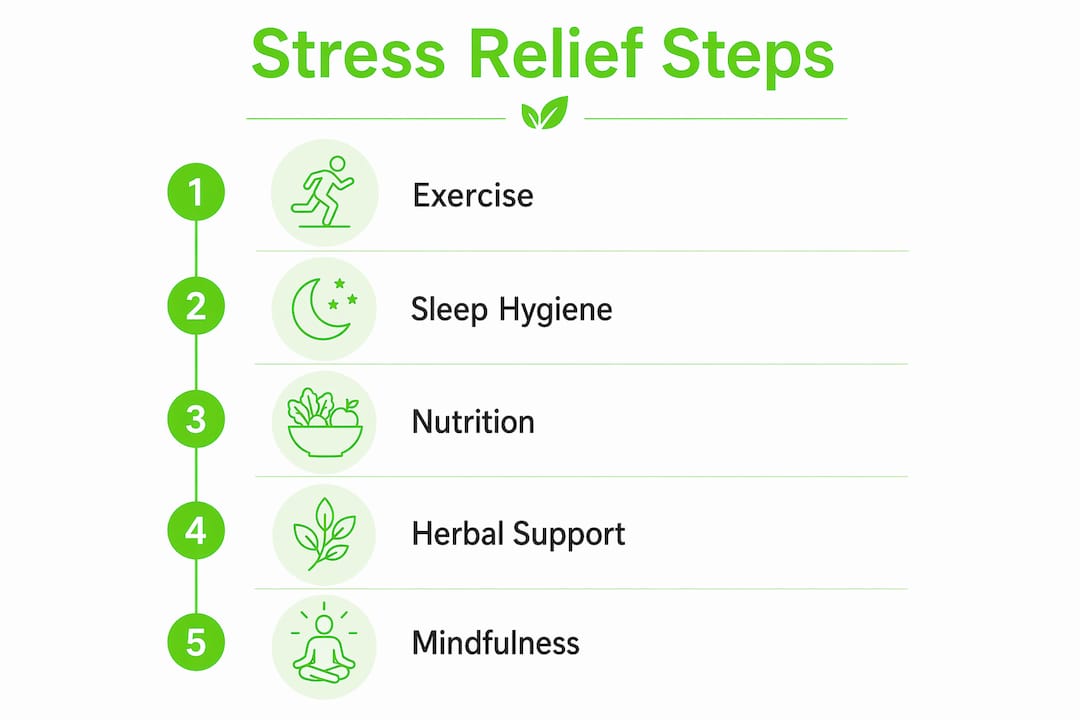
Diet matters too. Mindful eating reduces the blood sugar swings that amplify stress reactivity. Whole foods, adequate protein, and reduced ultra-processed food all support a calmer nervous system. Caffeine and alcohol both deserve attention: the CDC guidelines recommend no more than one alcoholic drink per day for women and two for men as a stress-related health measure.
Key lifestyle pillars to address before reaching for supplements:
- Daily movement: aim for 20–30 minutes of heart-rate-raising activity
- Sleep routine: consistent bed and wake times, even at weekends
- Nutrition: whole foods, reduced sugar, adequate hydration
- Caffeine: limit to before noon to protect sleep quality
- Alcohol: stay within CDC moderation guidelines
Pro Tip: Set one lifestyle habit at a time. Adding exercise, improving sleep, and changing diet simultaneously is difficult to sustain. Start with sleep, as it amplifies the benefit of every other change.
Which herbal supplements and teas help with stress?
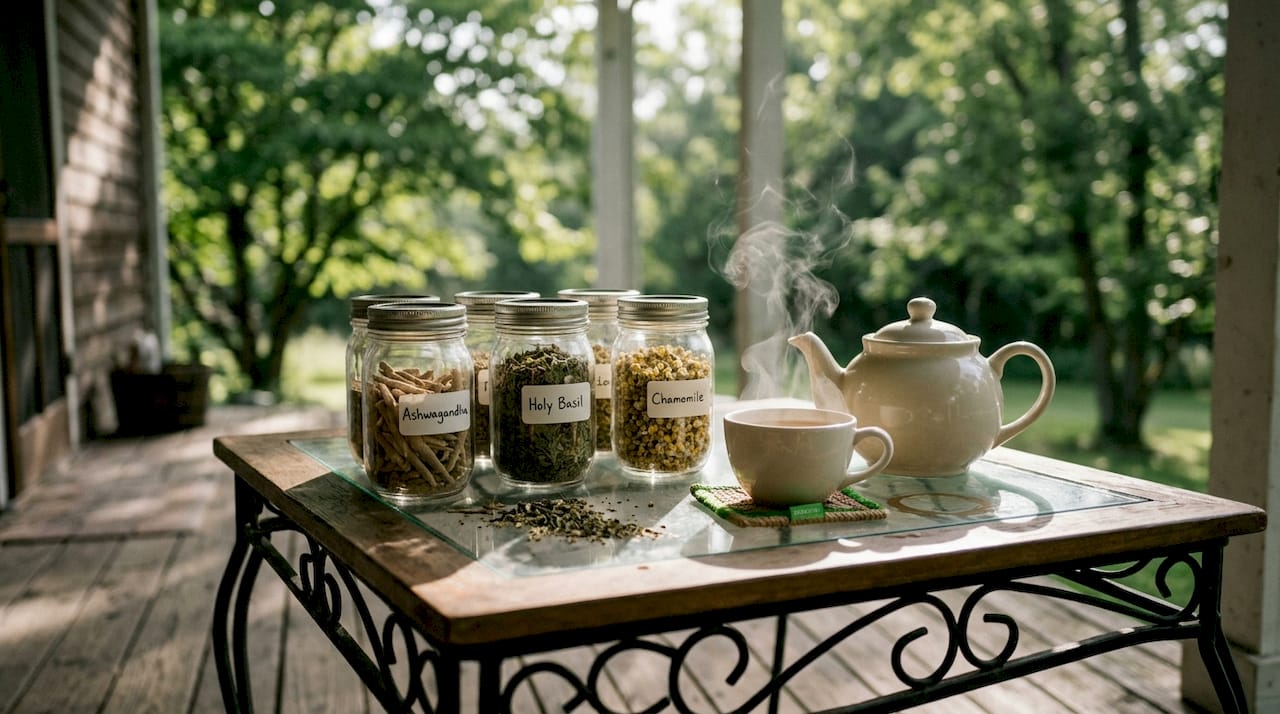
Herbal stress relief draws on a long tradition of plant-based medicine, and several herbs now have clinical evidence behind them. The key category is adaptogens: herbs that help the body regulate its cortisol response.
Ashwagandha and holy basil
Ashwagandha is the most studied adaptogen for stress. Regular ashwagandha supplementation reduces cortisol levels by up to 30% in people with chronic stress. That is a clinically meaningful reduction in the primary stress hormone. Organic India’s ashwagandha capsules are a well-regarded option for consistent daily use.
Holy basil, known in Ayurvedic medicine as tulsi, works similarly. It supports the adrenal system and helps moderate the cortisol spike that follows acute stress. Tulsi tea is one of the most accessible ways to take it daily. Naturessoulshop’s Holy Tea with tulsi and ginger is USDA organic and caffeine-free, making it suitable for evening use.
Chamomile, lavender, and aromatherapy
Chamomile tea has a well-established calming effect, primarily through its action on GABA receptors in the brain. Lavender works through a similar pathway and is effective both as a tea and as an essential oil. Aromatherapy with citrus-based oils such as neroli has shown a mean reduction of 12.45 points on clinical anxiety scales across seven randomised controlled trials involving 666 participants. That is a statistically significant result for a non-pharmaceutical intervention.
Aromatherapy effectiveness depends heavily on oil quality and delivery method. Pharmaceutical-grade oils used consistently in a diffuser outperform sporadic inhalation of low-quality consumer products. Structured use matters as much as the oil itself.
| Herb or oil | Primary benefit | Best delivery method |
|---|---|---|
| Ashwagandha | Cortisol reduction | Capsule or powder |
| Holy basil (tulsi) | Adrenal support | Tea |
| Chamomile | Calming, sleep support | Tea |
| Lavender | Anxiety relief | Essential oil, diffuser |
| Neroli (citrus aurantium) | Acute anxiety reduction | Diffuser, aromatherapy |
Safety considerations
“Natural” does not mean risk-free. Ashwagandha can interact with thyroid medications. Lavender oil taken orally can interfere with sedatives. Chamomile may affect blood-thinning drugs. Always inform your GP or pharmacist before starting any herbal supplement, particularly if you take prescription medication.
Pro Tip: Choose supplements with third-party certification such as USDA Organic or equivalent. Certification signals consistent potency and clean ingredients, which matters for both safety and effectiveness.
How do mindfulness techniques for stress actually work?
Mindfulness is the practice of directing attention to the present moment without judgement. It works by interrupting the cycle of anxious thought that keeps the stress response active long after the original trigger has passed.
Mindfulness and meditation lower baseline anxiety by shifting attention away from anxious thoughts and promoting emotional regulation. The effect is not immediate, but it is cumulative. People who practise consistently for four to eight weeks typically report measurable reductions in stress reactivity.
Practical techniques to build into your daily routine:
- Diaphragmatic breathing: Inhale for four counts, hold for four, exhale for six. This activates the parasympathetic nervous system within minutes. Use it before stressful meetings or when anxiety spikes.
- Body scan meditation: Lie down and move your attention slowly from your feet to your head, noticing tension without trying to fix it. Ten minutes is enough to shift your nervous system state.
- Journalling: Write three things that went well each day, plus one worry you want to set aside. This separates productive reflection from rumination.
- Grounding (the 5-4-3-2-1 technique): Name five things you can see, four you can touch, three you can hear, two you can smell, and one you can taste. This technique interrupts acute anxiety within two to three minutes.
- Mindful walking: Walk without your phone for ten minutes, paying attention only to physical sensations. This combines the endorphin benefit of movement with the attentional benefit of mindfulness.
The key is consistency over intensity. A ten-minute daily practice outperforms a one-hour session done once a week. Pairing mindfulness with digital wellbeing habits amplifies the effect by reducing the constant low-level stimulation that keeps cortisol elevated.
How do you safely combine natural anxiety solutions?
Natural remedies function best as a system, not as isolated fixes. Expecting ashwagandha alone to resolve chronic stress is like expecting a single vegetable to fix a poor diet. The cumulative effect of multiple consistent habits is where the real benefit lies.
A well-rounded personal routine might look like this: morning exercise, a tulsi tea in the afternoon, a ten-minute breathing practice before bed, and a consistent sleep schedule. Each element reinforces the others. Exercise improves sleep quality. Better sleep reduces cortisol. Lower cortisol makes mindfulness easier to sustain.
Key principles for safe, personalised integration:
- Start with one change: add a second only after the first feels automatic
- Track your response: note energy, mood, and sleep quality weekly to identify what works
- Rotate herbs seasonally: long-term use of a single adaptogen can reduce its effect
- Inform your healthcare provider: supplement interactions with medications are real and require professional oversight
- Use aromatherapy as an adjunct: it works best alongside personalised care, not as a standalone treatment for severe symptoms
“A holistic approach to stress requires addressing multiple lifestyle pillars simultaneously. Sleep, nutrition, emotional triggers, and herbal support each contribute to the overall system. No single product or practice replaces the whole.”
If you are supporting a partner through stress or depression alongside your own wellbeing work, practical guidance on emotional support can help you avoid common pitfalls that increase stress for both people.
Key takeaways
Natural stress relief works best when lifestyle, herbal support, and mindfulness practices are combined consistently rather than used in isolation.
| Point | Details |
|---|---|
| Lifestyle comes first | Exercise, sleep, and nutrition set the baseline before any supplement can work effectively. |
| Ashwagandha reduces cortisol | Regular use can lower cortisol by up to 30%, making it the most evidence-backed adaptogen for stress. |
| Mindfulness is cumulative | Ten minutes of daily practice beats occasional longer sessions for reducing stress reactivity. |
| “Natural” carries safety risks | Herbal supplements can interact with medications; always consult a GP before starting. |
| Combine methods for best results | A routine pairing movement, herbal teas, and breathing techniques outperforms any single remedy. |
Why I think most people approach natural stress relief backwards
People almost always reach for a supplement first. They buy ashwagandha, try it for two weeks, feel underwhelmed, and conclude that “natural remedies don’t work.” What they have actually done is skip the foundation and go straight to the finishing touches.
The plant-based supplements I find most effective are the ones people add on top of solid sleep, regular movement, and a decent diet. Without those, even the best adaptogen is working against a tide of cortisol that lifestyle factors keep generating. The herb cannot outrun the habits.
The other thing I have noticed is that patience is not optional. Adaptogens like ashwagandha typically need four to six weeks of consistent use before the cortisol-lowering effect becomes noticeable. People who quit after ten days never find out what the herb can actually do. Mindfulness works the same way. The first week feels pointless. The fourth week feels different.
My honest recommendation: spend the first month fixing sleep and adding twenty minutes of daily movement. Add herbal support in month two. Add a structured mindfulness practice in month three. By month four, you will have a system that compounds. That is the version of natural stress relief that actually lasts.
— Arjit
Natural stress support from Naturessoulshop
Naturessoulshop brings together organic herbs, functional teas, and clean-ingredient supplements across one trusted platform.

Whether you are looking for USDA-certified tulsi tea, ashwagandha capsules, or reishi powder for sleep support, the health range at Naturessoulshop covers the core categories this article covers. Every product uses clean, traceable ingredients with no unnecessary additives. The range spans dry grocery, vegan and gluten-free options, and skin care, so your stress-relief routine can extend beyond what you ingest. Browse the full Naturessoulshop store to find products that fit your personal routine.
FAQ
What is the most effective natural remedy for stress?
Exercise is the top lifestyle intervention recommended by psychiatrists for stress and anxiety. Combined with consistent sleep hygiene and an adaptogen such as ashwagandha, it forms the most evidence-backed natural approach.
How long does ashwagandha take to reduce stress?
Ashwagandha typically requires four to six weeks of consistent daily use before cortisol-lowering effects become noticeable. Studies show up to a 30% reduction in cortisol with regular supplementation.
Are essential oils for anxiety clinically proven?
Clinical trials show that aromatherapy with neroli oil produces a statistically significant reduction in anxiety scores. Effectiveness depends on oil quality and consistent diffuser use rather than occasional inhalation.
Can mindfulness techniques replace medication for stress?
Mindfulness techniques significantly lower baseline anxiety and stress reactivity, but they are not a replacement for prescribed medication in clinical anxiety disorders. They work best as part of a broader stress management plan.
Is it safe to combine herbal supplements with prescription drugs?
Herbal supplements including ashwagandha, chamomile, and lavender can interact with thyroid, blood pressure, and sedation medications. Always consult your GP or pharmacist before combining supplements with any prescription treatment.


