


TL;DR:
- Carrying reusable bottles, cups, and refusing single-use cutlery can significantly reduce plastic waste.
- Focusing on these high-impact habits prevents the production problem at its source, especially for coffee cups and packaging.
The three highest-impact actions you can start today are carrying a reusable water bottle, switching to a reusable coffee cup, and refusing single-use cutlery and packaging whenever it is offered. Those three habits alone address some of the most wasteful categories in the UK. WRAP data cited by WWF UK estimates that 4.2 billion disposable coffee cups and 2.9 billion lids are sold in the UK each year, with fewer than 7% of those cups being recycled. That is not a recycling problem you can solve by sorting your bin more carefully. It is a production problem, and the only reliable fix is to stop using the cups in the first place.
Start today with these three steps:
- Put a reusable bottle in your bag before you leave the house.
- Carry a reusable cup and ask cafés to fill it directly.
- Keep a set of bamboo or stainless steel cutlery in your bag or desk drawer, and refuse plastic cutlery at every opportunity.
The habit to form is simple: before you accept any disposable item, pause for two seconds and ask whether you have a reusable alternative with you.
Table of Contents
- How do reusable bottles, cups and refill schemes cut drinks-related plastic?
- Lunch and snacks: how to ditch single-use food packaging
- How to cut packaging when you shop for groceries
- Kitchen and cleaning swaps that remove plastic from your home
- Small single-use items you can refuse right now
- Keep, repair and reuse: making plastic last longer
- What actually gets recycled in the UK, and what does not?
- How to reduce single-use plastic at school and at work
- What does the UK evidence say about which swaps matter most?
- A simple 30-day plan to cut single-use plastic
- Key takeaways
- The gap between good intentions and lasting change
- Low-plastic groceries and natural products from Naturessoulshop
- Useful sources and further reading
How do reusable bottles, cups and refill schemes cut drinks-related plastic?
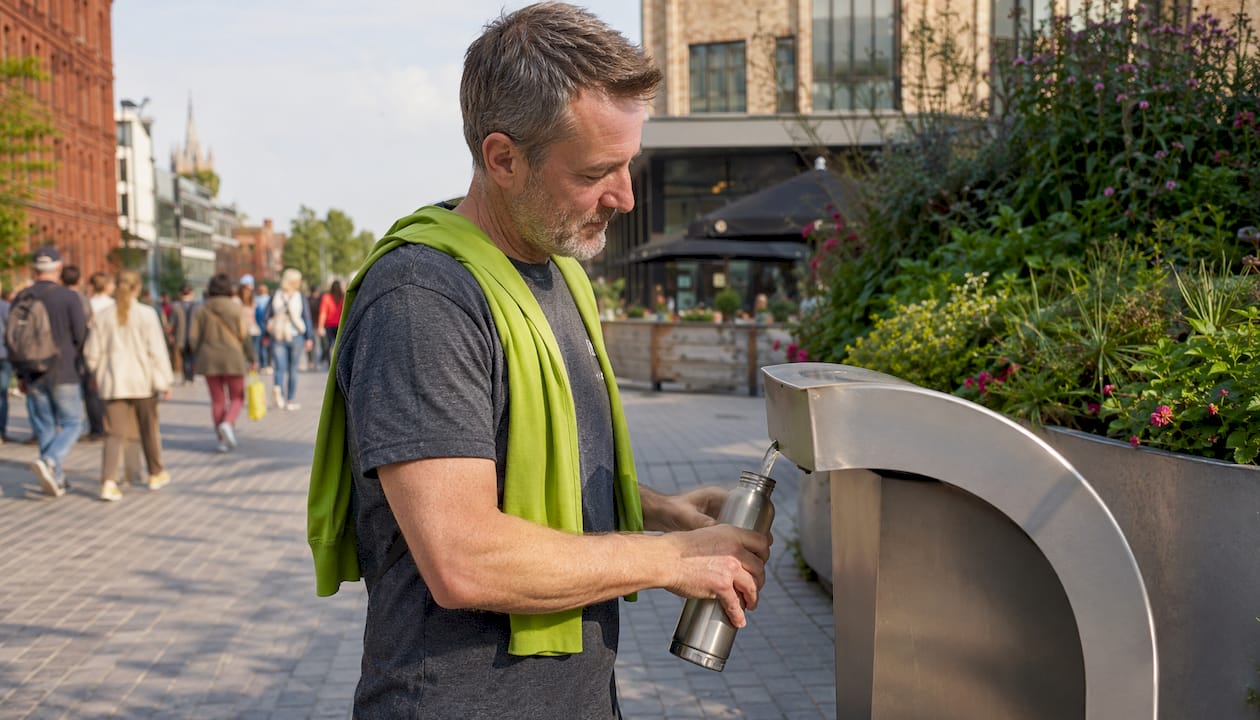
Drinks on the go are one of the easiest wins for cutting single-use plastic. A good stainless steel or glass bottle lasts years, keeps drinks cold or hot without the need for a disposable cup, and pays for itself within weeks compared to buying bottled water.
When choosing a reusable cup, look for one that fits under a standard espresso machine group head (roughly 8–9 cm diameter) so cafés can fill it without fuss. Silicone lids are common, but treat silicone as a long-lasting durable rather than an infinitely recyclable material — UK municipal systems rarely accept it for recycling.
The Refill network maps thousands of locations across the UK where you can top up a water bottle for free, including cafés, shops and public buildings. Download the app or check the website before heading out, and you will rarely need to buy bottled water again.
Around 614,000 people in the UK already use a milk delivery service with reusable glass bottles. If you want to join them, FindMeAMilkman.net is a UK directory that helps you locate your nearest delivery round. Availability varies by area, so check before assuming it is an option where you live.
Pro Tip: When handing over your reusable cup at a café, say: “Could you fill this for me, please? No lid needed.” Most staff are happy to oblige, and some chains now offer a small discount for bringing your own cup.
Lunch and snacks: how to ditch single-use food packaging
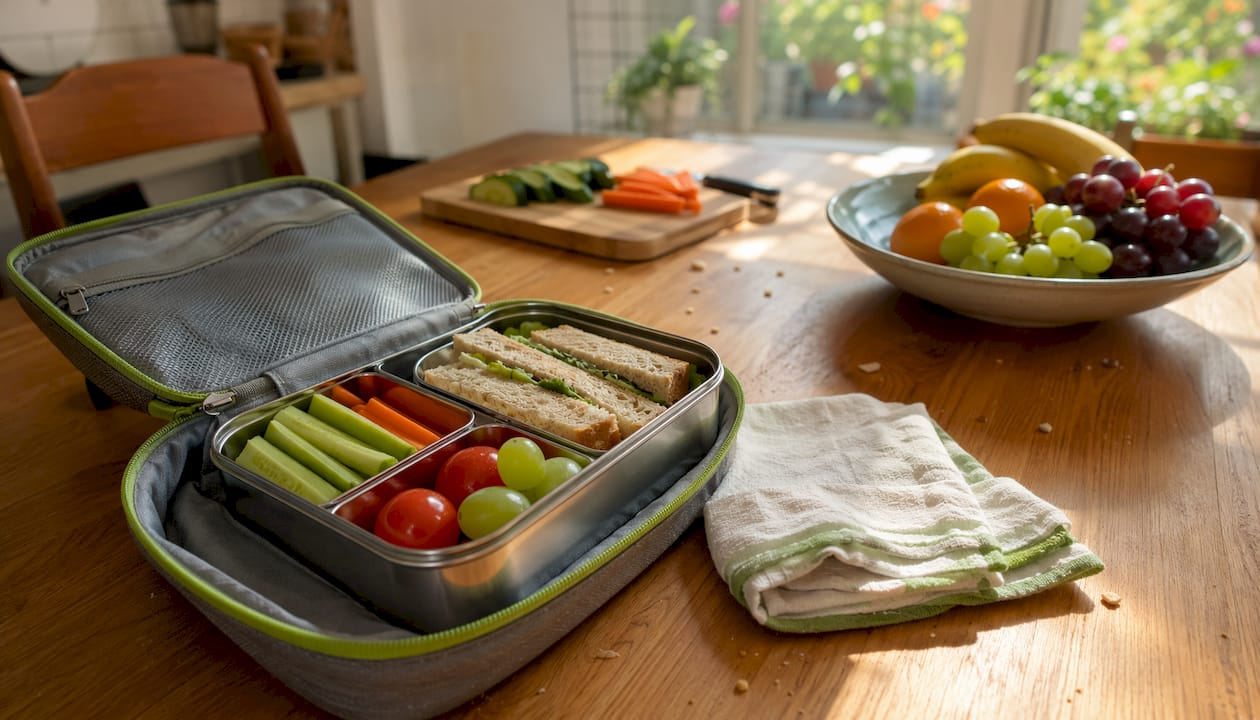
Packed lunches and takeaway food are where single-use plastic accumulates fastest. A stainless steel lunchbox, a glass container with a clip lid, or even a well-washed jar from a previous purchase covers most needs without generating any new plastic.
For wrapping food at home, the main alternatives to cling film are:
- Beeswax wraps for sandwiches, cheese and cut fruit (hand-wash in cool water; avoid hot water, which melts the wax).
- Aluminium foil where you need a tighter seal — foil is recyclable at most UK kerbside collections when clean.
- Reusable silicone bags or cotton pouches for snacks and dry goods.
- A plate placed upside-down over a bowl for short-term fridge storage.
When buying food from a café or market stall, bring your own container and ask: “Would you be able to put that in my container?” Most independent traders say yes. Chains are more variable, but the ask normalises the behaviour.
Refusing a single-use lid or sauce sachet takes two seconds. Over a year, those two-second decisions add up to dozens of pieces of plastic that never enter the waste stream.
Sauce sachets are easy to overlook. Ask for sauces in a small pot you can return, or bring a tiny reusable condiment bottle if you eat out regularly. Numbered steps for building the habit:
- Pack your lunchbox the night before so you are not scrambling in the morning.
- Add a cloth napkin and a set of reusable cutlery to your bag alongside the box.
- When ordering takeaway, specify “no plastic cutlery, no extra sachets” in the notes field.
- Rinse containers immediately after use so residue does not set.
Pro Tip: Stainless steel tiffin-style boxes stack neatly and are genuinely indestructible. Buy one good set rather than several cheaper options that crack or warp.
How to cut packaging when you shop for groceries
Supermarket packaging accounts for a significant share of household plastic waste. The most direct fix is to buy loose produce wherever possible, use bulk bins for dry goods, and visit a refill shop for staples such as washing-up liquid, grains and pulses.
Steps for a successful refill shop visit:
- Collect clean, dry containers at home (glass jars, stainless tins, cloth bags for dry goods).
- Check the shop’s protocol — some weigh containers before filling (tare weight), others ask you to note the weight yourself.
- Label containers with the contents and date when you get home.
- Wash containers between refills to avoid cross-contamination.
At the supermarket, a few habits make a measurable difference:
- Choose loose fruit and vegetables over pre-packaged equivalents.
- Pick the brand with the least packaging when quality is equal.
- Avoid individually wrapped portions — buy a larger format and portion at home.
- Keep reusable bags in your coat pocket, car, or by the front door so you always have one.
Bulk buying and refill schemes are consistently identified as key prevention strategies for packaging waste, and the logic is straightforward: one large container generates far less plastic per unit than ten small ones.
Pro Tip: Keep a spare folded bag in your handbag or rucksack at all times. The moment you stop carrying one is the moment you end up with a plastic carrier.
For zero-waste grocery shopping, Naturessoulshop has a practical guide that covers planning, bulk buying and what to look for on labels.
Kitchen and cleaning swaps that remove plastic from your home
The kitchen is where hidden plastics accumulate quietly. Many paper-looking teabags contain polypropylene heat-sealants, meaning a cup of tea can release microplastics into the brew. Switch to loose-leaf tea with a stainless steel infuser, or check that your teabag brand explicitly labels itself as plastic-free.
Other kitchen swaps worth making:
- Replace plastic food wrap with beeswax wraps or reusable containers (glass, stainless steel).
- Store pantry staples in glass jars — reuse jars from pasta sauce, jam or pickles rather than buying new.
- Swap synthetic sponges for wooden-handled brushes with plant-fibre heads, which do not shed microplastics into the water supply.
- Avoid microwaveable plastic trays; use oven- and microwave-safe glass or ceramic dishes instead.
For cleaning products, concentrated refillable formats are now widely available in the UK. Brands selling refill pouches or tablet-format cleaners (you add water at home) cut plastic use dramatically compared with buying a new bottle each time. Simple DIY alternatives work too: a solution of white vinegar and water cleans most hard surfaces, and bicarbonate of soda handles light abrasive tasks.
- Audit your cleaning cupboard and identify which products come in single-use plastic.
- Find a refill equivalent for each, either at a local refill shop or via a postal refill scheme.
- Keep one good-quality spray bottle and refill it rather than buying new.
Pro Tip: For plastic-free food storage, glass and stainless steel are the most durable long-term choices. Avoid cheap plastic containers even when labelled BPA-free — they still shed particles over time.
Small single-use items you can refuse right now
An estimated 4.25 billion pieces of disposable cutlery are used every year in England alone. That figure makes the case for carrying your own set more clearly than any argument could.
Items to refuse immediately, and what to use instead:
- Plastic straws — carry a stainless steel or bamboo straw, or simply drink without one.
- Disposable cutlery — a small bamboo or stainless set fits in any bag.
- Wet wipes — switch to washable cotton cloths or a damp flannel.
- Chewing gum — most brands contain polyvinyl acetate, a synthetic plastic; choose natural gum or go without.
- Glitter — conventional glitter is microplastic; choose plant-based alternatives for crafts and events.
- Single-use sauce sachets — ask for sauce in a pot, or bring your own.
- Plastic-sealed teabags — switch to loose-leaf or explicitly labelled plastic-free bags.
Polite phrases that work in practice:
- At a café: “No straw, please, and no lid — I’ll drink it here.”
- At a food stall: “Could I skip the plastic cutlery? I have my own.”
- At a till: “No bag needed, thanks.”
Pro Tip: Check labels for “polypropylene”, “polyethylene” or “PP”/“PE” on packaging that looks paper or card. Those codes mean plastic is present, even when the product looks natural.
Keep, repair and reuse: making plastic last longer
The most sustainable plastic is the one already in your home. Before buying a replacement, ask whether the item can be repaired, repurposed, or sourced second-hand.
Common plastic containers get a second life as:
- Seed trays and plant pots for windowsill growing.
- Workshop organisers for screws, nails and small parts.
- Storage boxes for craft supplies, cables or stationery.
- Freezer containers for batch-cooked meals.
Where to find repair and reuse resources in the UK:
- Repair Cafés — a network of community repair events where volunteers fix electronics, clothing and household items for free or a small donation. Find your nearest at repaircafe.org.
- Freecycle and Freegle — online platforms for giving away and collecting unwanted items locally.
- Local Facebook Marketplace and charity shops — often the fastest route to a second-hand durable alternative.
- Swap shops — some libraries and community centres run regular swap events for clothes, books and household goods.
When buying new, choose items made from glass, stainless steel, cast iron or solid wood. These materials last decades and do not degrade into microplastics. The benefits of reusable accessories go beyond environmental impact — durable goods almost always cost less per use over their lifetime than disposable equivalents.
What actually gets recycled in the UK, and what does not?
Recycling is useful, but it sits near the bottom of the waste hierarchy. The US EPA’s guidance places reducing waste generation first, ahead of reuse, and recycling last. That order matters: recycling is not a clean solution to a production problem.
In the UK, kerbside recycling typically accepts:
- Rigid plastic bottles, tubs and trays (check your local council’s list).
- Clean aluminium foil and tins.
- Cardboard and paper.
- Glass bottles and jars.
Items that rarely get recycled at kerbside:
- Disposable coffee cups (the plastic lining requires specialist processing).
- Plastic film, bags and wrappers (take these to supermarket collection points).
- Black plastic trays (the pigment interferes with sorting equipment at many facilities).
- Polystyrene packaging.
| Item | Typical UK kerbside | Better alternative |
|---|---|---|
| Disposable coffee cup | Rarely accepted | Reusable cup |
| Plastic film/bags | Not accepted — supermarket drop-off | Reusable bags, bulk buying |
| Black plastic trays | Often rejected | Buy in cardboard or glass |
| Plastic bottles | Widely accepted | Refillable bottle |
| Disposable cutlery | Not accepted | Carry reusable set |
The UK’s deposit return scheme for drinks containers is being introduced in phases — check the current status with your local council or WRAP for the latest rollout dates.
Only around 2% of plastic is made from recycled material globally. Recycling infrastructure is improving, but it cannot keep pace with production volumes. Prevention is the only lever that reliably works.
How to reduce single-use plastic at school and at work
Workplaces and schools generate substantial plastic waste through vending machines, single-use cups at water coolers, and individually wrapped snacks. The good news is that small policy changes have an outsized effect because they apply to everyone in the building.
Steps to introduce at your workplace or school:
- Replace single-use cups at water coolers with a reusable cup policy (provide a small supply of branded reusable cups if budget allows).
- Install a water refill station or clearly sign the nearest tap.
- Switch canteen cutlery to washable stainless steel or compostable alternatives.
- Run a one-month pilot: offer staff a reusable lunchbox and track how many single-use items are refused.
- Add a “no single-use plastic” note to event and meeting catering briefs.
Quick checklist for schools:
- Encourage pupils to bring reusable water bottles and lunch containers.
- Remove single-use plastic from school tuck shops and vending machines.
- Run a classroom audit to count single-use items used in a week.
- Partner with a local refill scheme or zero-waste supplier for school events.
Employers who provide facilities for home-prepared food — a fridge, a microwave, a clean space to eat — reduce their staff’s reliance on packaged convenience food. That is a structural change that costs little and delivers consistent results.
Pro Tip: For low-plastic school events and workplace gatherings, hosting a zero-waste event requires more planning upfront but generates a fraction of the waste of a standard catered event.
What does the UK evidence say about which swaps matter most?
Not all plastic swaps are equal. The evidence points clearly to a short list of high-impact categories.
WWF UK and WRAP data show that disposable coffee cups, disposable cutlery (used in very large quantities), and packaging are the dominant sources of single-use plastic waste for individuals., and packaging are the dominant sources of single-use plastic waste for individuals. Tackling those three categories first delivers the most impact per unit of effort.
Prioritised swaps by impact:
- Reusable coffee cup — addresses 4.2 billion cups per year at source.
- Reusable water bottle plus Refill app — eliminates bottled water purchases.
- Reusable cutlery set — addresses 4.25 billion disposable pieces per year.
- Reusable shopping bags — removes carrier bag use entirely.
- Bulk buying and refill shops — cuts packaging across dozens of product categories.
| Category | UK scale | Recycling rate | Priority swap |
|---|---|---|---|
| Disposable coffee cups | 4.2 billion/year | Under 7% | Reusable cup |
| Disposable cutlery | 4.25 billion pieces/year (England) | Negligible | Carry reusable set |
| Plastic packaging | Major share of household waste | Variable by type | Buy loose, bulk, refill |
| Plastic bottles | Widely used | Higher than cups | Refillable bottle |
Sustainable food packaging choices at the point of purchase reinforce every one of these swaps — choosing products sold in glass, cardboard or no packaging at all removes the problem before it enters your home.
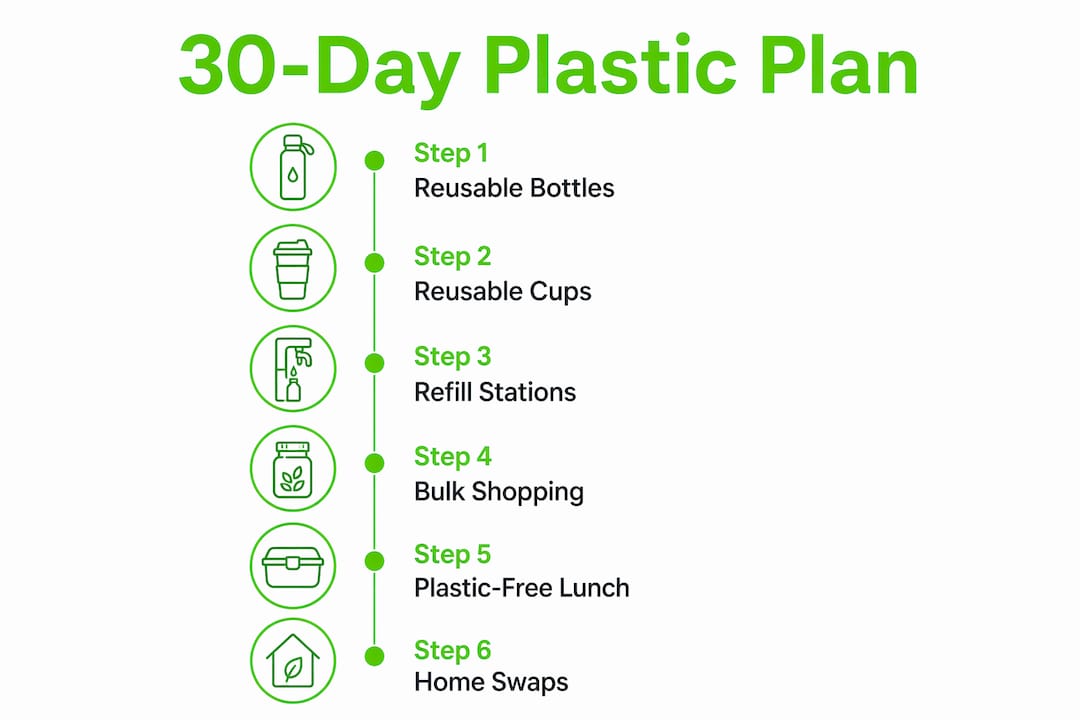
A simple 30-day plan to cut single-use plastic
A month is enough time to build four or five new habits that stick. The key is to add one focus per week rather than trying to change everything at once.
Week 1: Drinks and bags
- Buy or locate a reusable bottle and cup.
- Download the Refill app and identify your nearest refill points.
- Put reusable bags in every bag, coat pocket and car you use.
- Refuse plastic straws and lids from day one.
Week 2: Lunch and food storage
- Pack lunch in a reusable container every day this week.
- Replace cling film with beeswax wraps or a plate-over-bowl method.
- Carry reusable cutlery and a cloth napkin.
- Try one refill shop or bulk bin section at a supermarket.
Week 3: Personal care and kitchen
- Switch to loose-leaf tea or plastic-free teabags.
- Replace one cleaning product with a refillable or concentrated alternative.
- Audit the bathroom for single-use plastic (cotton buds, disposable razors, sachets) and find one swap.
- Check eco-friendly food storage options for the items you store in plastic containers.
Week 4: Routines and vendor conversations
- Ask your regular café to fill your cup and note their response.
- Contact your workplace or school about one policy change (refill station, reusable cups).
- Look up milk delivery options via FindMeAMilkman.net if you use a lot of milk.
- Review your progress: count how many single-use items you refused this month.
Upfront costs for a basic starter kit (reusable bottle, cup, cutlery set, beeswax wraps, a few cloth bags) typically run to £30–£50 depending on quality. Buying in bulk and avoiding bottled water alone can offset that within a few months for most households.
Pro Tip: Track refusals rather than purchases. Each time you say no to a disposable item, note it. Seeing the count grow is more motivating than watching a spending total.
Key takeaways
Switching to a reusable cup and bottle, refusing disposable cutlery, and buying loose or in bulk are the three highest-impact changes UK individuals can make to cut single-use plastic waste.
| Point | Details |
|---|---|
| Start with drinks | A reusable cup and bottle address the UK’s 4.2 billion disposable cups per year at source. |
| Refuse cutlery and straws | England uses an estimated 4.25 billion pieces of disposable cutlery annually — carry your own set. |
| Buy loose and in bulk | Choosing loose produce and refill shops removes packaging before it enters your home. |
| Prevention beats recycling | Fewer than 7% of disposable coffee cups are recycled; avoiding them is the only reliable fix. |
| Naturessoulshop supports low-plastic living | Naturessoulshop stocks organic groceries, natural personal care and home care products with clean ingredients, making it easier to shop with less packaging. |
The gap between good intentions and lasting change
Most people who try to reduce their plastic use hit the same wall around week three: the reusable cup gets left at home, the bulk shop is out of the way, and a busy Tuesday ends with a plastic-wrapped sandwich and a disposable fork. That is not failure. It is just friction, and friction is manageable.
The conventional advice is to overhaul everything at once. That rarely works. What does work is anchoring one new habit to something you already do reliably. The reusable bottle goes next to your keys. The cutlery set lives in the same pocket as your phone charger. The beeswax wrap sits on top of the cling film so you reach for it first. Small placement decisions remove the need for willpower entirely.
There is also a tendency to overestimate what recycling can do. The data on disposable coffee cups is stark: under 7% recycled, despite decades of public awareness campaigns. The infrastructure simply cannot handle the volume. Accepting that recycling is a last resort rather than a solution changes how you shop and what you refuse.
Naturessoulshop’s educational content on zero-waste grocery shopping and reducing food waste reflects the same principle: small, consistent choices compound over time. You do not need to be perfect. You need to be consistent enough that the exceptions stop feeling like the norm.
Low-plastic groceries and natural products from Naturessoulshop
Cutting single-use plastic is easier when the products you buy come with less packaging to begin with. Naturessoulshop stocks organic fruit and vegetables, dry grocery staples, dairy, vegan and gluten-free options, and natural home care and skin care products, all selected for clean ingredients and minimal processing.
For shoppers working through a 30-day plastic-reduction plan, the fresh produce and dry grocery ranges at Naturessoulshop are a practical starting point: buying organic loose produce and natural pantry staples from a single source reduces both packaging and the number of shops you need to visit. The fresh produce range is worth checking if you want to move away from supermarket pre-packed fruit and vegetables. Browse the full range and find the products that fit your low-plastic routine.
Useful sources and further reading
- WWF UK: Tips to reduce your plastic footprint — the clearest summary of UK-specific evidence on disposable cups, cutlery and packaging, with practical tips grounded in WRAP data.
- Refill (refill.org.uk) — use the app or website to find your nearest water refill point, and check which local businesses participate in refill schemes for household products.
- US EPA: What you can do to reduce plastic waste — clear guidance on the waste hierarchy (reduce first, recycle last) with practical steps for households.
- Plastic Pollution Coalition: A beginner’s guide — particularly useful for identifying hidden plastics in kitchen items, teabags and personal care products.
- FindMeAMilkman.net — UK directory for locating glass-bottle milk delivery services by postcode.
- Your local council’s recycling pages — rules vary significantly between councils; search “[your council name] recycling” to find exactly what is accepted at kerbside in your area.
- WRAP (wrap.org.uk) — the UK’s leading resource on waste reduction data, circular economy guidance and business packaging standards.
The most useful thing you can do after reading this is pick one swap, do it today, and add a second one next week. The evidence consistently shows that small, repeated actions compound into habits that last.


