


Every fridge in Delhi NCR tells a silent story of wilted greens or forgotten leftovers when life gets busy. For health-conscious expats chasing an organic lifestyle, food waste not only raises costs but undercuts the very values you hold dear. By taking a clear look at your current food habits and storage, you can uncover simple ways to cut waste, save money, and enjoy fresher food every day. Understanding your kitchen routines is the first step to a more sustainable home.
Table of Contents
- Step 1: Assess Current Food Habits And Storage
- Step 2: Optimise Shopping For Organic Produce
- Step 3: Organise And Label Perishables Effectively
- Step 4: Create Flexible Meal Plans Using Leftovers
- Step 5: Monitor Waste And Refine Daily Routines
Quick Summary
| Key Point | Explanation |
|---|---|
| 1. Assess Your Food Habits | Track and analyse your food consumption and waste patterns to identify areas for improvement. |
| 2. Plan Smart Organic Purchases | Create a weekly meal plan and shopping list to avoid overbuying and reduce waste effectively. |
| 3. Organise Perishable Foods | Use effective labelling and storage strategies to prevent spoilage and prolong the life of ingredients. |
| 4. Create Flexible Meal Plans | Incorporate leftovers creatively into meal plans to minimise waste and inspire new recipes. |
| 5. Continuously Monitor Waste | Regularly document and analyse your discarded food to refine habits and reduce future waste. |
Step 1: Assess current food habits and storage
Reducing food waste starts with a thorough understanding of your current kitchen practices. Most households unknowingly contribute to significant food waste through inefficient shopping and storage methods. By carefully examining how you currently purchase, store, and manage food, you can identify specific areas for improvement and develop smarter, more sustainable strategies.
To begin this assessment, track your food consumption and waste patterns systematically. Consider creating a detailed food diary for one week, noting everything you purchase, consume, and discard. Consumer food waste tracking methods reveal surprising insights into household consumption patterns. Focus on several key areas:
- Inventory tracking: Document all food items in your refrigerator, pantry, and cupboards
- Expiration monitoring: Note how frequently items spoil before usage
- Shopping habits: Review impulse purchases and unplanned grocery trips
- Storage techniques: Evaluate current food preservation methods
Carefully analyse your findings to identify recurring waste patterns. Look for trends such as:
- Repeatedly purchasing similar items
- Buying more fresh produce than you can consume
- Storing food inefficiently
- Forgetting about items hidden in the back of the refrigerator
By understanding these patterns, you can develop targeted strategies to minimise waste. Reducing household food waste requires a comprehensive approach that combines smart shopping, efficient storage, and mindful consumption.
Pro Tip: Create a dedicated whiteboard or digital spreadsheet to track your food inventory and consumption patterns, helping you make more informed purchasing decisions.
Here is a comparison of common food waste types and ways to prevent them:
| Waste Type | Typical Cause | Prevention Method |
|---|---|---|
| Spoilage | Improper storage or overbuying | Store correctly, buy less |
| Plate waste | Large portion sizes | Serve smaller portions |
| Preparation scraps | Over-trimming or peeling | Use whole foods, compost trimmings |
| Forgotten foods | Poor inventory tracking | Label items, track usage |
Step 2: Optimise shopping for organic produce
Reducing food waste begins with strategic shopping, especially when purchasing organic produce. Making intelligent choices about what and how much you buy can dramatically minimise unnecessary waste while ensuring you consume fresh, nutritious ingredients. Consumer organic purchasing strategies reveal that informed shopping is key to sustainable food management.
When optimising your organic produce shopping, consider implementing these critical strategies:
- Plan your meals: Create a detailed weekly meal plan before shopping
- Check current inventory: Review what you already have to prevent duplicate purchases
- Buy seasonal produce: Select fruits and vegetables currently in season
- Purchase appropriate quantities: Buy only what you can realistically consume
To make smarter purchasing decisions, follow these practical guidelines:
- Create a comprehensive shopping list based on your meal plan
- Use portion calculators to determine precise quantities needed
- Prioritise locally sourced organic produce
- Learn storage techniques for different types of produce
Strategic shopping reduces waste and supports sustainable food systems.
By adopting a mindful approach to purchasing organic produce, you can significantly reduce food waste while supporting environmentally responsible consumption. National food waste reduction strategies emphasise the importance of consumer-driven waste minimisation.
Pro Tip: Invest in reusable produce bags and containers to streamline your shopping process and reduce packaging waste.
Step 3: Organise and label perishables effectively
Effective organisation and labelling of perishable foods can dramatically reduce waste and extend the usable life of your ingredients. By implementing systematic tracking and clear communication about food storage, you can ensure that nothing gets forgotten or left to spoil. Tracking perishables effectively requires a strategic approach to managing your food inventory.
To organise your perishables efficiently, follow these essential strategies:
- Colour-code labels: Use different coloured stickers for different storage dates
- Create zones: Designate specific refrigerator and pantry areas for different food types
- Use transparent containers: Store leftovers in clear containers with visible labels
- Implement first-in-first-out system: Place newer items behind older items
Detailed labelling helps prevent unnecessary waste. Your labels should include:
- Name of the food item
- Date of purchase or preparation
- Recommended use-by date
- Any special storage instructions
Systematic organisation transforms your kitchen into a waste-reduction powerhouse.
By developing systematic food storage practices, you can significantly reduce spoilage and maximise the use of your ingredients. Consistent monitoring and strategic organisation are key to minimising food waste.
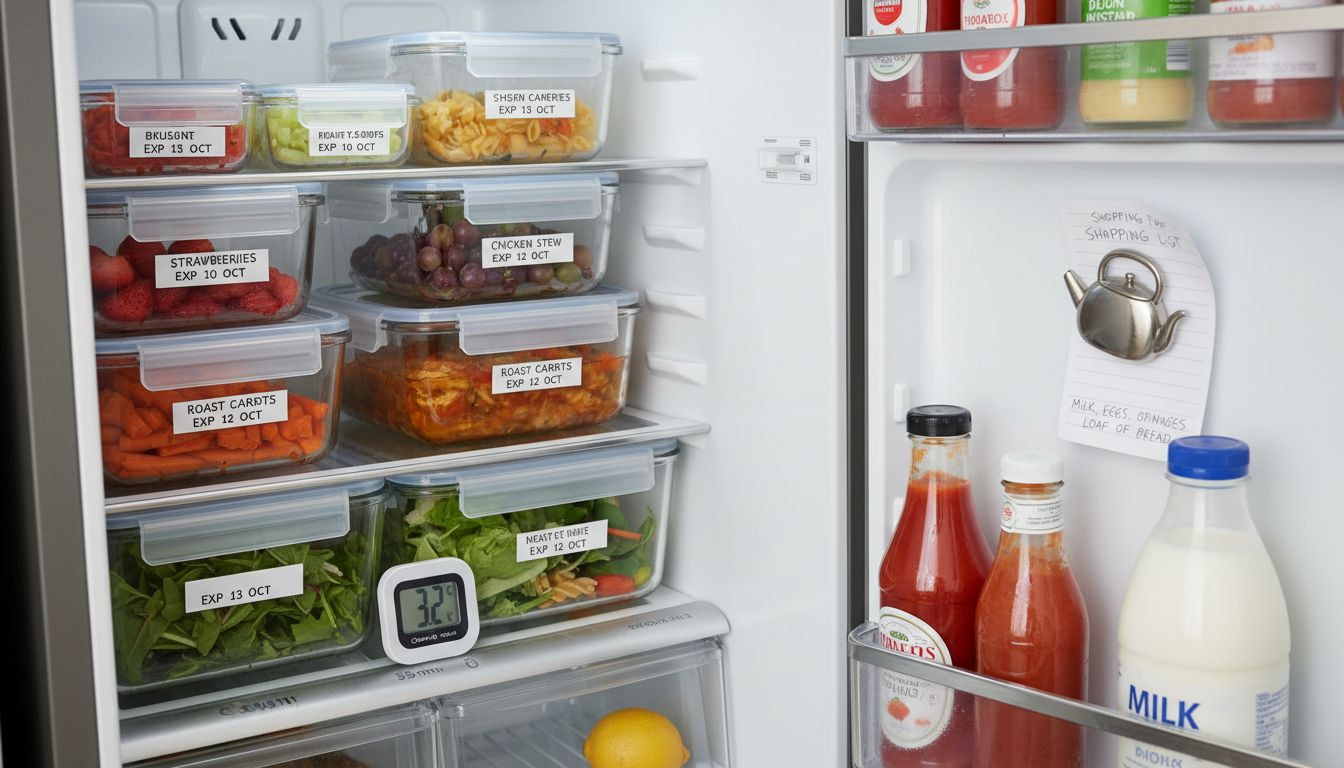
Pro Tip: Invest in a small whiteboard or digital app to track perishable inventories and their expiration dates in real-time.
Step 4: Create flexible meal plans using leftovers
Designing strategic meal plans that incorporate leftovers creatively can significantly reduce food waste while keeping your meals interesting and nutritious. Flexible meal planning techniques offer an intelligent approach to transforming remaining ingredients into delicious new dishes.
To create an effective leftover-friendly meal plan, consider these essential strategies:
- Batch cooking: Prepare large quantities of versatile base ingredients
- Transformation techniques: Design recipes that can easily incorporate different leftover components
- Ingredient compatibility: Select meal combinations with overlapping ingredients
- Strategic reheating: Learn proper techniques to maintain food quality and safety
Your flexible meal planning should follow these systematic steps:
- Take inventory of existing ingredients before shopping
- Plan complementary meals with potential crossover ingredients
- Choose recipes with adaptable base components
- Store leftovers safely for future meal transformations
Transforming leftovers prevents waste and saves money simultaneously.
By developing planned-over meal strategies, you can create diverse and exciting meals while minimising food waste. Creativity and strategic thinking are key to maximising your ingredients’ potential.
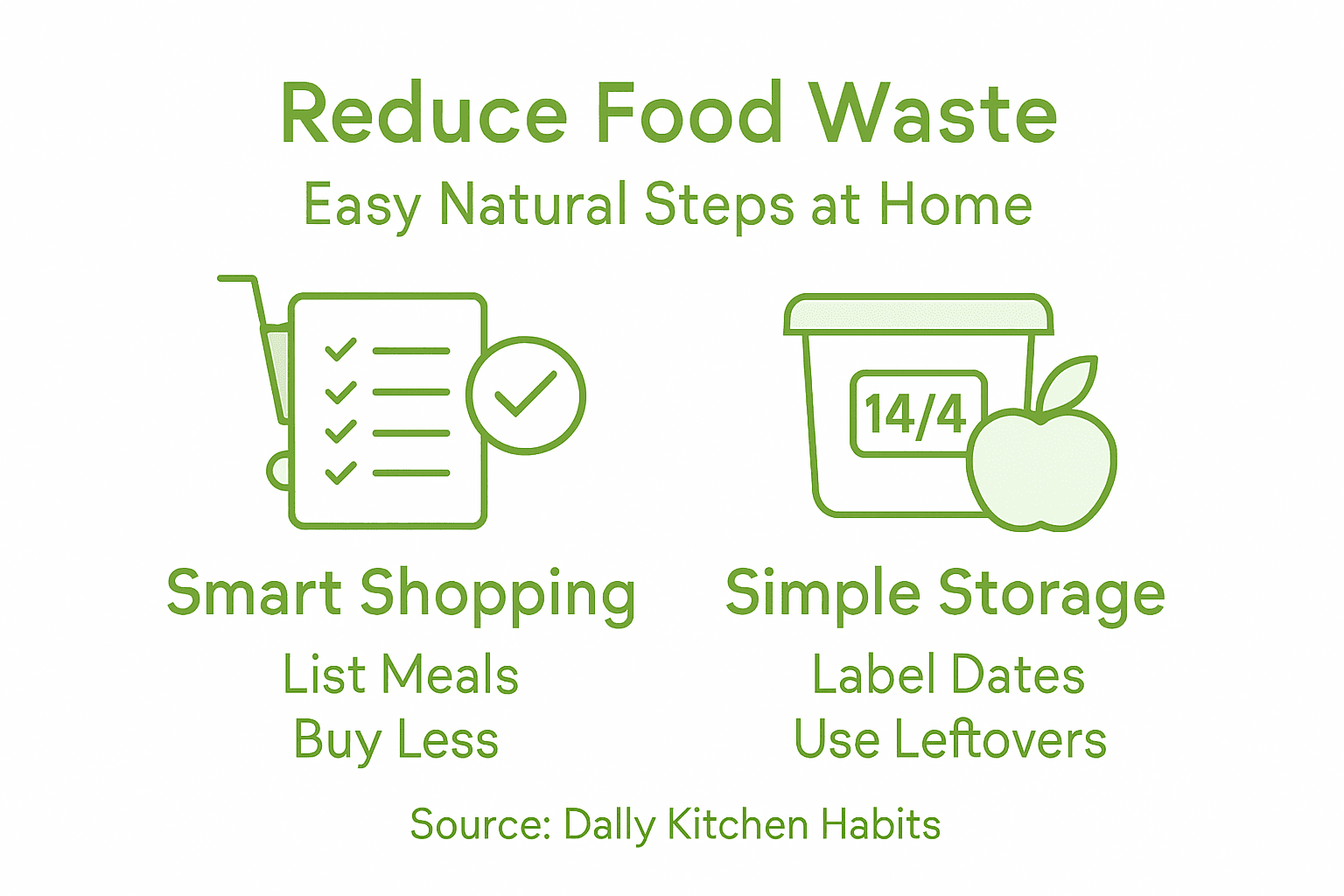
Pro Tip: Designate one evening per week as “leftover remix night” to ensure all remaining ingredients get used creatively.
The following table summarises the benefits of flexible leftover-based meal planning:
| Benefit | Description |
|---|---|
| Reduces food waste | Uses up excess cooked ingredients |
| Saves time | Minimises need for daily cooking |
| Saves money | Maximises value of purchased food |
| Encourages creativity | Inspires new recipe combinations |
Step 5: Monitor waste and refine daily routines
Transforming your approach to food consumption requires systematic tracking and continuous improvement of your daily habits. Household food waste monitoring provides crucial insights into your consumption patterns and helps identify areas for meaningful reduction.
To effectively track and minimise your food waste, implement these strategic monitoring techniques:
- Daily documentation: Record every discarded food item
- Categorise waste types: Distinguish between spoilage, plate waste, and preparation scraps
- Weekly review: Analyse your waste log to identify recurring patterns
- Cost calculation: Estimate financial impact of wasted food
Your comprehensive waste monitoring should include:
- Weighing discarded food quantities
- Noting reasons for disposal
- Tracking frequency of different waste types
- Identifying potential prevention strategies
Consistent monitoring transforms unconscious habits into deliberate, sustainable choices.
By developing a systematic approach to tracking food consumption, you can progressively reduce waste and create more sustainable household routines. Understanding your specific waste patterns enables targeted, effective interventions.
Pro Tip: Use a digital spreadsheet or dedicated food waste tracking app to make monitoring effortless and insightful.
Embrace Natural Solutions to Minimise Food Waste at Home
Reducing food waste naturally at home challenges many of us to rethink how we shop, store and consume food. This article highlights key struggles like improper storage, overbuying organic produce and forgotten perishables. At Nature’s Soul Shop, we understand your goal is to make smarter choices that protect both your health and the planet. Our range of organic and natural products supports your journey towards sustainable living by offering clean ingredients across every category from fresh fruits and vegetables to dairy, vegan and gluten-free options.
Take control of your kitchen waste today by exploring our collection at Nature’s Soul Shop. Discover reliable, fresh produce and thoughtfully curated dry groceries that help you plan meals with confidence and reduce spoilage. Visit https://naturessoulshop.com now to start your path to a more organised, waste-conscious home filled with wholesome, natural goodness.
Frequently Asked Questions
How can I track my food waste at home?
To track your food waste at home, keep a daily log of all discarded food items for at least one week. Document the type of waste, the reason for disposal, and estimate the quantities to identify patterns you can address.
What are effective ways to organise my perishables to reduce waste?
Organising perishables effectively involves colour-coding labels by storage dates and designating specific areas in your refrigerator and pantry for different food types. Use transparent containers for leftovers and implement a first-in-first-out system to ensure older items are used first.
How can I optimise my shopping habits to reduce food waste?
Optimising your shopping habits requires planning your meals in advance and creating a detailed shopping list based on your inventory. Buy seasonal produce in appropriate quantities to avoid over-purchasing and ensure you consume everything you buy.
What should I consider when creating flexible meal plans with leftovers?
When creating flexible meal plans, focus on batch cooking versatile ingredients that can be reused in various recipes. Plan meals that use overlapping ingredients and establish a designated night for enjoying leftover meals to minimise waste.
How can I minimise spoilage in my kitchen?
To minimise spoilage, monitor the expiration dates of your food items and store foods correctly based on their specific requirements. Implement an inventory management system to keep track of what’s in your fridge and use a whiteboard or app to note items that need to be consumed soon.


