


TL;DR:
- Choosing genuinely clean pantry staples requires checking short ingredient lists and recognizable, unprocessed foods.
- Opt for organic grains, pulses, healthy fats, natural sweeteners, and traditional spices to build a trustworthy pantry.
- Proper storage and rotation prevent spoilage and waste, making a clean pantry sustainable and practical.
Walk into any supermarket in Delhi NCR and you will find shelves stacked with products labelled “natural,” “wholesome,” or “free from additives.” Most of them are none of those things. For health-conscious households trying to build a genuinely clean kitchen, this noise is exhausting. Choosing the right pantry staples requires more than good intentions. It requires clear criteria, a reliable shortlist, and the confidence to ignore clever packaging. This article gives you exactly that: a practical, no-nonsense guide to identifying, selecting, storing, and sourcing the best clean ingredient pantry staples available right here in Delhi NCR.
Table of Contents
- How to identify genuinely clean ingredient staples
- Top grains, flours, and pulses for a clean pantry
- Healthy fats, natural sweeteners, and seasoning staples
- Smart storage and rotation for lasting freshness
- Why building a clean pantry is simpler and harder than it sounds
- Where to source the best clean staples in Delhi NCR
- Frequently asked questions
Key Takeaways
| Point | Details |
|---|---|
| Use clear criteria | Always check ingredients and labels to ensure your pantry staples are truly clean. |
| Prioritise whole foods | Choose grains, pulses, oils, and sweeteners in their purest, least-processed forms. |
| Store wisely | Good storage habits maintain freshness and prevent wastage of high-quality staples. |
| Buy from trusted sources | Source your pantry items from vetted local shops with a focus on organic and natural ingredients. |
How to identify genuinely clean ingredient staples
The phrase “clean eating” gets used loosely, but its core meaning is straightforward. Clean eating involves choosing minimally processed, whole foods that nourish rather than burden your body. No artificial colours, no synthetic preservatives, no refined sugar hiding under twelve different names on the label.
To cut through the marketing clutter, use these five criteria every time you pick up a new staple:
- Short ingredient list. If you cannot read the list in under ten seconds, put it back. Genuine staples have three to five ingredients at most, often just one.
- Recognisable names. Every ingredient should be something your grandmother could identify. “Calcium disodium EDTA” is not a food. “Organic sesame” is.
- Whole and unprocessed. Look for staples that are as close to their natural state as possible. Brown rice over white, stone-ground flour over bleached, whole lentils over instant varieties.
- Certified organic where it counts. Grains, pulses, and oils absorb pesticides readily. Prioritise organic certification for these categories specifically.
- Allergen transparency. A clean product clearly states what it contains and what it does not. Vague labelling is a red flag, not a sign of simplicity.
For Delhi NCR households, local sourcing adds another layer of reliability. Shorter supply chains mean fewer opportunities for contamination or adulteration. When you buy minimally processed foods from regional producers or verified platforms, you also support more transparent farming practices.
Red flags to watch for include hidden sugars (look for dextrose, maltose, or corn syrup solids), artificial colours listed as “permitted food colour,” and preservatives like sodium benzoate or potassium sorbate. These appear even in products marketed as healthy.
Statistic: Studies suggest that over 60% of packaged foods contain at least one additive not visible from the front-of-pack label. Reading the full ingredient list is non-negotiable.
Pro Tip: When possible, choose staples sold in bulk or refillable formats. This not only reduces plastic waste but also means the product is less likely to contain stabilisers added purely to extend shelf life in sealed packaging.
Building a clean pantry starts with this filter. Once it becomes habit, you will find that the shortlist of genuinely trustworthy staples is actually quite manageable. Use it alongside resources that help you build a healthy pantry from the ground up.
Top grains, flours, and pulses for a clean pantry
Whole grains and pulses are fundamental to building a natural, healthy diet, and they form the backbone of most Indian kitchens already. The difference lies in choosing the right versions.
Here are the must-have grains, flours, and pulses for a clean Delhi NCR pantry:
- Organic brown rice. Retains the bran layer, which means more fibre, magnesium, and B vitamins than white rice. Widely available and affordable.
- Quinoa. A complete protein containing all nine essential amino acids. Excellent for those reducing meat intake or following vegan pantry essentials.
- Jowar (sorghum) flour. Naturally gluten free, high in iron, and deeply rooted in Indian culinary tradition. A smart swap for refined wheat flour in rotis and bakes.
- Buckwheat (kuttu). Despite its name, buckwheat contains no wheat at all. It is rich in rutin, a plant compound that supports circulation, and is one of the best gluten free alternatives available locally.
- Organic masoor, moong, and chana dal. These pulses are protein-dense, easy to digest, and incredibly versatile. Buying them whole rather than split preserves more of their nutritional value.
| Staple | Gluten free | Protein (per 100g) | Approx. price (Delhi NCR) |
|---|---|---|---|
| Organic brown rice | Yes | 7g | ₹90 to ₹130/kg |
| Quinoa | Yes | 14g | ₹300 to ₹500/kg |
| Jowar flour | Yes | 10g | ₹60 to ₹100/kg |
| Buckwheat | Yes | 13g | ₹150 to ₹250/kg |
| Organic moong dal | Yes | 24g | ₹120 to ₹180/kg |
For meal planning, refer to meal prep guides that show you how to batch-cook these staples efficiently across the week.
Pro Tip: Combine a pulse with a grain at each meal. Moong dal with brown rice, for instance, creates a complete amino acid profile. This is especially valuable for vegetarian and vegan households where varied protein sources matter most.
Healthy fats, natural sweeteners, and seasoning staples
Healthy staples are not just about grains. Your choice of oils, sweeteners, and spices shapes both the flavour and the nutritional quality of every meal you cook. Getting these right is just as important as choosing the correct flour.
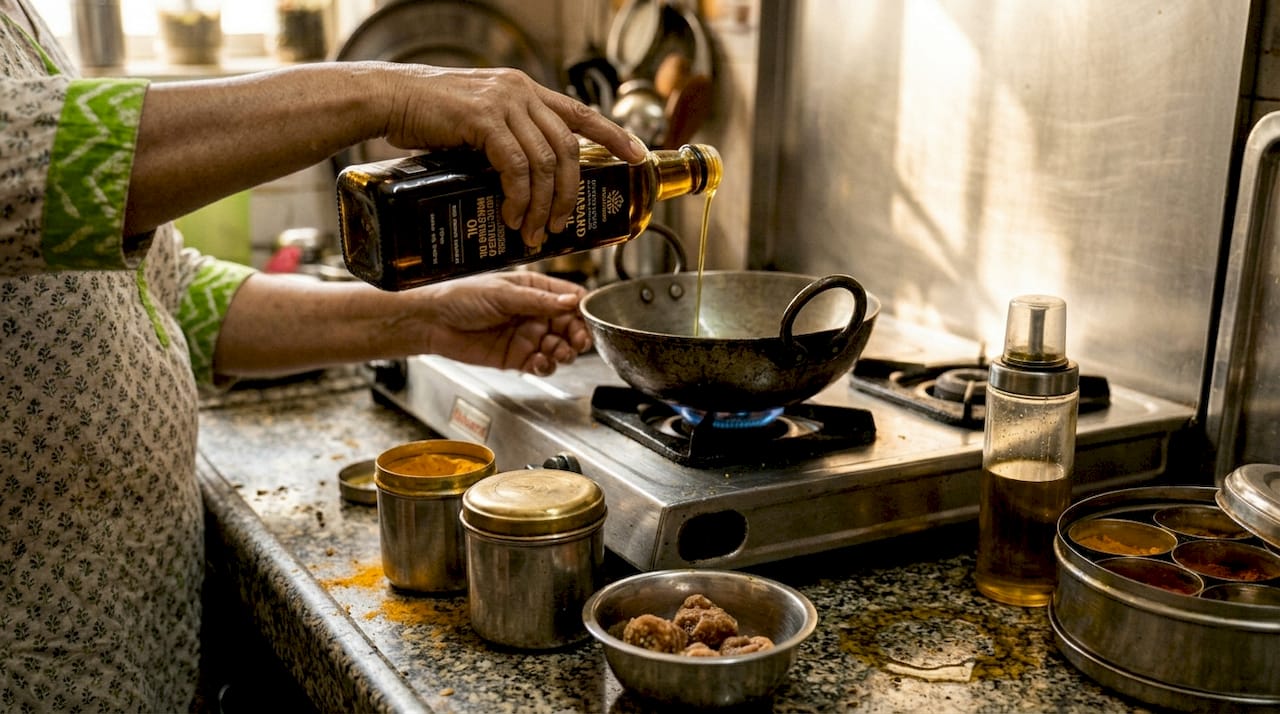
Here are the clean options worth keeping in your kitchen:
Healthy fats:
- Extra-virgin coconut oil. Cold-pressed and unrefined, it retains its natural aroma and medium-chain fatty acids. Best for medium-heat cooking and baking.
- Organic mustard oil. A staple in North Indian cooking with a high smoke point and naturally occurring omega-3 fatty acids. Choose cold-pressed, single-origin varieties.
- Pure desi ghee. When sourced from grass-fed cows and made using the traditional bilona method, ghee is rich in fat-soluble vitamins and butyric acid, which supports gut health.
Natural sweeteners:
- Raw honey. Unfiltered and unpasteurised honey retains enzymes and antioxidants. Avoid anything labelled simply “honey” without origin information.
- Date sugar. Made from whole dried dates, it retains fibre and minerals unlike refined alternatives.
- Jaggery (gur). A traditional Indian sweetener with trace minerals like iron and potassium. Choose dark, unrefined blocks over processed jaggery powder.
Clean seasonings: Himalayan pink salt, whole turmeric, cumin seeds, and dried coriander are the non-negotiables. Buy them whole and grind as needed for maximum potency.
Organic, cold-pressed oils, natural sweeteners, and clean spices are key for a wholesome pantry, and the difference in flavour alone justifies the switch.
Expert note: Refined oils such as refined sunflower or soybean oil are processed at high temperatures with chemical solvents, stripping away natural nutrients and creating oxidised compounds. Similarly, artificial sweeteners like aspartame and sucralose may disrupt gut microbiota. Neither belongs in a clean kitchen.
| Oil or sweetener | Purity | Smoke point | Flavour | Approx. price |
|---|---|---|---|---|
| Cold-pressed coconut oil | High | 177°C | Mild, sweet | ₹400 to ₹700/litre |
| Organic mustard oil | High | 250°C | Sharp, pungent | ₹200 to ₹350/litre |
| Desi ghee (bilona) | Very high | 252°C | Rich, nutty | ₹800 to ₹1500/litre |
| Raw honey | High | N/A | Floral, complex | ₹350 to ₹600/500g |
| Jaggery (unrefined) | Medium-high | N/A | Earthy, caramel | ₹80 to ₹150/kg |
Pro Tip: Pair fresh-ground spices with cold-pressed oils when tempering. The fat-soluble compounds in turmeric and cumin are absorbed far better in the presence of a quality fat, making your food both tastier and more nourishing. For more on building a clean eating guide, explore the full framework.
Smart storage and rotation for lasting freshness
After selecting the right staples, proper storage ensures your investment in clean ingredients actually pays off. Delhi NCR’s climate, with its extreme summer heat and monsoon humidity, makes this especially important.
Follow these five steps to keep your pantry in excellent condition:
- Use airtight containers. Glass jars with rubber-sealed lids are ideal. They prevent moisture ingress, deter pests, and do not leach chemicals into food the way some plastics can.
- Store in a cool, dry location. A dedicated pantry shelf away from the stove and direct sunlight is best. Avoid storing oils near heat sources, as they oxidise quickly.
- Use natural preservatives where appropriate. A dried bay leaf in a container of flour or rice deters insects without any chemicals. Neem leaves work similarly for pulses.
- Batch rotate consistently. When restocking, move older items to the front and place new stock behind. This simple habit eliminates waste and ensures nothing expires unnoticed.
- Avoid cross-contamination. Use a dedicated dry spoon for every container. Never return a used spoon to a jar, and keep strongly aromatic spices sealed separately from grains.
Natural storage methods preserve food quality and reduce waste, which matters both for your health and your household budget.
Statistic: Up to 40% of household food waste is preventable with better storage practices, according to food sustainability researchers.
Useful storage materials to keep on hand:
- Borosilicate glass jars in multiple sizes
- Stainless steel dabbas with tight-fitting lids
- Beeswax wraps for partial produce
- Cotton muslin bags for whole spices
- Silica gel sachets (food-grade) for high-humidity months
For more detailed guidance, the fresh food storage resource covers both dry and perishable categories in depth.
Why building a clean pantry is simpler and harder than it sounds
Here is what nobody tells you when you start this journey: buying organic is the easy part. The harder part is consistency. It is resisting the “superfood of the month” that costs ₹1,200 for a small pouch and does not fit into any meal you actually cook. It is choosing jowar flour again when your family asks for maida-based snacks. It is accepting that a clean pantry is not a one-time purchase but a series of small, repeated decisions.
Marketing is extraordinarily good at making you feel behind. A new grain, a new oil, a new certification. But the truth is that the most powerful pantry staples have been part of Indian kitchens for centuries. Moong dal, mustard oil, jaggery, turmeric. These are not trends. They are tested, trusted, and genuinely clean.
“The cleanest pantry is not the most expensive one. It is the one you understand and actually use.”
Shop small and often rather than doing one large haul. Freshness matters more than variety. And when you feel overwhelmed, return to the basics. Learning to create balanced meals from a modest, well-chosen pantry is a far more valuable skill than owning every trending ingredient.
Where to source the best clean staples in Delhi NCR
Finding genuinely clean pantry staples in Delhi NCR does not have to be a scavenger hunt. Nature’s Soul Shop offers a carefully vetted range of organic and natural products across dry grocery, dairy, vegan, and gluten free categories, all delivered to your doorstep.
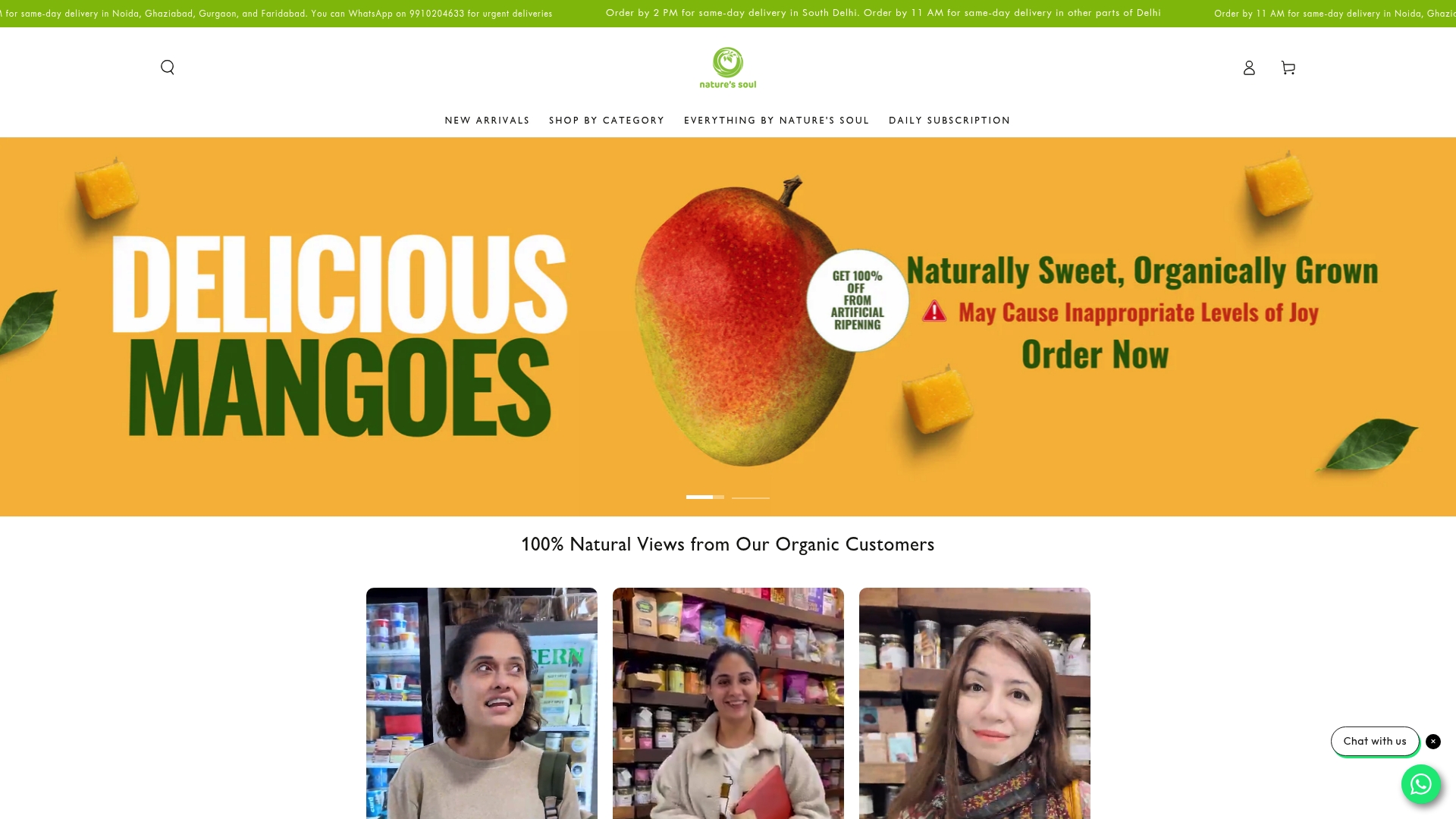
For fresh produce alongside your dry staples, Nature’s Soul Fresh brings seasonal, clean-sourced fruits and vegetables directly to Delhi NCR homes. Every product on the platform is selected for ingredient integrity, with no artificial additives or misleading labels. If you are ready to stock your kitchen with staples you can genuinely trust, shop healthy staples and build your clean pantry with confidence today.
Frequently asked questions
What does ‘clean ingredient’ actually mean?
Clean ingredients are minimally processed foods free from artificial additives, colours, and preservatives. The simpler the ingredient list, the cleaner the product.
Can clean pantry staples really improve my health?
Yes. Organic foods lower your intake of harmful chemicals, and clean staples support better digestion, stronger immunity, and long-term wellness by removing unnecessary additives from your daily diet.
How can I avoid food wastage with clean pantry essentials?
Store staples in airtight glass or steel containers, keep them in a cool dry place away from heat, and always rotate older stock to the front. Natural storage methods preserve quality and significantly reduce waste.
Which clean ingredient pantry staples are naturally gluten free?
Jowar, buckwheat, quinoa, and brown rice are all safe, naturally gluten free pantry basics that work well across a wide range of Indian and international recipes.
Recommended
- Non Toxic Home Cleaning in Delhi NCR: Safe Tips for 2025 – naturessoulshop
- Weekly organic grocery list for clean eating in Delhi NCR – naturessoulshop
- Preservatives in Packaged Food: What Delhi NCR Needs to Know in 2025 – naturessoulshop
- Best Organic Home Care Products for 2025: A Guide for Delhi NCR – naturessoulshop
- 7 Top Examples of Non-Toxic Pans for Pro Cooks – Brass & Steel


