


Choosing healthier meals for your family can feel complicated when shelves are stacked with processed snacks and confusing labels. Families across Delhi NCR are increasingly searching for straightforward ways to boost wellness through clean eating that champions organic and gluten-free options. By understanding how whole, minimally processed foods contribute to sustained energy and better health, you’ll discover practical steps to make nutritious choices part of everyday life.
Table of Contents
- Defining Clean Eating and Core Principles
- Main Types and Approaches to Clean Eating
- Clean Eating Versus Conventional Diets
- Benefits and Drawbacks for Family Wellness
- Practical Clean Eating Tips for Beginners
Key Takeaways
| Point | Details |
|---|---|
| Core Principles of Clean Eating | Clean eating prioritises whole, minimally processed foods, emphasising nutrient density and ingredient transparency. |
| Diverse Approaches | Various clean eating methodologies allow personalisation, focusing on balanced nutrition and minimising artificial additives. |
| Differences from Conventional Diets | Clean eating contrasts conventional diets by prioritising nutrient-rich ingredients and sustainable practices over convenience. |
| Benefits and Challenges for Families | Clean eating can enhance nutrition and immune support but may pose social challenges; flexibility is essential for success. |
Defining Clean Eating and Core Principles
Clean eating represents a holistic nutritional approach focused on consuming whole, minimally processed foods that nourish the body and support optimal wellness. At its core, this dietary philosophy emphasises selecting ingredients in their most natural state, prioritising nutrient density and ingredient transparency over convenience or mass production.
The fundamental principles of clean eating centre around several key practices:
- Whole Food Selection: Prioritising unprocessed or minimally processed ingredients
- Ingredient Transparency: Choosing foods with recognisable, simple ingredient lists
- Nutrient Density: Focusing on foods that provide maximum nutritional value
- Minimal Additives: Avoiding artificial preservatives, colours, and unnecessary chemical enhancements
According to nutritional sustainability research, clean eating goes beyond individual health, encompassing broader ecological considerations. Sustainable diets protect biodiversity, remain culturally acceptable, and minimise environmental impact while delivering comprehensive nutritional benefits.

These principles translate into practical dietary choices like selecting whole grains over refined products, choosing fresh produce, and understanding food origins. By embracing minimally processed ingredients, individuals can create meals that support personal health and broader environmental sustainability.
Pro tip: Start your clean eating journey by gradually replacing one processed food item with a whole food alternative each week, making sustainable dietary transitions more manageable.
Main Types and Approaches to Clean Eating
Clean eating encompasses diverse dietary approaches, each with unique interpretations and strategies for consuming whole, nutritious foods. Various clean eating methods range from balanced mainstream diets to more specialised nutritional philosophies.
The primary approaches to clean eating include:
- Balanced Whole Food Approach: Consuming foods from all nutritional groups with emphasis on quality and minimally processed ingredients
- Organic-Focused Diet: Prioritising foods grown without synthetic pesticides or chemical interventions
- Plant-Based Clean Eating: Centring meals around vegetables, fruits, legumes, and whole grains
- Elimination-Style Diets: Removing specific food groups like gluten, dairy, or processed sugars to identify potential sensitivities
Flexibility and Personalisation are key characteristics of clean eating. Nutritional research indicates that individual interpretations can vary widely, allowing people to adapt principles to their specific health goals and dietary requirements.
These approaches share fundamental goals of consuming nutrient-dense foods, understanding ingredient origins, and minimising artificial additives. The methodology allows individuals to create personalised nutrition strategies that support overall wellness while maintaining dietary enjoyment.
Pro tip: Begin your clean eating journey by introducing one whole food replacement each week, gradually building sustainable dietary habits without overwhelming yourself.
Clean Eating Versus Conventional Diets
Nutritional research highlights significant differences between clean eating and conventional dietary approaches. While conventional diets often prioritise convenience and processed foods, clean eating emphasises whole, minimally transformed ingredients that support comprehensive health and wellness.
Key distinctions between clean eating and conventional diets include:
- Ingredient Quality: Clean eating prioritises natural, minimally processed ingredients
- Nutritional Density: Whole foods versus refined, nutrient-stripped products
- Chemical Additives: Avoiding artificial preservatives and synthetic interventions
- Environmental Impact: Supporting sustainable food production methods
Nutritional Transformation represents a fundamental shift in dietary philosophy. Sustainable diet research demonstrates that clean eating approaches not only benefit individual health but also contribute to broader ecological sustainability.
Conventional diets typically rely on packaged, processed foods with extended shelf lives and standardised production methods. In contrast, clean eating embraces variability, seasonal produce, and transparent ingredient sourcing, encouraging consumers to understand food origins and nutritional content.
Here’s a summary comparing clean eating with conventional diets to clarify their core differences:
| Aspect | Clean Eating Approach | Conventional Diet Approach |
|---|---|---|
| Ingredient Sourcing | Locally grown, minimally processed | Global, highly processed |
| Focus of Nutrition | Quality, nutrient-dense foods | Convenience, energy-dense foods |
| Environmental Impact | Supports biodiversity and sustainability | Often higher ecological footprint |
| Health Outcome Goal | Long-term wellness and disease prevention | Short-term satiety and ease of access |
Pro tip: Start transitioning by replacing one processed food item with a whole food alternative each week, gradually building a more nutritionally comprehensive diet.
Benefits and Drawbacks for Family Wellness
Family wellness research demonstrates that clean eating offers significant health advantages while requiring thoughtful implementation. The approach presents a holistic nutritional strategy that can transform family dietary habits, balancing potential benefits with mindful considerations.
Key benefits for family wellness include:
- Nutritional Enhancement: Increased intake of whole, nutrient-dense foods
- Immune System Support: Boosted natural defence mechanisms
- Energy Level Improvement: Sustained vitality through balanced nutrition
- Long-Term Health Protection: Reduced risk of chronic disease development
Potential Challenges must also be carefully navigated. Nutritional balance research indicates that overly restrictive approaches can lead to unintended nutritional gaps and social complications. Families should prioritise flexibility and comprehensive nutrition over rigid dietary rules.
Successful clean eating implementation requires understanding that wellness is not about perfection, but consistent, balanced choices. Parents can model healthy relationships with food by demonstrating moderation, variety, and enjoyment in dietary selections, creating positive long-term nutritional habits for their children.
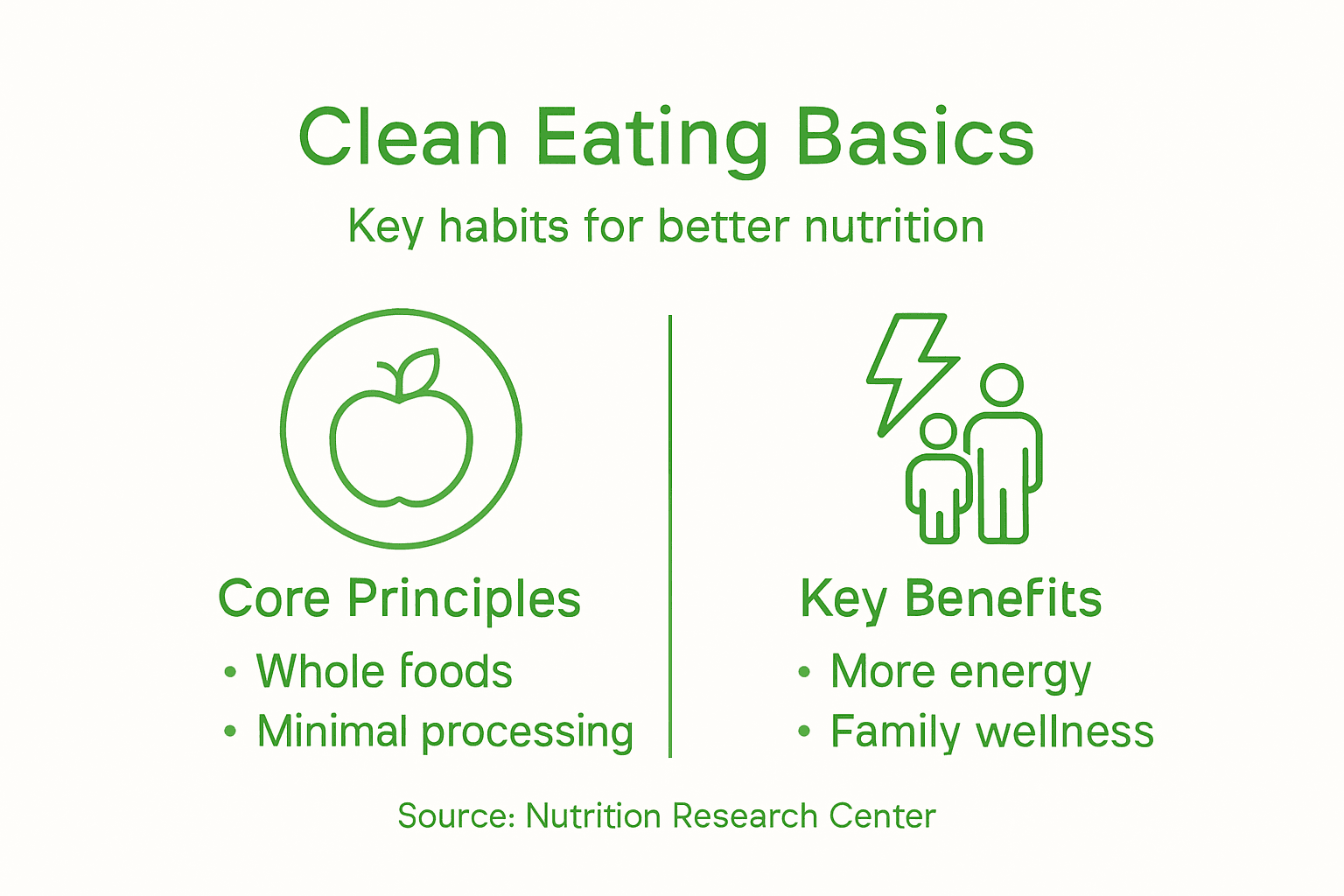
To help families evaluate the dietary shift, here’s an overview of the main benefits and potential challenges of clean eating for household wellness:
| Benefit/Drawback | Description | Family Impact |
|---|---|---|
| Enhanced Nutrition | Greater intake of vitamins and minerals | Improved child development |
| Social Challenges | May conflict with social occasions | Requires planning and flexibility |
| Energy & Immunity | Sustained energy and stronger immune system | Fewer sick days and better mood |
| Cost Consideration | Whole foods may cost more initially | Budget adjustments may be needed |
Pro tip: Introduce clean eating principles gradually, involving family members in meal planning and preparation to build collective nutritional awareness and engagement.
Practical Clean Eating Tips for Beginners
Embarking on a clean eating journey requires strategic planning and mindful approach. Starting healthy eating naturally involves understanding core principles and implementing gradual, sustainable changes that transform dietary habits without overwhelming lifestyle disruption.
Key strategies for beginners include:
- Pantry Transformation: Replace processed snacks with whole food alternatives
- Ingredient Awareness: Learn to read nutrition labels and understand ingredient origins
- Meal Planning: Prepare weekly menus focusing on minimally processed ingredients
- Gradual Substitution: Slowly introduce whole foods while reducing processed options
- Kitchen Skills Development: Learn basic cooking techniques using whole ingredients
Successful clean eating transition demands patience and consistent effort. Building balanced meals naturally requires understanding nutritional balance, portion control, and selecting high-quality ingredients that nourish the body.
Beginners should approach clean eating as a holistic lifestyle modification, not a restrictive diet. Flexibility, curiosity, and willingness to experiment with new ingredients and cooking methods are crucial for long-term success and enjoyment of nutritious eating.
Pro tip: Start by introducing one new whole food recipe each week, gradually expanding your culinary repertoire and nutritional knowledge.
Embrace Clean Eating with Natural, Organic Goods
The article highlights the challenge of adopting clean eating principles such as choosing whole, minimally processed ingredients and avoiding artificial additives. Achieving this goal often demands access to truly natural and organic products that support nutrient density and family wellness. Your desire for ingredient transparency and sustainable nutrition matches our commitment to providing a diverse selection across fruits, vegetables, meats, dry grocery, dairy, vegan and gluten free options.
Discover how Nature’s Soul Shop makes clean eating attainable and enjoyable. Explore our range of natural and organic products carefully curated to help you replace processed foods with wholesome alternatives. Whether you want to build balanced meals with fresh produce or seek transparent, clean-label groceries, our selection is designed to empower your clean eating journey.
Start transforming your family’s health today by visiting Nature’s Soul Shop and take the first step towards a cleaner, more nourishing diet. Embrace wellness with confidence knowing your ingredients align with the clean eating principles you value.
Frequently Asked Questions
What is clean eating?
Clean eating is a nutritional approach that focuses on consuming whole, minimally processed foods that provide maximum nutritional value, prioritising ingredient transparency and natural ingredients over convenience.
What are the core principles of clean eating?
The core principles of clean eating include whole food selection, ingredient transparency, nutrient density, and minimal additives, encouraging the intake of unprocessed foods and avoidance of artificial preservatives.
How does clean eating differ from conventional diets?
Clean eating emphasises whole, minimally processed ingredients and nutrient density, whereas conventional diets often prioritise convenience and processed foods, leading to differences in ingredient quality and health outcomes.
What are the benefits of clean eating for families?
Benefits of clean eating for families include enhanced nutrition, improved immune system support, increased energy levels, and long-term health protection, fostering healthier dietary habits among family members.
Recommended
- Understanding What Are Clean Ingredients and Their Benefits – naturessoulshop
- How to Start Eating Healthy: A Simple Step-by-Step Guide – naturessoulshop
- Understanding Healthy Eating on the Go: Key Concepts – naturessoulshop
- Complete Guide to Sustainable Food Choices – naturessoulshop
- Wild Vs Farmed Iberico Pigs: Impact On Flavour And Quality
- Ernährungsarten Paleo: Dein kompletter Guide zur Steinzeiternährung – mybody®x


