


Finding truly gentle skincare can feel like a challenge, especially when every new product seems to leave your skin irritated or red. For eco-conscious families in Delhi NCR, caring for sensitive skin means more than avoiding harsh chemicals, it is about understanding your unique skin type and choosing products that respect your health and the planet. This guide highlights key steps to help you confidently build an effective organic routine using only the safest, most nourishing ingredients.
Table of Contents
- Step 1: Assess Your Skin Type And Sensitivities
- Step 2: Select Organic Products With Clean Ingredients
- Step 3: Prepare Your Skin With Gentle Cleansing
- Step 4: Apply Targeted Treatments And Nourishment
- Step 5: Verify Results For Improved Skin Health
Quick Summary
| Key Insight | Explanation |
|---|---|
| 1. Assess your skin type clearly | Identify characteristics like dryness, oiliness, or sensitivity through careful observation for better skincare. |
| 2. Choose products with clean ingredients | Select organic skincare with certifications, transparency, and minimal processing to protect your skin. |
| 3. Maintain a gentle cleansing routine | Use lukewarm water and mild cleansers to cleanse without stripping your skin’s protective barrier. |
| 4. Apply targeted treatments effectively | Layer products from thinnest to thickest, focusing on specific concerns like hydration or irritation. |
| 5. Regularly verify skincare effectiveness | Document changes with photos and consultations to understand how your routine impacts your skin’s health. |
Step 1: Assess your skin type and sensitivities
Understanding your unique skin type is crucial for developing an effective organic skincare routine that keeps your complexion healthy and radiant. Identifying your skin characteristics involves carefully observing how your skin responds to various environmental factors and products.
To accurately determine your skin type, you’ll want to conduct a simple home assessment by paying close attention to these key indicators:
- Dry skin: Feels tight, appears flaky, and may have visible fine lines
- Oily skin: Appears shiny, has enlarged pores, and is prone to acne
- Combination skin: Exhibits different characteristics in different facial zones
- Sensitive skin: Reacts quickly with redness, itching, or irritation
The assessment process requires careful observation over several days. Cleanse your face with a gentle, neutral cleanser and avoid applying any products. After 30 minutes, examine how your skin feels and looks. Does it feel tight and dry? Appear shiny and greasy? Or maintain a balanced, comfortable texture?

Here’s how common skin types differ in their needs and sensitivities:
| Skin Type | Primary Need | Typical Sensitivity | Best Organic Approach |
|---|---|---|---|
| Dry | Intensive hydration | More prone to flaking | Oils and creamy moisturisers |
| Oily | Sebum balance | Prone to breakouts | Lightweight gels and toners |
| Combination | Zone-specific care | May react in T-zone | Multi-phase routines |
| Sensitive | Irritation prevention | Redness, itching | Hypoallergenic, minimal ingredients |
Additionally, consider your skin’s reactivity by tracking how it responds to new products, environmental changes, and stress. Allergy skin tests can provide deeper insights into potential sensitivities that might impact your skincare approach.
Pro tip: Keep a detailed skincare journal to track your skin’s responses and patterns, which will help you make more informed decisions about your organic skincare routine.
Step 2: Select organic products with clean ingredients
Selecting the right organic skincare products requires careful consideration and understanding of what truly constitutes clean ingredients. National organic standards provide a crucial framework for identifying truly organic and safe skincare options that protect both your skin and overall health.
When searching for organic skincare products, focus on these essential criteria:
- Certification labels: Look for legitimate organic certifications like USDA Organic or OMRI-listed products
- Ingredient transparency: Check for full ingredient lists with recognisable, natural components
- Minimal processing: Seek products with fewer synthetic additives
- Plant-based origins: Prioritise ingredients derived directly from natural sources
Carefully read product labels and understand what each ingredient represents. Avoid products containing parabens, synthetic fragrances, petroleum derivatives, and other potentially harmful chemicals. Natural does not automatically mean safe, so research each ingredient’s potential impact on your skin.
Organic skincare is about more than marketing - it’s a commitment to your health and environmental sustainability.
Pro tip: Download a reputable ingredient scanning mobile app that helps you quickly identify and understand the safety profile of skincare product ingredients.
Step 3: Prepare your skin with gentle cleansing
Preparing your skin begins with a thoughtful, gentle cleansing approach that preserves your skin’s natural balance and protective barrier. Dermatologist-recommended cleansing techniques emphasise the importance of using mild methods that nurture rather than strip your skin.
Follow these essential guidelines for effective and gentle skin cleansing:
- Water temperature: Use lukewarm water to avoid damaging delicate skin
- Cleansing duration: Limit face washing to no more than twice daily
- Product selection: Choose mild, non-aggressive cleansers
- Application technique: Use gentle, circular motions with fingertips
- Drying method: Pat skin dry instead of rubbing harshly
When selecting a cleanser, prioritise products with natural ingredients that respect your skin’s microbiome. Skin care experts recommend avoiding harsh chemicals and focusing on hydration-preserving techniques.
Gentle cleansing is not about removing everything, but about maintaining your skin’s natural protective ecosystem.
Pro tip: Keep your cleansing routine consistent but adaptable, adjusting techniques seasonally to match your skin’s changing needs.
Step 4: Apply targeted treatments and nourishment
Targeted skincare treatments transform your organic routine from basic maintenance to personalised skin rejuvenation. Precision application allows you to address specific skin concerns while supporting your skin’s natural healing processes.
Approach your targeted treatment strategy with these key considerations:
- Ingredient compatibility: Ensure treatments complement each other
- Layering sequence: Apply treatments from thinnest to thickest consistency
- Concentration: Start with lower concentrations and gradually increase
- Patch testing: Always test new treatments on a small skin area first
- Time of application: Some treatments work best morning or evening
Focus on active natural ingredients that provide specific benefits like hydration, brightening, or calming. Each treatment should serve a precise purpose, whether addressing hyperpigmentation, reducing fine lines, or supporting skin barrier repair.
Your skin is unique - treatments should be as individualised as your fingerprint.
Pro tip: Keep a detailed skincare journal to track how different treatments impact your skin, enabling you to fine-tune your routine with scientific precision.
Step 5: Verify results for improved skin health
Tracking your organic skincare routine’s effectiveness requires systematic observation and scientific documentation. Clinical studies of natural compounds demonstrate how careful monitoring can reveal meaningful improvements in skin health.
Implement a comprehensive results verification process using these strategic approaches:
- Photographic documentation: Take consistent, well-lit progress photos
- Measurement metrics: Track specific skin characteristics like hydration and texture
- Symptom tracking: Record changes in sensitivity, inflammation, and overall skin appearance
- Quantitative assessment: Use standardised skin health scoring systems
- Professional consultation: Schedule periodic dermatologist reviews
Carefully analyse topical treatment outcomes by examining both visible changes and underlying skin health indicators. Look beyond surface-level improvements to understand deeper physiological transformations.
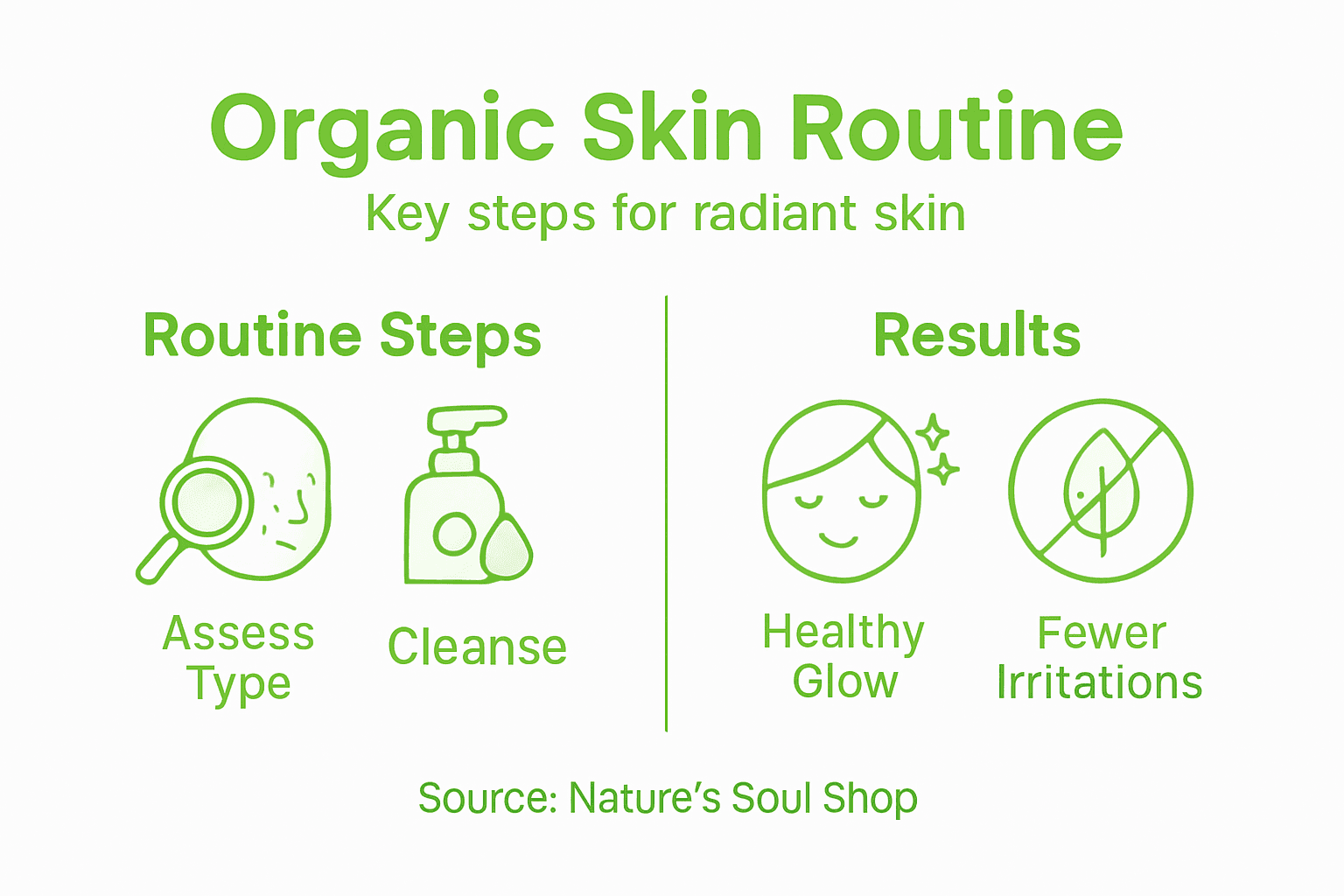
The following table summarises effective ways to verify your skincare routine’s success:
| Verification Method | Benefit | How Often to Use |
|---|---|---|
| Progress photos | Visual comparison | Weekly |
| Hydration measurement | Tracks moisture levels | Monthly |
| Symptom diary | Monitors irritation | Ongoing |
| Professional consultation | Expert guidance | Every 6-12 months |
Your skin’s journey is unique - systematic tracking reveals its true potential.
Pro tip: Create a digital or physical skin health journal with dated entries, allowing you to correlate lifestyle changes with your skincare routine’s effectiveness.
Transform Your Skin Care Journey with Truly Organic Solutions
Achieving radiant skin means understanding your unique skin type and choosing products based on clean, natural ingredients. If you struggle with dryness, sensitivity or balancing oily zones, embracing an organic skincare routine made with carefully selected ingredients can make all the difference. With so many synthetic options available many feel overwhelmed or unsure if their products truly support skin health and environmental wellness.

Discover a curated selection of organic and natural skincare essentials at Nature’s Soul Shop that align perfectly with your skin’s specific needs. Our commitment to products with transparent, plant-based ingredients lets you confidently nourish and protect your skin barrier. Start tracking your skin’s transformation today and experience the calming, hydrating and balancing benefits that only clean skincare can offer. Visit Nature’s Soul Shop now and take the first step towards glowing skin with trusted organic care.
Frequently Asked Questions
How can I determine my skin type for an organic skincare routine?
Understanding your skin type is essential for creating an effective organic skincare routine. Conduct a simple assessment by cleansing your face and observing how it feels after 30 minutes—does it feel tight, oily, or balanced? This will guide your choice of organic products tailored to your needs.
What ingredients should I look for in organic skincare products?
When selecting organic skincare products, prioritise those with clean, recognizable ingredients and valid organic certifications. Look for products that have minimal processing, are plant-based, and have full ingredient transparency to ensure they are safe and effective for your skin.
How can I prepare my skin before applying organic skincare products?
Gently cleanse your skin with lukewarm water and a mild cleanser to preserve your skin’s natural balance. Limit cleansing to twice daily and use gentle, circular motions to avoid irritation, ensuring your skin is ready to absorb the benefits of your organic products.
How do I apply targeted treatments in my organic skincare routine?
Apply targeted treatments from thinnest to thickest consistency, ensuring that each product complements the others. Start with lower concentrations and gradually increase as your skin adjusts, and remember to always patch test new treatments on a small area first.
How can I track the effectiveness of my organic skincare routine?
To verify your skincare routine’s success, document your progress with consistent photographs and a symptom diary. Assess changes in hydration, texture, and irritation over time, as this will help you make data-driven adjustments to your routine and better understand your skin’s needs.
What should I do if I notice irritation after using organic products?
If you experience irritation after using organic skincare products, stop using the new product immediately and assess what could have caused the reaction. Patch test any new treatments on a small area in the future and consult a dermatologist if irritation persists to ensure your skin remains healthy and balanced.
Recommended
- Healthy Skin From Within: Science, Diet, and Aging – naturessoulshop
- Organic Skincare Benefits: Cleaner Living, Healthier Skin – naturessoulshop
- Natural Skin Care Benefits: Wellness for Sensitive Skin – naturessoulshop
- Building Healthy Habits Naturally: A Step-by-Step Guide – naturessoulshop
- Organic Hair Conditioner: Everything You Need to Know | MyHair


