


Practical zero waste lifestyle tips you can start today
Reducing your waste does not require a complete life overhaul. The most effective zero waste lifestyle tips are small, repeatable swaps that compound over time: carry a reusable bag, switch to beeswax wraps instead of cling film, and start composting your food scraps. These three changes alone divert a meaningful volume of material from landfill every single week.
Here is a quick-start list to get you moving immediately:
- Carry a reusable water bottle. Producing one plastic bottle requires 2,000 times the energy of producing the same amount of tap water.
- Swap cling film for beeswax wraps or silicone lids in the kitchen.
- Keep a cloth bag in your coat pocket or by the front door so you never need a plastic carrier.
- Start a compost bin or caddy for fruit peel, vegetable trimmings, and coffee grounds.
- Refuse what you do not need: say no to plastic cutlery, printed receipts, and promotional freebies.
- Buy loose produce rather than pre-packaged wherever your local shop allows it.
- Switch to a bamboo toothbrush and a shampoo bar to cut bathroom plastic.
- Use reusable cloths and rags instead of disposable kitchen roll.
- Donate or sell items you no longer use rather than binning them.
- Check what your local council collects before you throw anything away.
The Zero Waste List frames zero waste not as a destination but as a set of progressive improvements. That framing matters because it removes the pressure to be perfect from day one.
Table of Contents
- How to start and actually stick to a zero waste lifestyle
- The 5 Rs of zero waste: the framework that actually guides change
- How to cut food waste at home, where it matters most
- Everyday sustainable swaps that genuinely reduce waste at home
- What sustainability experts say about realistic zero waste living
- Managing and composting non-recyclable waste
- How to shop with less packaging and waste
- How to make your personal hygiene and beauty routine lower waste
- Naturessoulshop supports your zero waste journey
- Key takeaways
How to start and actually stick to a zero waste lifestyle
The single biggest mistake beginners make is buying a trolley full of zero waste products before they understand their own waste patterns. Start with a waste audit instead.
1. Do a trash audit first
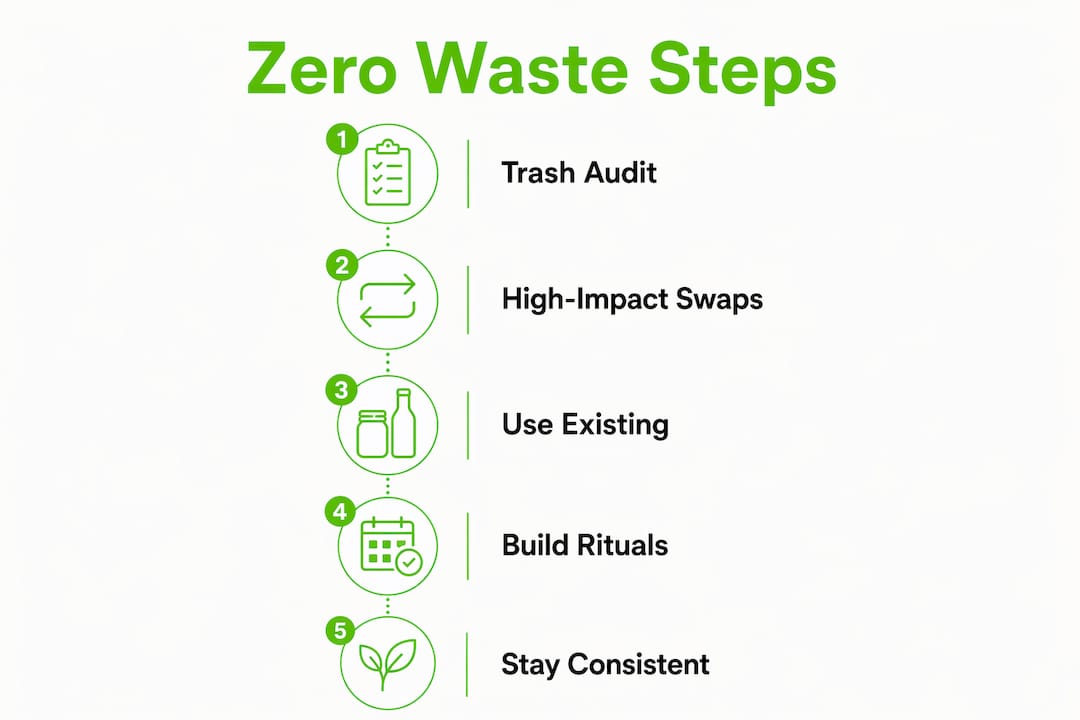
Spend one week collecting your rubbish without changing anything. Sort it into categories: food scraps, plastic packaging, paper, glass, and non-recyclables. The audit reveals your highest-impact areas so you can prioritise targeted swaps rather than guessing. Most people discover that food waste and single-use plastic packaging account for the bulk of what they throw away.
2. Pick two or three high-impact swaps
Once you know your patterns, choose two or three changes that address your biggest waste streams. If plastic packaging dominates your bin, focus on zero waste grocery shopping before anything else. If food scraps are the problem, meal planning and a compost caddy will move the needle faster than any product purchase.
3. Use what you already own
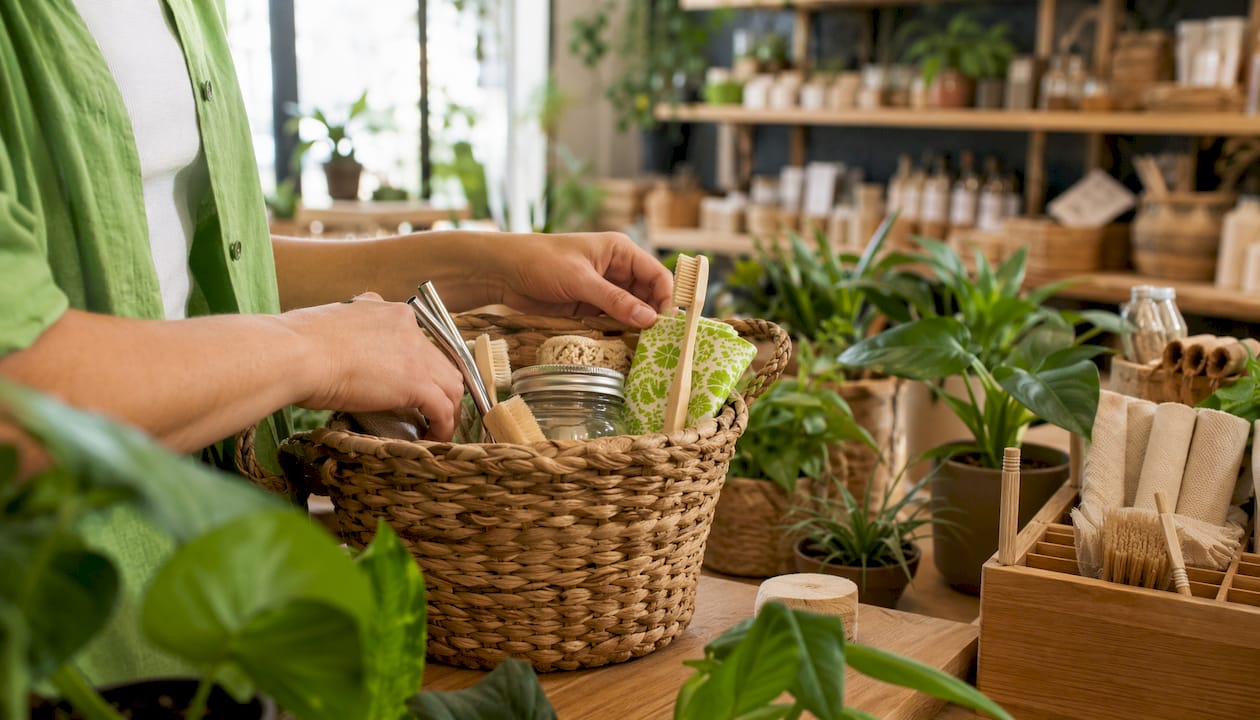
Resist the urge to replace everything at once. Finish the shampoo in the plastic bottle before buying a shampoo bar. Use up the cling film before switching to beeswax wraps. Throwing away functional items to replace them with “eco” versions creates waste rather than reducing it.
4. Build rituals, not rules
Habit research consistently shows that attaching a new behaviour to an existing routine embeds it faster. Put your reusable bags by the front door. Keep a reusable cup next to the kettle. Set a Sunday evening meal-planning slot. Small environmental cues do more than willpower.
Pro Tip: Never start a zero waste journey by spending money. Your first week should cost nothing. A waste audit, a cloth from an old T-shirt, and a jar for composting are all you need to begin.
The 5 Rs of zero waste: the framework that actually guides change
The 5 Rs give zero waste its structure. The order is not arbitrary; each step prevents waste more effectively than the one below it.
1. Refuse
The most powerful R. If you do not accept something, it never enters your home and never needs disposing of. Refuse plastic straws, promotional tote bags you do not need, excess packaging, and single-use cutlery. The US EPA identifies refusal as the first and most effective step in the waste hierarchy.
2. Reduce
Buy only what you will genuinely use. Borrow, rent, or share items you need infrequently, such as power tools, party decorations, or camping equipment. Fewer possessions mean fewer things to eventually dispose of.
3. Reuse
Reuse grocery bags, glass jars, containers, and clothing. Repair broken items rather than replacing them. The right-to-repair movement and sharing economies extend product lifespans and avoid the emissions created by manufacturing new goods.

4. Recycle
Recycling sits fourth in the hierarchy deliberately. It still requires energy and industrial processing. Metals, glass, paper, and some plastics can be recycled, but only after you have exhausted the first three Rs. Know what your local council actually collects before putting anything in the recycling bin.
5. Rot
Composting is the final R. Food scraps, garden trimmings, and compostable materials that cannot be refused, reduced, reused, or recycled should be composted rather than sent to landfill. Composting organic waste diverts material from landfill, cuts methane emissions, and produces nutrient-rich soil.
The hierarchy matters because most people skip straight to recycling. Recycling is better than landfill, but refusing and reducing are better still.
How to cut food waste at home, where it matters most
Food waste is one of the highest-impact areas to address. Households account for roughly 60% of global food waste by mass, and food scraps in landfill emit methane, a greenhouse gas considerably more potent than CO2 over a short timeframe.
Methane from food waste: Food scraps rotting in landfill produce methane gas, which drives greenhouse emissions far more intensely than CO2 over a 20-year period. Composting the same scraps produces no methane at all.
Practical steps to reduce food waste at home:
- Meal plan weekly. Write a shopping list from your plan and buy only what is on it. Regular meal planning can halve avoidable food waste and reduce a household’s carbon footprint by 0.2–0.5 tonnes of CO2 per year.
- Create an “eat first” section in your fridge. Move items approaching their use-by date to a visible shelf or dedicated box so they get used before newer purchases.
- Store food properly. Herbs last longer in a glass of water. Bread stays fresh longer in a cloth bag. Leafy greens keep better wrapped in a damp cloth. Small storage habits prevent a lot of spoilage.
- Freeze before it spoils. Bread, cooked grains, ripe bananas, and leftover soups all freeze well. Freezing is a far better outcome than the bin.
- Compost what you cannot eat. Vegetable peelings, fruit cores, eggshells, and coffee grounds all belong in a compost caddy, not the general waste. For a full walkthrough, the home composting guide covers everything from bin setup to what to add.
- Buy loose and in bulk where possible. Loose produce generates no packaging waste and lets you buy exactly the quantity you need.
The food waste section of your bin is almost always the easiest place to make rapid, visible progress.
Everyday sustainable swaps that genuinely reduce waste at home
The goal here is not to replace everything at once. It is to make better choices as items run out or wear out, and to prioritise reuse over recycling at every turn.
Kitchen
- Reusable beeswax wraps instead of cling film for covering bowls and wrapping food.
- Silicone food bags or glass containers instead of single-use plastic bags.
- Cotton or linen cloths instead of disposable kitchen roll.
- A reusable water bottle and travel mug for drinks on the go.
- Durable stainless steel or glass food storage containers that last for years.
Bathroom
- A bamboo toothbrush instead of a plastic one.
- Shampoo bars and conditioner bars instead of plastic bottles.
- Bar soap instead of liquid soap in a pump dispenser.
- A safety razor with replaceable metal blades instead of disposable plastic razors.
- Reusable cotton pads instead of single-use cotton wool rounds.
Cleaning
- Concentrated cleaning tablets dissolved in water, decanted into a reusable glass spray bottle.
- Reusable mops, rags, and sponges instead of disposable wipes.
- Homemade cleaners using bicarbonate of soda and white vinegar for many everyday tasks.
Shopping
- Cloth tote bags and reusable produce bags for every shop.
- Buying from bulk stores or refill shops where you bring your own containers.
Beyond swaps, borrowing and repairing extend the life of what you already own. A repair café, a local library of things, or a neighbourhood tool-share achieves more than buying a new “sustainable” product. Secondhand shops, clothing swaps, and online resale platforms keep goods in circulation and out of landfill. Quality over quantity applies across every category: one well-made item that lasts a decade beats three cheap ones that end up in the bin within a year.
What sustainability experts say about realistic zero waste living
The zero waste movement has an image problem. Social media tends to present it as a glass jar of annual rubbish and a perfectly curated linen wardrobe. That version is neither realistic nor the point.
“The ideal of zero waste as 100% waste elimination is misleading. The goal is continuous improvement through mindful decisions, not perfection.” — The Zero Waste List
Real zero waste living is incremental. You will still produce some waste. The aim is to produce less of it, more thoughtfully, over time. Zero waste living involves progressive improvements, and the most durable changes come from habit shifts rather than product purchases.
Individual action is necessary but not sufficient. The David Suzuki Foundation notes that the zero waste movement must operate at all levels: individuals, corporations, and governments each carry responsibility. Refusing single-use plastics sends a market signal. Composting reduces municipal methane. But systemic change in packaging design, corporate take-back schemes, and government policy determines the ceiling of what individual effort can achieve.
The IPCC’s findings on demand-side action are worth knowing. Household actions including waste reduction can contribute to emissions reductions of 40–70% by 2050 when combined with broader systemic changes. That figure covers a wide range of behaviours, not waste alone, but it situates daily choices within a genuinely significant collective outcome.
Pro Tip: Follow community groups, repair cafés, and local zero waste networks rather than influencer accounts. Real-world communities offer practical support, shared resources, and a far more honest picture of what sustainable living looks like day to day.
Managing and composting non-recyclable waste
Not everything can be refused, reduced, or recycled. Some materials, such as certain composite plastics, waxed cardboard, and contaminated packaging, fall outside what most UK council kerbside collections will accept. The question is what to do with them.
Composting handles a large portion of what would otherwise go to landfill. Fruit and vegetable scraps, coffee grounds, tea bags (if plastic-free), eggshells, cardboard, paper, and garden trimmings all compost well. A countertop caddy collects scraps daily, and a garden compost bin or local council food waste collection takes them from there. Composting organic waste cuts methane emissions and returns nutrients to soil, making it one of the most practical zero waste actions available to anyone with even a small outdoor space.
For genuinely non-recyclable materials, specialist collection schemes exist. TerraCycle, for example, accepts categories such as crisp packets, coffee pods, and beauty packaging that standard recycling cannot process. Many UK supermarkets now run soft plastic return points for carrier bags, bread bags, and film packaging. Checking your local council’s website for hazardous household waste collection days covers batteries, electronics, paint, and medications, all of which cause serious harm if they reach landfill.
The honest position is that some waste is currently unavoidable. The priority is to reduce it at source through the earlier Rs, and to divert as much of the remainder as possible through composting and specialist schemes rather than general waste.
How to shop with less packaging and waste
Shopping is where most household waste originates, which makes it the most direct lever you have. A few consistent habits at the point of purchase prevent far more waste than any amount of sorting afterwards.
Before you shop
Write a list and stick to it. Impulse purchases generate packaging waste and often end up unused. Check what you already have at home before buying more of anything.
At the shop
- Bring your own reusable bags, including small mesh or cloth produce bags for loose fruit and vegetables.
- Choose loose produce over pre-packaged wherever available.
- Buy in bulk for dry goods such as oats, rice, lentils, nuts, and flour. Bulk buying reduces packaging per unit and usually costs less. Durable stainless steel containers, like a well-made fruit bowl, keep bulk purchases organised and accessible at home.
- Look for products in glass or metal rather than plastic, as both are more likely to be recycled or reused.
- Avoid products with excessive secondary packaging, such as individually wrapped items inside a larger box.
Refill and zero waste shops
Refill shops, where you bring your own containers and fill them with cleaning products, grains, oils, and personal care items, are expanding across UK towns and cities. They eliminate packaging entirely for the categories they cover. A quick search for “refill shop” plus your postcode will show what is available locally.
Online shopping
Request minimal packaging when ordering online. Some retailers offer a “no plastic” or “minimal packaging” option at checkout. Consolidate orders to reduce the number of deliveries and therefore the total packaging volume.
How to make your personal hygiene and beauty routine lower waste
The bathroom is typically the second-largest source of single-use plastic in a household, after the kitchen. The good news is that most bathroom products have well-established, widely available alternatives.
Hair and body
Shampoo bars and conditioner bars replace plastic bottles entirely and tend to last longer per wash than their liquid equivalents. Bar soap in paper or no packaging replaces pump dispensers, which are rarely recyclable due to their mixed-material construction. A bamboo toothbrush swaps out a plastic one with minimal adjustment. Toothpaste tablets in a glass jar or compostable packaging replace conventional tubes, which are composite materials that most recycling facilities cannot process.
Skin care
Choosing skin care products with clean, organic ingredients and minimal or recyclable packaging reduces both chemical load and plastic waste simultaneously. Naturessoulshop stocks options such as the Rose Bergamol skin cream, which is organic, GMO-free, and free from silicone and palm oil. Concentrated products that require smaller quantities per use also reduce packaging turnover.
Menstrual and shaving products
Reusable menstrual cups, period pants, and washable cloth pads replace a high volume of monthly single-use waste. A safety razor with replaceable stainless steel blades outlasts dozens of disposable plastic razors and costs less over time.
A practical rule of thumb: finish what you have before switching. Buying new zero waste products while discarding functional ones defeats the purpose. As each item runs out, replace it with a lower-waste alternative. Within six to twelve months, the bathroom transforms without generating a bin bag of discarded products in the process.
Naturessoulshop supports your zero waste journey
Making the shift to an eco-friendly lifestyle is easier when the products you rely on are already aligned with those values. Naturessoulshop brings together organic and natural products across food, home care, and skin care, all with clean ingredients and minimal unnecessary additives. Whether you are stocking a zero waste kitchen, switching to natural personal care, or looking for organic grocery staples, the range covers the practical everyday needs that sit at the heart of sustainable living.
Explore the full range at Naturessoulshop and find products that fit the life you are building.
Key takeaways
Starting with a waste audit and two or three targeted swaps delivers faster, more lasting results than buying a full set of zero waste products before you understand your own habits.
| Point | Details |
|---|---|
| Audit before you act | Spend one week observing your waste patterns before making any purchases or changes. |
| Follow the 5 Rs in order | Refuse and reduce prevent waste at source; recycling and composting handle what remains. |
| Food waste is high impact | Meal planning can halve avoidable food waste and cut household CO2 by 0.2–0.5 tonnes per year. |
| Reuse beats recycling | Repairing, borrowing, and buying secondhand avoids manufacturing emissions entirely. |
| Progress over perfection | Zero waste living is incremental; consistent small habits outperform occasional grand gestures. |


