


In the UK, meat is only legally ‘organic’ when it has been certified by an approved control body, meaning the animal was raised on certified organic land, fed 100% organic feed, given meaningful outdoor access, and not given routine antibiotics or growth promotants. The GB-ORG code on the packaging is the single most reliable signal you can check at the point of purchase.
Here is what that means in practice:
- Feed: 100% certified organic feed, with no genetically modified ingredients
- Medicines: no routine prophylactic antibiotics, no growth hormones or promotants
- Outdoor access: mandatory access to pasture or outdoor areas when conditions allow
- Certification: registered with an approved UK control body (such as the Soil Association or Organic Farmers & Growers), whose code appears on the pack
Verdict: Organic certification gives you a legally enforceable guarantee on farming method, not a blanket health claim. The nutritional differences are real but modest, and the label is most valuable if welfare, traceability, and reduced antibiotic use matter to you.
Key takeaways
Organic meat in the UK is a legally defined category backed by third-party inspection, and the nutritional differences versus conventional meat are real but concentrated in fatty-acid profiles, particularly omega-3s in ruminants.
| Point | Details |
|---|---|
| Legal definition | Organic meat requires certification by an approved UK control body and the GB-ORG code on the pack. |
| Feed and pasture | 100% organic feed and mandatory pasture access drive the ~47% higher omega-3 content in organic ruminant meat. |
| Antibiotic rules | Routine prophylactic antibiotics are banned; treated animals permanently lose organic status. |
| Buying check | Look for the GB-ORG-XX code and statement of agricultural origin; verify the producer on the certifier’s public register. |
| Naturessoulshop | Stocks certified organic meat and fresh produce with certifier details on product pages at Naturessoulshop. |
Table of Contents
- What UK organic rules actually require and how certification works
- Feed, pasture, and housing rules that shape what you actually eat
- Antibiotics, growth promotants, and what happens when an animal gets sick
- Environmental and animal-welfare strengths and trade-offs in organic systems
- How to verify organic meat on the shelf and online
- What the research actually says about whether organic meat is healthier
- An editorial perspective on what the organic label really delivers
- Naturessoulshop’s organic range: verified sourcing, clear certification
- Sources
What UK organic rules actually require and how certification works
The word ‘organic’ is legally protected in the UK. A producer cannot use it on meat packaging unless the business is registered with an approved control body and passes regular third-party inspections. This is not a voluntary quality mark; it is a statutory requirement enforced under retained EU law and UK regulations administered by DEFRA.
Approved control bodies are the organisations that inspect farms, processors, and retailers and issue the certification. The two most widely recognised in the UK are the Soil Association (code GB-ORG-04) and Organic Farmers & Growers (OF&G, code GB-ORG-02). Others include the Organic Food Federation (OFF) and the Biodynamic Association. Each body must itself be approved by DEFRA, and their codes are publicly listed.
On prepacked organic meat, the label must carry:
- The control body code (e.g. GB-ORG-04)
- A statement of agricultural origin (e.g. “UK Agriculture” or “Non-EU Agriculture”)
- The certifier’s name or logo
What the label does not guarantee is traceability all the way to a named farm, or that every input used in processing was organic. The certification covers the animal rearing stage; processing facilities must be separately certified, but some minor non-organic processing aids are permitted. Terms such as ‘natural’, ‘farm-fresh’, or ‘free-range’ carry no equivalent legal weight and are not subject to the same inspection regime. The Business Companion guidance on organic labelling makes this distinction clearly: only the GB-ORG code and certifier name are legally mandated trust signals.
Inspections typically happen at least once a year, and producers must maintain detailed records covering feed sourcing, veterinary treatments, and animal movements. Any breach can result in suspension of certification.
Feed, pasture, and housing rules that shape what you actually eat
The farming practices required by organic rules are not just bureaucratic boxes. They directly affect what ends up in the meat on your plate, and the feed rules are the most consequential.
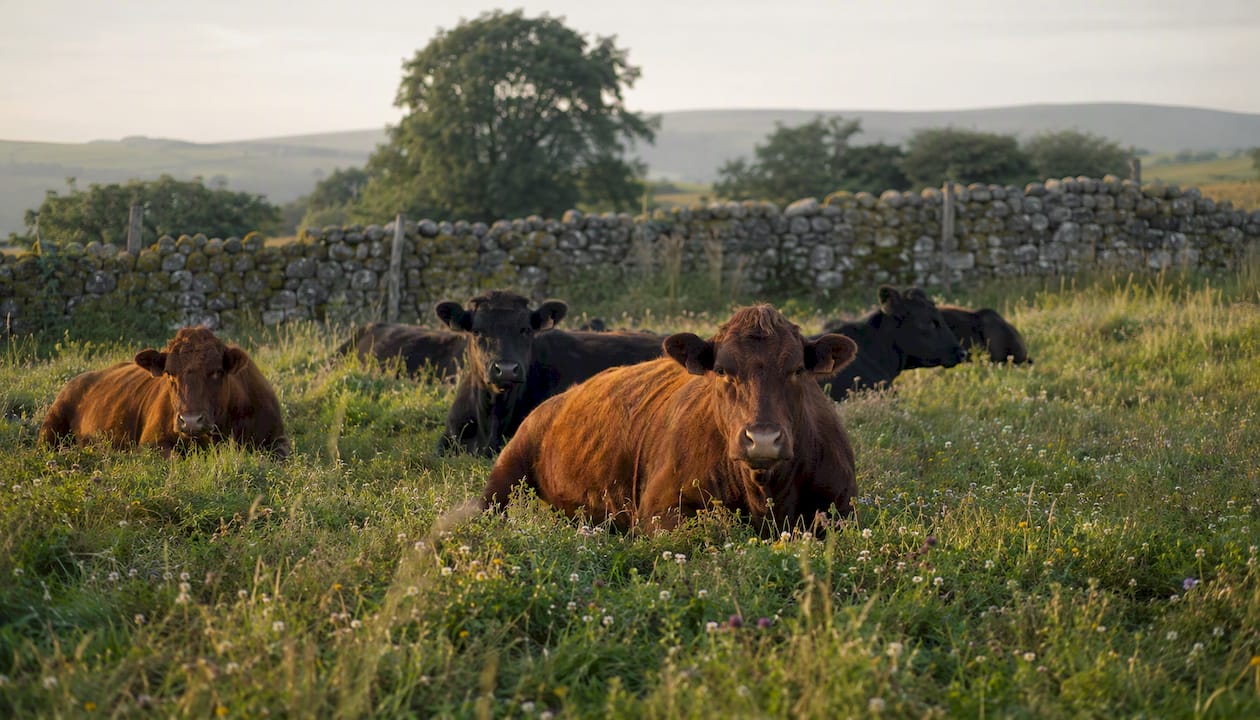
Feed requirements are straightforward: every animal sold as organic must have been fed 100% certified organic feed throughout its life. Genetically modified feed is prohibited, as are synthetic growth additives and most synthetic amino acid supplements. For ruminants (cattle, sheep, goats), the rules go further: a minimum proportion of their diet must come from forage, and they must have access to grazing pasture whenever weather and ground conditions allow.
That grazing requirement is where the nutritional story gets interesting. Grass and legume-rich pasture are naturally high in alpha-linolenic acid (ALA), the plant-based omega-3 fatty acid. When ruminants graze, they convert ALA into longer-chain omega-3s including EPA, DPA, and DHA, which accumulate in the muscle tissue. Research published in the British Journal of Nutrition by Srednicka-Tober et al. confirms that grazing and high-forage diets are the primary mechanism behind elevated omega-3 and PUFA levels in organic ruminant meat.
Statistic: A meta-analysis pooling 67 studies found organic meat contains approximately 47% more n-3 PUFA (omega-3) and 23% more total PUFA than conventional meat, with the difference driven largely by higher forage and grazing in organic systems.
Housing rules reinforce this. Organic standards require lower stocking densities than conventional systems, access to bedding, and the ability for animals to express natural behaviours. For poultry certified as organic, birds must have continuous daytime access to outdoor runs, and indoor space allowances are more generous than even free-range standards.
- Cattle and sheep: access to pasture during the grazing season; housing permitted in winter but must include bedding and adequate space
- Pigs: outdoor access required; rooting material must be provided
- Poultry: continuous daytime outdoor access; lower indoor stocking density than free-range
Pro Tip: When buying online or at a farmers’ market, look for the producer’s certifier page or farm profile on the Soil Association or OF&G website. Both certifiers publish searchable registers of certified producers, so you can confirm the farm’s status before you buy rather than relying solely on the label.
Antibiotics, growth promotants, and what happens when an animal gets sick
The antibiotic question is one of the most practically important differences between organic and conventional meat production, and it is worth understanding precisely what the rules say.
Organic standards prohibit routine prophylactic antibiotic use, meaning antibiotics cannot be given to healthy animals as a preventive measure or to promote growth. Growth hormones and other growth promotants are banned outright. This is a meaningful restriction: in conventional systems, prophylactic antibiotic use in livestock has been linked to the development of antibiotic-resistant bacteria, a public health concern that DEFRA and the UK Health Security Agency have both flagged.
What happens when an animal genuinely falls ill? Treatment is not only permitted but required under animal welfare law. A sick animal must receive appropriate veterinary care, including antibiotics if necessary. However, once treated with a prohibited substance, the animal loses its organic status permanently and cannot be sold as organic. The farmer must record the treatment, and the animal is tracked separately. This creates a financial incentive to invest in preventive husbandry (good housing, lower stocking density, robust breeds) rather than relying on medicines.
Questions worth asking your butcher or producer:
- Are medicine records available for inspection?
- What breeds are used, and are they selected for resilience?
- How many treatment courses were recorded in the last 12 months?
- Are withdrawal periods doubled, as some certifiers require?
The traceability requirement means certifiers can audit medicine records during annual inspections, and any discrepancy between records and the number of animals sold as organic is a serious compliance failure.
Environmental and animal-welfare strengths and trade-offs in organic systems
Organic meat production has genuine environmental and welfare advantages, but it also carries trade-offs that honest buyers should understand. The picture is more nuanced than either advocates or critics typically present.
Documented strengths:
- Higher on-farm biodiversity scores, driven by the prohibition on synthetic pesticides and fertilisers on organic land
- Improved habitat provision: hedgerows, field margins, and mixed cropping are more common in organic systems
- Stronger animal welfare provisions: mandatory outdoor access, lower stocking densities, and a ban on routine mutilations
- Reduced antibiotic use, which matters for broader public health
Documented trade-offs:
- Organic systems typically require more land per kilogram of meat produced, because animals grow more slowly and yields per hectare are lower
- Greenhouse gas emissions per kilogram of product can be higher in some organic systems, though emissions per hectare are often lower; the comparison depends entirely on whether you measure by output or by land area
- Productivity is lower, which is part of why organic meat costs more
The UC Davis CLEAR explainer on organic vs conventional production makes the point plainly: organic systems are not uniformly superior on every environmental metric, and results shift depending on species, region, and the comparison basis used. Per-hectare comparisons often favour organic; per-kilogram comparisons sometimes do not.
For context, the 2023 UK organic farming statistics recorded approximately 462,000 hectares of fully organic land in the UK, a small fraction of total agricultural land. The 2025 DEFRA organic farming statistics confirm organic livestock remains a single-digit percentage of national herds, which means the environmental impact of switching to organic at scale would be substantially different from the current niche position.
For buyers trying to prioritise: if animal welfare is your primary concern, organic certification delivers the strongest legal guarantee. If environmental impact is the priority, the answer depends on which metric you weight most. If nutrition is the driver, the omega-3 difference is real but modest in everyday portion sizes.
For a deeper look at how food choices interact with environmental outcomes, the environmental impact of food explainer covers the broader picture.
How to verify organic meat on the shelf and online
Checking whether meat is genuinely organic takes about 30 seconds if you know what to look for.
- Find the GB-ORG code. Every prepacked organic product sold in the UK must carry a control body code in the format GB-ORG-XX. If it is absent, the product is not certified organic regardless of any other claim on the pack.
- Check the statement of agricultural origin. The label must state where the animal was reared, for example “UK Agriculture” or “Non-EU Agriculture”. This is a legal requirement, not optional marketing copy.
- Look for the certifier name or logo. Soil Association, OF&G, Organic Food Federation, and others each have distinct logos. The logo alone is not sufficient without the code, but it tells you which body to contact if you have questions.
- Verify the code online. The Soil Association and OF&G both maintain searchable public registers of certified operators. Type the farm or producer name into the register to confirm their current certification status.
- Treat unregulated terms with scepticism. ‘Natural’, ‘farm-fresh’, ‘traditionally reared’, and similar phrases have no legal definition in UK food law. They are marketing language, not certification claims.
- Ask at the counter. A butcher selling genuine organic meat should be able to tell you the certifier name, the farm of origin, and the control body code. Hesitation on any of these is a signal to probe further.
- Check the organic standards for the species. Certification rules differ slightly between beef, lamb, pork, and poultry. If you are buying a less common species, confirm the certifier covers that category.
Pro Tip: Both the Soil Association and OF&G registers are mobile-friendly. Pull them up on your phone while you are standing at the meat counter or browsing an online retailer’s product page. A 20-second search is all it takes to confirm whether a producer’s certification is current.
Understanding food quality standards more broadly can also help you interpret what different labels mean across meat, dairy, and produce.
What the research actually says about whether organic meat is healthier
The strongest evidence concerns fatty-acid composition, and it is worth being precise about what the data shows and what it does not.
The meta-analysis published in PMC (PMC4838835), pooling 67 studies, found organic meat contains roughly 47% more n-3 PUFA and 23% more total PUFA than conventional meat. That is a statistically meaningful difference in composition. The systematic review in the British Journal of Nutrition corroborates the fatty-acid finding but flags high heterogeneity between studies and limited evidence for differences in minerals, antioxidants, and other nutrients.
What the research does not show is a long-term human intervention study demonstrating that eating organic meat produces measurable clinical health benefits. The compositional difference is real; the clinical translation is unproven.
Practically, a 100g serving of organic beef might contain a few extra milligrams of omega-3 compared with conventional beef. That is a genuine nutritional advantage, but it is not a substitute for eating oily fish or other rich omega-3 sources. The difference matters most if you eat red meat frequently and your overall omega-3 intake is low.
What we can say reliably:
- Organic ruminant meat (beef, lamb) tends to have a more favourable omega-3 to omega-6 ratio than grain-fed conventional equivalents
- The mechanism is well established: pasture and forage diets increase ALA conversion in ruminants
- Evidence for poultry and pork is thinner and more variable
- No peer-reviewed evidence currently supports claims that organic meat reduces disease risk in humans
What remains uncertain: whether the compositional differences translate into measurable health outcomes over a lifetime of consumption, and whether the difference is large enough to matter against the backdrop of a varied diet.
For a broader look at organic meat benefits and the case for switching, the Naturessoulshop blog covers the practical and nutritional angles in more detail.
An editorial perspective on what the organic label really delivers
The organic label is often sold as a health product. It is more accurately a farming method guarantee with health-adjacent benefits.
The nutritional differences are real, but the honest version of the story is that you are mostly paying for a set of farming practices: no routine antibiotics, mandatory outdoor access, 100% organic feed, and third-party inspection. Those practices happen to produce meat with a better fatty-acid profile in ruminants, but the label itself does not guarantee superior taste, superior nutrition across every metric, or zero environmental impact.
What the certification does deliver reliably is traceability and accountability. A farmer who loses organic status because of a single antibiotic treatment has a strong financial incentive to invest in animal health from the ground up. That structural incentive is arguably more valuable than any single nutritional difference, because it shapes the entire system of care around the animal.
The trade-offs on land use and greenhouse gas emissions are real and should not be dismissed. Organic systems are not a free environmental lunch. But the biodiversity and welfare benefits are also real, and they are legally enforceable in a way that no voluntary ‘sustainable’ or ‘responsible’ label currently is in the UK.
If you are buying organic meat primarily for health reasons, focus on ruminants (beef and lamb) where the omega-3 evidence is strongest, and treat the label as a bonus on top of a diet that already includes oily fish and plenty of plant-based omega-3 sources. If welfare and antibiotic stewardship are your drivers, the certification is doing exactly what it promises.
Naturessoulshop’s organic range: verified sourcing, clear certification
Knowing what the GB-ORG code means is one thing. Finding products that actually carry it, with certifier details you can check, is another.
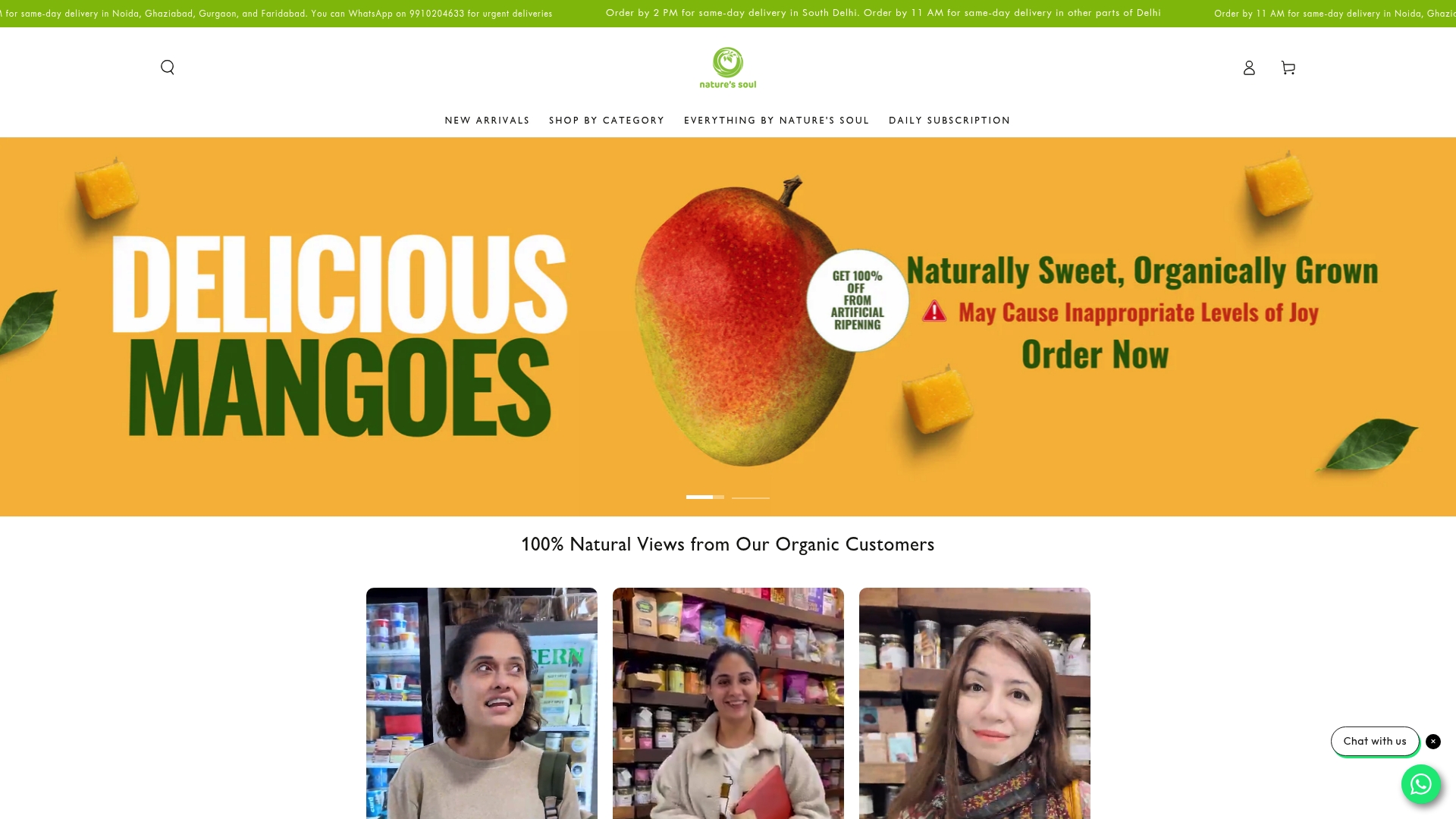
Naturessoulshop stocks certified organic products across meat, fresh produce, dairy, and dry grocery, with certifier information available on product pages so you can verify before you buy. The shop’s approach is straightforward: products listed as organic must carry a recognised control body code, and sourcing details are kept on file. For fresh and chilled organic items, the Nature’s Soul Fresh page is the right starting point. For the full organic range across all categories, browse Naturessoulshop directly.
Disclosure: Naturessoulshop sells organic products commercially. Check the GB-ORG code on each product page and verify it against the certifier’s public register before purchase.
Sources
Primary UK sources:
- Organic food and impact on human health: meta‑analysis (PMC4838835)
- Soil Association — Why organic is better for animals
- Gov
- Composition differences between organic and conventional meat: systematic review and meta‑analysis (British Journal of Nutrition)
- Orgprints — supplementary material for Srednicka‑Tober et al. 2016 (British Journal of Nutrition)
- UC Davis CLEAR explainer — organic vs conventional production systems
- Business Companion — Labelling and describing organic food (printable guide)
- Organic farming statistics 2023: United Kingdom (PDF)
Academic sources:
Environmental trade-offs:


