


TL;DR:
- Micronutrients, including vitamins and minerals, are essential for supporting immune function, metabolism, and cellular health. Proper absorption and bioavailability depend on food pairing, cooking methods, and gut health, making a varied, balanced diet crucial. Higher-risk groups should monitor their levels and prioritize whole foods over supplements for optimal health.
Micronutrients are essential vitamins and minerals required by the body in small amounts to support growth, development, disease prevention, and optimal well-being. Unlike macronutrients such as protein, fat, and carbohydrates, micronutrients provide no direct energy. Instead, they power the biological machinery that keeps every system running. The CDC and WHO both confirm that without adequate micronutrient intake, the body cannot sustain normal immune function, metabolism, or cellular repair. Deficiencies in these nutrients cause conditions as serious as scurvy, rickets, and anaemia, making them anything but minor players in your diet.
What are micronutrients and how are they classified?
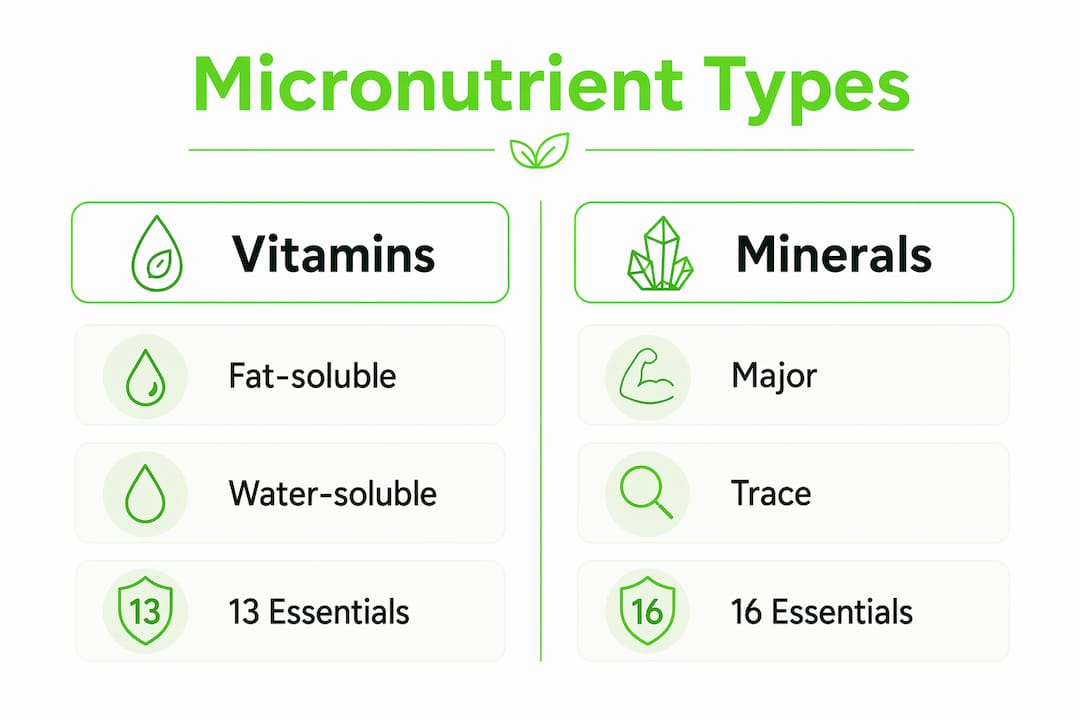
Micronutrients divide into two broad categories: vitamins and minerals. There are 29 primary essential micronutrients, comprising 13 vitamins and 16 minerals, each with distinct roles and sources. Understanding this classification is the clearest way to grasp the full scope of what micronutrients do.
Vitamins: fat-soluble and water-soluble
Vitamins split into two groups based on how the body stores and uses them. Fat-soluble vitamins, specifically A, D, E, and K, are absorbed alongside dietary fat and stored in body tissues. Water-soluble vitamins, which include the eight B vitamins and vitamin C, dissolve in water and are not stored in significant quantities. This distinction matters enormously for dietary planning and supplementation safety, which is covered in detail later.
Minerals: major and trace
Minerals divide into major minerals and trace minerals. Major minerals, including calcium, magnesium, potassium, sodium, and phosphorus, are needed in relatively larger amounts. Trace minerals such as iron, zinc, selenium, iodine, and manganese are required in far smaller quantities but are no less critical. Iron, for example, is central to oxygen transport in red blood cells, and zinc underpins immune response and wound healing.
How micronutrients differ from macronutrients
Macronutrients supply calories and structural material. Micronutrients do not. Their role is to enable energy conversion from macronutrients into usable biological processes. Think of macronutrients as the fuel and micronutrients as the engine components that make combustion possible. Without the right vitamins and minerals, your body cannot extract energy from food efficiently, regardless of how much you eat.
| Type | Examples | Primary function |
|---|---|---|
| Fat-soluble vitamins | A, D, E, K | Vision, bone health, antioxidant defence |
| Water-soluble vitamins | B1, B2, B6, B12, C | Energy metabolism, nerve function, immunity |
| Major minerals | Calcium, magnesium, potassium | Bone structure, muscle contraction, fluid balance |
| Trace minerals | Iron, zinc, selenium, iodine | Oxygen transport, immune function, thyroid regulation |
How do micronutrients support health?
Micronutrients act as the chemical core for physiological regulation, including blood pressure control, nerve signalling, and hormonal balance. Grouping them by function, rather than by alphabetical listing, reveals how they interact and support each other. This functional perspective is far more useful for making real dietary decisions.

Energy metabolism: B vitamins, particularly B1 (thiamine), B2 (riboflavin), B3 (niacin), and B5 (pantothenic acid), are cofactors in the enzymatic reactions that convert carbohydrates, fats, and proteins into ATP. Without them, fatigue sets in regardless of caloric intake.
Immune function: Vitamin C, vitamin D, zinc, and selenium are the primary micronutrients supporting immune defence. Vitamin C stimulates the production of white blood cells, while vitamin D modulates the immune response. Zinc deficiency directly impairs immune cell development. You can read more about immune-supporting food choices and how to build these into your daily meals.
Bone and muscle health: Calcium and vitamin D work together as a functional pair for bone density/8.03%3A_Vitamins_and_Minerals_Functional_Categories). Vitamin D facilitates calcium absorption in the gut. Without sufficient vitamin D, calcium simply passes through the digestive system unused. Magnesium also plays a supporting role in muscle contraction and relaxation.
Blood health: Iron and vitamin C form another powerful pairing. Iron is the core component of haemoglobin, the protein that carries oxygen through the bloodstream. Vitamin C significantly improves the absorption of plant-based iron, making food pairing a practical strategy rather than a theoretical one.
Antioxidant protection: Vitamins C and E, along with selenium and zinc, neutralise free radicals that damage cells and accelerate ageing. This antioxidant function is one reason that diets rich in colourful fruits and vegetables correlate with lower rates of chronic disease.
Pro Tip: Pair a handful of strawberries or a squeeze of lemon juice with lentils or spinach at mealtimes. The vitamin C in the fruit dramatically increases the iron your body actually absorbs from the plant-based source.
| Function | Key micronutrients | Food sources |
|---|---|---|
| Energy metabolism | B vitamins | Wholegrains, eggs, legumes |
| Immune support | Vitamin C, D, zinc | Citrus, oily fish, pumpkin seeds |
| Bone health | Calcium, vitamin D | Dairy, fortified plant milks, sunlight |
| Blood health | Iron, vitamin C | Red meat, lentils, leafy greens |
| Antioxidant defence | Vitamins C and E, selenium | Berries, nuts, seeds |
What affects micronutrient absorption and bioavailability?
Consuming a micronutrient-rich diet does not automatically mean your body absorbs all of it. Bioavailability refers to the proportion of a nutrient that actually enters circulation and becomes available for use. Several factors determine this, and understanding them separates good nutrition from genuinely effective nutrition.
Absorption enhancers and inhibitors operate simultaneously in most meals. Vitamin C enhances iron absorption from plant sources, while phytates found in raw grains and legumes bind to minerals like zinc, calcium, and iron, reducing their uptake. Oxalates in spinach and rhubarb similarly inhibit calcium absorption. Soaking, sprouting, or fermenting grains and legumes reduces phytate content substantially. Steaming vegetables rather than boiling preserves water-soluble vitamins that would otherwise leach into cooking water.
The fat-soluble versus water-soluble distinction carries a critical safety implication. Fat-soluble vitamins accumulate in liver and fatty tissues and can reach toxic levels with excessive supplementation. Vitamins A and D are the most common culprits. Water-soluble vitamins, by contrast, are excreted in urine when consumed in excess, though very high doses of B6 over extended periods can still cause nerve damage. This is why high-dose supplements deserve careful consideration, not casual use.
Gut health also plays a direct role. A compromised gut lining, whether from chronic inflammation, coeliac disease, or dysbiosis, reduces the surface area available for nutrient absorption. Addressing gut health is therefore as relevant to micronutrient status as the food you eat. For a deeper look at how vitamins and minerals pair to enhance absorption, the interaction between nutrients and supplement formats is worth understanding before adding anything to your routine.
Pro Tip: Add a small amount of healthy fat, such as olive oil or avocado, to salads containing fat-soluble vitamins like vitamin K and vitamin E. Without dietary fat present, these vitamins pass through largely unabsorbed.
How to get enough micronutrients through your daily diet
Meeting your micronutrient needs through food is achievable with a structured approach. The following steps reflect what consistently works for health-conscious individuals who want to cover their nutritional bases without obsessing over supplements.
-
Eat across the colour spectrum. Different pigments in fruits and vegetables represent different phytonutrients and micronutrients. Orange and yellow foods supply beta-carotene (a precursor to vitamin A). Dark leafy greens provide folate, iron, and vitamin K. Red and purple foods are rich in antioxidants including vitamin C.
-
Include animal and plant protein sources. Citrus supplies vitamin C, dairy provides calcium, and meats deliver B12. For those following a plant-based diet, fortified foods and strategic food pairing become especially important. Explore vegan iron sources and practical absorption strategies if you are reducing or eliminating animal products.
-
Address vitamin D separately. Vitamin D is the one micronutrient that food alone rarely covers adequately. Sunlight triggers its synthesis in the skin, but people in northern latitudes, those who spend most time indoors, and individuals with darker skin tones produce less. A daily supplement of 10 micrograms is recommended by Public Health England for adults, particularly through autumn and winter.
-
Prioritise whole foods over fortified products. Fortified cereals and drinks can fill gaps, but whole foods deliver micronutrients alongside fibre, phytonutrients, and cofactors that improve absorption. A bowl of oats with berries and a handful of seeds covers B vitamins, zinc, iron, and vitamin C in one meal.
-
Check your status if you belong to a higher-risk group. Vegans, adults over 50, and pregnant women are more likely to have suboptimal levels of vitamin B12, calcium, vitamin D, and iron. A blood test through your GP provides a clear baseline and removes the guesswork from supplementation decisions.
Understanding the physiological roles of micronutrients in relation to your own diet and lifestyle is the most direct way to make these steps meaningful rather than generic.
Key takeaways
Micronutrients are the vitamins and minerals that regulate every major biological function, and no amount of macronutrient optimisation compensates for their absence.
| Point | Details |
|---|---|
| Two core categories | Micronutrients comprise 13 vitamins and 16 minerals, each with specific biological roles. |
| Functional pairing matters | Calcium and vitamin D, and iron and vitamin C, work synergistically and should be consumed together. |
| Bioavailability is not automatic | Phytates, oxalates, and poor gut health reduce absorption; cooking methods and food pairing improve it. |
| Fat-soluble vitamins carry risk | Vitamins A, D, E, and K accumulate in tissue and can reach toxic levels with excessive supplementation. |
| Higher-risk groups need monitoring | Vegans, older adults, and pregnant women should check B12, calcium, vitamin D, and iron levels regularly. |
Why micronutrients deserve more attention than they get
Most nutrition conversations centre on macronutrients. How much protein? How many carbohydrates? The micronutrient conversation gets far less airtime, and that is a genuine gap in how most people approach their diet.
What I find most striking is how many people experience persistent fatigue, low mood, or frequent illness and never consider that a micronutrient shortfall might be contributing. Iron deficiency is the most common nutritional deficiency globally, yet it often goes undiagnosed for months because the symptoms, tiredness, pale skin, difficulty concentrating, are attributed to stress or poor sleep. Vitamin D insufficiency follows a similar pattern, particularly in the UK where sunlight is limited for much of the year.
The other thing worth saying plainly is that supplements are not a substitute for dietary variety. A multivitamin will not replicate the synergistic effect of eating a genuinely diverse diet. The interaction between nutrients in whole foods, the fibre, the phytonutrients, the cofactors, is something no capsule replicates. Supplements have a legitimate role, particularly for B12 in vegans or vitamin D in winter, but they work best as targeted corrections, not as a foundation.
My practical advice is to think in terms of food groups and colour variety rather than individual nutrients. If your plate consistently includes leafy greens, legumes, whole grains, quality protein, and colourful fruits, you are covering most of your micronutrient bases without needing a spreadsheet.
— Arjit
Support your micronutrient intake with Naturessoulshop
Getting your micronutrients from clean, whole food sources is straightforward when you have the right products to hand.

Naturessoulshop stocks a curated range of organic foods and health products across fresh produce, dairy, vegan and gluten-free options, and dietary supplements, all with clean, traceable ingredients. Whether you are looking for iron-rich legumes, calcium-packed dairy alternatives, or vitamin C-dense fruits, the health category at Naturessoulshop brings everything together in one place. Clean ingredients, no unnecessary additives, and products chosen with your nutritional goals in mind.
FAQ
What are micronutrients in simple terms?
Micronutrients are vitamins and minerals the body needs in small amounts to function correctly. They support immunity, energy production, bone health, and hundreds of other biological processes.
What are the main types of micronutrients?
The two main types are vitamins and minerals. Vitamins divide into fat-soluble (A, D, E, K) and water-soluble (B complex and C); minerals divide into major minerals such as calcium and trace minerals such as iron and zinc.
What are common micronutrient deficiency symptoms?
Common symptoms include fatigue and pallor from iron deficiency, bone pain and muscle weakness from vitamin D deficiency, and bleeding gums from vitamin C deficiency. Deficiencies in B12 can cause nerve damage and cognitive decline over time.
How can I get enough micronutrients without supplements?
Eating a varied diet that includes colourful fruits and vegetables, whole grains, legumes, dairy or fortified alternatives, and quality protein sources covers most micronutrient needs. Vitamin D is the main exception and often requires supplementation, particularly in the UK.
Are micronutrients the same as macronutrients?
No. Macronutrients, which are protein, fat, and carbohydrates, provide energy and structural material. Micronutrients provide no calories but regulate the processes that convert macronutrients into usable energy and support every major body system.


