


TL;DR:
- Outdoor exercise offers a range of benefits, including increased calorie burn, muscle engagement, and stress reduction. Activities like trail running, hiking, and outdoor yoga are accessible for all fitness levels and provide mental health rewards. Proper preparation, including suitable gear and safety precautions, enhances outdoor workout effectiveness and safety.
Outdoor physical activities are exercises performed in natural settings that combine movement, fresh air, and varied terrain to improve both physical fitness and mental well-being. The term covers everything from trail running and rock climbing to outdoor yoga and family hikes, making it one of the most accessible fitness categories available. Exposure to nature reduces cortisol levels significantly, which means every session outdoors doubles as stress relief. Sunlight exposure and sensory input from natural environments also improve workout adherence compared to indoor gym sessions. Whether you are a seasoned athlete or a complete beginner, there is an outdoor activity that fits your schedule, fitness level, and family.
1. What are the best outdoor physical activities for fitness?
The ten activities below cover cardio, strength, flexibility, and mindfulness. Each one uses the natural environment as its gym, which means lower cost and higher variety than any indoor facility.
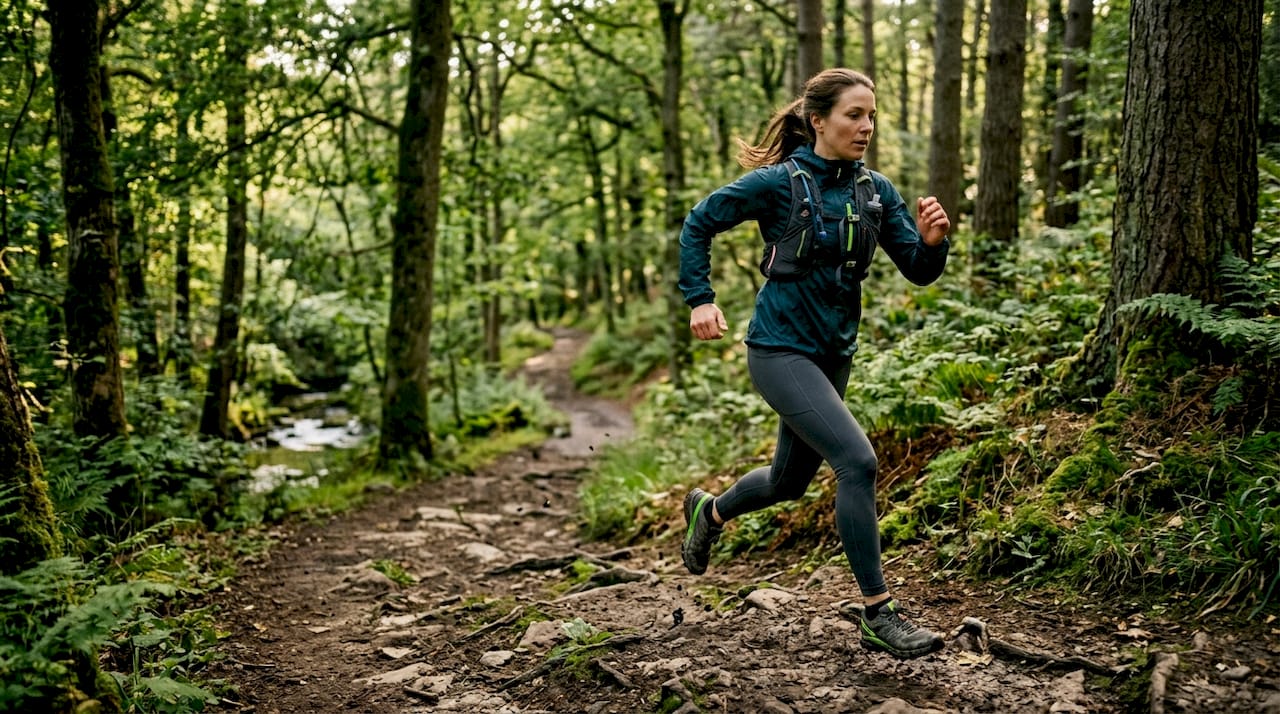
2. Trail running
Trail running is the highest-calorie outdoor sport on this list. Trail running burns up to 20% more calories than treadmill running because uneven terrain forces constant micro-adjustments from your legs, hips, and core. That extra muscular demand also builds ankle stability and proprioception that flat-road running simply cannot replicate.
- Intensity: High
- Equipment: Trail shoes, moisture-wicking kit, hydration vest
- Best for: Adults seeking cardiovascular challenge and calorie burn
Pro Tip: Start on graded forest paths before moving to technical single-track. Your ankles need time to adapt to uneven ground.
3. Cycling outdoors
Road and off-road cycling deliver sustained cardiovascular conditioning with lower joint impact than running. Hill climbs recruit the glutes and quadriceps intensely, while descents demand balance and concentration. A 60-minute ride through varied terrain works the lower body, elevates heart rate, and provides the cortisol-reducing benefits of nature exposure.
- Intensity: Moderate to high
- Equipment: Road or mountain bike, helmet, padded shorts
- Best for: All ages, including older adults managing joint conditions
4. Hiking
Hiking is the most accessible entry point into outdoor fitness. Outdoor recreation is scalable across all fitness levels, and a gentle 5-kilometre trail walk delivers measurable cardiovascular benefit for beginners while a steep ridge route challenges experienced athletes. Carrying a loaded rucksack, a practice known as rucking, adds resistance training to the same movement pattern.
- Intensity: Low to moderate
- Equipment: Walking boots, rucksack, trekking poles (optional)
- Best for: Families, older adults, beginners
Hiking also pairs naturally with mindfulness. Paying attention to birdsong, tree canopy, and changing light keeps the mind present in a way that a treadmill never can.
5. Park bench bodyweight circuits
A park bench is a fully functional piece of gym equipment. Step-ups, incline press-ups, tricep dips, and Bulgarian split squats all require nothing more than a stable surface. Always test public outdoor equipment for stability before loading it with your bodyweight, as weathered wood or loose bolts create real injury risk.
- Intensity: Moderate
- Equipment: None beyond the bench; optional resistance bands
- Best for: Adults wanting strength work without a gym membership
Pro Tip: Carry a small resistance band in your pocket. It adds upper-body pulling movements that bodyweight pressing circuits lack.
6. Rock climbing and bouldering
Outdoor bouldering and sport climbing build grip strength, upper-body pulling power, and problem-solving focus simultaneously. The mental engagement required to read a route means climbers rarely notice how hard they are working. Natural rock faces also engage core and stabiliser muscles more effectively than gym machines because every hold and foothold demands independent balance.
- Intensity: Moderate to high
- Equipment: Climbing shoes, chalk bag; rope and harness for sport routes
- Best for: Adults and teenagers seeking adventurous physical activities
7. Outdoor yoga and stretching
Outdoor yoga is a low-impact activity with measurable mental health benefits. Practising on grass or a park surface introduces subtle instability that deepens core engagement compared to a studio floor. The combination of breathwork, movement, and natural surroundings produces a pronounced reduction in stress hormones, making it one of the most efficient nature exercise ideas for recovery days.
- Intensity: Low
- Equipment: Yoga mat or firm grass surface
- Best for: All ages, post-workout recovery, stress management
Outdoor yoga also works as a family activity. Children engage with the novelty of practising outside, and the session requires no equipment beyond a flat patch of ground.
8. Paddle sports: kayaking and paddleboarding
Kayaking and stand-up paddleboarding (SUP) combine upper-body strength, core stability, and cardiovascular endurance in a single session. SUP in particular demands constant balance correction, which activates deep stabiliser muscles along the spine and hips. Both activities sit at moderate intensity and are genuinely enjoyable for families, making them strong candidates for the best outdoor activities on or near water.
- Intensity: Moderate
- Equipment: Board or kayak, paddle, buoyancy aid, wetsuit in cooler months
- Best for: Families, adults seeking low-impact full-body conditioning
9. Tai chi in nature
Tai chi is a slow, flowing martial art practised outdoors across East Asia for centuries. Western exercise science now confirms what practitioners have long known: regular tai chi improves balance, reduces fall risk in older adults, and lowers cortisol. A 20-minute morning session in a park requires no equipment and delivers both physical conditioning and mental calm.
- Intensity: Very low
- Equipment: None
- Best for: Older adults, beginners, anyone recovering from injury
10. Family outdoor games and nature scavenger hunts
Structured family outdoor games, including orienteering, nature scavenger hunts, and team relay races, deliver genuine physical activity while building social bonds. Children accumulate significant movement without perceiving it as exercise. Adults benefit from the same effect. These activities require no fitness baseline, which makes them the most inclusive option on this list.
- Intensity: Low to moderate
- Equipment: Map, compass, or printed scavenger hunt list
- Best for: Mixed-age families, school groups, community events
11. How to structure effective outdoor workouts
The most effective outdoor circuits follow a clear format. Expert guidance recommends 3–4 rounds of exercises with each movement performed for 45–60 seconds followed by 15–20 seconds of rest. That structure delivers cardiovascular and muscular stimulus without requiring any equipment beyond your own bodyweight and the environment around you.
Natural terrain adds resistance that gym machines cannot replicate. Uneven surfaces engage stabiliser muscles more effectively than flat gym floors, which means a hillside squat works harder than a machine leg press at equivalent load. Beginners should start on flat grass and progress to slopes as their balance improves.
For people with limited time, 15-minute snack-sized circuits performed consistently outperform occasional long sessions. A portable resistance band or small towel expands exercise variety without adding meaningful weight to a bag.
Pro Tip: Sequence your circuit as lower body, upper body, core, then cardio burst. That rotation prevents local muscle fatigue from cutting your session short.
A sample 20-minute outdoor circuit:
- Step-ups on a park bench (45 seconds)
- Incline press-ups (45 seconds)
- Walking lunges on grass (45 seconds)
- Plank hold (45 seconds)
- Sprint or fast walk between two trees (60 seconds)
- Rest 90 seconds, then repeat for 3–4 rounds
12. Essential safety tips for outdoor workouts
Safe outdoor exercise depends on preparation before you leave the house. Moisture-wicking apparel, trail-appropriate footwear, and eco-friendly sunscreen are the three non-negotiable items for any session lasting more than 30 minutes. Footwear matters most: trail shoes with grip prevent slips on wet grass or loose gravel and engage stabiliser muscles more effectively than flat trainers.
“The single biggest mistake outdoor exercisers make is treating nature like a gym floor. Terrain changes constantly. Assess every surface before you load it with your bodyweight, and always carry more water than you think you need.”
Environmental awareness protects both you and the spaces you use. Follow Leave No Trace principles: take all litter home, stay on marked paths, and avoid disturbing wildlife. These habits preserve the natural environments that make outdoor fitness possible in the first place.
Pro Tip: Check the weather forecast the evening before, not the morning of. Conditions change fast on exposed routes, and a 10-minute preparation window is not enough to adjust your kit.
Key safety checklist:
- Carry water for every session over 20 minutes
- Tell someone your route and expected return time
- Wear visible colours in low-light conditions
- Check park benches and outdoor structures before use
- Apply sunscreen even on overcast days
13. Integrating outdoor activity into daily family life
Making outdoor exercise a daily habit requires removing friction, not adding motivation. Short, repeatable options work better than ambitious plans that collapse after two weeks. A 20-minute family walk after dinner, a weekend park circuit, or a Saturday morning nature scavenger hunt all count as meaningful physical activity.
Social connection accelerates adherence. Activities that involve other people, whether a running club, a family hike, or a community tai chi group, create accountability that solo workouts rarely provide. Children who exercise outdoors regularly with family members develop lifelong movement habits far more reliably than those who attend structured sports classes alone.
Fuelling outdoor sessions correctly matters as much as the exercise itself. Light, natural snacks before activity and proper post-workout recovery foods afterwards support consistent energy and muscle repair. Naturessoulshop stocks a wide range of organic, clean-ingredient options that fit neatly into an active outdoor lifestyle.
Practical ways to build outdoor movement into the week:
- Replace one car journey per week with a walk or cycle
- Schedule a fixed family outdoor session each Saturday morning
- Use lunch breaks for a 15-minute park circuit
- Combine nature walks with learning, such as identifying local plants or birds
- Keep a bag packed with basic kit so spontaneous sessions require no preparation
Key takeaways
Outdoor exercise delivers measurable physical and mental health benefits that indoor training cannot fully replicate, making consistent time outside the single most effective fitness habit for individuals and families.
| Point | Details |
|---|---|
| Trail running leads on calorie burn | It burns up to 20% more calories than treadmill running due to terrain variation. |
| Natural terrain improves muscle engagement | Uneven surfaces activate stabilisers and core muscles more than flat gym floors. |
| Short sessions still work | 15-minute outdoor circuits deliver real fitness gains when performed consistently. |
| Preparation prevents injury | Trail footwear, sunscreen, and hydration are non-negotiable for safe outdoor workouts. |
| Outdoor activity suits all ages | Options range from gentle nature walks to high-intensity climbing, with no fitness baseline required. |
Why I think most people underestimate outdoor fitness
Most people treat outdoor exercise as a lesser version of the gym. They assume that without machines, mirrors, and air conditioning, the session cannot be serious. That assumption is wrong, and the evidence is clear.
I have spent years watching people transform their fitness by simply moving their workouts outside. The terrain does the programming for you. A hillside forces progressive overload. A muddy trail demands balance work you would never think to programme yourself. Fresh air and changing scenery keep motivation alive in a way that a gym playlist never quite manages.
The mental health benefit is the part most people discover last and value most. Consistent outdoor exercise does not just reduce stress in the moment. It changes how you respond to pressure across the whole day. That is not a soft benefit. It is a measurable physiological shift driven by cortisol reduction and sensory engagement with the natural world.
My honest recommendation for beginners: start with hiking. It requires no technique, no expensive equipment, and no fitness baseline. Walk for 30 minutes three times a week for a month. By the end of that month, you will want to do more. That is how outdoor fitness works. It earns its own momentum.
Weather is the excuse I hear most often. It is rarely the real barrier. The real barrier is not owning the right kit. A waterproof jacket and a pair of trail shoes remove 90% of the weather objection permanently. Invest in those two items before anything else.
— Arjit
Fuel your outdoor fitness with Naturessoulshop
Outdoor exercise demands clean, reliable nutrition before, during, and after every session. Naturessoulshop is an organic food and wellness store stocking fresh produce, dry grocery, dairy, vegan, and gluten-free options, all with clean, natural ingredients that support an active outdoor lifestyle.

Whether you need natural energy before a hike or want to browse healthy snack options that travel well on trail runs and family walks, Naturessoulshop has you covered. The full range of organic groceries and wellness products is available online, with options suited to every dietary need, from vegan to gluten-free. Clean food and outdoor movement are a natural pairing. Naturessoulshop makes the food side straightforward.
FAQ
What are outdoor physical activities?
Outdoor physical activities are exercises performed in natural settings, including running, hiking, cycling, climbing, and yoga. They improve cardiovascular fitness, strength, and mental well-being through movement in natural environments.
How do outdoor workouts compare to gym sessions?
Outdoor workouts engage stabiliser muscles more effectively due to uneven terrain, and trail running burns up to 20% more calories than treadmill running. Natural environments also reduce cortisol levels, adding a mental health benefit that indoor sessions rarely match.
Are outdoor activities suitable for beginners and older adults?
Outdoor recreation is scalable across all fitness levels and ages, with gentle options like nature walking, tai chi, and outdoor yoga requiring no prior fitness. Beginners should start on flat, well-marked routes and progress gradually.
How long should an outdoor workout be?
A 15-minute snack-sized circuit performed consistently delivers real fitness gains for busy schedules. Longer sessions of 45–60 minutes suit those building endurance through hiking, cycling, or trail running.
What should I bring to an outdoor workout?
The three essentials are moisture-wicking clothing, trail-appropriate footwear, and eco-friendly sunscreen. Carry water for any session over 20 minutes, and always check outdoor structures like park benches for stability before use.


