


TL;DR:
- Outdoor fitness involves structured activities performed in open-air environments, offering mental and physical benefits. A balanced weekly routine includes aerobic, HIIT, and recovery sessions, utilizing natural features and terrain for effective workouts. Partner workouts, proper hydration, layered clothing, and nutritious post-session food improve consistency and performance outdoors.
Outdoor fitness is defined as any structured or semi-structured physical activity performed in open-air environments, from park circuits and trail runs to paddleboarding and group yoga sessions. The best outdoor fitness ideas combine aerobic endurance, bodyweight strength, and flexibility work to improve cardiovascular health, reduce stress, and sharpen motivation. Research confirms that outdoor workouts reduce stress and increase motivation compared to indoor exercise. That psychological edge is the reason many fitness enthusiasts find it far easier to stay consistent outside than in a gym.
1. What do balanced outdoor workout routines look like?
A balanced weekly routine includes 2–3 aerobic sessions, 1–2 bodyweight HIIT circuits, and one recovery-focused session. That structure covers every major fitness component without overloading any single system.
Aerobic sessions work best as trail runs, brisk hikes, or cycling on varied terrain. These activities build cardiovascular endurance and strengthen the legs through natural resistance. Aim for 30–60 minutes per session at a pace where you can hold a short conversation.
HIIT circuits add intensity without equipment. Bodyweight park circuits use 45-second work intervals followed by 15-second rest periods, repeated for 3–4 rounds to complete a full-body workout in under 30 minutes. That format is time-efficient and adaptable to any fitness level.
Recovery sessions matter as much as the hard work. Outdoor yoga, gentle walking, or a slow swim on a rest day keeps blood moving, reduces muscle soreness, and prevents overuse injuries. Rotating your workout types across the week also stops your body from adapting too quickly, which keeps progress steady.
Pro Tip: Rotate the terrain you train on each week. Grass, gravel, and tarmac each challenge your stabilising muscles differently, which builds functional strength you cannot replicate on a flat gym floor.
2. No-equipment outdoor exercises using natural features
Bodyweight training outdoors is one of the most accessible outdoor fitness ideas available. Beginners should start with foundational movements including squats, lunges, push-ups, and core bracing, keeping sessions between 15 and 30 minutes using minimal props like park benches.
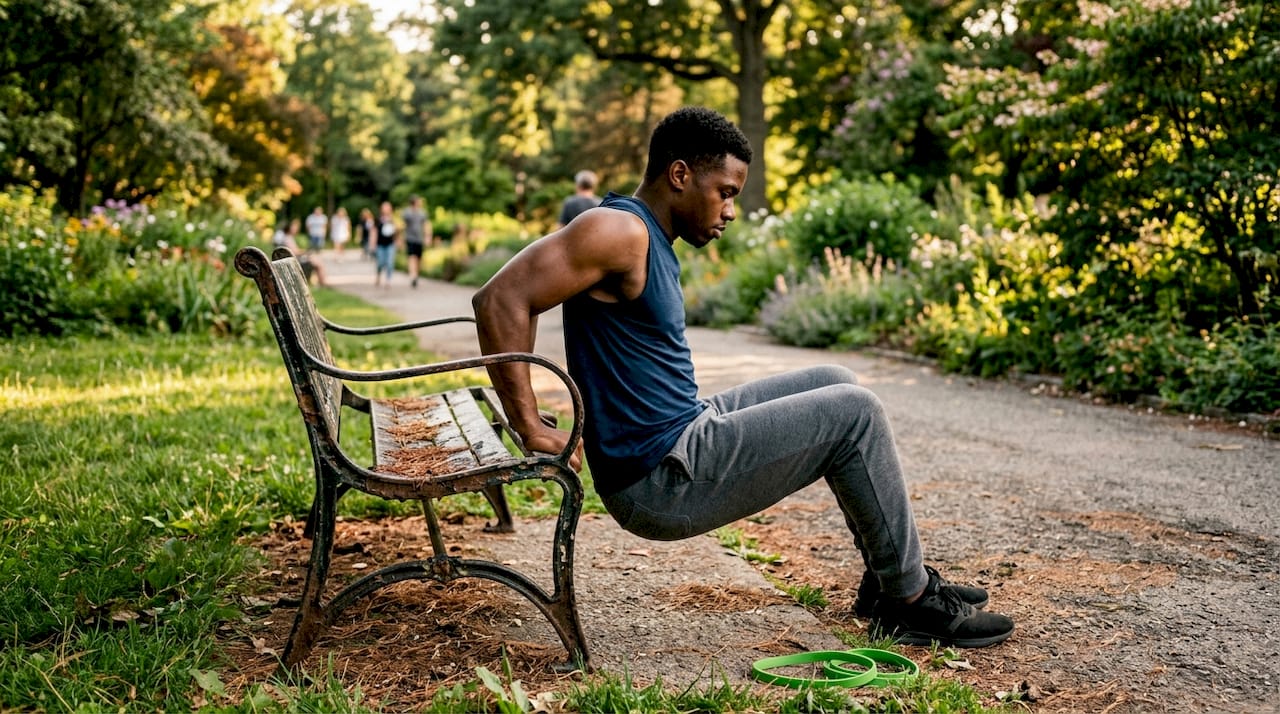
Park benches, steps, and low walls add genuine variety to a bodyweight session. A bench supports incline push-ups, tricep dips, step-ups, and Bulgarian split squats. Each of these movements targets a different muscle group, so a single bench can anchor a complete lower and upper body circuit.
Here are the core movements to build your circuit around:
- Squats and jump squats for leg power and cardiovascular output
- Reverse lunges for single-leg stability and glute activation
- Push-up variations (wide, narrow, incline) for chest, shoulder, and tricep strength
- Plank holds and mountain climbers for core endurance and hip flexor control
- Step-ups and box jumps using a bench for explosive leg strength
- Tricep dips off a bench edge for posterior arm strength
Safety is non-negotiable when using outdoor furniture. Select sturdy, stable benches before loading them with your bodyweight. On uneven grass, reduce your rep count by 10–20% initially, because the unstable surface increases the demand on your stabilising muscles and raises fatigue faster than expected.
Functional exercises like speed skaters and forward step-downs prepare your body for uneven outdoor terrain and reduce injury risk on trails. Adding two or three of these movements to your warm-up takes under five minutes and pays dividends on longer runs.
Pro Tip: Always test a bench by pressing down firmly with both hands before using it for dips or step-ups. A wobbly bench mid-set is a sprained wrist waiting to happen.
3. Fun fitness activities outside for every level
The best outdoor exercises are the ones you actually look forward to. Variety keeps motivation high and works different energy systems, so mixing activity types across the week produces better results than repeating the same run every day.
- Trail running builds endurance, strengthens the ankles and hips, and delivers a stronger cardiovascular stimulus than road running at the same pace, because varied terrain demands constant micro-adjustments from your muscles.
- Hiking offers a lower-impact aerobic workout that suits all fitness levels. A steep hill hike with a loaded rucksack becomes a genuine strength and cardio session.
- Roller skating and speed intervals deliver short, sharp cardio bursts that rival cycling for calorie output. Alternating sprint intervals with recovery glides mimics HIIT structure without a single squat.
- Outdoor HIIT with resistance bands adds progressive overload to bodyweight circuits. Resistance bands are lightweight, portable, and versatile enough to replace a full rack of dumbbells for most compound movements.
- Paddleboarding trains balance, core stability, and shoulder endurance simultaneously. A one-hour session on open water is deceptively demanding and doubles as active recovery from high-intensity days.
- Outdoor yoga improves flexibility, breathing control, and mental focus. Practising on grass rather than a studio floor adds a proprioceptive challenge that deepens every pose.
- Group fitness challenges outdoors increase adherence significantly. Partner workouts increase follow-through compared to solo plans, because mutual accountability replaces the need for pure willpower.
| Activity | Primary benefit | Equipment needed |
|---|---|---|
| Trail running | Cardiovascular endurance | Trail shoes |
| Outdoor HIIT | Full-body strength and cardio | None or resistance bands |
| Paddleboarding | Core stability and balance | Board and paddle |
| Outdoor yoga | Flexibility and recovery | Mat (optional) |
| Hiking with rucksack | Aerobic endurance and leg strength | Rucksack |
4. How to optimise outdoor workouts with hydration and gear
Performance outdoors depends heavily on preparation before you leave the house. Hydration, clothing, and a small amount of portable kit make the difference between a strong session and one you cut short.
Hydration is the most overlooked variable in outdoor training. For sessions under 60 minutes, drink 200–300 millilitres of water at regular intervals. For sessions exceeding 60 minutes, switch to an electrolyte drink to prevent cramps and maintain endurance. Dehydration outdoors accelerates faster than indoors because wind and sun increase sweat rate without you always noticing.
Practical preparation tips:
- Carry a single resistance band. Portable resistance bands maximise workout variety and require almost no space in a bag, making them the most cost-effective outdoor fitness investment available.
- Layer clothing for variable weather. A moisture-wicking base layer, a light mid-layer, and a wind-resistant shell cover most British weather conditions. Remove layers as your body temperature rises.
- Apply SPF 30 or higher before every outdoor session, even on overcast days. UV exposure is cumulative, and most people underestimate how much they receive during a 45-minute run.
- Time sessions wisely. Training in the early morning or early evening avoids peak UV hours and reduces heat-related fatigue in warmer months.
- Fuel post-workout with whole foods. A combination of protein and complex carbohydrates within 60 minutes of finishing supports muscle repair and glycogen replenishment. Post-workout recovery foods and athletic recovery nutrition both offer detailed guidance on what to eat and when.
Key takeaways
Outdoor fitness delivers the greatest results when you combine aerobic sessions, bodyweight HIIT circuits, and recovery work across a structured weekly plan.
| Point | Details |
|---|---|
| Structure your week | Include 2–3 aerobic sessions, 1–2 HIIT circuits, and one recovery session weekly. |
| Use what is around you | Park benches, steps, and natural terrain replace gym equipment for a full-body workout. |
| Prioritise hydration | Drink 200–300ml of water per session; switch to electrolytes for sessions over 60 minutes. |
| Add social accountability | Partner workouts increase adherence more reliably than solo motivation alone. |
| Pack light but smart | A resistance band and layered clothing cover most outdoor training needs in any weather. |
Why outdoor training changed how I think about fitness
I spent years treating the gym as the only legitimate place to train. The machines felt measurable, the environment controlled. Then a knee injury forced me outside for low-impact walking, and I never fully went back.
What surprised me most was not the physical change. It was the mental shift. Sessions I dreaded on a treadmill became genuinely enjoyable on a trail. I started looking forward to workouts rather than ticking them off. That shift in attitude is what outdoor exercise does to motivation that no gym programme can replicate.
The practical challenge most people face is consistency when the weather turns. My solution was simple: commit to a partner. Social accountability outdoors is not just a nice idea. It is the single most reliable mechanism I have found for showing up on cold mornings. You will not cancel on a friend the way you cancel on yourself.
My honest advice is to start with your local green space and one bodyweight circuit. You do not need a trail or a coastline. A park bench and 25 minutes is enough to build a habit that lasts.
— Arjit
Fuel your outdoor fitness with Naturessoulshop
Outdoor training demands clean, reliable nutrition. What you eat before and after a session shapes your energy, recovery, and long-term progress.

Naturessoulshop stocks a full range of organic and natural products across fruits and vegetables, dry grocery, dairy, vegan and gluten-free options, and skin care. Every product uses clean ingredients with no unnecessary additives. Whether you need a plant-based snack before a morning run or a wholefood meal to support recovery, the range covers it. Fitness enthusiasts following a plant-forward approach can also browse healthy snacking ideas to find options that fit every training day.
FAQ
What are the best outdoor exercises for beginners?
Beginners should start with squats, lunges, push-ups, and plank holds, keeping sessions between 15 and 30 minutes. A park bench adds variety through step-ups and incline push-ups without any additional equipment.
How often should I exercise outside each week?
A balanced outdoor routine includes 2–3 aerobic sessions, 1–2 HIIT circuits, and one recovery session per week. That frequency builds fitness progressively while allowing adequate rest between hard efforts.
Do I need equipment for outdoor workouts?
No equipment is required for an effective outdoor session. Bodyweight movements and natural features like benches and steps provide enough resistance for a complete strength and cardio workout.
How much water should I drink during an outdoor workout?
Drink 200–300 millilitres of water at regular intervals for sessions under 60 minutes. For longer sessions, use an electrolyte drink to replace minerals lost through sweat and prevent cramps.
How do I stay motivated to exercise outside in poor weather?
Committing to a workout partner is the most reliable strategy for maintaining consistency outdoors. Social accountability removes the reliance on personal motivation and significantly increases follow-through on planned sessions.


