


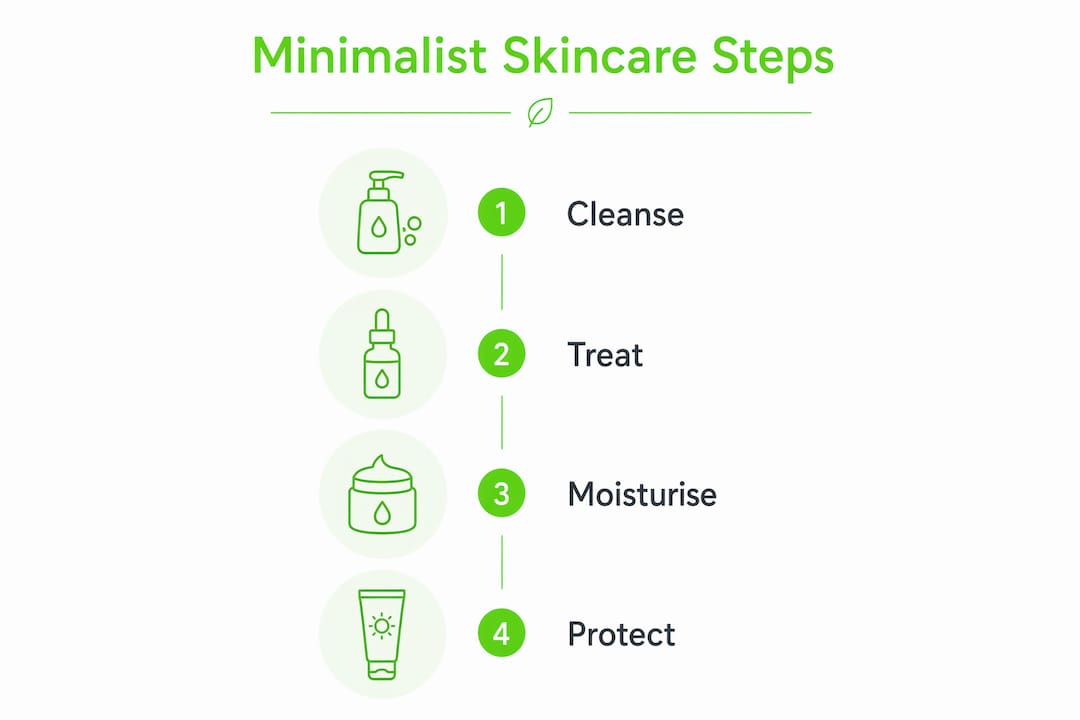
A minimalist skincare routine works on three core steps: cleansing, moisturising, and daily sun protection with SPF 30 or higher. One targeted treatment is added only when needed. That is all most people need. Harvard Health and the American Academy of Dermatology both endorse this approach, noting that a short, consistent regimen outperforms a complicated one for the vast majority of skin types. The goal is not to strip your routine to the bone, but to remove everything that does not earn its place.
The case for simplicity is practical as well as dermatological. Complex regimens often lead to inconsistent use because the cognitive load of managing ten products makes people skip steps or abandon the routine entirely. Three well-chosen products, used every single day, will always beat a ten-step regimen used sporadically.
The essential steps in a minimalist routine:
- Cleanse to remove dirt, oil, and environmental residue
- Exfoliate or tone (optional but purposeful, not habitual)
- Treat and moisturise to support the skin barrier
- Apply broad-spectrum sun protection every morning
Step 1: How should you cleanse in a minimalist routine?
Cleansing is the foundation of any simple skincare habit, and getting it wrong undermines everything that follows. The key is gentle: lukewarm water, a mild cleanser, and hands rather than a rough cloth. Your skin’s acid mantle, the slightly acidic film that protects against bacteria and moisture loss, is easily disrupted by hot water and harsh surfactants.
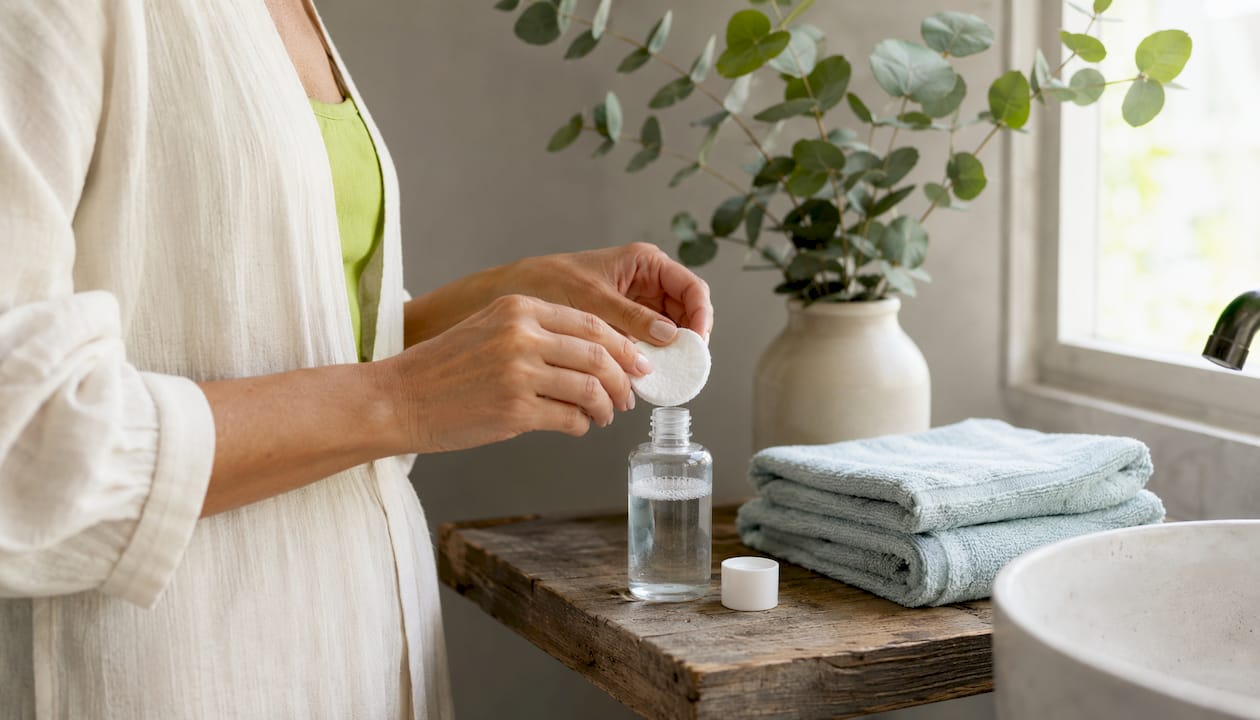
For dry or sensitive skin, a micellar water like Sensibio H2O Micellar Water works well as a first cleanse, lifting makeup and surface impurities without stripping. The Lipikar AP+ Gentle Foaming Cleansing Oil suits very dry or eczema-prone skin, combining oil-based cleansing with barrier-supporting ingredients. Those with sensitive or redness-prone skin often do well with a Calming Cleanser, formulated to reduce reactivity while still removing the day’s grime. For oily or combination skin, the True Calm Rosehip Gel Cleanser offers a lightweight, water-based cleanse with the added benefit of rosehip’s natural fatty acids.
One cleanser per session is enough. Double cleansing is only necessary if you wear heavy makeup or SPF that a single wash cannot fully remove.
Cleansing do’s and don’ts for a minimalist routine:
- Do use lukewarm water and pat skin dry gently with a clean towel
- Do choose a cleanser matched to your skin type (gel for oily, cream or oil for dry)
- Do cleanse once in the morning and once at night
- Don’t use alcohol-based toners or astringents as a substitute for cleansing
- Don’t scrub with a washcloth, which causes micro-abrasions
- Don’t over-cleanse oily skin; stripping oil triggers more sebum production
Step 2: Does your routine actually need a toner or exfoliant?
The honest answer: not always. Toners that solely add hydration can be skipped because a good moisturiser already covers that function. The ones worth keeping are those that deliver something a moisturiser cannot, specifically exfoliation or antioxidant activity.
The Cashmere Peel Gentle Exfoliating AHA Toner is a good example of a toner that earns its place. Alpha hydroxy acids (AHAs) like glycolic and lactic acid dissolve the bonds between dead skin cells, improving texture and brightness without physical scrubbing. Use it two to three times a week at most; daily AHA use on a minimalist routine is one of the faster routes to a compromised barrier. The Full Fit Propolis Synergy Toner takes a different angle, delivering antioxidant and soothing benefits from propolis extract, making it a reasonable choice for those who want a hydrating step that also calms inflammation. For a more concentrated treatment approach, Bean Essence offers a fermented formula that supports skin renewal and hydration simultaneously.
Alcohol-based toners are worth avoiding entirely. Dermatologist Dr. Shilpi Khetarpal notes that alcohol-based toners strip natural oils, leading to dryness and irritation, which is the opposite of what a pared-back routine should achieve.
Minimalist exfoliation and toning best practices:
- Use an exfoliating toner two to three times per week, never daily
- Choose AHA toners for dull or uneven skin tone; BHA toners for congested or oily skin
- Apply toner after cleansing, before any serum or moisturiser
- Skip hydrating-only toners if your moisturiser already contains hyaluronic acid
- Avoid mixing AHA toners with retinol in the same evening routine
Step 3: Which moisturisers and treatments belong in a simple routine?
Moisturiser is non-negotiable for every skin type, including oily. It strengthens the skin barrier, reduces water loss, and keeps the surface supple enough to tolerate any active ingredients you introduce. Applying it within three minutes of washing your face, while skin is still slightly damp, optimises hydration retention noticeably compared to applying it to dry skin.
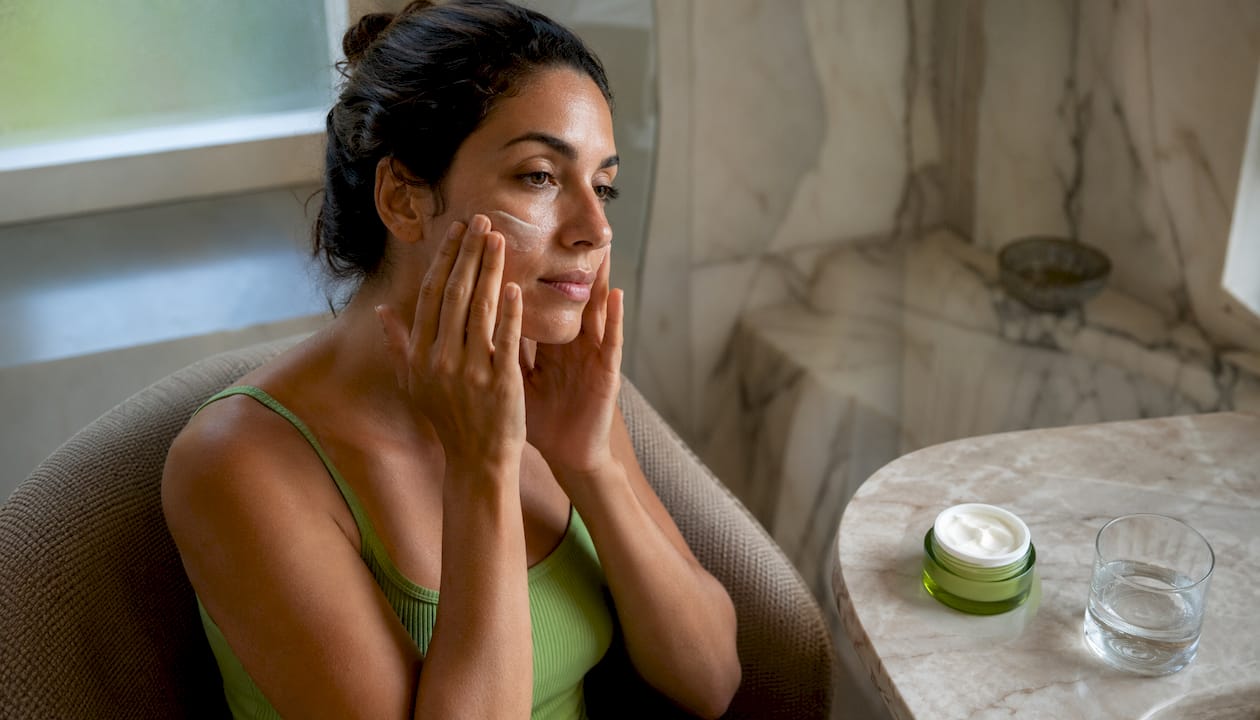
Multi-tasking moisturisers containing hyaluronic acid, niacinamide, and ceramides are the ideal choice for a minimal regimen. Hyaluronic acid draws water into the skin, niacinamide regulates oil and reduces redness, and ceramides repair the barrier itself. One product doing all three jobs means you do not need separate serums for each concern. The The Base Face Milk fits this brief well, offering a lightweight, multi-functional formula suited to most skin types.
When a targeted treatment is genuinely needed, serums are the right vehicle. Silymarin CF is a vitamin C serum that also contains silymarin (milk thistle extract), offering antioxidant protection and oil control in one step, particularly useful for oily or acne-prone skin. The EGF Serum uses epidermal growth factor peptides to support skin renewal, making it a considered choice for mature skin focused on texture and firmness. For those dealing with post-inflammatory marks or uneven tone, the Mandelic Clearing Serum delivers gentle exfoliation via mandelic acid alongside brightening actives. The rule for a minimalist routine is one serum at a time, applied after cleansing and before moisturiser.
Key considerations when choosing moisturisers and treatments:
- Prioritise moisturisers with hyaluronic acid, ceramides, or niacinamide for multi-tasking benefits
- Choose a serum only if your moisturiser does not already address your primary concern
- Lightweight gel or fluid textures suit oily skin; richer creams suit dry or mature skin
- Apply serums before moisturiser, always, so actives penetrate before a heavier layer seals them in
- Introduce one new treatment at a time and wait at least two weeks before adding another
Pro Tip: A natural, organic moisturiser such as the Rose Bergamol Skin Cream from Naturessoulshop, enriched with jojoba wax and sal butter, works as a genuinely multi-purpose option that suits both face and body, cutting your product count further.
Step 4: Why SPF is the one step you cannot skip
Sun protection is the single most evidence-backed step in any skincare routine, minimalist or otherwise. Daily broad-spectrum sun protection prevents UV damage and premature skin ageing, and it applies every day, including overcast days and days spent mostly indoors. UVA rays, which drive photoageing, penetrate glass and cloud cover with little reduction.
The Mayo Clinic recommends applying a palm-sized amount of sunscreen and reapplying every two hours when outdoors. For a minimalist routine, a moisturiser with built-in SPF 30 can reduce the morning step count by one, though a dedicated sunscreen applied over moisturiser gives more reliable coverage. Mineral sunscreens containing zinc oxide or titanium dioxide are the better choice for sensitive skin, as they sit on the surface rather than being absorbed. Dr. Khetarpal specifically recommends formulas containing iron oxide, zinc oxide, or titanium dioxide for daily facial use.
Sunscreen goes on last in the morning routine. Applying it before moisturiser or serum reduces its protective film and defeats the purpose entirely.
Sun protection tips for a minimalist regimen:
- Use SPF 30 as the daily minimum; SPF 50 for extended outdoor exposure
- Apply sunscreen as the final morning step, after all other products
- Choose mineral formulas (zinc oxide or titanium dioxide) for sensitive or reactive skin
- A moisturiser with SPF can replace a separate sunscreen on low-exposure days
- Reapply every two hours when spending time outdoors
How do you choose the right products for a minimal routine?
Minimalism in skincare is defined by necessity, not product count. Four products that each serve a distinct role without overlapping actives is a minimalist routine. Four products that all contain retinol, for instance, is not. The distinction matters because overlapping actives are the most common cause of irritation in people who think they are keeping things simple.
Ingredient simplicity is the other half of the equation. Dr. Khetarpal puts it plainly: “Without fragrance, extra preservatives and all these other things, you want to use bare-bone ingredients to serve a purpose, whether it’s moisturising, cleansing or using sunscreen.” Choosing fragrance-free, minimally preserved products reduces the risk of contact dermatitis and keeps the ingredient list focused on function. For those interested in how diet supports the skin from within, nutrients for skin health are worth exploring alongside topical choices.
Layering order matters more than most people realise. Applying products from thinnest to thickest consistency ensures each layer absorbs properly rather than being blocked by a heavier formula applied too early. Serums before moisturiser, moisturiser before SPF. Applying a thick cream before a vitamin C serum means the serum sits on top of the cream and barely penetrates the skin.
Skin type shapes every product decision. Oily skin needs gel cleansers, water-based moisturisers, and mattifying sunscreens. Dry skin needs cream cleansers, richer moisturisers with ceramides, and hydrating SPF formulas. Sensitive skin needs fragrance-free everything, minimal actives, and patch testing before any new product goes near the face. For families looking to build natural skincare routines across different skin types, the same principles apply at every age.
Patch testing is not optional when you are running a minimal routine. With fewer products, each one carries more weight, so a reaction to one item disrupts the whole regimen. Apply a small amount behind the ear or along the jawline and wait 24–48 hours before using it on your face.
For those managing mature skin, the principles of a pared-back routine translate well to anti-ageing strategies too. A step-by-step anti-ageing guide can help you understand which actives genuinely earn a place in a simplified regimen after 30.
Pro Tip: Consistency beats complexity every time. A three-step routine used every single day will produce better results than a ten-step routine used three times a week.
Expert product selection and routine-building tips:
- Choose products with short, recognisable ingredient lists and no added fragrance
- Apply in order from thinnest to thickest: cleanser, toner (if used), serum, moisturiser, SPF
- Introduce one new active at a time and allow two weeks before assessing results
- Patch test every new product before full facial application
- Avoid routines with multiple overlapping actives (e.g., two AHA products, or AHA plus retinol nightly)
- Match every product to your skin type, not to trends or marketing claims
- Skip any product that does not serve a function your current routine lacks
Naturessoulshop and clean, minimal skincare

Naturessoulshop stocks a carefully selected range of organic, clean-ingredient skincare products that align naturally with a minimal routine. The Rose Bergamol Skin Cream is a non-greasy, palm-oil-free moisturiser enriched with jojoba wax and sal butter, free from silicones and GMOs. For those who want to support skin health from the inside out, the Beautiful Skin Capsules by Organic India offer a clean supplement option alongside a topical routine. Browse the full range at Naturessoulshop to find organic, minimal-ingredient products that do exactly what they say.
Key takeaways
A minimalist skincare routine built on cleansing, moisturising, and daily SPF 30 or higher, with one targeted treatment added only when needed, delivers consistent skin health without the irritation risk of complex layering.
| Point | Details |
|---|---|
| Three core steps are sufficient | Cleansing, moisturising, and SPF 30 or higher form the foundation endorsed by Harvard Health and the American Academy of Dermatology. |
| Toners are optional, not automatic | Only include a toner if it offers exfoliation or antioxidant benefits; hydrating-only toners duplicate what a moisturiser already does. |
| Apply thinnest to thickest | Layering from lightest to heaviest consistency ensures each product absorbs properly and actives reach the skin. |
| Fragrance-free beats feature-rich | Products with minimal, fragrance-free ingredients reduce irritation risk and keep the routine genuinely purposeful. |
| Consistency outperforms complexity | A simple routine used every day produces better long-term results than an elaborate one used inconsistently. |


