


Rushing from meeting to market in Delhi NCR, many expats find their energy drained by environmental stress and crowded routines. The need for sustained vitality—not just fleeting bursts—is real, especially for those who value organic living. By thoughtfully preparing your surroundings, you can harness natural energisers and create an uplifting space that supports your well-being, helping you feel focused and revived every day.
Table of Contents
- Step 1: Prepare Your Environment For Natural Energisers
- Step 2: Select Organic Foods To Fuel Sustained Energy
- Step 3: Integrate Energising Habits Into Your Daily Routine
- Step 4: Evaluate And Refine Your Natural Energy Approach
Quick Summary
| Key Insight | Explanation |
|---|---|
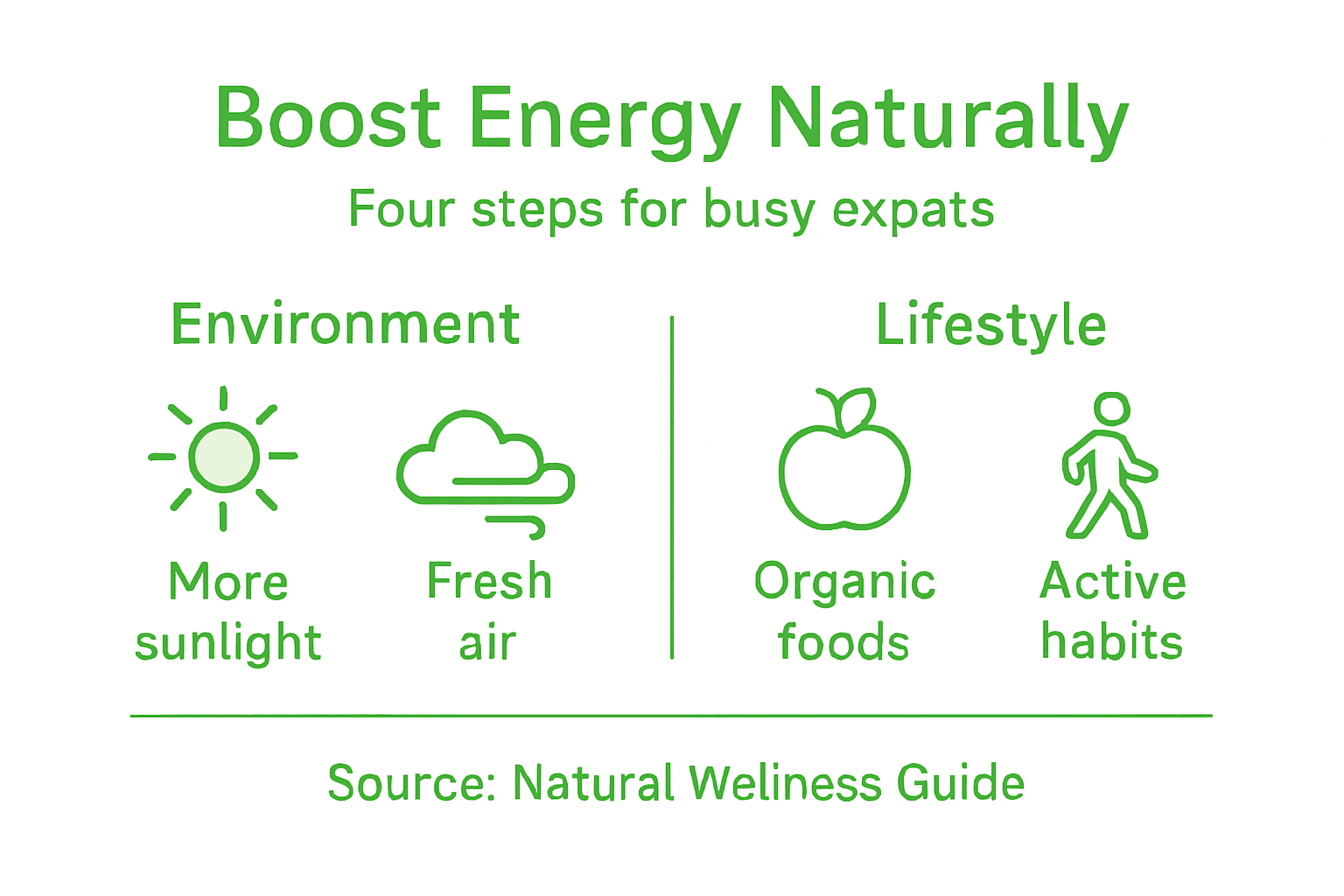
| 1. Optimise your lighting | Position your workspace near windows to maximise natural light for better energy throughout the day. |
| 2. Improve air quality | Regularly open windows and maintain a cool room temperature to enhance mental clarity and alertness. |
| 3. Switch to organic foods | Choose organic staples to support sustained energy, reducing fatigue caused by chemical residues. |
| 4. Integrate energising habits | Establish consistent morning routines and movement throughout the day to enhance overall energy levels. |
| 5. Evaluate and adjust regularly | Regularly track your energy levels and habits to refine your approach based on what works best for you. |
Step 1: Prepare your environment for natural energisers
Your surroundings profoundly affect your energy levels throughout the day. By deliberately designing your home and workspace, you can harness natural energy sources and create conditions that support sustained vitality.
Start by assessing your current living space. Look at lighting, temperature, air quality, and how you’re using energy daily. This awareness forms the foundation for meaningful changes that actually stick.
Optimise your lighting first. Natural daylight is one of your most powerful energy tools. Position your workspace near windows where possible, and allow sunlight to flood in during morning hours. This synchronises your circadian rhythm and boosts alertness naturally. When artificial light is necessary, energy-efficient lighting options reduce eye strain and provide better illumination without draining your resources.
Next, focus on air quality and temperature. Stale air depletes mental clarity within minutes. Open windows regularly, even in Delhi’s climate, during early morning or late evening when outdoor air is cooler and fresher. A slightly cooler room temperature around 18–20°C helps maintain alertness, whilst stuffy, overheated spaces trigger fatigue.
Consider these practical adjustments:
- Remove visual clutter from your immediate workspace
- Keep plants in your bedroom and work areas to improve oxygen levels
- Use natural materials like wood and cotton in furnishings
- Establish a dedicated workspace separate from relaxation zones
Your physical environment either supports or sabotages your energy—make it work for you, not against you.
If you’re interested in complementing these environmental changes with sustainable lifestyle practices, understanding how to build a pantry naturally helps you create a cohesive approach to natural living.
Make one change this week rather than overhauling everything at once. Small, deliberate adjustments compound into genuine energy transformation.
Here is a comparison of environmental factors and their impact on daily energy levels:
| Factor | Positive Impact | Negative Impact |
|---|---|---|
| Daylight Exposure | Boosts natural alertness and mood | Insufficient light disrupts circadian rhythms |
| Air Quality | Enhances focus and mental clarity | Pollutants and stale air induce fatigue |
| Temperature | 18–20°C maintains alertness | Overheated rooms cause sluggishness |
| Workspace Design | Decluttered areas reduce distractions | Cluttered spaces increase stress and tiredness |
Pro tip: Spend the first 15 minutes of your day near a window with natural light before checking your phone or emails—this single habit stabilises your energy for the entire day.
Step 2: Select organic foods to fuel sustained energy
Organic foods deliver a fundamentally different quality of nutrition because they’re grown without synthetic pesticides or fossil fuel-based fertilisers. When you switch to organic produce, you’re choosing foods that genuinely support lasting vitality rather than temporary energy spikes.

Start by understanding what organic means in practice. Organic farming practices eliminate synthetic chemicals, which means the soil retains more nutrients and microorganisms. These healthier soils produce nutrient-dense foods that your body can actually use for sustained energy.
Begin with your most-consumed items:
- Replace regular rice and grains with organic versions
- Choose organic vegetables you eat daily, especially leafy greens
- Prioritise organic fruits, particularly those you consume raw
- Switch dairy and eggs to organic if you eat animal products
- Select organic dry groceries like lentils and pulses
When shopping at local Delhi NCR markets, look for the organic certification label. Ask vendors directly about their suppliers if labels aren’t visible. Building relationships with trusted vendors makes sourcing easier over time.
Focus on seasonal organic produce. Tomatoes, spinach, and beans are abundant and affordable during their peak seasons. You’ll notice better flavour and sustained energy compared to off-season, chemically-treated alternatives.
Organic foods cost more upfront, but your sustained energy eliminates the need for constant coffee top-ups and afternoon crashes.
Begin by switching 3–5 staple foods this month. Once organic selection becomes habitual, expand gradually. This measured approach prevents budget shock whilst building momentum.
Consider growing your own organic vegetables if space allows. Even a small balcony garden provides fresh, pesticide-free produce and connects you directly to your food source.
Pro tip: Buy organic frozen vegetables and berries, which retain their nutrient content and cost significantly less than fresh whilst remaining free from synthetic chemicals.
Here is a summary of how organic foods support sustained energy compared to conventional foods:
| Aspect | Organic Foods | Conventional Foods |
|---|---|---|
| Chemical Exposure | Free from synthetic pesticides and fertilisers | Often contain chemical residues |
| Soil Health | Grown in nutrient-rich, biodiverse soils | Frequently grown in depleted soils |
| Nutrient Density | Generally higher, supporting sustained energy | May provide temporary energy spikes |
| Flavour & Freshness | More flavourful; longer-lasting vitality | Flavour can be dull, nutrients less preserved |
Step 3: Integrate energising habits into your daily routine
Energy isn’t about single grand gestures. It’s built through small, consistent actions woven into your daily life. By anchoring energising habits to existing routines, you create sustainable change that actually sticks.
Start with your morning. The first hour sets your energy tone for the entire day. Step outside for natural light within 30 minutes of waking, even if just for five minutes. This synchronises your body clock and triggers alertness naturally.
Next, add movement throughout your day:
- Walk for 10 minutes after lunch to stabilise blood sugar
- Take the stairs instead of lifts when possible
- Stand whilst checking emails or taking calls
- Do five minutes of stretching between tasks
- Move during your tea or coffee breaks
Regular physical activity elevates mood and oxygenates your brain far better than sitting. Even gentle movement creates noticeable energy shifts within days.
Manage stress through breathwork. When fatigue hits mid-afternoon, pause for two minutes of deep breathing. Inhale for four counts, hold for four, exhale for six. This activates your parasympathetic nervous system and prevents energy crashes.
Protect your sleep fiercely. Aim for consistent bedtimes, even weekends. Your bedroom should be cool, dark, and quiet. Put phones and screens away one hour before bed. Quality sleep genuinely replenishes energy stores more than any supplement can.
Your energy multiplies when habits reinforce each other. Morning light plus movement plus good sleep creates a virtuous cycle you can’t fake.
Make one change per week rather than attempting everything simultaneously. Anchor each new habit to an existing routine. After your morning coffee, stretch. Before lunch, take a walk. After dinner, prepare tomorrow’s organic lunch.
Pro tip: Track your energy levels in a simple notebook for one week before making changes, then again after two weeks of new habits—seeing the difference motivates continued commitment.
Step 4: Evaluate and refine your natural energy approach
Your energy strategy isn’t static. What works brilliantly in winter might need adjusting during Delhi’s intense summer heat. Regular evaluation helps you identify what’s truly working versus what you’re doing out of habit.
Begin by tracking your energy patterns systematically. For two weeks, note your energy levels at three points daily: morning, midday, and evening. Record what you ate, how much you moved, your sleep quality, and stress levels. This simple data reveals patterns you’d otherwise miss.
Look for correlations between your habits and energy outcomes:
- Which meals sustain you longest versus causing crashes
- Whether morning sunlight genuinely improves your alertness
- How much sleep you actually need versus what you think you need
- Which movement times energise you most effectively
- Whether organic foods make a tangible difference
After two weeks, assess what’s working. Keep practices that deliver results. Drop or modify those that don’t. Understanding energy consumption patterns helps you make informed decisions about where to focus your efforts.
Be honest about what fits your lifestyle. If morning workouts drain you rather than energise you, stop forcing them. If certain organic foods are prohibitively expensive, find affordable alternatives. Sustainability matters more than perfection.
Adjust seasonally. Your summer routine should differ from winter. Heat affects digestion, sleep, and motivation. Some habits serve you better in cooler months. Allow flexibility without abandoning your overall approach.
Energy isn’t about rigid rules. It’s about understanding your unique body and refining what genuinely works for you.
Schedule monthly reviews. Spend 15 minutes assessing what’s shifted. Your energy needs evolve as your circumstances change, so your approach should evolve with them.
Pro tip: Take the same energy tracking snapshot every three months at the same time of year—this reveals whether seasonal changes are natural or whether your approach needs adjustment.
Reclaim Your Energy with Natural Wellness Solutions
Busy expats often struggle with low energy caused by disruptive environments and poor nutrition The article highlights the need to optimise natural light, improve air quality, choose organic foods, and develop energising daily habits At Nature’s Soul Shop, we understand these challenges and offer a comprehensive range of organic and natural products carefully selected to support sustained vitality including fresh fruits, vegetables, dry grocery essentials, and more

Don’t let fatigue slow you down in your new home Explore our organic foods and natural wellness essentials designed to integrate seamlessly into your daily routine Whether you seek chemical-free produce or clean ingredients for meals and self-care, now is the perfect time to make the switch Visit Nature’s Soul Shop today and take the first step towards boosting your energy naturally with trusted products suited for busy lifestyles
Frequently Asked Questions
How can I create a workspace that boosts my energy?
Start by positioning your workspace near windows to maximise natural light, which enhances alertness. Additionally, declutter your space and maintain a comfortable room temperature of 18–20°C to promote mental clarity.
What organic foods should I include for sustained energy?
Incorporate organic staples such as grains, leafy greens, and fruits into your diet, as they offer higher nutrient density without synthetic chemicals. Begin by swapping 3–5 of your most consumed items to organic this month for noticeable energy improvements.
How can I establish energising habits in my daily routine?
Anchor energising habits, like stretching or a short walk, to existing routines, such as after your morning coffee. Implement one new habit each week to create lasting energy-boosting changes in your day-to-day life.
What are some effective ways to manage stress for better energy?
Practice breathwork, where you inhale for four counts, hold for four, and exhale for six counts to quickly reduce stress and prevent energy dips. Integrating this simple two-minute exercise several times a day can significantly enhance your overall energy.
How often should I evaluate my energy-boosting strategies?
Conduct a monthly review of your energy levels and habits to identify what works best for you. Set aside 15 minutes each month to assess your routine and make necessary adjustments according to seasonal changes in your lifestyle.
What is the impact of natural light on my energy levels?
Natural light has a profound effect on your energy by positively influencing your circadian rhythms. Aim to spend at least 15 minutes in natural light each morning to stabilise your energy for the day ahead.


