


TL;DR:
- Intermittent fasting involves cycling between fasting and eating periods and benefits metabolic health. Its primary effects include weight loss and blood sugar regulation, with additional support for cardiovascular and cellular health. Success relies on food quality, sustainable schedules, and combining fasting with healthy lifestyle habits.
Intermittent fasting is defined as an eating pattern that cycles between periods of fasting and eating, with well-documented effects on weight management, blood sugar control, and metabolic health. Unlike conventional diets that focus on what you eat, intermittent fasting focuses on when you eat. The clinical term used in research is “time-restricted eating” when referring to daily fasting windows, though “intermittent fasting” covers a broader family of protocols. Recent meta-analyses confirm that intermittent fasting benefits include measurable reductions in fasting blood glucose and BMI, making it one of the most studied dietary approaches of the past decade.
What are the main health benefits of intermittent fasting?
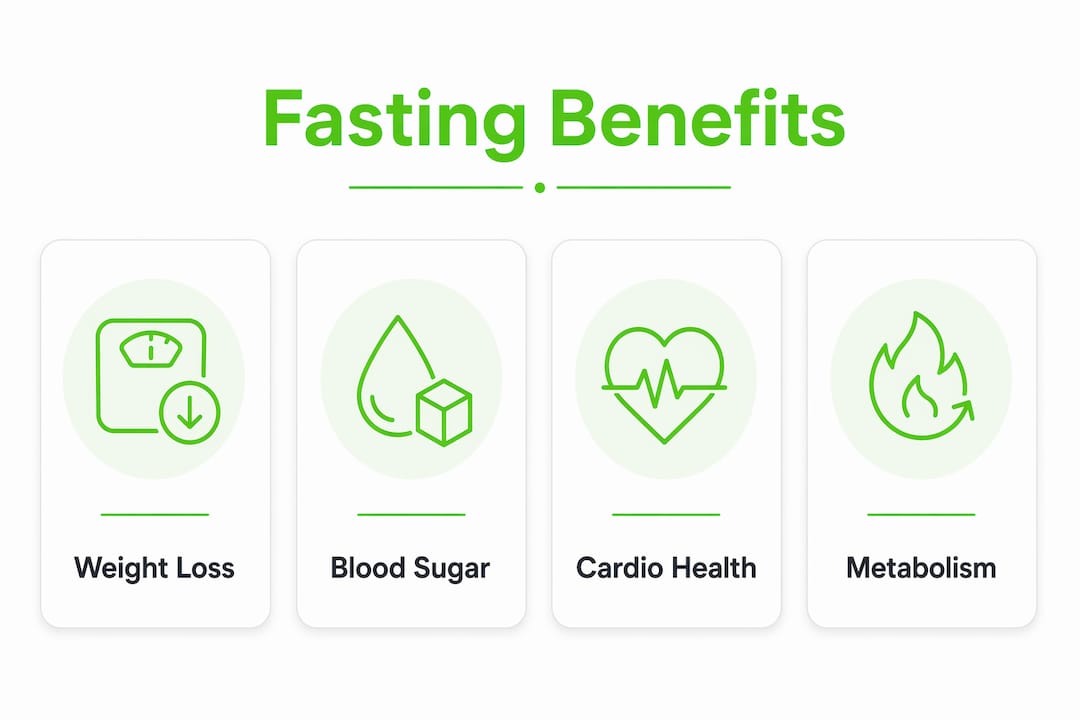
Intermittent fasting produces several well-supported health outcomes, with weight loss and blood sugar regulation at the top of the list. A meta-analysis of nine trials involving 531 participants found a mean reduction of 2.18 mg/dL in fasting blood glucose in women with overweight or obesity. That figure matters because even modest reductions in fasting glucose lower the long-term risk of type 2 diabetes.

Beyond blood sugar, the health benefits of fasting extend to cardiovascular markers. Clinical research shows fasting can improve insulin sensitivity, reduce blood triglycerides, and support healthier cholesterol profiles. These changes reduce strain on the cardiovascular system over time.
The cellular effects are equally compelling. Neuroscientist Mark Mattson at Johns Hopkins Medicine has documented how fasting triggers autophagy, the process by which cells clear out damaged components and repair themselves. Enhanced mitochondrial function and adaptive stress responses also contribute to better metabolic balance. Think of autophagy as the body’s internal housekeeping: fasting gives it the time and conditions to do the job properly.
Fasting also produces benefits that people rarely expect:
- Reduced inflammation: Clinical observations show fasting lowers systemic inflammatory markers.
- Improved gut health: Fasting periods allow the digestive system to rest and reset.
- Better sleep quality: Regulated eating windows support more consistent circadian rhythms.
- Reduced appetite and cravings: Fasting regulates appetite hormones, particularly reducing cravings for processed snacks.
- Improved concentration: Stable blood sugar during fasting periods supports steadier mental focus.
One important nuance: individual responses vary considerably. Not every person experiences the same degree of benefit, and the research confirms there is no single ideal fasting schedule that works universally.
How does intermittent fasting compare with traditional calorie restriction?
The most common misconception about intermittent fasting is that the timing of eating is itself the active ingredient. The American Medical Association’s position as of 2026 is clear: when total caloric intake is equal, intermittent fasting produces no significant difference in weight loss or metabolic markers compared to traditional calorie restriction. The mechanism driving fat loss is caloric reduction, not the fasting window itself.
This does not make intermittent fasting less useful. It means the reason it works for many people is behavioural rather than purely physiological. Fasting windows naturally reduce the opportunity to eat, which cuts overall intake without requiring calorie counting. A 2025 study found that fasting participants were more likely to maintain their eating patterns years later compared to those on traditional calorie restriction. Sustainability is where intermittent fasting holds a genuine edge.
Nutrition quality remains the deciding factor in either approach. Eating processed, nutrient-poor food within a fasting window produces far weaker results than eating whole, nutrient-dense food. Timing without quality is a half-measure. For practical meal planning ideas that pair well with fasting schedules, a plant-based approach built around whole foods is one of the most evidence-aligned strategies available.
Pro Tip: If you are new to fasting, do not change what you eat and when you eat at the same time. Start by narrowing your eating window first. Once that feels natural, shift your focus to food quality.
What fasting schedules exist and how do they affect outcomes?
Intermittent fasting is not a single protocol. Several distinct schedules exist, each with different demands and benefits:
- 16:8 time-restricted eating: Fast for 16 hours, eat within an 8-hour window daily. This is the most widely practised format and the most studied for metabolic benefits.
- 5:2 periodic fasting: Eat normally five days per week, then restrict calories to roughly 500–600 on two non-consecutive days. This suits people who find daily restriction difficult.
- Alternate day fasting: Alternate between normal eating days and very low-calorie or complete fasting days. Research shows strong effects on insulin sensitivity but higher dropout rates.
- 24-hour fasts: Fast from dinner one day to dinner the next, once or twice per week. Less common but used by those seeking deeper cellular repair effects.
The evidence on side effects is consistent: headaches, nausea, and anxiety are common during the first one to two weeks of adaptation. These symptoms are transient for most people. Persistent symptoms warrant medical consultation, particularly for those with diabetes, a history of disordered eating, or cardiovascular conditions.
Choosing a schedule depends on lifestyle fit, not on which protocol sounds most rigorous. A 16:8 window that you maintain for six months outperforms a 24-hour fast you abandon after two weeks. The AMA expert guidance reinforces that long-term success depends on personal sustainability rather than rigid adherence to any single protocol.
How to get the most from fasting through nutrition and lifestyle
Fasting creates the conditions for better health. What you eat during your eating window determines whether those conditions translate into real results.
-
Prioritise nutrient-dense whole foods. Vegetables, legumes, whole grains, lean proteins, and healthy fats deliver the micronutrients your body needs after a fasting period. Organic options reduce exposure to pesticide residues and tend to retain higher nutrient content. For ideas on how to start your eating window well, healthy breakfast options built around whole ingredients make a strong foundation.
-
Avoid compensatory overeating. Behavioural research shows that eating excessively during the eating window is the single most common reason fasting fails to produce results. Mindful eating, not calorie counting, is the practical solution.
-
Protect your muscle mass. Adequate protein intake and resistance training are both necessary to prevent lean mass loss during fasting. Aim for protein at every meal within your eating window, and include strength-based exercise at least twice per week.
-
Hydrate consistently. Water, herbal teas, and black coffee are all acceptable during fasting windows. Dehydration worsens the headaches and fatigue that many people attribute to fasting itself.
-
Treat sleep as part of the protocol. Poor sleep raises cortisol and ghrelin, both of which increase hunger and undermine the appetite-regulating effects of fasting. Seven to nine hours of sleep per night supports the hormonal environment that makes fasting effective.
Pro Tip: Plan your eating window around your social and work schedule, not the other way around. Fasting that fits your life is fasting you will actually maintain.
One claim worth addressing directly: no high-quality long-term evidence currently shows that intermittent fasting prevents cancer or extends lifespan beyond what standard healthy diets achieve. The AMA cautions against marketing claims in this area. The proven benefits are real and meaningful. They do not need to be overstated.
Key takeaways
Intermittent fasting produces genuine, evidence-backed benefits in weight management, blood sugar regulation, and metabolic health, but food quality and caloric balance remain the primary drivers of those outcomes.
| Point | Details |
|---|---|
| Blood glucose reduction | A meta-analysis of 531 participants showed a mean drop of 2.18 mg/dL in fasting blood glucose. |
| Caloric balance drives results | The AMA confirms fasting and calorie restriction produce equal outcomes when total intake is matched. |
| Sustainability advantage | A 2025 study found fasting participants more likely to maintain eating patterns long-term than calorie restriction groups. |
| Food quality is non-negotiable | Nutrient-dense whole foods during eating windows determine whether fasting produces lasting metabolic benefit. |
| Side effects are manageable | Headaches and nausea during adaptation are transient; persistent symptoms require medical review. |
What I have learned from watching people practise intermittent fasting
Intermittent fasting is a tool. A useful one, but still just a tool. The people I have seen get the most from it are not the ones who follow the strictest protocol. They are the ones who treat it as a framework for eating more intentionally, not as a performance to be optimised.
The most common mistake I observe is treating the fasting window as the hard work and the eating window as the reward. That framing leads directly to compensatory overeating, which is the fastest way to undo every benefit fasting creates. The eating window is where the real work happens.
I am also cautious about the longevity and cancer-prevention claims that circulate widely online. The animal studies are genuinely interesting. The human evidence is not yet there. Promising something that the science cannot yet support does more harm than good, because it sets expectations that reality cannot meet.
My honest recommendation is to start with a 12-hour fast, which most people already do overnight, and extend it gradually. Pair it with whole, clean food. Do not skip sleep. Do not skip protein. And if you have any underlying health condition, speak to your GP before changing your eating pattern significantly. Fasting done well is not dramatic. It is quiet, consistent, and genuinely effective.
— Arjit
Organic foods that support your fasting eating windows
Fasting creates the window. What you eat inside it shapes the outcome. Naturessoulshop stocks a wide range of organic groceries and fresh produce specifically chosen for clean ingredients and high nutritional value, exactly what your eating window needs to deliver real results.

Whether you are building meals around fresh vegetables, whole grains, or plant-based proteins, Naturessoulshop’s health-focused range covers every category from dry grocery and dairy to vegan and gluten-free options. Clean ingredients are not a premium feature here. They are the standard. When your eating window is short, every meal needs to count, and that starts with what goes into it.
FAQ
What are the main intermittent fasting benefits for weight loss?
Intermittent fasting supports weight loss primarily by reducing overall caloric intake through structured eating windows. A meta-analysis of 531 participants confirmed measurable reductions in BMI alongside improved fasting blood glucose.
Is intermittent fasting healthy for everyone?
Intermittent fasting is not suitable for everyone. People with diabetes, a history of disordered eating, or cardiovascular conditions should consult a GP before starting any fasting protocol.
How does intermittent fasting help with blood sugar control?
Fasting periods lower insulin demand and improve insulin sensitivity over time. Clinical research shows fasting reduces fasting blood glucose levels, which lowers long-term risk of type 2 diabetes.
What is the easiest intermittent fasting schedule to start with?
The 16:8 protocol, fasting for 16 hours and eating within an 8-hour window, is the most widely practised and the most studied. Starting with a 12-hour overnight fast and extending gradually is the lowest-friction entry point.
Does intermittent fasting preserve muscle mass?
Fasting alone can reduce lean mass if protein intake is insufficient. Adequate protein at every meal within the eating window, combined with resistance training at least twice per week, protects muscle during fasting periods.


