


TL;DR:
- Reducing sugar intake involves cutting back on added sugars in processed foods while maintaining natural fruit and vegetable sugars.
- The most effective strategies include gradually reducing added sugars, swapping sugary drinks, and reading nutrition labels carefully.
Reducing sugar intake means cutting back on added sugars found in processed foods and drinks, not eliminating the natural sugars in fruit and vegetables. The American Heart Association recommends no more than 25 grams (6 teaspoons) of added sugar per day for women and 36 grams (9 teaspoons) for men. Most people exceed these limits without realising it, because added sugars hide in foods that do not taste obviously sweet. The good news is that gradual, consistent changes work far better than drastic elimination, and your palate genuinely adapts over time.
How to reduce sugar intake: spotting where it hides
Added sugar is not just in sweets and fizzy drinks. Nearly 70% of added sugar in the average diet comes from five categories: sweetened beverages, desserts and snacks, sugar-sweetened coffee and tea, confectionery, and breakfast bars and cereals. That figure is striking. It means cutting sugary drinks alone removes a significant chunk of your daily added sugar load.
Hidden sugars appear in foods most people consider healthy or neutral. Flavoured yoghurts, pasta sauces, salad dressings, and shop-bought soups all carry added sugars. Reading nutrition labels is the single most effective habit you can build, because manufacturers use dozens of names for added sugar.
Watch out for these aliases on ingredient lists:
- Sucrose and glucose-fructose syrup (common in fizzy drinks and sauces)
- Agave syrup and coconut sugar (marketed as “natural” but still added sugars)
- Cane juice and evaporated cane juice (found in cereals and protein bars)
- Maltose, dextrose, and barley malt (common in bread and condiments)
- Fruit juice concentrate (used in “no added sugar” products to add sweetness)
The rule is simple: if any form of sugar appears in the first three ingredients, the product is high in added sugar. Avoiding impulsive purchases and checking labels before buying are the two habits that protect you most at the point of sale.
What are the best practical strategies to cut sugar?
Cutting sugar does not mean eating bland food. The most effective sugar reduction strategies work with your appetite rather than against it.
-
Reduce gradually, not all at once. Cut the sugar you add to tea or coffee by half a teaspoon each week. Your taste buds adjust slowly, and a gradual reduction is far more sustainable than going cold turkey.
-
Swap sugary drinks first. Sweetened beverages are the largest single source of added sugar. Replace them with water, sparkling water with a slice of lemon, or unsweetened herbal teas. This one swap can remove more added sugar from your diet than any other single change.
-
Add protein and fibre to sweet foods. Mixing protein and fibre with sweets slows sugar absorption, keeps you fuller for longer, and naturally reduces the portion you want. A small handful of nuts alongside a piece of fruit is a practical example.
-
Never eat sweets on an empty stomach. Consuming sweets after a balanced meal with protein and fibre significantly reduces blood glucose spikes and the urge to eat more. An empty stomach amplifies cravings and makes portion control much harder.
-
Choose whole fruit over fruit juice. Whole fruit contains fibre that slows sugar absorption. Fruit juice removes that fibre and delivers a concentrated sugar hit. A medium orange contains roughly the same sugar as a small glass of orange juice, but the fibre makes it far more satisfying.
-
Cook more meals at home. Home cooking gives you full control over what goes into your food. Restaurant and takeaway meals routinely contain added sugars in sauces, marinades, and dressings that you would never add yourself.
Pro Tip: Retrain your palate by reducing sweetness in stages. If you currently use two teaspoons of sugar in your morning coffee, drop to one and a half for two weeks, then one, then half. After six to eight weeks, full-sugar drinks will taste unpleasantly sweet. The change is real and permanent.
Why do sugar cravings happen, and how do you manage them?

Sugar cravings are often not about sugar at all. Sleep deprivation raises ghrelin, the hormone that drives hunger, which the body then interprets as a craving for quick energy from sugar. Dehydration produces a similar signal. Before reaching for something sweet, drink a glass of water and wait ten minutes.
The following habits address the root causes of cravings rather than just the symptoms:
- Eat regular meals. Skipping meals causes blood sugar to drop sharply, which triggers intense cravings for fast energy. Three balanced meals a day, with protein and healthy fats at each, keeps blood sugar stable.
- Prioritise sleep. Seven to nine hours of sleep per night reduces ghrelin and makes resisting cravings significantly easier the next day.
- Keep your home environment low-sugar. Avoiding high-sugar foods at home removes the temptation entirely. You cannot eat what is not there.
- Satisfy sweet cravings with whole foods. Fresh berries, a small square of dark chocolate (70% cocoa or higher), or a date with almond butter all deliver sweetness with fibre and nutrients attached.
- Manage stress actively. Stress drives cortisol production, which increases appetite and sugar cravings. Short walks, breathing exercises, and adequate rest all reduce cortisol.
One insight that surprises many people: sugar dependence is habituation, not true addiction. The brain adapts to lower sweetness levels over weeks. This means cravings genuinely diminish as you reduce intake, rather than persisting indefinitely.
Pro Tip: If a craving hits hard, eat a small portion of protein first, such as a boiled egg or a tablespoon of nut butter. Protein signals satiety to the brain within minutes and often removes the craving entirely without any sugar at all.
Shopping and cooking tips for a low-sugar diet
A low-sugar diet is built in the supermarket, not just in the kitchen. The decisions you make while shopping determine what is available to you at home.
Set a daily “sugar budget” based on the AHA guidelines: 25 grams for women, 36 grams for men. Track your intake for one week using a food diary or a free nutrition app. Most people are genuinely shocked by how quickly the budget fills up. That awareness alone changes behaviour.
| Food category | Typical added sugar content | Lower-sugar alternative |
|---|---|---|
| Flavoured yoghurt (125g) | 12–20g added sugar | Plain Greek yoghurt with fresh fruit |
| Sweetened breakfast cereal (40g) | 8–15g added sugar | Rolled oats with cinnamon |
| Fruit juice (250ml) | 20–28g sugar | Whole fruit or infused water |
| Shop-bought pasta sauce (150g) | 6–12g added sugar | Home-made tomato sauce |
| Flavoured granola bar | 10–18g added sugar | Low-sugar snack options with nuts and seeds |
When cooking at home, use spices such as cinnamon, vanilla, and cardamom to add perceived sweetness without any sugar. These flavours trick the palate into expecting sweetness and reduce the amount of actual sugar a recipe needs. Natural alternatives to sugar such as small amounts of raw honey or medjool dates work well in baking when used sparingly, but they still count toward your daily total.
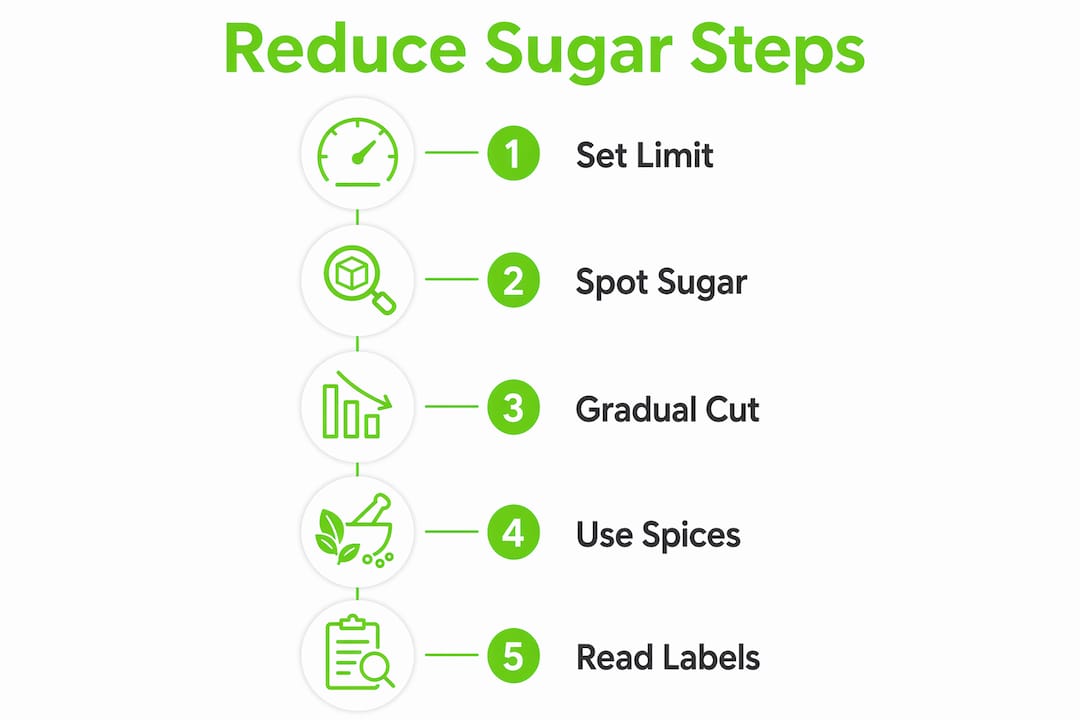
One firm rule: do not buy processed foods labelled “sugar-free” without reading the label. Many sugar-free products replace sugar with artificial sweeteners that maintain a preference for intense sweetness, which makes reducing sugar cravings harder over time. Whole, minimally processed foods are always the better choice.
Key takeaways
Reducing added sugar intake sustainably requires label awareness, gradual palate retraining, and consistent environmental controls rather than short-term elimination.
| Point | Details |
|---|---|
| Know your daily limit | The AHA sets 25g for women and 36g for men as the upper limit for added sugars. |
| Target beverages first | Sweetened drinks contribute the largest share of added sugar; swapping them delivers the fastest results. |
| Pair sweets with protein and fibre | Eating sweets after a balanced meal slows absorption and reduces cravings naturally. |
| Retrain your palate gradually | Reducing sweetness in small steps over weeks produces lasting changes in taste preference. |
| Control your home environment | Avoiding high-sugar foods at home removes the biggest source of impulsive consumption. |
What I have learned from cutting sugar over time
The most underrated part of reducing sugar is patience. Most people expect to feel better within a week and give up when cravings persist into week two. The reality is that palate retraining takes four to six weeks of consistent lower-sugar eating before the preference genuinely shifts. I have seen this pattern repeatedly, and the people who succeed are the ones who commit to the process rather than the timeline.
The second thing most articles get wrong is the obsession with detoxes. No medical evidence supports a sugar detox. Cutting out fruit and other natural sugars in the name of “cleansing” actively worsens diet quality. The goal is managing added sugars, not avoiding every gram of sugar in existence. Fruit is not the enemy. Flavoured yoghurt with 18 grams of added sugar is.
What genuinely changed my relationship with sugar was focusing on what I was adding rather than what I was removing. When I started building meals around whole foods, vegetables, legumes, and quality proteins, the space for sugary foods naturally shrank. I did not feel deprived. I felt full. That is the shift worth pursuing.
Occasional treats are not failure. Eating a slice of cake at a birthday party does not undo weeks of progress. Flexibility is what makes this sustainable. Rigidity is what makes people quit.
— Arjit
Where Naturessoulshop can support your low-sugar goals
Changing what you eat is easier when you have access to the right ingredients. Naturessoulshop stocks a wide range of organic and natural foods across dry grocery, dairy, vegan, and gluten-free categories, all with clean, traceable ingredients and no unnecessary additives.
Whether you are looking for wholesome snacks, natural sweetener alternatives, or everyday staples that keep added sugars low, the health-focused range at Naturessoulshop is curated with exactly these priorities in mind. Every product is selected for ingredient quality, which means fewer hidden sugars and more of what your body actually needs. Browsing by category makes it straightforward to build a weekly shop that supports a lower-sugar lifestyle without sacrificing variety or flavour.
FAQ
What is the recommended daily limit for added sugar?
The American Heart Association recommends no more than 25 grams (6 teaspoons) of added sugar per day for women and 36 grams (9 teaspoons) for men. These limits apply to added sugars only, not the natural sugars found in fruit and dairy.
Is fruit sugar the same as added sugar?
Natural sugars in whole fruit come packaged with fibre, vitamins, and minerals that slow absorption and support health. Added sugars in processed foods carry none of those benefits, which is why experts recommend managing added sugars rather than avoiding fruit.
Does a sugar detox work?
No medical evidence supports a sugar detox. Cutting out natural sugars from fruit and vegetables reduces diet quality without providing additional benefit. Gradually reducing added sugars from processed foods and drinks is the approach supported by clinical evidence.
Why do I crave sugar even when I am not hungry?
Sugar cravings are frequently caused by dehydration, poor sleep, or low blood sugar from skipped meals rather than genuine hunger. Drinking water, eating regular balanced meals, and prioritising seven to nine hours of sleep reduces cravings significantly.
What are the easiest ways to cut sugar from your diet?
Swapping sweetened drinks for water or unsweetened tea removes the largest single source of added sugar for most people. Reading ingredient labels to spot hidden sugar names such as sucrose, cane juice, and agave syrup is the next most effective step.


